
Views: 272 Author: Miluo Smart Home Publish Time: 2026-06-28 Origin: Site


Content Menu
● What Makes A Freestanding Tub Different?
● Essential Pre‑Installation Planning
>> Assess Structural Support And Floor Conditions
>> Plan Plumbing Layout And Drain Strategy
● Step‑By‑Step Freestanding Tub Installation Guide
>> Step 2 – Connect The Drain And Overflow
>> Step 3 – Level And Secure The Tub
>> Step 4 – Seal Perimeter And Test For Leaks
● Common Freestanding Tub Installation Mistakes To Avoid
● 2026 Design Trends Shaping Freestanding Bathtub Choices
>> Materials And Sustainability
● OEM & ODM Freestanding Bathtub Solutions For Global Brands
● Maintenance And User Experience After Installation
● How To Choose The Right Freestanding Tub For Your Project
● Freestanding Tub Features And Installation Considerations Table
● When To Involve Your Manufacturer Or OEM Partner
● Call To Action – Plan Your Next Freestanding Tub Project With Confidence
● FAQs About Freestanding Tub Installation
Freestanding bathtubs have become the centerpiece of modern high‑end bathrooms, and a professional freestanding tub installation is essential to unlock their full comfort, safety, and design impact. As a manufacturing‑side expert working with global brands, wholesalers, and project developers, I'll walk you through the practical steps, industry best practices, and design decisions that actually matter on site. [medunjess]
Freestanding tubs are not confined by walls or deck structures, which allows far more flexibility in placement and visual impact compared with built‑in bathtubs. At the same time, they demand more precise coordination between floor support, plumbing, and fixtures to avoid leaks, instability, or awkward user experience. [vegakitchenandbath]
Key characteristics of modern freestanding bathtubs:
- Sculptural, standalone silhouette that becomes the visual focal point. [designedcurated]
- Variety of materials (solid surface, composite stone, acrylic) with different weight and performance profiles. [medunjess]
- Deeper soaking depths for wellness‑oriented, spa‑like bathing. [medunjess]
- Flexible compatibility with floor‑mount or wall‑mount tub fillers and integrated overflows. [horow]
For installers and homeowners, the main takeaway is simple: installation planning must start before tile is laid and fixtures are ordered, not on the day the tub arrives.
Proper planning is the foundation of a smooth freestanding tub installation and long‑term reliability. Before touching any tools, walk through these checks. [kbbonline]
Freestanding tubs, especially solid surface and composite stone models, can be significantly heavier than standard acrylic bathtubs, particularly when filled with water and occupied. You need to confirm that: [vegakitchenandbath]
- The subfloor meets or exceeds load‑bearing requirements for the selected tub size and material. [vegakitchenandbath]
- Joists are sound and there is no movement or deflection when walking across the installation zone. [horow]
- Floor leveling compound or underlayment has been properly applied to achieve a flat surface. [horow]
On slab‑on‑grade projects, weight is less of an issue, but routing the drain and providing access for future maintenance must be considered early. [kbbonline]
Unlike alcove bathtubs with fixed framing, freestanding tubs need a precise relationship between the base of the tub and the drain opening. Common planning tasks include: [kbbonline]
- Confirming rough‑in location for the P‑trap and vertical stub‑out relative to the tub centerline. [kbbonline]
- Allowing enough clearance under the tub base for fittings, gaskets, or a universal drain kit. [kbbonline]
- Coordinating hot and cold supply lines for floor‑mount or wall‑mount tub fillers. [youtube]
- Ensuring access for future inspection or re‑sealing, especially on enclosed or tiled floors. [kbbonline]
More designers and contractors are now specifying universal drain systems with slip‑joint connections and internal gaskets, which reduce the guesswork associated with traditional stub‑out methods and allow above‑floor connections. [kbbonline]
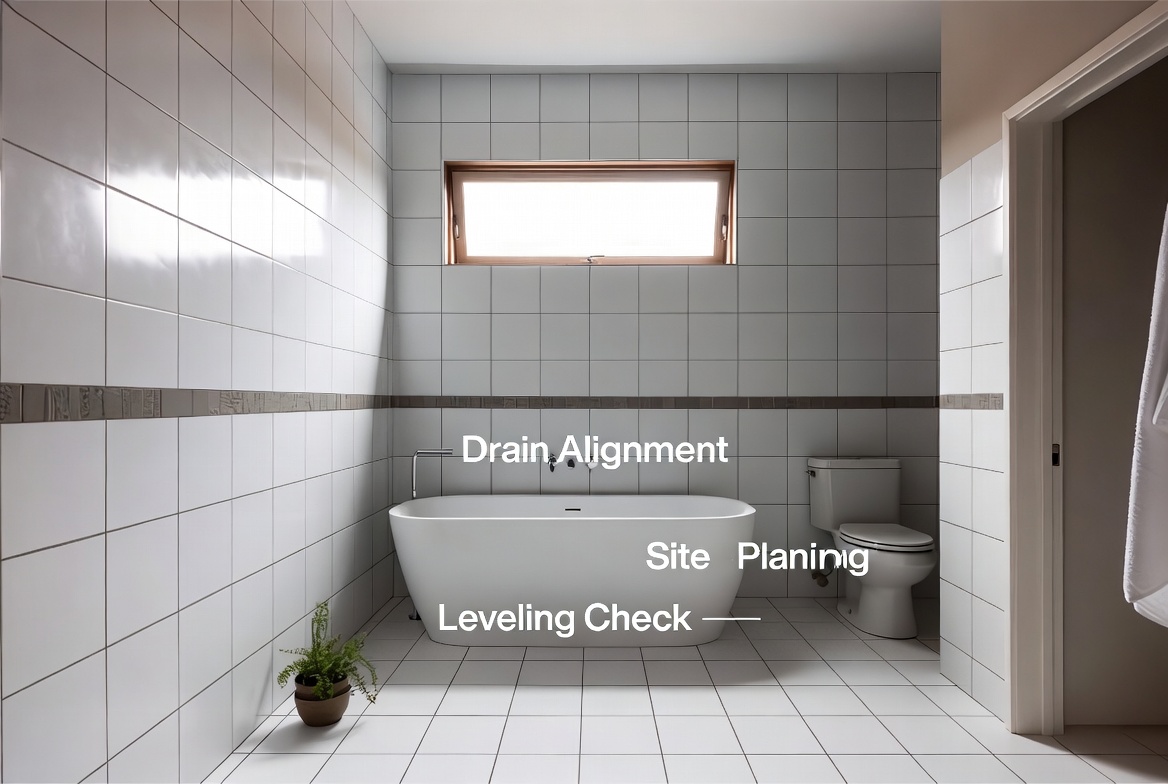
Every bathroom layout is unique, but a robust installation workflow follows a consistent sequence. The steps below reflect common industry practice and what we see across successful projects globally. [vintagetub]
Before permanent connections:
1. Place the tub in its approximate final position.
2. Check visual alignment with walls, windows, and focal elements like vanities or lighting. [medunjess]
3. Verify clearance for cleaning access around the tub and easy entry/exit for users.
4. Confirm that the drain opening and tub outlet align without stress on the piping. [horow]
Do not skip dry‑fitting; it is where most avoidable layout mistakes are caught.
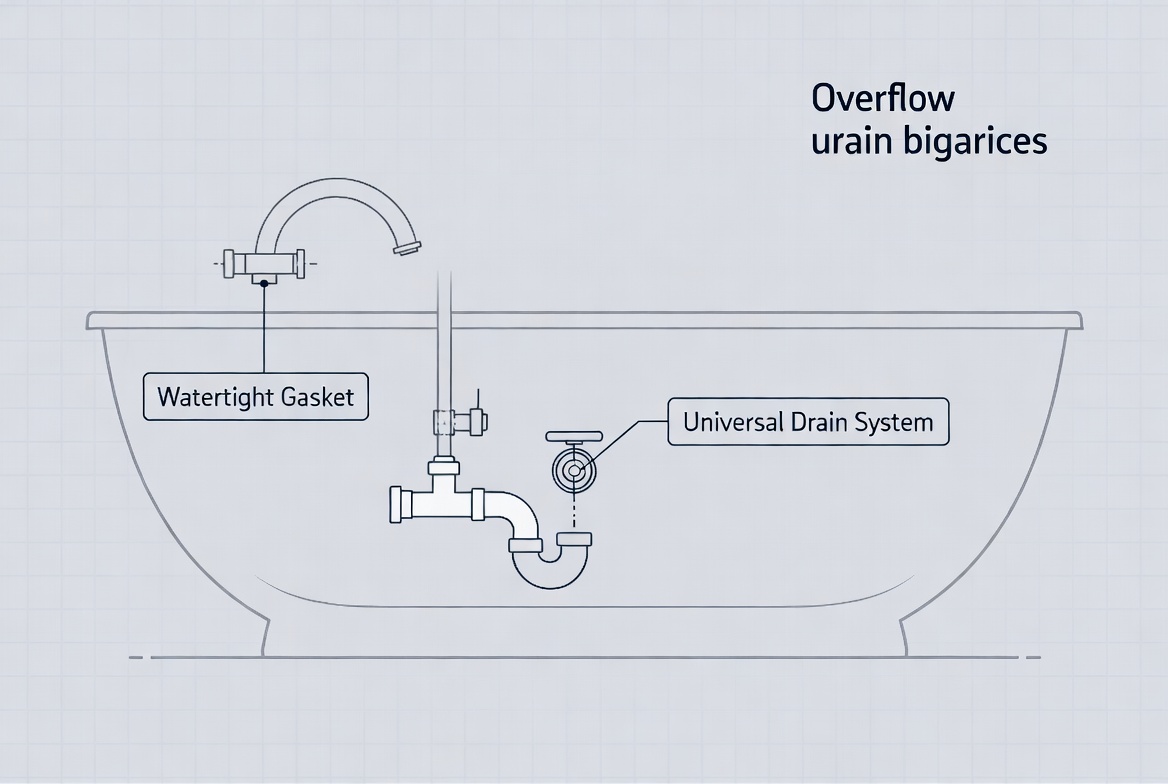
Once the position is confirmed, focus on a stable, watertight drain assembly. [horow]
Typical actions:
- Install the manufacturer‑specified waste/overflow kit, ensuring gaskets seat evenly.
- Apply appropriate sealant around flanges, avoiding excessive material that can obstruct the opening. [vintagetub]
- Use either a slip‑joint or correctly cemented connection between the tub's tailpiece and the P‑trap, depending on the system specified. [kbbonline]
- Tighten all connections from a comfortable access point whenever possible to avoid blind work under the tub. [kbbonline]
Where universal drain solutions are used, installers can often drop the tub into place first and complete the connection from above, which reduces labor time and the risk of missed alignment. [kbbonline]
A freestanding tub that is slightly off‑level can create drainage issues, uneven water lines, and discomfort. To prevent this: [horow]
- Use a spirit level on multiple axes (length, width, and diagonals) along the tub rim.
- Adjust integrated leveling feet or shims as required on hard surfaces. [vintagetub]
- Confirm there is no rocking or movement under normal loading.
For very heavy tubs, always follow the manufacturer's guidance on number of installers and recommended lifting methods to avoid damage to the tub body or to finished surfaces. [vegakitchenandbath]
After the tub is stable and connected:
1. Apply a high‑quality, mold‑resistant sealant at the base, where the tub meets tile or finished flooring (if recommended by the manufacturer).
2. Fill the tub progressively and check overflow and drain connections for any sign of moisture.
3. Perform multiple drain cycles, observing both the visible joints and any accessible under‑floor sections. [horow]
4. Wipe down all surfaces and verify that the sealant has formed a continuous, clean bead.
At this stage, it is better to re‑seat and re‑seal than to assume minor weeping will "settle" over time.
Industry feedback from contractors and designers highlights recurring problem areas that can be prevented with better planning. [kbbonline]
Frequent mistakes include:
- Working blind on the drain connection, relying on rough measurements instead of using adjustable or universal systems. [kbbonline]
- Under‑estimating the tub weight and failing to reinforce floor structure where needed. [medunjess]
- Forgetting to verify local code requirements for access panels, venting, or overflow systems. [horow]
- Positioning the tub too close to walls, which limits cleaning access and creates moisture traps.
- Mis‑aligning floor‑mount fillers, leading to uneven reach over the tub rim and uncomfortable user ergonomics. [youtube]
Professional installers treat each freestanding tub as a unique object with specific tolerances, not a generic replacement for a built‑in tub.
From a manufacturer and project‑specification perspective, understanding current design trends helps bathroom brands and developers choose tubs that remain relevant for years. [designedcurated]
In 2026, demand is strong for:
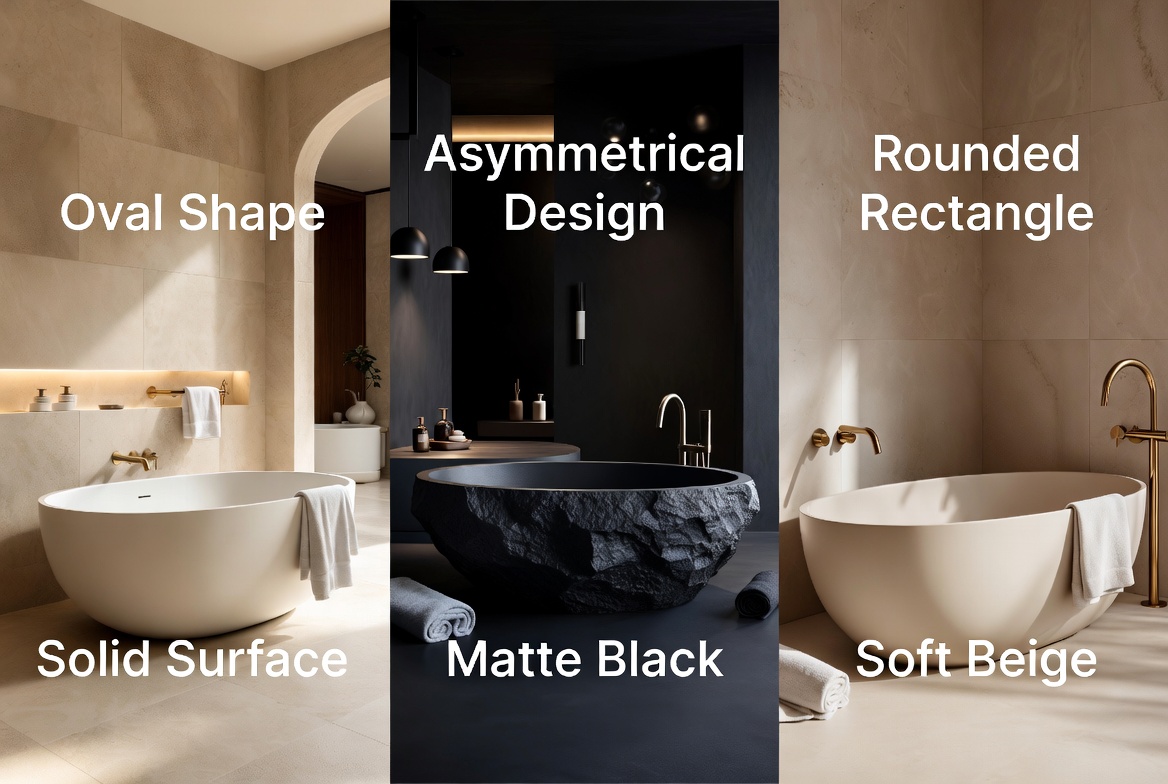
- Soft‑geometry oval and rounded‑rectangle tubs that adapt to both compact and large bathrooms. [vegakitchenandbath]
- Sculptural, asymmetrical designs that treat the tub as a statement art piece. [designedcurated]
- Deep soaking profiles with ergonomic backrests inspired by Japanese bathing culture. [designedcurated]
These shape choices have installation implications, especially for center‑room placements and views framed by windows or feature walls.
Brands and homeowners are increasingly prioritizing materials that balance aesthetics, durability, and environmental impact. [designedcurated]
Key material trends:
- Solid surface and mineral composite tubs that allow thin rims and smooth curves while remaining non‑porous and repairable. [medunjess]
- Stone‑effect finishes that deliver marble or terrazzo visuals without the weight and maintenance burden of natural stone. [vegakitchenandbath]
- Eco‑oriented formulations designed to reduce VOC emissions, extend product life cycle, and align with green building standards. [designedcurated]
For manufacturers and OEM partners, this translates into clear material storytelling in product pages and technical documentation.
Color is now an essential design lever in freestanding tub selection, not just an afterthought. [medunjess]
Typical choices in 2026:
- Nature‑inspired neutrals (warm whites, beiges, soft taupes) for spa‑like calm. [medunjess]
- Bold, moody tones (matte black, charcoal, deep green, navy) that provide dramatic contrast against light walls or stone surfaces. [vegakitchenandbath]
- Two‑tone body designs with white interiors and colored exteriors, often paired with matte finishes for a tactile, contemporary feel. [vegakitchenandbath]
Designers must coordinate these finishes with fixtures, lighting temperature, and tile selections to avoid visual noise in compact bathrooms.
From the perspective of a manufacturing partner like Jiaxing Miluo Smart Home Co., Ltd., successful freestanding tub installation starts with the right product, engineered for clear and efficient on‑site workflows. Our OEM and ODM collaborations with international bathroom brands, wholesalers, and project developers focus on:
- Custom sizing and proportions tailored to regional bathroom standards and hotel or multi‑family layouts. [medunjess]
- Dedicated drain, overflow, and filler configurations designed to match installers' preferred methods and local code requirements. [horow]
- Material and color portfolios that align with current spa‑inspired and luxury trends while remaining practical for long‑term use. [designedcurated]
- Detailed installation guides, CAD drawings, and technical documentation to support architects, designers, and contractors.
By treating the tub as part of a broader integrated bathroom solution, OEM and ODM clients can strengthen brand consistency, improve user satisfaction, and reduce site‑level risk.
A freestanding tub installation is only truly complete when users can enjoy the product comfortably for years with minimal friction. [vegakitchenandbath]
Core maintenance and UX considerations:
- Recommend non‑abrasive cleaners suitable for the specific tub material to protect finish integrity. [medunjess]
- Educate users about regular inspection of visible seals and easily accessible drain components.
- Ensure that access paths around the tub remain clear to support safe entry and exit, especially for multi‑user family bathrooms or hospitality environments. [designedcurated]
- Encourage periodic water‑line checks to catch subtle leveling issues or slow drainage early.
Installers and brands that include clear after‑care guidance see fewer warranty claims and stronger long‑term customer reviews.
Whether you are a homeowner, designer, or bathroom brand, choosing the right freestanding bathtub requires balancing design, performance, and installation realities. [designedcurated]
Use the following checklist as a practical decision tool:
- Bathroom size and layout constraints.
- Desired soaking depth and user body types.
- Preferred visual style (minimalist, sculptural, classic).
- Material performance, weight, and cleaning requirements.
- Color and finish alignment with tiles, fittings, and lighting.
- Local plumbing standards and installer preferences.
Partnering with a specialized freestanding tub manufacturer that understands both design trends and technical constraints makes this process more predictable and future‑proof.
| Feature / Factor | Design & UX Impact | Installation Consideration |
|---|---|---|
| Tub shape (oval, sculptural) (medunjess) | Comfort, visual focus, space perception | Affects centerline, distance to walls, filler placement |
| Material (solid surface, composite) (medunjess) | Weight, thermal performance, tactile feel | Determines floor reinforcement needs and handling method |
| Soaking depth (medunjess) | Relaxation quality, immersion experience | Influences drain height, stability, and overflow design |
| Color & finish (matte, two‑tone) (medunjess) | Style coherence, mood, contrast | Requires alignment with tile and fixture finishes |
| Drain system type (universal, stub‑out) (horow) | Reliability, ease of repair | Changes rough‑in layout, access method, and labor time |
In practice, the best freestanding tub installation experiences occur when architects, designers, contractors, and manufacturers collaborate early in the project. [vegakitchenandbath]
You should bring your manufacturing or OEM partner into the conversation when:
- You are working on non‑standard layouts, such as elevated platforms or open‑plan bathrooms.
- The project requires custom dimensions, tailored drain positions, or branded finishes.
- You anticipate challenges with floor load, access, or code‑specific requirements in your region.
- You want unified documentation covering tubs, fillers, and complementary sanitary ware in a single package.
For global brands and wholesalers, this approach reduces fragmentation across SKUs and ensures that marketing promises match real‑world installation performance.
If you are planning a modern freestanding bathtub project—whether for a residential renovation, hotel development, or branded bathroom collection—start by aligning design intent, installation practicalities, and manufacturing capabilities from day one. Working with a dedicated OEM/ODM partner allows you to tailor tub design, technical specifications, and documentation to your market while giving installers the clarity they need on site. [medunjess]
Reach out to your preferred freestanding bathtub supplier or OEM partner to review upcoming projects, share layout drawings, and refine product selections before construction begins. A well‑planned tub installation is not only safer and more efficient; it is also what transforms a simple bathroom into a truly elevated, spa‑like space.
Q1: Do I need to reinforce my floor for a freestanding tub?
A1: Heavier solid surface and stone‑effect tubs often require confirmation of load‑bearing capacity and, in some cases, local reinforcement, especially in older buildings. [vegakitchenandbath]
Q2: Can a freestanding tub be installed in a small bathroom?
A2: Yes, compact deep‑soaking models and oval designs are ideal for smaller spaces, provided you maintain safe circulation clearance around the tub. [medunjess]
Q3: What type of drain is best for a freestanding tub?
A3: Many installers prefer universal drain systems with slip‑joint connections and internal gaskets, which simplify alignment and allow above‑floor access compared with traditional stub‑outs. [kbbonline]
Q4: Are matte black freestanding tubs harder to maintain?
A4: Matte finishes require non‑abrasive cleaners and proper ventilation, but when maintained correctly they resist glare and deliver a sophisticated, contemporary aesthetic. [vegakitchenandbath]
Q5: When should I choose a floor‑mount vs wall‑mount tub filler?
A5: Floor‑mount fillers suit center‑room or sculptural placements, while wall‑mount options are better for tighter layouts or where wall plumbing is more accessible and cost‑effective. [youtube]
1. MedunJess. *Freestanding Tub Trends 2026: Shapes, Materials & Colors.* Available at: [https://www.medunjess.com/blogs/blog/freestanding-tub-trends-2026-shapes-materials-colors]
2. Vega Kitchen & Bath. *Freestanding Bathtub Ideas 2026: Silhouettes, Materials & Plumbing.* Available at: [https://www.vegakitchenandbath.com/blog/freestanding-bathtub-ideas-2026-westchester]
3. Vintage Tub & Bath. *How to Install Freestanding Tubs – How‑To Guide.* Available at: [https://www.vintagetub.com/how-to-guides/how-to-install-a-freestanding-tub]
4. Horow. *Installing Freestanding Tub: Step‑By‑Step Freestanding Tub Guide.* Available at: [https://horow.com/blogs/guide/installing-freestanding-tub-step-by-step-freestanding-tub-guide]
5. KBBOnline. *Freestanding Bathtubs: Installation and Detailing Tips for Designers.* Available at: [https://kbbonline.com/trends-inspirations/freestanding-bathtubs-installation-and-detailing-tips-for-designers/165637/]
6. Designed | Curated Interiors. *Bathtub Design Trends 2026: A Designer's Guide.* Available at: [https://www.designedcurated.com/insights/bathtub-design-trends-2026/]


