
Views: 289 Author: Miluo Smart Home Publish Time: 2026-10-09 Origin: Site


Content Menu
● 1. Start Your Bathroom Remodel With Daily Routines
>> Separate Essentials From Optional Features
● 2. Use Current Bathroom Trends Without Copying Them Blindly
>> Treat Survey Results as Direction, Not a Sales Forecast
● 3. Choose a Bathtub That Fits the Room and the Bather
>> Check Delivery Access Before Ordering
>> Assess Floor Loading and Hot-Water Capacity
● 4. Compare Bathtub Materials Through Performance
● 5. Make Small Bathroom Remodel Ideas More Functional
>> Test the Layout at Full Scale
● 6. Plan Wet-Room Waterproofing Before Selecting Tile
● 7. Design Lighting, Ventilation, and Storage Together
>> Keep Storage Close to the Routine
● 8. Balance Water Efficiency With Bathing Comfort
>> Avoid Unsupported Environmental Claims
● 9. Build an OEM and ODM Bathroom Procurement Brief
>> Approve More Than Appearance
● 10. Control Budget and Verify the Finished Bathroom
● Turn Your Bathroom Concept Into a Defined Product Brief
>> 1. What bathroom remodel ideas should come first?
>> 2. Is a freestanding bathtub suitable for a small bathroom?
>> 3. Should every luxury bathroom include a bathtub?
>> 4. What should buyers request for custom bathtub production?
>> 5. Can tile and grout waterproof a wet room?
>> 6. How can a bathroom brand develop a coordinated collection?
The best bathroom remodel ideas combine everyday comfort with thoughtful engineering. A sculptural bathtub, coordinated finishes, and elegant lighting can transform a room, but lasting luxury also depends on drainage, cleaning access, water supply, and reliable installation.
For homeowners, designers, and international bathroom brands, the challenge is similar: choose products that look exceptional and work well together. As a manufacturer offering customized bathroom products and OEM and ODM services, Jiaxing Miluo Smart Home Co., Ltd. approaches this challenge through coordinated product planning.
This guide explores modern bathroom renovation ideas, practical bathtub selection, and purchasing decisions that help turn an attractive concept into a usable, maintainable space.
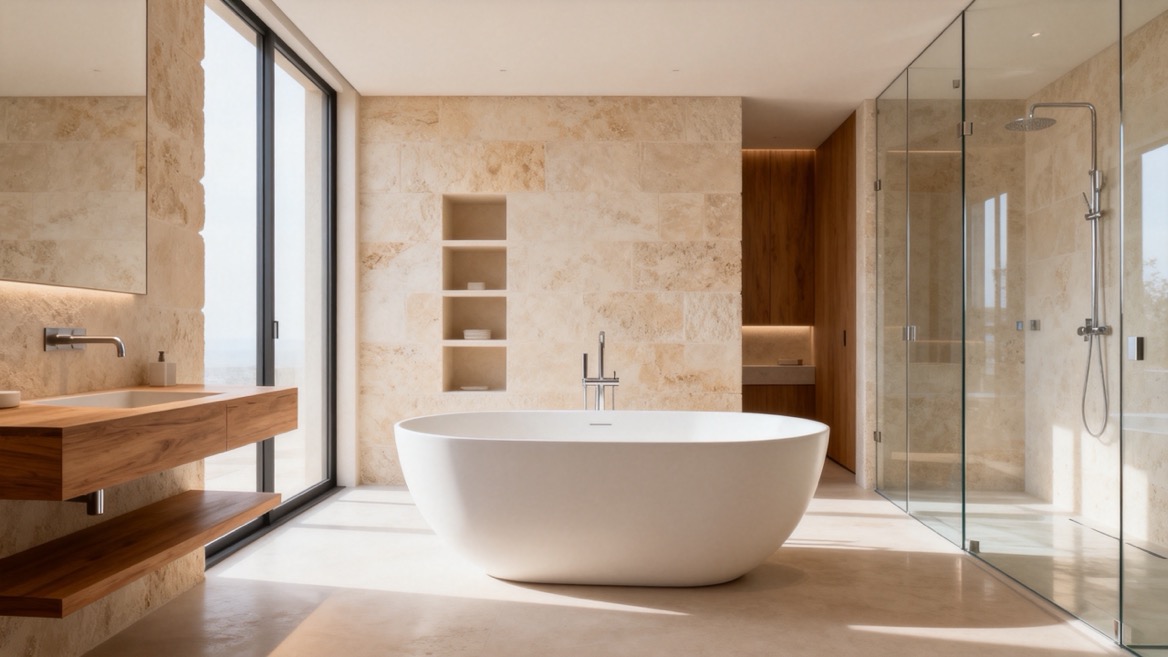
Before selecting finishes, identify what the bathroom must accomplish. A family bathroom, boutique hotel suite, and private wellness retreat need different layouts.
Ask five questions:
- Who will use the bathroom most often?
- Is bathing a regular habit or an occasional pleasure?
- What currently makes the room uncomfortable?
- Which cleaning and maintenance tasks should become easier?
- Will users' mobility or household needs change?
My planning recommendation is simple: resolve these questions before choosing a statement product. A beautiful bathtub cannot compensate for an awkward doorway, inaccessible controls, or inadequate storage.
For commercial buyers, translate the answers into a customer profile. A compact urban collection should solve different problems from a spacious hospitality collection.
Create two lists. Essentials include sound waterproofing, suitable ventilation, comfortable circulation, and dependable fixtures. Optional features might include decorative lighting, integrated audio, or an oversized soaking tub.
Protect the essential budget first. Premium finishes should enhance a reliable bathroom, not distract from unresolved problems.
Recent homeowner research points toward comfort and purposeful design rather than appearance alone.
The 2026 U.S. Houzz Bathroom Trends Study surveyed 1,619 homeowners about recent or planned projects. Among respondents adding or replacing a bathtub, 72% selected a soaking tub. However, 26% of renovation projects removed a bathtub.
These findings tell two different stories. Soaking tubs appeal strongly to buyers who want a tub, but not every bathroom needs one.
The same study found that cleanliness, a spacious shower, and organized storage ranked ahead of a comfortable tub as relaxing bathroom features. For product developers, this suggests that luxury should include easy maintenance and practical organization.
These figures describe participating U.S. homeowners, not all international consumers or wholesale purchasing behavior.
Brands should combine trend research with local customer feedback, showroom observations, and installation conditions. The right collection responds to a defined market rather than assuming one global preference.
Bathtub selection begins with fit, not silhouette. External dimensions determine whether a tub fits the room; internal geometry determines whether it feels comfortable.
Compare basin length, backrest angle, usable depth, rim width, and entry height. Two tubs with similar outside measurements may offer noticeably different bathing experiences.
| Bathtub configuration | Suitable project | Main planning check |
|---|---|---|
| Freestanding bathtub | Spacious bathroom with a focal point | Cleaning access and filler position |
| Back-to-wall bathtub | Contemporary room with limited clearance | Wall interface and installation instructions |
| Alcove bathtub | Enclosed bathing area or tub-shower combination | Surround waterproofing and flange details |
| Drop-in bathtub | Custom platform or integrated surround | Deck construction and service access |
| Compact soaking bathtub | Smaller bathroom prioritizing bathing | Internal comfort and safe entry |
Measure the complete delivery route, including doorways, stairs, elevators, and turning spaces. Confirm packaged dimensions, not just the bathtub's finished size.
A product that fits the bathroom may still be difficult to deliver. Address this before production or shipment.
Ask the installer to review the tub's empty weight, operating water volume, occupant allowance, and support requirements.
Also assess the available hot-water supply. Do not confuse capacity to the overflow with the amount normally used during bathing. Product-specific information should guide both structural and plumbing decisions.
Material names alone do not establish quality. Construction, surface formulation, reinforcement, and quality control all affect the finished product.
Common options include acrylic, cast iron, and mineral-based composite materials. Their suitability depends on the model and the project.
Instead of relying on broad claims such as "maintenance-free" or "scratch-proof," request written information covering:
- Empty weight and installation support.
- Approved cleaning products.
- Surface repair procedures.
- Resistance-testing methods where available.
- Warranty coverage and exclusions.
- Replacement components and after-sales support.
For mineral composites or products described as solid surface, request the precise material specification. Similar marketing terminology does not guarantee identical composition or performance.
A sample helps buyers assess color, gloss, texture, edge finishing, and visible consistency. For custom orders, define which sample becomes the approved production reference.
Photographs are useful for initial selection, but they should not replace physical evaluation when finish consistency matters.
Small bathrooms benefit from careful product placement rather than simply smaller products.
Start by identifying conflicts between doors, drawers, shower screens, and bathing areas. Then consider whether a compact bathtub, wall-hung vanity, or revised storage arrangement solves those conflicts.
Useful design approaches include:
- Keeping frequently used items near their point of use.
- Using recessed storage where construction permits.
- Choosing coordinated finishes to reduce visual clutter.
- Planning lighting around grooming and bathing tasks.
- Preserving access to valves, traps, and serviceable components.
Mark proposed fixture outlines on the floor with tape. Include door swings and the space needed to stand, bend, clean, and enter the tub.
This inexpensive exercise can expose problems that are difficult to notice in a rendering. Use applicable local requirements and installer guidance when confirming final clearances.
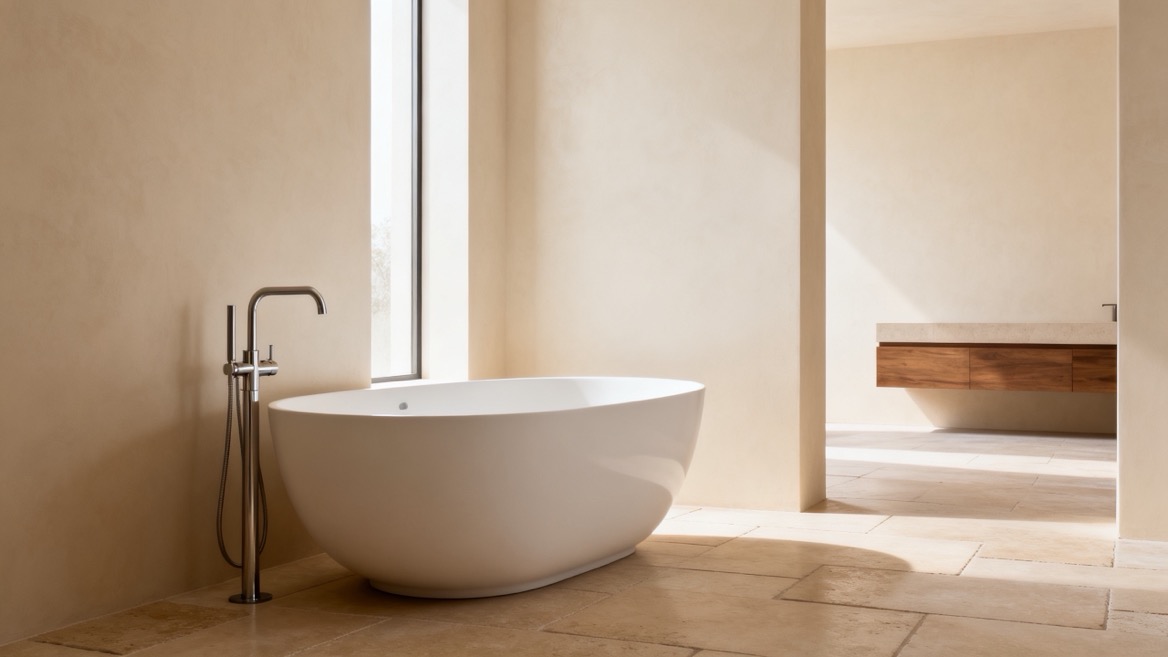
Wet-room bathroom ideas can create a cohesive, open appearance, but they require careful coordination of waterproofing, drainage, and adjoining dry areas.
Tile and grout are not a complete waterproofing system. The assembly beneath them must manage moisture at floors, walls, corners, penetrations, and drain connections.
Ask the installer to document:
1. The proposed waterproofing system.
2. Substrate preparation and compatibility.
3. Floor slopes and drainage arrangements.
4. Treatment of corners and pipe penetrations.
5. Required testing before finishes conceal the assembly.
Follow the selected system's installation instructions and applicable local requirements. Avoid combining components simply because each is individually marketed as waterproof.
A seamless appearance should not make routine servicing destructive. Plan access to concealed valves and other maintainable components before closing walls or installing a platform.
This is particularly important for hospitality projects, where repair access affects downtime as well as cost.
A bathroom should support grooming, bathing, cleaning, and relaxation. One bright ceiling fixture rarely addresses all four equally well.
Consider separate lighting functions:
- Task lighting around mirrors.
- General lighting for movement and cleaning.
- Softer lighting for bathing.
- Suitable illumination near entry points.
Have qualified professionals confirm fixture suitability, placement, and electrical protection for the installation environment.
Ventilation deserves equal attention. A running fan is not necessarily removing enough moisture. Check its performance and discharge route; bathroom exhaust should lead outdoors rather than into an attic or another indoor space.
Place towels near bathing areas, grooming products near the vanity, and cleaning supplies in an appropriate dedicated location.
Organized storage can contribute more to everyday comfort than an additional decorative feature. Prioritize usable interiors, accessible drawers, and surfaces that are easy to wipe.
Water-efficient products can support a premium bathroom when performance is verified.
In the United States, WaterSense-labeled showerheads use no more than 2.0 gallons per minute and must meet independent efficiency and performance requirements. Standard showerheads commonly use 2.5 gallons per minute.
The label applies to qualifying products, not automatically to an entire bathroom collection or a bathtub.
For bathtub planning, examine working fill volume, filler flow rate, and hot-water availability. A large exterior does not reliably indicate how much water a particular bather will use.
Brands should explain specific features and evidence rather than describing every product as sustainable.
Identify what has been measured, which model was tested, and which market the documentation covers. Clear, limited claims are more useful than sweeping promises.
For overseas brands, wholesalers, and manufacturers, a successful collection starts with a clear specification.
Jiaxing Miluo Smart Home Co., Ltd. offers customized modern bathroom products and OEM and ODM services. Buyers should define their project requirements before requesting a final proposal.
OEM projects typically follow buyer-defined designs and requirements. ODM projects generally involve adapting a supplier-developed design. Confirm the actual scope, design rights, and responsibilities in the agreement.
| Requirement | Information to confirm |
|---|---|
| Target market | Destination, customer profile, and relevant requirements |
| Product geometry | Dimensions, tolerances, basin shape, and drain position |
| Finish | Approved color, gloss level, and reference sample |
| Components | Drain, overflow, fittings, and supplied accessories |
| Documentation | Drawings, installation instructions, care guide, and applicable evidence |
| Commercial terms | Quantity, tooling, lead time, warranty, and shipment terms |
Evaluate the sample's installation interface, drainage arrangement, supplied components, and maintenance instructions.
For repeat orders, establish an approved reference and written acceptance criteria. Also clarify whether changes require fresh sample approval.
Customization should produce a defined, repeatable product—not an interpretation that changes between orders.
The 2026 Houzz study reported median U.S. bathroom renovation spending of $15,000 for projects completed in 2025. Major remodels, defined as those upgrading at least the shower, had a median of $25,000.
These are survey benchmarks, not quotations. Local labor, room size, structural work, product choices, and delivery conditions determine actual costs.
For imported products, compare landed cost rather than factory price alone. Include freight, duties, handling, installation components, and potential replacement costs.
Before handover, verify:
- Drainage and visible connection leaks.
- Filler alignment and operation.
- Surface condition under suitable lighting.
- Ventilation performance.
- Service access and supplied documentation.
Photograph completed work and record outstanding issues. A clear handover protects the buyer, installer, and supplier.
Successful bathroom renovation connects visual ambition with practical details. The strongest projects consider bathing comfort, moisture management, maintenance, and installation from the beginning.
For brands, wholesalers, and manufacturers planning a custom collection, share your target market, drawings, preferred finishes, anticipated quantities, and project schedule with Jiaxing Miluo Smart Home Co., Ltd. Request an OEM or ODM feasibility discussion and sampling proposal to establish the next steps before committing to production.
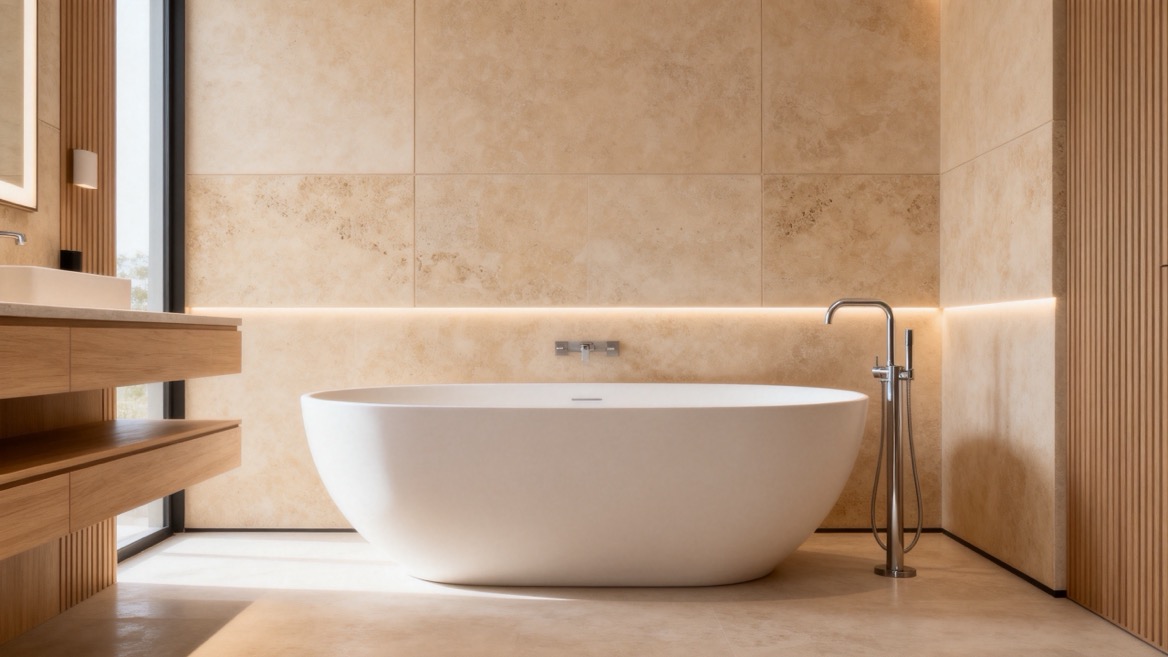
Begin with layout, waterproofing, drainage, ventilation, and storage. These decisions influence comfort and reliability. Select decorative finishes after confirming how the bathroom will function.
Sometimes. Check its full installation footprint, cleaning clearance, delivery route, and internal comfort. A compact or back-to-wall model may suit the project better than a conventional freestanding design.
No. Choose a bathtub when bathing habits, available space, and the intended customer justify it. A well-designed shower and organized storage may deliver greater value in another project.
Request drawings, material details, finish samples, installation requirements, component specifications, acceptance criteria, and applicable documentation. Confirm warranty responsibilities and replacement support before approving production.
Not by themselves. A wet room needs a suitable waterproofing assembly with properly detailed drainage connections, corners, and penetrations. Installation and testing should follow the selected system's instructions.
Define the target user, design language, dimensions, finishes, and technical interfaces first. Then evaluate samples and installation requirements together rather than approving each product in isolation.
1. Aquatica — *Bathroom Remodel Ideas 2023*. Supplied competitor page; search results verified its title and general topic, but the complete page could not be retrieved. Used as the topic reference, not as a verified source for detailed claims or customer reviews. [aquaticausa]
2. Houzz Research — *2026 U.S. Houzz Bathroom Trends Study*. Survey of 1,619 U.S. homeowners. Source for bathtub selection and removal figures, relaxation priorities, renovation spending, and the definition of major remodels. [houzz]
3. U.S. Environmental Protection Agency — *Showerheads*. Source for WaterSense showerhead flow limits, independent certification, and performance requirements. [epa]
4. U.S. Environmental Protection Agency — *Remodeling Your Home and Indoor Air Quality*. Source for checking bathroom exhaust performance and discharging exhaust outdoors rather than into indoor spaces. [epa]
5. Schluter Systems — *Tiled Shower Waterproofing Systems*. Source for the distinction between tile finishes and waterproofing assemblies, including moisture management beneath tile. This is technical guidance from a system manufacturer, not a substitute for local requirements or project-specific design. [schluter]


