
Views: 248 Author: Miluo Smart Home Publish Time: 2026-07-23 Origin: Site


Content Menu
● Introduction: The Quiet Power Of "Stone-Feel" In Boutique Hotels
● What "Stone-Feel" Surfaces Really Are
● Why Bathrooms Shape Perceived Value In Boutique Hotels
● Traditional Stone vs. Modern Stone-Feel – A Practical Comparison
>> Guest-Facing Aesthetics And Sensory Experience
● Stone-Feel Surfaces And Contemporary Boutique Bathroom Trends
● The Bathtub As The Perception Anchor
● Inside The Material Engineering Of Stone-Feel Bathtubs
● How Stone-Feel Surfaces Support Maintenance And Longevity
● Design Steps For Implementing Stone-Feel Surfaces In Boutique Hotels
>> Step 1 – Clarify The Bathroom's Strategic Role
>> Step 2 – Establish A Coherent Stone-Feel Palette
>> Step 3 – Pair Stone-Feel Bathtubs With Lighting And Hardware
● OEM/ODM Customization – Turning Stone-Feel Into A Brand Signature
● How Stone-Feel Baths Support Rate And Reputation
● Practical Recommendations From An Industry Perspective
● FAQ
Walk into a memorable boutique hotel, and the bathroom often tells you more about the property's ambition than the lobby ever could. Guests instinctively judge the overall room quality by what they see and touch in this intimate space. When surfaces look and feel like carved stone, they immediately read as considered, invested, and luxurious.
In my work with hospitality teams and bathroom manufacturers, I see a consistent pattern: stone-feel bathtubs, vanities, and wall panels are treated as signature elements rather than background finishes. They carry visual weight, create a spa-like mood, and quietly communicate that the property has gone beyond basic, standard fixtures. This is where perceived value starts to rise—before a guest reads any description or sees any amenity list.

"Stone-feel" surfaces are engineered materials that convincingly mimic natural stone in appearance and touch, while offering more controlled performance. They are typically created from mineral composites, solid surface formulations, or advanced quartz-based materials that integrate fine mineral content with resins and pigments.
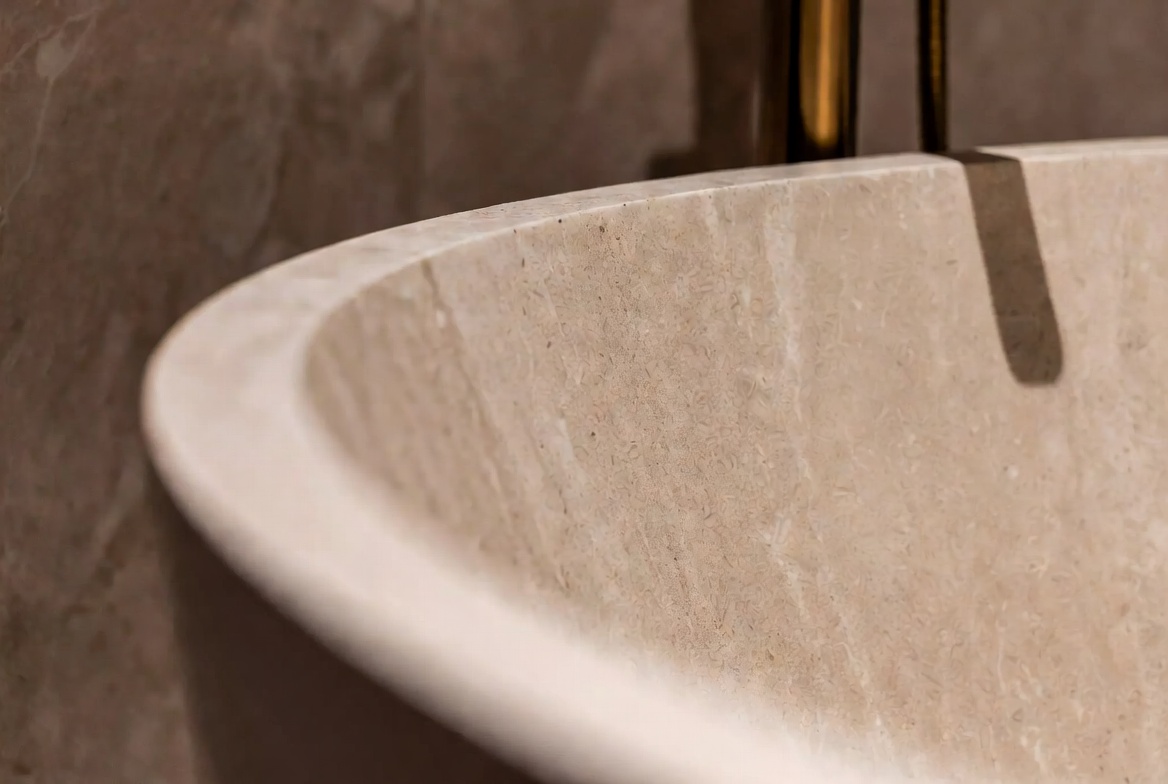
From a guest's perspective, what matters most is the combination of visual depth and tactile response. A stone-feel bathtub or vanity should look monolithic and substantial, with gentle veining and a soft-matte surface that feels calm rather than slick. For manufacturers, the goal is to deliver this experience while keeping weight, durability, and maintenance within the demanding thresholds of hospitality projects.
Boutique hotels often position their bathrooms as private retreats rather than purely functional rooms. This is where guests unwind, reset, and test whether the brand's promise of comfort holds up under close inspection. The materials chosen here become powerful signals of overall investment.
Several perception dynamics are especially important:
- Guests associate heavier, stone-like forms with higher material and construction cost.
- Textured, matte surfaces are read as more crafted and thoughtful than basic, glossy shells.
- Cohesive bathroom design is frequently mentioned in reviews and personal recommendations.
- A striking bathtub or stone-feel feature wall often becomes the most photographed part of the room.
When guests feel that the bathroom belongs in a high-end residence or spa rather than a generic hotel, they tend to rate the entire stay as more premium and memorable.
Natural stone carries long-standing prestige, but it can be challenging for boutique hotels to manage at scale. It is heavy, often porous, and sensitive to certain cleaning agents. Over time, inconsistent sealing and spot repairs can undermine the very premium impression it was meant to create.
Modern stone-feel materials, by contrast, are specifically engineered to balance aesthetics with daily use. Mineral composites and quartz-based surfaces are formulated to be harder, more uniform, and less porous than many natural stones. They typically offer:
- More predictable stain resistance.
- Reduced absorption and better hygiene.
- Lower weight per unit, easing installation demands.
- Uniform slabs and components that can be repeated across projects.
These qualities matter deeply in hospitality settings, where housekeeping teams must deliver consistent results room after room.
From the guest's vantage point, the material's origin matters less than its emotional and tactile impact. A stone-feel bathtub with generous curves and a smooth, velvety surface can feel more inviting than a cold, highly polished stone tub. When lighting grazes a textured wall panel behind the tub, the depth and softness of the surface can instantly transform the mood of the room.
Done well, stone-feel solutions enable a hotel to offer the visual weight and character of stone while fine-tuning color, pattern, and touch across multiple room types. The result is a coherent, high-end story that guests experience without needing to know anything about the underlying material technology.
Current high-end bathroom trends place strong emphasis on serenity, tactility, and large, uninterrupted surfaces. In this landscape, stone-feel materials are not an optional accent; they sit at the center of many design concepts.
Some of the most relevant directions include:
- Seamless panels and slab walls that minimize grout lines and create an architectural, gallery-like feel.
- Warm, earthy palettes that pair stone-like surfaces with brushed metals, soft textiles, and layered lighting.
- Freestanding sculptural tubs that act as focal points and photo moments.
- Wellness-inspired layouts with open showers, built-in benches, and generous circulation around the tub.
Stone-feel composites and quartz-based solutions are especially well matched to these trends because they can be fabricated in large formats, maintain consistent patterning, and retain a subtly textured surface that plays beautifully with light.
Among all fixtures in a boutique hotel bathroom, the bathtub tends to carry the greatest symbolic weight. It is often the first object guests notice when they open the bathroom door—or even from the bedroom, if the layout is partially open. A well-placed, stone-feel bathtub becomes an immediate statement.
A perception-shaping tub normally combines:
- Sculptural mass: A solid, grounded presence that suggests permanence and investment.
- Comfortable ergonomics: Gently sloped backrests and soft inner curves that invite longer baths.
- Refined exterior texture: A matte or honed finish that feels sophisticated to the touch.
- Supportive setting: A background of coordinated stone-feel or complementary surfaces, instead of visually noisy tile patterns.
When these elements are in harmony, guests feel that they are stepping into a space designed at a higher level of intention. The bathtub is no longer just a fixture; it becomes the emotional anchor for the room's entire experience.
Behind the sculptural forms and textured finishes lies careful material engineering. The most successful stone-feel bathtubs and bathroom components are the result of deliberate choices about mineral content, resin systems, and manufacturing processes.
Key technical considerations include:
- Mineral loading and hardness: A high proportion of fine mineral content improves scratch resistance and gives the surface a convincing stone-like density.
- Porosity control: Closed or minimally porous surfaces limit water ingress, reduce staining, and improve long-term hygiene.
- Pigment and veining design: Controlled pigmentation and veining patterns allow for consistent color batches while still creating depth and variation that resemble natural stone.
- Thermal behavior: The material should avoid an uncomfortably cold initial touch while retaining warmth once filled with water.
- Edge and surface processing: Finishing methods determine whether a tub feels honed, slightly textured, or ultra-smooth, each carrying different design implications.
Manufacturers specializing in modern stone-feel technologies invest heavily in calibrating these parameters so that the final product not only looks beautiful but also performs reliably in daily hotel use.
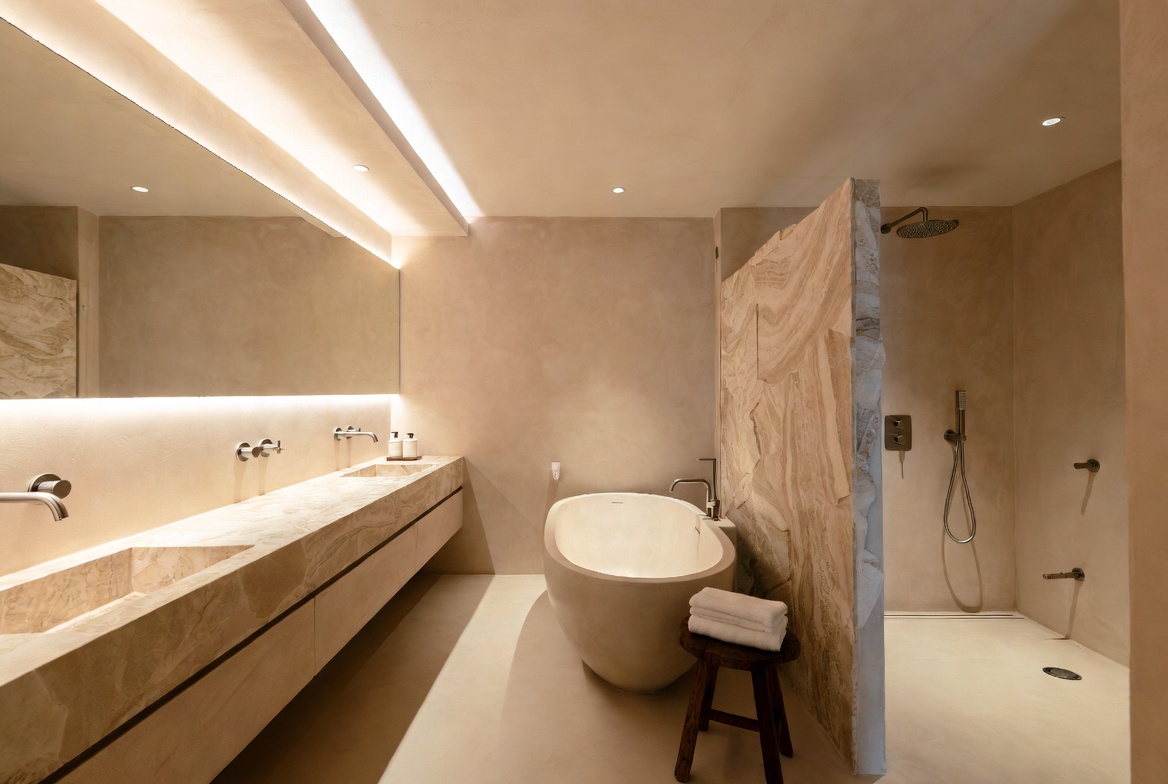
Boutique hotels often operate with lean teams, making maintenance strategy a critical part of bathroom design. Materials that age poorly or require specialized care can quietly erode guest satisfaction and brand image over time.
Stone-feel composites and quartz-based solutions help here in several ways:
- They are typically less prone to etching and staining from personal care products and cleaning chemicals.
- Their non-porous or low-porosity surfaces simplify routine cleaning and reduce the risk of lingering discoloration.
- Large-format panels can minimize joints where dirt and moisture tend to accumulate.
- Consistent color and pattern across components make replacement or repair in individual rooms less conspicuous.
With the right cleaning protocols and product selection, these surfaces maintain their visual integrity for longer periods, ensuring that the premium impression guests receive on opening day is preserved across many stays.
The first step is deciding what the bathroom should represent within the guest journey. Is it primarily a restorative retreat, an intimate spa, or a bold visual signature? This strategic decision informs where stone-feel materials will create the most impact.
Practical actions:
1. Map guest sightlines from the bedroom into the bathroom.
2. Identify which surfaces guests see first and touch most frequently.
3. Reserve stone-feel for these high-impact zones—typically the tub, main wall plane, and vanity.
Fragmented material choices can dilute the perceived value of the room. Instead, a coherent palette around a primary stone-feel tone creates a calm, curated impression.
Useful guidelines:
1. Choose a core color family (warm beige, soft grey, deep charcoal, or off-white with subtle veining).
2. Align the bathtub, top surfaces, and key wall areas with this family.
3. Balance the stone-feel with warmer elements such as brushed metals and timber accents to avoid an overly cold aesthetic.
Stone-feel materials reveal their depth under the right light and in conversation with well-chosen fixtures. A beautifully engineered tub can look flat if the lighting is harsh or the hardware feels mismatched.
Design priorities:
- Opt for soft, layered lighting that grazes surfaces and emphasizes texture.
- Use warm metal finishes to bring contrast and human warmth to the stone-like mass.
- Keep hardware lines simple to let the tub and wall planes feel deliberate and sculptural.
- Avoid over-accessorizing; visual breathing room allows details to be appreciated.
For boutique hotels, the ability to customize stone-feel products through OEM and ODM partnerships is a powerful advantage. Rather than selecting generic catalog solutions, properties can develop tub shapes, surface tones, and design details that express their own identity.
Customization opportunities include:
- Unique geometries tailored to specific room footprints or view corridors.
- Location-inspired tones that echo regional stone, local landscapes, or cultural motifs.
- Integrated features such as discreet shelves, recessed overflows, or integrated steps that keep the silhouette clean.
- Tiered product families that maintain a consistent language from entry-level rooms to flagship suites.
This approach turns stone-feel surfaces from simple materials into narrative tools. Guests who stay at different locations within the same brand start to recognize a consistent design DNA, reinforced every time they encounter the bathtub and bathroom environment.
When boutique hotels upgrade bathroom environments with well-executed stone-feel bathtubs and coordinated surfaces, several positive outcomes tend to follow. These results are not instantaneous, but they accumulate as more guests experience and share the space.
Common outcomes include:
- Stronger room photography and marketing visuals, especially around freestanding tubs and feature walls.
- Increased guest mentions of bathroom quality in ratings and written feedback.
- Higher appeal of certain room types that prominently feature stone-feel installations.
- A clearer differentiation point from competitors that rely on standard, glossy fixtures.
In a market where many stays are booked based on images and reviews, these elements quietly strengthen perceived value before a guest even arrives on property.
Looking across recent projects and manufacturing advances, several practical recommendations stand out for boutique hotels and their supply partners working with stone-feel surfaces:
- Prioritize tactile quality and comfort over aggressive veining or highly decorative patterns.
- Use lighting to reveal the material, not fight it; gentle wall washing and concealed sources are especially effective.
- Keep visual language consistent—repeat similar tones and textures to build a sense of calm.
- Integrate storage and functional details in a way that preserves the monolithic presence of the tub and key wall planes.
- Engage manufacturing partners early, so structural, plumbing, and installation requirements are aligned with chosen stone-feel solutions.
Taken together, these practices help transform stone-feel bathtubs and surfaces from isolated design upgrades into central elements of a highly coherent guest experience.
Q1: What makes stone-feel bathtubs more desirable than standard acrylic options in boutique hotels?
Stone-feel bathtubs offer a visual mass, refined texture, and crafted presence that standard acrylic tubs rarely achieve. They help the bathroom feel more like a private spa space and less like a utilitarian fixture zone, which guests interpret as a sign of higher overall room quality.
Q2: Are stone-feel surfaces durable enough for high-traffic hotel use?
Well-engineered stone-feel composites and quartz-based materials are designed for demanding environments. Their hardness, low porosity, and resistance to staining make them a strong fit for bathrooms that must endure frequent use and regular cleaning while retaining a premium appearance.
Q3: How important is lighting when working with stone-feel materials?
Lighting is critical. Soft, layered illumination brings out the depth of stone-feel surfaces and highlights the sculptural qualities of bathtubs and wall planes. Poorly positioned or overly harsh lighting can flatten the material and reduce its perceived value.
Q4: Can stone-feel surfaces be tailored to different boutique hotel concepts?
Yes. Through OEM and ODM collaboration, hotels can adapt color palettes, surface textures, and tub geometries to match coastal, urban, resort, or heritage-inspired concepts while maintaining the underlying advantages of engineered stone-feel materials.
Q5: Do guests notice the difference between natural stone and modern stone-feel materials?
Most guests respond to the overall atmosphere and tactile experience rather than the precise material classification. When stone-feel solutions are well designed and thoughtfully integrated, they deliver a level of comfort and visual richness that satisfies the expectations typically associated with natural stone.
1. [Toulmin Cabinetry – 2026 Bathroom Design Trends] [toulmincabinetry]
2. [Good Housekeeping – Top Bathroom Design Trends for 2026] [goodhousekeeping]
3. [Pizrog Natursteine AG – Composite Countertops and Bathrooms] [pizrog]
4. [Stonebaths AU – Luxury Bath And Basin Design Trends] [archipro.com]
5. [GON – Stylish Composite Quartz For Bathrooms] [g-o-n.co]


