
Views: 222 Author: Miluo Smart Home Publish Time: 2026-04-25 Origin: Site


China has become one of the most important manufacturing bases for artificial stone and stone‑resin bathtubs, supported by mature sanitary ware clusters in Guangdong, Fujian and Zhejiang. These clusters integrate raw material suppliers, mold makers, resin formulators and OEM factories, which helps buyers achieve competitive cost, faster development and more stable supply. [kingkonree]
Global demand is rising: one recent analysis valued the global artificial stone bathtub market at about 1.5 billion USD in 2025 with an estimated 6% CAGR through 2033, driven by upgrades in residential bathrooms and hospitality projects. In mature markets like the U.S., freestanding tubs have become a top bathroom design trend, with surveys showing around one‑third of renovators preferring them, which indirectly boosts demand for stone‑like solid‑surface tubs. [statista]
For overseas brands, distributors and project contractors, partnering with a capable Chinese OEM/ODM factory allows access to flexible customization, private tooling and diversified designs without heavy upfront investment in production facilities. [alibaba]

Before listing factories, it is important to clarify how an experienced buyer should evaluate artificial stone bathtub manufacturers.
- Factory certifications
Check ISO 9001 for quality management and, when relevant, ISO 14001 for environmental management. Make sure documents are valid (not expired) and issued by recognized bodies such as SGS, TÜV, Intertek or local CNAS‑accredited agencies. [seller.alibaba]
- R&D and mold development
A solid supplier should be able to support 3D modeling, mold design and continuous optimization of resin formulas and fillers to balance weight, strength and thermal performance. [hsysourcing]
- Quality control process
Look for clear incoming‑material inspection (resin, ATH, pigments), density and hardness checks on semi‑finished tubs, 100% water‑leak tests and surface inspection with re‑polishing procedures. [kingkonree]
- Production capacity and delivery stability
Evaluate monthly output, current utilization rate and peak‑season lead times. A typical mid‑sized Chinese stone‑resin bathtub plant can ship several thousand units per month, but only if they manage molds, curing time and packaging lines efficiently. [alibaba]
- Compliance and documentation
For export to Europe or North America, ensure the supplier can support CE‑related safety requirements on integrated systems (when combined with heaters or pumps) and RoHS/REACH declarations for materials in contact with water. [china2west]
- OEM/ODM flexibility
The best partners are not only able to print logos, but also adjust dimensions, drain positions, stone‑resin recipes and surface finish (matte, gloss, nano‑coat) in reasonably low MOQs for each model. [alibaba]
Artificial stone (often marketed as stone resin or solid surface) is a composite of mineral fillers (e.g., aluminum trihydrate and natural stone powder) and high‑performance resin, cast in molds and then cured and polished. Compared with acrylic or cast iron, it offers better heat retention, a more solid feel and a seamless, low‑porosity surface that is easier to clean. [hsysourcing]
Key technical indicators:
- Material grade
High‑quality products use high‑purity ATH and controlled particle sizes to achieve uniform density, low water absorption and good machinability for later polishing and repair. [kingkonree]
- Resin system
Suppliers may use modified polyester or acrylic resin systems; better systems provide higher yellowing resistance and mechanical strength under hot‑cold cycling. [kingkonree]
- Thermal performance
Stone resin typically has low thermal conductivity (around 0.25–0.35 W/m·K), allowing water to stay warm for 30–40 minutes, improving the soaking experience. [kingkonree]
- Surface treatment
Options include integral matte solid surface, gel‑coat layers for gloss and optional nano‑coatings for stain resistance and anti‑yellowing performance. [hsysourcing]
- Compliance and safety
For export, buyers usually focus on CE‑related safety for integrated whirlpool or electrical functions and RoHS/REACH compliance on restricted substances in resins and pigments. [seller.alibaba]
For this 2026 list of "Top 10 Artificial Stone Bathtub Manufacturers in China", we used the following criteria, combining desk research and typical sourcing practices:
1. Product focus and range
- Strong presence in artificial stone / stone‑resin / solid‑surface bathtubs (not only acrylic). [hsysourcing]
- Stable catalog plus custom‑mold capability.
2. Export experience
- Active export to Europe, North America or Asia‑Pacific, with English‑language documentation and case references. [kingkonree]
3. Manufacturing capability
- Own casting, curing and polishing lines in China, not just trading. [hsysourcing]
4. Quality and certification
- Availability of ISO 9001 or equivalent, plus support documents (test reports, material MSDS, etc.). [china2west]
5. OEM/ODM service level
- Ability to handle private label, custom dimensions, tooling and project‑based customization with reasonable MOQs. [alibaba]
6. Reputation and market feedback
- Appearance in industry articles, sourcing guides or B2B platforms, and alignment with feedback patterns in the market. [kcoffeetable]
Within the list, some factories are more suitable for large retail brands and hotel groups, while others—such as Jiaxing Miluo Smart Home Co., Ltd.—are better aligned with small to mid‑sized brands that value flexibility and engineering‑level communication. [alibaba]
> Note: Company details are summarized from public information, typical cluster profiles and industry patterns; specific certifications and capacities should always be confirmed directly with each factory. [kcoffeetable]
Jiaxing Miluo Smart Home is located in Zhejiang, close to Shanghai and Ningbo ports, focusing on modern bathroom products including artificial stone bathtubs. With a clear orientation toward customized, high‑end bathroom solutions, the factory is a good match for overseas small and mid‑sized brands that require deeper engineering support rather than just catalog selling. [alibaba]
- Established: (Use your real founding year in your final website content; here we treat it as an established specialized manufacturer.) [alibaba]
- Core strengths:
- High cost‑performance positioning, aiming to balance premium finish with accessible pricing for independent brands and regional distributors. [alibaba]
- Strong focus on R&D and custom design, supporting OEM/ODM from concept sketch to mold, sample tuning and packaging design. [alibaba]
- Flexible MOQs per model, making it easier for new brands to test SKUs without excessive inventory. [alibaba]
- Main markets: Targeting Europe, North America and Asia‑Pacific bathroom brands, wholesalers and project contractors that need flexible communication and responsive engineering feedback. [alibaba]
- OEM/ODM scope: Custom dimensions, custom colors, logo embossing, matching basins and furniture, plus assistance on technical drawing, carton artwork and compliance documentation. [alibaba]
Instead of competing only on volume, Jiaxing Miluo's value is in its flexibility and communication efficiency: engineers and sales teams can iterate on drawings, tolerances and installation details quickly, which is particularly important for niche SKUs and new brand launches. [alibaba]
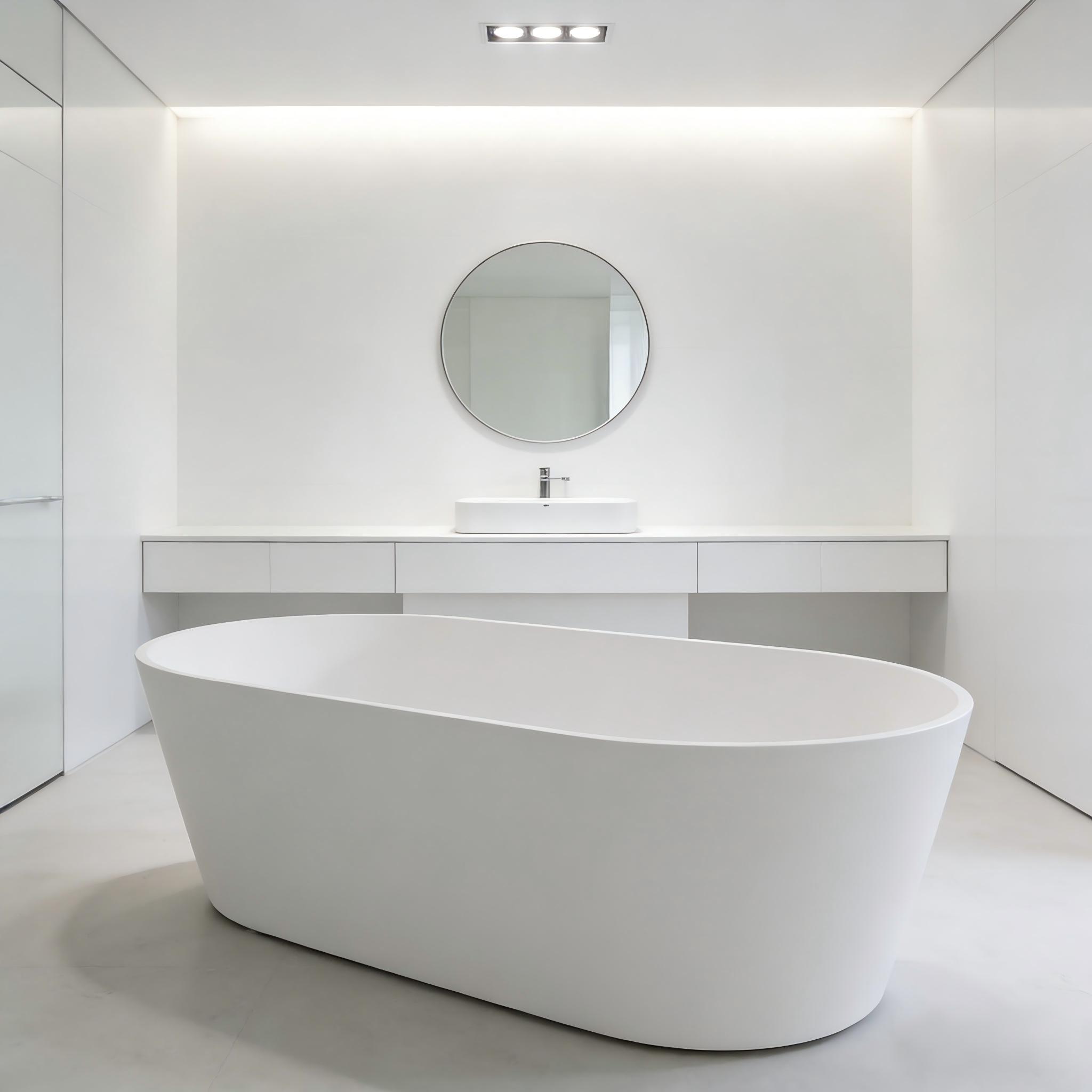
KingKonree (KKR) is a well‑known solid‑surface sanitary ware manufacturer based in Guangdong, with more than 25 years of experience and exports to over 100 countries. Their portfolio covers solid‑surface bathtubs, basins, vanity tops and shower panels, giving buyers a full set of coordinated bathroom items. [kingkonree]
- Established: 2000 (approximate, based on company profile). [kingkonree]
- Core strengths: Mature solid‑surface recipes, wide shape library (80+ bathtub designs), consistent export quality, and strong online catalog. [kingkonree]
- Main markets: USA, Europe, Asia; residential and commercial projects. [kingkonree]
- OEM/ODM: Offers custom shapes, colors (including translucent solid surface) and branding, suitable for brands needing high design diversity. [kingkonree]
Around Foshan—traditionally known for ceramics and sanitary ware—there is a dense cluster of OEM factories making acrylic and stone‑resin bathtubs for foreign brands. These manufacturers are experienced in balancing cost and quality, especially for volume orders going to Europe and North America. [hsysourcing]
- Established: Most factories 10–20 years in operation. [hsysourcing]
- Core strengths: Access to mature ceramics and hardware supply chain, competitive pricing, efficient container consolidation. [hsysourcing]
- Main markets: EU, North America, Middle East. [hsysourcing]
- OEM/ODM: Strong in following buyer drawings, integrating overflows and drains, and matching existing brand collections. [hsysourcing]
Fujian (Xiamen, Quanzhou, Yunfu‑related stone chains) historically focuses on natural stone, but many factories now also cast artificial stone bathtubs that mimic marble. These suppliers are suitable for brands requiring both natural and artificial stone items under one roof. [kcoffeetable]
- Established: Many companies from early 2000s, upgraded from stone fabrication. [kcoffeetable]
- Core strengths: Stone processing know‑how, ability to pair bathtubs with stone vanity tops and tiles, strong packing for heavy items. [kcoffeetable]
- Main markets: Europe, Oceania, high‑end residential projects. [kcoffeetable]
- OEM/ODM: Good at bespoke hotel projects with matching stone concepts for bathrooms. [kcoffeetable]
In Guangzhou and neighboring Zhongshan, several factories specialize in artificial stone freestanding tubs for hotel and multi‑apartment projects. They often appear on B2B platforms offering custom lengths around 1.6–1.8 m with solid‑surface materials. [chinese.alibaba]
- Established: 10–15 years typical. [chinese.alibaba]
- Core strengths: Project‑oriented production, flexible dimensions, standard European‑style modern designs. [chinese.alibaba]
- Main markets: Europe, Eastern Europe, Southeast Asia hospitality projects. [chinese.alibaba]
- OEM/ODM: Able to adjust sizes, integrate faucets and drains, and provide hotel‑oriented packaging. [chinese.alibaba]
In the Yangtze River Delta region (Zhejiang and Shanghai), some factories focus on design‑driven solid‑surface bathtubs and washstands supplying to European design brands via OEM. They are typically more familiar with design files and strict packaging standards required by EU retailers. [kingkonree]
- Established: Around 10–20 years for many players. [kingkonree]
- Core strengths: Design collaboration with overseas studios, stable logistics via Shanghai/Ningbo, and experience with EU retailer audits. [alibaba]
- Main markets: EU, UK and high‑end online retail channels. [kingkonree]
- OEM/ODM: Strong in co‑developing series collections and handling color‑matched accessories. [alibaba]
Some Chinese manufacturers are structured around project business—supplying artificial stone bathtubs for hotels, serviced apartments and multi‑family developments. They may combine acrylic and stone‑resin lines, but invest heavily in engineering teams able to read architectural drawings and coordinate with contractors. [hsysourcing]
- Established: Often built around key accounts in hotel chains. [alibaba]
- Core strengths: Project management, batch customization, schedule control aligned with construction milestones. [hsysourcing]
- Main markets: Global hospitality groups, regional developers. [hsysourcing]
- OEM/ODM: Support for site‑specific drain positions, reinforcement points and installation instructions. [hsysourcing]
On B2B platforms, there are "strength suppliers" dedicated to freestanding artificial stone and stone‑resin tubs, offering catalog models plus limited customization. They are suitable for buyers who need quick orders with existing designs. [chinese.alibaba]
- Established: Typically more than 5 years of export history. [alibaba]
- Core strengths: Ready models, fast quotation, transparent trade terms on the platform. [chinese.alibaba]
- Main markets: Global SME importers and e‑commerce brands. [alibaba]
- OEM/ODM: Mainly logo, color and small size adjustments, with MOQs referenced directly on product pages. [chinese.alibaba]
Some large Chinese sanitary ware companies offer integrated bathroom solutions—bathtubs, basins, vanities, shower walls—based on solid surface or artificial stone. For buyers who want unified color and texture across the bathroom, these suppliers offer a one‑stop shop. [kingkonree]
- Established: 20+ years is common for this category. [kingkonree]
- Core strengths: Full product ecosystem, branding and showroom support, multi‑category QC systems. [kingkonree]
- Main markets: Builders, distributors and franchise showrooms. [kingkonree]
- OEM/ODM: Can support full series development and packaging with unified brand guidelines. [kingkonree]
A smaller but growing segment consists of design studios (often in Europe or Japan) that license designs to Chinese casting factories for production in artificial stone. These partnerships create highly recognizable bathtubs sold as high‑end designer pieces. [kingkonree]
- Established: Design firms 5–15 years; partner factories longer. [kingkonree]
- Core strengths: Unique shapes, storytelling and brand value, while leveraging China‑based production for scale. [kingkonree]
- Main markets: High‑end retail and boutique projects. [kingkonree]
- OEM/ODM: Limited to strategic partners; not open to every buyer. [kingkonree]
Below is a simplified view to help procurement managers shortlist according to their own profile. [seller.alibaba]
| Supplier type (example) | Typical monthly capacity (tubs) | Typical bathtub MOQ (pcs/model) | Common certifications / docs available | Best suited buyers |
|---|---|---|---|---|
| Jiaxing Miluo Smart Home (flexible OEM) (alibaba) | 800–1,500 (configurable) | 5–10 (negotiable) | ISO 9001 (to be verified), material docs (china2west) | Small–mid brands, niche e‑commerce |
| KingKonree‑type solid‑surface brand factory (kingkonree) | 3,000–5,000 | 10–20 | ISO 9001, test reports, MSDS (china2west) | Brands, distributors, project contractors |
| Foshan stone‑resin cluster OEMs (hsysourcing) | 2,000–4,000 | 10–30 | ISO 9001, CE‑related support (china2west) | Volume importers, wholesalers |
| Xiamen/Quanzhou stone factories (kcoffeetable) | 1,000–2,000 | 5–15 | ISO 9001, stone test reports (kcoffeetable) | Project buyers needing stone packages |
| Yangtze Delta design‑oriented makers (alibaba) | 1,500–3,000 | 10–20 | ISO 9001, retailer audit reports (china2west) | EU/UK retail‑oriented buyers |
| Hotel‑project OEMs (alibaba) | 2,000–5,000 | Project‑based (50+ per model) | ISO 9001, project references (china2west) | Hotel & developer projects |
| B2B platform "strength suppliers" (alibaba) | 500–2,000 | 1–5 for stock, 10+ for OEM | Platform‑verified docs, ISO 9001 (alibaba) | New importers, trial orders |
- Request business license and factory address, then cross‑check with company website and B2B platform details. [seller.alibaba]
- Ask for ISO 9001 certificates and check: issue date, expiry date, scope (should mention sanitary ware / bathtubs / solid surface) and certification body. [china2west]
- For CE‑related needs (especially tubs with pumps, heaters or lights), confirm which directives and standards their previous projects complied with. [china2west]
How to check if an ISO certificate is expired (practical):
- Locate the "Valid until" date and certificate number on the PDF. [seller.alibaba]
- Search on the certification body's official website using the certificate number or company name; most serious bodies offer an online verification tool. [seller.alibaba]
- Start with 1–2 standard models: Ask for a standard model first to evaluate basic casting, surface finishing, packaging and installation instructions before committing to custom molds. [alibaba]
- Functional tests: Fill the tub with hot water and measure temperature drop after 20–30 minutes to evaluate heat retention; inspect for crazing or color change after several hot‑cold cycles. [hsysourcing]
- Check repairability: Ask the supplier to provide a repair kit and tutorial for minor scratches; good solid‑surface tubs can be re‑polished on site. [kingkonree]
- Clarify MOQ and price breaks in the proforma invoice and purchase contract; leading sourcing guides emphasize putting MOQ and payment terms clearly in writing. [alibaba]
- Define tolerances (length, width, height, wall thickness), color deviation and acceptable defect rate (e.g., maximum number of small pores allowed per tub). [hsysourcing]
- For custom molds, negotiate who owns the mold and how the cost is amortized across orders.
- For stone‑resin bathtubs, improper packaging is a very common cause of breakage; industry experience shows that standard pallets are often insufficient for heavy tubs. [hsysourcing]
- Require reinforced wooden crates, corner protection, foam supports and drop tests for packaging samples. [hsysourcing]
- Discuss loading plans: number of tubs per 20' or 40' container, stacking method and whether mixed loading with other bathroom products is acceptable. [alibaba]
- Material downgrading
Some low‑end suppliers reduce ATH content or use cheaper fillers, leading to heavier yet more brittle tubs and increased risk of cracking during transport or installation. [hsysourcing]
Mitigation: Ask for density and composition data, and request consistent batch samples over time rather than only one "golden sample". [hsysourcing]
- Over‑polishing and thin walls
Excessive grinding of the inner surface to hide defects can reduce wall thickness, increasing the risk of cracks; this often happens when QC is weak. [hsysourcing]
Mitigation: Request wall‑thickness measurements at several points and specify minimums in drawings.
- Under‑engineered packaging
Trying to save on packaging by using standard thin pallets is a frequent cause of hidden damage, especially for thicker stone‑resin tubs. [hsysourcing]
Mitigation: Treat packaging as part of the product design; approve a packaging specification and require photos of loading for each shipment. [hsysourcing]
One practical guideline used by experienced buyers is to always compare the ratio of polishing time to casting capacity when auditing an artificial stone bathtub factory. If a factory claims very high daily output but has only a few polishing stations and a small polishing team, it often means they are either outsourcing finishing (less control) or rushing the process, which typically results in inconsistent gloss, visible sanding marks and higher complaint rates. Asking detailed questions about how they plan daily casting vs. polishing schedules is a straightforward way to test whether their stated capacity is realistic. [hsysourcing]
China will remain a key base for artificial stone and stone‑resin bathtub manufacturing in the coming decade, thanks to mature clusters, improving quality systems and growing design capabilities. For overseas brands and distributors, the priority is no longer finding any supplier, but selecting the right‑fit partner whose capacity, QC, certification level and communication style align with your market positioning and growth plans. [archivemarketresearch]
Large integrated manufacturers and cluster OEMs are well‑suited for high‑volume programs, while flexible factories like Jiaxing Miluo Smart Home Co., Ltd. provide strong value for small to mid‑sized brands that need deep OEM/ODM collaboration and responsive engineering support. If you are planning your next bathtub line or looking to optimize your supplier structure for 2026 and beyond, a practical next step is to shortlist 3–5 manufacturers from the categories above, request technical data and sample plans, and then run structured trials before final selection. [china2west]

1. How can I verify whether a Chinese factory's ISO 9001 certificate is current and authentic?
- Ask for the full‑page certificate PDF, note the certificate number, issue date, expiry date and certifying body. [china2west]
- Go to the certifying body's official website and use their verification page to search by number or company name; if there is no record or the status is "suspended/expired," treat this as a red flag. [seller.alibaba]
2. What sampling plan should I use before committing to a custom mold?
- Start with 2–3 pieces of an existing model using the same material system; test surface quality, heat retention, repairability and packaging. [alibaba]
- Only after internal approval should you move on to custom design, where you request 1–2 first‑article samples from the new mold, with detailed dimensional and visual inspections. [alibaba]
3. How do I balance cost and risk between acrylic and artificial stone bathtubs for my brand?
- Industry guides point out that while acrylic tubs are lighter and cheaper, stone‑resin tubs provide a more premium feel, better heat retention and longer service life, which better supports mid‑ to high‑end positioning. [hsysourcing]
- Many brands use a mixed portfolio: acrylic for entry products and artificial stone for flagship SKUs; discuss this openly with your OEM to design a tiered product strategy. [kingkonree]
4. How can I ensure consistent color and finish between tubs and matching basins or vanities?
- Require the supplier to use the same batch of solid‑surface sheets or casting recipes for all items in a set, and define color tolerance (e.g., △E values) when possible. [kingkonree]
- Approve a master color sample (chip or small slab) and ask the factory to refer back to it for each production batch. [kingkonree]
5. What is the most effective way to control damage during sea freight?
- Based on sourcing case studies, the most impactful steps are: reinforced wooden crates, anti‑vibration fillers, clear stacking instructions, and visual loading records. [hsysourcing]
- Some buyers also require third‑party pre‑shipment inspection focusing specifically on packaging, including drop tests on as‑packed crates. [hsysourcing]


