
Views: 269 Author: Miluo Smart Home Publish Time: 2026-09-18 Origin: Site


Content Menu
● A Brief Timeline of Bathtub History
● Ancient Baths: Where the Bathtub Story Began
>> Early Civilizations Treated Bathing as Essential
>> Roman Bathhouses Changed the Meaning of Bathing
● From Portable Tubs to Private Bathrooms
>> Bathing at Home Was Once Difficult
>> The Industrial Era Made Bathtubs More Accessible
● How Modern Bathtub Materials Transformed Design
● Why Freestanding Bathtubs Became a Modern Icon
>> What Buyers Look for in Freestanding Tubs
● Choosing the Right Bathtub for Different Projects
>> For Residential Bathroom Brands
>> For Developers and Contractors
● A Practical Bathtub Sourcing Checklist
● The Future of Luxury Bathtub Design
● Build Your Bathtub Collection With Miluo
● FAQ
>> 1. Who invented the modern bathtub?
>> 2. What is the oldest known bathtub?
>> 3. Why are freestanding bathtubs popular?
>> 4. Which bathtub material is best for a luxury bathroom?
>> 5. What should wholesalers check before ordering bathtubs?
>> 6. Can a bathtub manufacturer provide OEM and ODM services?
>> 7. Are deep soaking tubs suitable for small bathrooms?
The history of the bathtub is the story of how bathing evolved from a shared ritual into one of the most personal experiences in the home. From early water basins and Roman bathhouses to today's freestanding soaking tubs, the bathtub has continually reflected changing ideas about hygiene, engineering, comfort, and luxury.
For bathroom brands, wholesalers, developers, and hospitality projects, a modern bathtub is no longer simply a sanitary fixture. It is a visual centerpiece, a wellness feature, and an important part of the overall bathroom experience. As demand grows for customized luxury bathrooms, freestanding bathtubs, deep soaking tubs, solid-surface designs, and tailored OEM and ODM solutions are becoming increasingly important to global buyers.

The bathtub did not appear through one single invention. It developed over thousands of years as civilizations improved their access to water, drainage, heating, materials, and private living spaces.
| Period | Bathtub Development | Why It Matters Today |
|---|---|---|
| Around 2500 BCE | Large watertight bathing structures appeared in the Indus Valley | Shows the early connection between bathing, hygiene, and urban planning |
| Around 1500 BCE | Personal bathing vessels and plumbing systems appeared in Minoan palaces | Demonstrates the origin of private bathing spaces |
| Ancient Greece and Rome | Communal bathhouses became social and architectural centers | Introduced heating, drainage, and organized bathing culture |
| 18th Century | Metal-lined wooden tubs became popular among wealthy European households | Marked the transition toward portable household bathing |
| 19th Century | Cast iron, enamel, and indoor plumbing reshaped bathtub manufacturing | Made durable, fixed bathtubs more practical for homes |
| 20th Century | Steel, fiberglass, acrylic, and whirlpool technologies expanded product options | Improved affordability, installation flexibility, and consumer choice |
| Today | Freestanding, solid-surface, smart, and customized tubs lead luxury bathroom design | Combines wellness, aesthetics, engineering, and customization |
This journey explains why the bathtub still holds such a powerful position in bathroom design. It combines practical function with the emotional appeal of rest, privacy, and personal wellbeing.
Some of the earliest known bathing structures were built in the ancient Indus Valley. The Great Bath of Mohenjo-daro, dating to approximately 2500 BCE, was a large brick-lined and waterproofed pool. Its sophisticated construction suggests that bathing was already linked with social customs, cleanliness, and organized urban life.
Although it was not a bathtub in the modern residential sense, it established an important principle: water spaces could be deliberately designed for human wellbeing.
Later, the Minoan civilization on Crete developed more recognizable private bathing environments. Archaeological evidence from the Palace of Knossos includes plumbing systems, clay piping, and an alabaster bathing vessel. These innovations are particularly significant because they brought bathing closer to the private indoor environment that homeowners expect today.
The Roman Empire made bathing part of daily public life. Roman bathhouses, known as *thermae*, were much more than places to wash. They were community spaces where people exercised, socialized, relaxed, discussed business, and participated in civic life.
A typical Roman bath complex could include:
- Cold-water pools.
- Warm bathing rooms.
- Hot-water pools.
- Steam rooms.
- Changing rooms.
- Exercise areas.
- Heated floors and water systems.
Roman engineers used aqueducts to transport water and developed the hypocaust, an underfloor heating system that warmed rooms and pools. These systems were remarkably advanced for their era and influenced later ideas about heated bathrooms, spa facilities, and hydrotherapy products.
The key lesson from Roman bathing culture remains relevant: a bathroom can be both functional and experiential. Modern luxury bathroom projects continue to use this principle by combining bathing fixtures with lighting, natural textures, ergonomic forms, and spa-inspired layouts. Roman bathing culture made hygiene a public ritual and elevated water into an architectural experience.
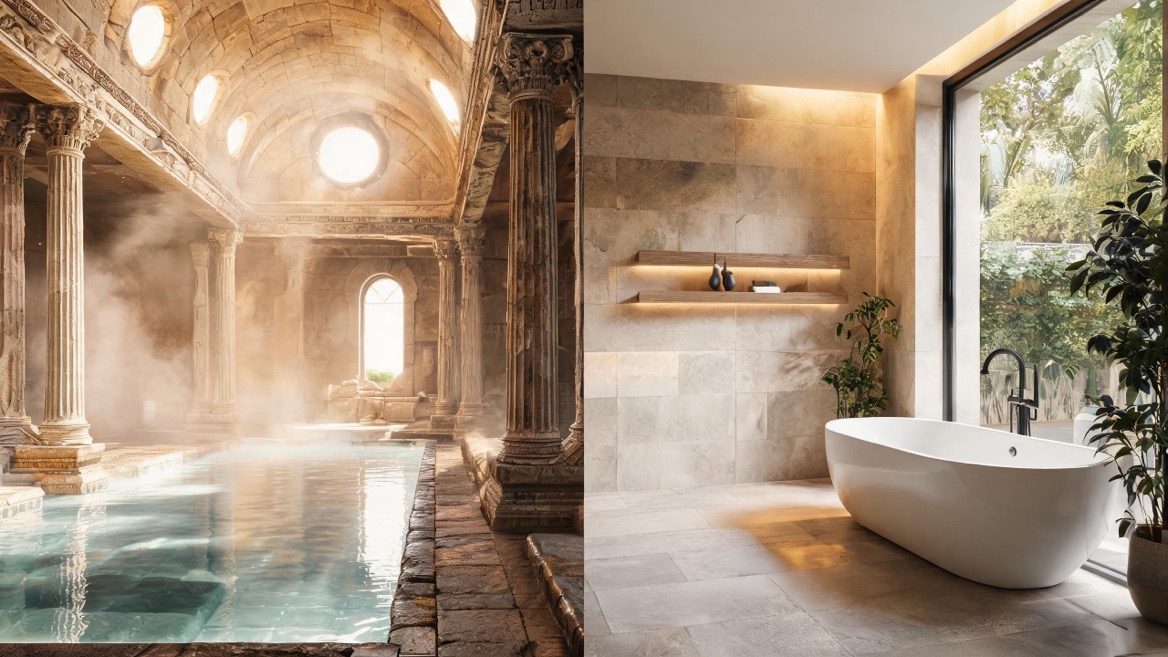
For much of European history, private bathing was inconvenient. Water had to be heated manually, carried into a room, and emptied after use. Wealthier households often used wooden tubs lined with metal such as copper or tin. These units were portable and could be placed in bedrooms or service areas rather than permanent bathrooms.
A bathtub at this stage was a luxury object, not a standard household fixture.
The limitations were clear:
- Water heating required significant labor.
- Drainage systems were often limited or nonexistent.
- Wooden tubs could leak, warp, or retain odors.
- Cleaning and maintaining the tub was difficult.
- Large tubs were not easy to move or store.
As cities modernized, indoor plumbing gradually changed the entire bathing experience. Running water, drainage pipes, improved sanitation standards, and more reliable hot-water systems made fixed bathtubs realistic for a growing number of homes.
The 19th century was a defining period for bathtub manufacturing. Cast iron became a preferred material because it was strong, durable, and suitable for mass production. When manufacturers improved porcelain-enamel coatings, bathtubs became easier to clean and more resistant to water damage.
One frequently cited milestone came in the 1880s, when John Michael Kohler adapted an enameled cast-iron horse trough by adding decorative feet. This early clawfoot-style product helped establish the bathtub as a recognizable household fixture rather than a temporary container for bathing.
The success of enameled cast-iron tubs was based on a simple combination:
1. Durability from a strong metal body.
2. Cleanability from a smooth enamel surface.
3. Visual appeal through decorative forms and finished surfaces.
4. Compatibility with permanent plumbing systems.
These same priorities remain central for modern buyers. Whether a project uses acrylic, solid surface, cast iron, or engineered composite materials, buyers still evaluate durability, comfort, surface quality, cleaning requirements, and long-term appearance.
The 20th century introduced manufacturing materials that made bathtub design more flexible. Heavy cast-iron tubs remained desirable, but lightweight alternatives opened new opportunities for residential construction, renovation, and large-scale project supply.
Enameled steel tubs are lighter than cast iron and can offer a clean, glossy appearance. They are often selected for practical residential applications where cost, weight, and ease of handling are important.
However, steel can feel cooler to the touch and may not retain water heat as effectively as heavier materials. Surface quality and enamel thickness are therefore important considerations during product selection.
Fiberglass introduced lower-cost and lightweight bathtub options. It allowed manufacturers to create molded forms more efficiently, supporting broader access to home bathing products.
Its limitations can include reduced rigidity, possible surface wear over time, and lower perceived luxury in premium markets. For value-driven housing projects, fiberglass can still serve a purpose, but it is less common in high-end bathroom collections.
Acrylic became one of the most widely used bathtub materials because it supports diverse shapes while remaining relatively lightweight. It is especially suitable for contemporary freestanding tubs, alcove tubs, corner tubs, and customized designs.
A well-made acrylic bathtub can offer:
- A warm, smooth bathing surface.
- Strong design flexibility.
- Easier installation than heavy cast iron.
- Good compatibility with reinforced structures.
- A broad range of colors, shapes, and sizes.
For global brands and wholesalers, acrylic also provides strong OEM and ODM potential because molds, colors, overflow systems, drain placements, accessories, and packaging can be adapted to market requirements.
Solid-surface bathtubs have become increasingly important in premium bathroom projects. These products often use mineral-based composite materials to create a smooth, matte, stone-like finish.
Their appeal lies in their ability to deliver a modern luxury appearance while allowing sculptural forms, deep soaking profiles, and seamless visual integration. Solid-surface materials can also support repairable surfaces and refined tactile quality when manufactured to a high standard.
For boutique hotels, luxury apartments, villas, and high-end retail bathroom collections, a solid-surface freestanding bathtub can create a stronger design statement than a conventional built-in unit.
The freestanding bathtub has become one of the most recognizable symbols of a luxury bathroom. Unlike a built-in bathtub, it does not need to be enclosed by tiled walls, a deck, or a surround. This creates a more sculptural and furniture-like visual effect.
Market research indicates that the global bathtub market was valued at approximately USD 9.89 billion in 2023 and is projected to grow at a 4.1% compound annual rate through 2030. Freestanding bathtub demand is forecast to grow faster than the broader market, supported by growing interest in home aesthetics, wellness-oriented spaces, and premium interior design.
A successful freestanding bathtub must perform well beyond its appearance. Experienced buyers evaluate the full product experience.
| Buyer Priority | What It Means in Product Development |
|---|---|
| Comfort | Ergonomic backrests, appropriate soaking depth, smooth internal curves, and sufficient shoulder room |
| Stability | A level base, controlled weight distribution, and tested floor-contact design |
| Material quality | Consistent wall thickness, durable surface finish, and reliable structural reinforcement |
| Drainage | Correct drain positioning, tested overflow systems, and compatibility with local plumbing requirements |
| Easy cleaning | Smooth non-porous surfaces and minimal areas where water or dirt can collect |
| Design identity | Distinctive silhouettes, colors, textures, and finishes for market differentiation |
| Packaging safety | Protective internal supports, export-grade cartons, and damage-reduction measures during shipping |
The best bathtub designs balance visual simplicity with technical detail. A tub may look minimal, but its comfort angle, bottom support, overflow position, drain compatibility, and packaging design require careful engineering.
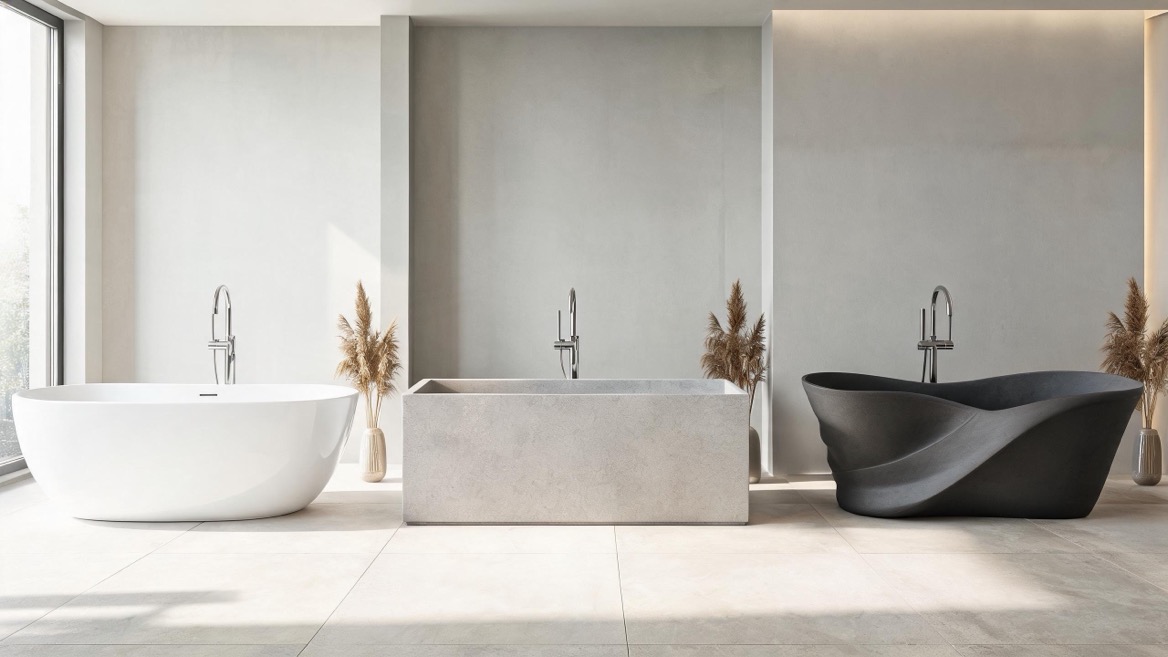
Not every bathtub is suitable for every market or application. Product selection should begin with the buyer's customer profile, bathroom size, price segment, installation method, and local technical requirements.
Residential brands often need a collection that covers several price levels. A practical assortment may include an entry-level acrylic tub, a mid-range reinforced freestanding tub, and a premium solid-surface bathtub.
This approach allows the brand to serve different consumer groups without losing a consistent design language.
Hospitality projects prioritize visual impact, repeatable quality, easy maintenance, and reliable supply schedules. Bathtubs may need to be ordered in large quantities and installed across multiple rooms.
For these projects, buyers should confirm:
- Product dimensions and bathroom layout compatibility.
- Material consistency across all units.
- Surface resistance to frequent cleaning.
- Drainage and overflow compatibility.
- Replacement-part availability.
- Export packaging performance.
- Production lead time and quality-control procedures.
A deep soaking freestanding bathtub can help a hotel create a memorable guest experience, especially in suites, wellness rooms, beachfront resorts, and boutique properties.
Developers usually focus on space efficiency, installation consistency, cost control, and long-term performance. A product that looks attractive but creates installation difficulties can increase project risk.
For volume projects, it is useful to request technical drawings, drainage specifications, material samples, load information, packaging dimensions, and pre-shipment inspection standards before finalizing the order.
When sourcing bathtubs from a manufacturer, do not evaluate products only by catalog images. A high-quality supplier should provide a clear process from product development to shipment.
Use this checklist before placing an OEM or ODM order:
1. Define the target customer, price level, and desired bathroom style.
2. Confirm the bathtub type: freestanding, alcove, drop-in, corner, soaking, whirlpool, or walk-in.
3. Select the material based on positioning, weight limits, durability needs, and budget.
4. Review detailed dimensions, including length, width, height, soaking depth, and internal bathing space.
5. Confirm drainage direction, overflow design, drain kit requirements, and local plumbing compatibility.
6. Request material samples or finish samples before bulk production.
7. Discuss logo placement, carton artwork, labels, manuals, accessories, and retail packaging.
8. Confirm quality-control standards, inspection procedures, and acceptable defect criteria.
9. Review export packaging, container loading plans, and replacement-part support.
10. Approve a pre-production sample before mass manufacturing.
For international buyers, the best sourcing outcome is not simply a low unit price. It is a bathtub collection that fits the market, protects the brand reputation, arrives safely, and creates repeat purchase potential.
Today's bathtub market is moving toward greater personalization. Buyers increasingly want products that fit their own brand identity, interior style, customer expectations, and project requirements.
Several design directions are shaping the next generation of bathtubs:
- Soft organic forms with rounded edges and comfortable interior contours.
- Deep soaking designs that support a more immersive bathing experience.
- Matte mineral finishes that resemble stone while retaining a refined modern appearance.
- Neutral colors such as white, cream, sand, gray, black, and warm natural tones.
- Compact luxury tubs for apartments and smaller urban bathrooms.
- Integrated wellness features including air systems, hydrotherapy functions, chromotherapy, and temperature control.
- Custom OEM and ODM collections designed around a brand's own aesthetic and regional requirements.
The bathtub is increasingly becoming the focal point of the bathroom rather than a secondary fixture. This shift is especially visible in premium residential interiors, hospitality design, and renovation projects where homeowners seek a retreat-like environment.
A well-designed bathtub can elevate an entire bathroom collection. It can create a stronger retail story, add value to a hospitality project, and help a bathroom brand stand out in a competitive market.
Jiaxing Miluo Smart Home Co., Ltd. provides customized modern bathroom products and integrated solutions for overseas brands, wholesalers, manufacturers, developers, and project buyers. From freestanding bathtubs and soaking tubs to customized finishes, dimensions, packaging, branding, and product-development support, Miluo can help turn a product concept into a market-ready bathroom collection.
If you are developing a private-label bathtub range or sourcing customized bathroom products for your next project, contact Miluo to discuss your OEM and ODM requirements, target market, preferred materials, and design direction.
The modern bathtub was not invented by one person. It developed gradually through advances in plumbing, sanitation, casting, and surface finishing. However, John Michael Kohler is often associated with an important late-19th-century milestone after adapting an enameled cast-iron horse trough into a bathtub with feet.
One early recognizable personal bathtub was found at the Palace of Knossos in Crete and dates to around 1500 BCE. The Great Bath of Mohenjo-daro is even older, dating to approximately 2500 BCE, although it was a large communal bathing structure rather than a private household tub.
Freestanding bathtubs are popular because they create a strong visual focal point, offer flexible placement options, and suit modern luxury interiors. Their sculptural shape can make a bathroom feel more spacious, refined, and spa-like.
The best material depends on the intended price level, design style, installation requirements, and customer expectations. Acrylic is flexible and lightweight, while solid-surface materials are often preferred for premium matte finishes and sculptural forms. Cast iron remains valued for its durability and heat retention.
Wholesalers should evaluate product dimensions, material quality, wall thickness, drainage compatibility, surface finish, packaging, branding options, quality-control procedures, production lead times, and after-sales support. A confirmed sample should be approved before bulk production.
Yes. An experienced bathtub manufacturer can support OEM and ODM projects by customizing dimensions, shapes, colors, surface finishes, drainage systems, accessories, logos, packaging, instructions, and private-label product collections.
Yes, if the product is designed efficiently. Compact soaking tubs can provide a deep bathing experience while using less floor length than a conventional long bathtub. Buyers should carefully review the external dimensions, internal space, installation clearance, and user comfort.
1. [Aquatica USA — A Brief History on the Invention and Rise of the Bathtub]
2. [World History Encyclopedia — Timeline: Roman Baths]
3. [NY Tubs — History of the Bathtub: From Ancient Baths to Modern Tubs]
4. [Badeloft — The History of the Bathtub: From Then to Now]
5. [Housing Design Matters — The Bathtub Enjoys Another Resurgence]
6. [Grand View Research — Bathtub Market Size, Share & Growth Report, 2024–2030]
7. [Market Research Future — Bathtub Market Size, Share, Growth, Trends Analysis]
8. [Business Research Insights — Freestanding Bathtub Market Size, Share & Growth]


