
Views: 217 Author: Miluo Smart Home Publish Time: 2026-07-04 Origin: Site


Content Menu
● Understanding Solid Surface Tubs
● Why Structure Matters More in High-rise Apartments
● Comparing the Two Core Dimensions: Solid Surface Tubs vs High-rise Structural Requirements
● Load-bearing and Floor Slab Design for Solid Surface Tubs
>> Practical Structural Strategies
● Vibration, Deflection, and Crack Control
● Plumbing Risers, Drainage, and Waterproofing Alignment
>> Waterproofing and Leak Risk
● Fire, Acoustic, and Code Compliance Considerations
>> Fire and Material Performance
● Design Flexibility vs Structural Constraints in High-rise Apartments
● Practical Step-by-step Checklist for High-rise Solid Surface Tub Installations
● OEM/ODM Opportunities for High-rise Projects
● Case-style Insight: High-rise Retrofit vs New-build Installations
● User Experience Benefits of Solid Surface Tubs in High-rise Apartments
● How a Specialized Solid Surface Manufacturer Supports High-rise Projects
● Call to Action: Align Your Solid Surface Tub Design with High-rise Structure
● FAQs
Installing a solid surface bathtub in a high-rise apartment is not just an aesthetic decision; it is a structural and compliance project that needs coordination between designers, contractors, and manufacturers. From a solid surface tub OEM/ODM supplier perspective, understanding how building structure, weight, plumbing, and code requirements interact will determine whether your installation is safe, durable, and profitable for multi-unit projects. [china-miluo]
Solid surface tubs are made from a blend of resin and mineral/stone powder, cast into durable, non-porous shells that can be seamlessly finished. As a manufacturer, we see three key characteristics relevant to high-rise projects: [china-miluo]
- High density and weight compared with acrylic or thin steel tubs, which directly affects structural load.
- Excellent thermal and acoustic performance, retaining heat and absorbing sound better than many traditional options. [china-miluo]
- Customizable shapes, sizes, and colors, especially in OEM/ODM projects for global brands and developers. [china-miluo]
For high-rise apartments, these properties mean that solid surface tubs can enhance perceived luxury while increasing the structural engineering demands compared with lighter bathtub options.
From a building engineering and project management perspective, high-rise apartments operate at much tighter structural margins than low-rise homes. Floor slabs, beams, and partitions are designed to specific live and dead load limits that must not be exceeded for safety and long-term performance.
Key structural considerations in high-rise buildings include:
- Floor load capacity: Most residential slabs are designed with standard load assumptions (for example, around 2–3 kN/m² in many markets), and a heavy tub plus water and occupant can consume a large portion of this allowance.
- Vibration and deflection control: Excessive deflection can cause cracks in tiles, doors to misalign, and leakage in waterproofing systems.
- Service coordination: Plumbing risers, drainage stacks, and mechanical shafts are highly centralized and often hard to modify post-construction.
For high-rise projects, every solid surface tub installation must be treated as an engineering item, not just a piece of sanitary ware.
A practical way to understand the title's two keywords is to directly compare solid surface tubs and high-rise apartment structure across critical dimensions.
| Dimension | Solid Surface Tub Characteristics | High-rise Structural Requirements |
|---|---|---|
| Weight & Density | Heavy, dense resin stone body with high mass per unit area (china-miluo) | Limited slab capacity, strict live/dead load ratios |
| Installation Flexibility | Freestanding, built-in, or recessed options (china-miluo) | Layout constrained by beams, columns, risers and shafts |
| Vibration & Deflection | Performs best on rigid, low‑deflection floors | Floors must limit deflection to protect finishes and waterproofing |
| Plumbing & Drainage | Center or end drain, overflow height fixed by design (jxmiluo.en.made-in-china) | Stack locations fixed, slopes tightly controlled, often limited floor buildup |
| Acoustics & Comfort | Naturally dampens noise and retains heat (china-miluo) | Building codes may require noise control between units |
| Maintenance & Access | Long lifespan, low porosity, easy to clean (china-miluo) | Access panels and maintenance routes required by code |
This comparison highlights a core truth: the heavier and more premium the bathtub, the more critical the structural and service planning in a high-rise environment becomes.
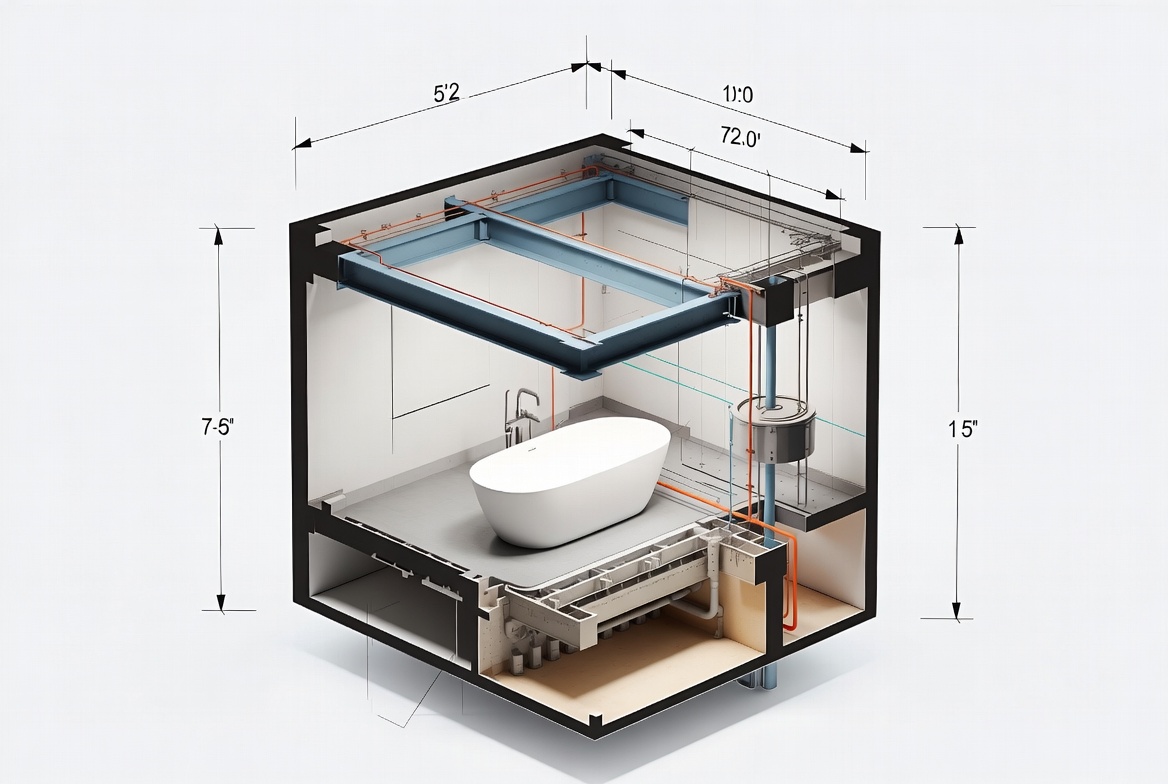
From both an OEM/ODM manufacturer and structural engineer standpoint, load calculation is the first step when preparing to install a solid surface tub in a high-rise apartment.
When placing a tub, consider the combined load of:
1. Tub weight (solid surface shell, typically significantly heavier than acrylic). [china-miluo]
2. Water volume (often 200–300 liters or more for deep soaking models). [china-miluo]
3. Occupant(s) (one or two people, depending on tub size and use case).
4. Supporting materials (subfloor, mortar bed, tiles, metal frames).
For a high-rise slab, this combined load is often concentrated in a relatively small area, which can cause local overstress if not verified by a structural engineer.
To align solid surface tub loads with high-rise slab capacity:
- Position tubs over beams or load‑bearing walls whenever possible to distribute weight safely.
- Use load‑spreading bases or frames, engineered to distribute point loads from tub feet across a larger area.
- Maintain compliance with local structural codes and ensure the design engineer signs off on weight and placement.
From our manufacturing projects, we see that early communication between the developer, architect, and tub supplier is the most effective way to prevent late-stage structural conflicts. [jxmiluo.en.made-in-china]
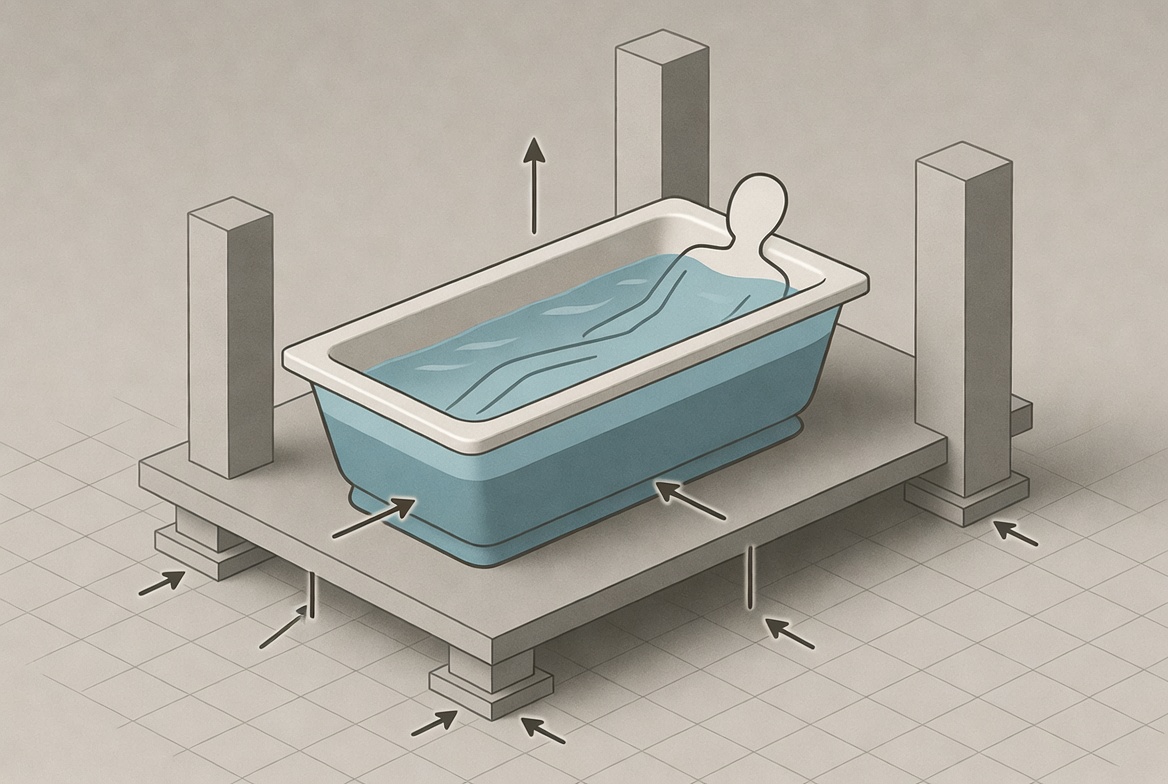
Solid surface tubs are relatively rigid; they perform best when supported by a stable, low-deflection floor. Excessive floor movement can lead to issues such as:
- Hairline cracks in the tub finish if support is uneven.
- Cracking of surrounding tile and grout.
- Micro-gaps in sealant joints, leading to water ingress.
In high-rise apartments, engineers specify maximum deflection limits (for example, span/360 or stricter), and installing a heavy tub over a flexible span can violate functional performance criteria even if basic strength limits are met.
Best practices include:
- Testing floor stiffness in the design phase, adjusting reinforcement if needed.
- Using adjustable leveling feet or mortared bases to ensure full, even support under the tub shell. [jxmiluo.en.made-in-china]
- Coordinating with contractors so that no voids remain under critical load points.
Installing a solid surface tub in a high-rise apartment also means integrating seamlessly with vertical plumbing systems.
- High-rise drainage stacks usually have fixed positions and limited horizontal offset allowance.
- Solid surface tubs may come with fixed center or end drain positions, which must align with or be connected to these stacks without excessive offsets. [jxmiluo.en.made-in-china]
- Minimum slope requirements for drainage pipes often conflict with limited floor build-up, especially for recessed or sunken tub designs.
High-rise buildings are extremely sensitive to leaks because water can penetrate to lower floors, causing costly claims and reputational damage for both developers and brands.
To mitigate risk:
- Ensure full waterproofing membranes under and around the tub area, with upturned edges.
- Seal junctions with flexible sealants and ensure all penetrations (drains, overflows) are properly detailed.
- Conduct a water test before handover to detect potential leaks early.
From a manufacturer's viewpoint, providing clear installation manuals, 3D drawings, and section details is critical to help contractors integrate tubs with building membranes and drainage designs.
High-rise apartments are governed by stricter building codes, including fire safety, noise control, and health regulations.
While solid surface materials are not structural, they must often meet flammability and smoke emission standards for bathroom fixtures. In some jurisdictions, bathroom assemblies (including tubs, ceilings, and walls) must be part of a rated compartment. [china-miluo]
Many high-rise codes or developer standards demand noise control between apartments. A solid surface tub has good intrinsic mass and damping, which can reduce structure-borne noise compared with thin metal options. However: [china-miluo]
- Tub framing and pipe supports must be isolated from the main structure.
- Filling and draining noise must be controlled via pipe insulation and proper air admittance planning.
When we support OEM/ODM clients, we often provide acoustic performance data and recommendations so they can showcase compliance in their marketing materials and project specifications. [china-miluo]
One of the biggest tensions in high-rise bathroom design is the balance between architectural freedom and structural constraints.
From a design and user-experience perspective, clients want:
- Freestanding solid surface tubs centered in the room for a luxury feel. [china-miluo]
- Large, deep soaking tubs that deliver a spa-like experience.
- Integrated vanities, basins, and mirrors that align with overall bathroom aesthetics. [china-miluo]
But from a structural and MEP standpoint:
- Central placement may be directly above a weak slab area rather than a beam.
- Deep soaking tubs require increased water volume, increasing load and drain requirements.
- Freestanding installations make it harder to conceal structural supports and service lines.
The most successful high-rise bathroom projects treat solid surface tubs as part of a co-created solution between architect, structural engineer, and manufacturer, not a plug-and-play item.
From our OEM/ODM project experience with developers and brand owners, the following practical checklist helps reduce risk and rework:
1. Concept Stage
- Confirm target tub type, size, and capacity (volume and weight). [china-miluo]
- Identify high-rise structural constraints such as beam grids and slab thickness.
- Align early with developer standards and local building codes.
2. Design Development Stage
- Obtain technical drawings and data sheets from the tub manufacturer (including weight, load distribution, drain position).
- Coordinate with structural engineer to position tubs over stronger structural zones.
- Integrate plumbing riser locations and confirm feasible drain connection paths.
3. Construction Stage
- Prepare subfloor supports, ensuring full, level support under the tub.
- Install drainage and overflow components exactly as per manufacturer guidelines.
- Apply and test waterproofing systems before final finishes.
4. Commissioning and Handover
- Perform a full-fill and drain test to check for leaks and structural movement.
- Verify sound, vibration, and deflection performance meet project requirements.
- Provide maintenance and usage guides to building management and end users.
This workflow improves both installation safety and long-term user satisfaction, especially in projects where luxury solid surface tubs are used as a key differentiator.
For brand owners, wholesalers, and project-based customers, solid surface tubs in high-rise buildings create several OEM/ODM opportunities: [jxmiluo.en.made-in-china]
- Weight-optimized designs: Adjusting wall thickness, internal ribbing, and base design to reduce weight without compromising strength.
- Drain position customization: Aligning drain outlets with typical high-rise riser layouts to minimize on-site adjustments.
- Integrated systems: Bundling tubs with matching basins, vanities, and mirrors to create full bathroom packages tailored for high-rise developers. [china-miluo]
- Documentation and training: Providing installation videos, BIM files, and design guides so architects and contractors integrate products correctly.
Working with an experienced manufacturer that specializes in solid surface and resin stone bathtubs helps project owners balance high-rise structural requirements with marketing goals and end-user experience. [china-miluo]

In our project observation, there is a significant difference between:
- New-build high-rise apartments, where structural and plumbing designs can accommodate solid surface tubs from the start.
- Retrofit or renovation projects, where existing slabs and risers impose strict limits.
In new-build projects, engineers can:
- Design slabs locally for higher point loads at bathroom locations.
- Place additional reinforcement and adjust beam layouts beneath heavy tubs.
- Coordinate risers and shafts around the planned tub position.
In retrofit scenarios, however, options may be limited to:
- Smaller or lighter tubs for existing slabs.
- Reinforcing subfloors with local steel framing where feasible.
- Using shallow, compact solid surface tubs that still deliver a premium feel while staying within structural limits. [china-miluo]
For both types, collaborating with a flexible OEM/ODM partner enables project teams to customize tub geometry and specifications to suit real-world constraints instead of forcing generic products into complex high-rise environments. [china-miluo]
From a user's perspective, the structural work behind the scenes translates into tangible comfort and UX benefits:
- Better heat retention, allowing longer soaks without constant hot water top-ups. [china-miluo]
- Smooth, non-porous surfaces that are comfortable to the touch and easy to clean. [china-miluo]
- Low noise levels during filling and bathing, especially when combined with proper acoustic detailing. [china-miluo]
In high-rise apartments, where space and privacy are at a premium, a well-installed solid surface tub becomes a strong selling point for developers and a key differentiator for brands targeting mid-to-high-end customers.
A manufacturer focused on solid surface bathtubs, basins, and bathroom solutions can add value far beyond simply supplying products. [jxmiluo.en.made-in-china]
Key supports often include:
- Technical consultation: Helping architects and contractors interpret structural constraints and choose appropriate tub models.
- Customized OEM/ODM development: Adjusting tub shapes, sizes, overflow positions, and bases for specific high-rise projects. [china-miluo]
- Quality control and testing: Ensuring each tub meets agreed strength, durability, and finishing standards.
For international buyers such as brands, wholesalers, and project developers, partnering with a supplier that has decades of bathroom product manufacturing experience reduces both technical risk and downstream after-sales issues. [china-miluo]
If you are planning a high-rise residential project, or you are a bathroom brand, wholesaler, or contractor serving these projects, aligning solid surface tub selection with structural and plumbing requirements is essential to protect your investment and reputation.
By partnering early with an experienced solid surface bathtub OEM/ODM manufacturer, you can:
- Optimize tub design for weight, performance, and aesthetics.
- Ensure installation details align with high-rise structural constraints.
- Deliver a premium bathing experience that supports your brand positioning in competitive apartment markets. [jxmiluo.en.made-in-china]
1. Are solid surface tubs too heavy for high-rise apartments?
Solid surface tubs are heavier than acrylic options, but with proper load calculation and structural coordination, they can be safely installed in high-rise apartments. [china-miluo]
2. How do I know if the floor slab can support a solid surface tub?
A structural engineer should verify slab capacity based on tub weight, water volume, and occupant load, and may recommend locating the tub above beams or adding local reinforcement.
3. Can solid surface tubs be customized for specific high-rise projects?
Yes. OEM/ODM manufacturers can adjust tub dimensions, drain positions, and base designs to match typical high-rise plumbing and structural layouts. [china-miluo]
4. What is the main structural risk when installing a solid surface tub in a high-rise building?
The primary risks are local slab overstress, excessive deflection, and water leakage into lower floors if waterproofing and support are not correctly detailed.
5. What documentation should I request from a tub manufacturer for high-rise projects?
Request detailed technical data sheets, installation guides, weight and load information, and, if possible, BIM or CAD files to coordinate with architectural and structural designs. [china-miluo]
1. Miluo Bath – Official Website. *Customized Bathtub, Wash Basin, Bathroom Solutions*. Available at: https://www.china-miluo.com [china-miluo]
2. Miluo Bath – *Wholesale Solid Surface Bathtub Manufacturer & Supplier*. Available at: https://www.china-miluo.com/solid-surface-bathtub.html [china-miluo]
3. Miluo Bath – *Solid Surface Soaking Tub*. Available at: https://www.china-miluo.com/solid-surface-soaking-tub.html [china-miluo]
4. Miluo Bath – *High End Bathtub OEM ODM For Architects And Brands*. Available at: https://www.china-miluo.com/high-end-bathtub-oem-odm-for-architects-and-brands.html [china-miluo]
5. Jiaxing Miluo Smart Home Co., Ltd. – Company Profile (Made-in-China). Available at: https://jxmiluo.en.made-in-china.com [jxmiluo.en.made-in-china]


