
Views: 219 Author: Miluo Smart Home Publish Time: 2026-10-23 Origin: Site


Content Menu
● What Are Cultured Marble Shower Surrounds?
● Why Choose Cultured Marble Shower Wall Panels?
>> Fewer Grout Lines and Simpler Cleaning
>> A Coordinated Modern Bathroom Appearance
>> Customization With Clear Boundaries
● Cultured Marble vs. Tile and Natural Marble
● Three Performance Claims Buyers Should Question
>> "Nonporous Means the Shower Cannot Leak"
>> "The Surface Is Scratchproof and Moldproof"
>> "Cultured Marble Is Automatically Sustainable"
● A Seven-Step Installation Review for Project Buyers
● How to Specify a Coordinated Vanity and Shower Collection
>> Build a Cross-Product Approval Schedule
>> Separate OEM and ODM Responsibilities
● Evaluate Total Delivered Cost, Not Just Panel Price
>> Use a Pilot Approval Before Volume Release
● Cleaning and Maintenance That Protect the Finish
● Develop Your Bathroom Product Brief With Jiaxing Miluo
>> Are Cultured Marble Shower Surrounds Waterproof?
>> Do Cultured Marble Shower Panels Need Sealing?
>> Can Cultured Marble Be Installed Over Existing Tile?
>> Can Scratched or Chipped Panels Be Repaired?
>> Is Cultured Marble Suitable for Premium Bathroom Collections?
>> How Long Will a Cultured Marble Shower Surround Last?
Cultured marble shower surrounds offer a marble-inspired appearance with large wall panels and fewer grout lines than conventional tile. For bathroom brands, wholesalers, and manufacturers, their appeal extends beyond appearance: they create opportunities to coordinate shower walls, vanity tops, and cabinet finishes within a consistent bathroom collection.
However, a beautiful sample does not establish installation reliability, cleaning compatibility, or repeat-order consistency. My recommendation is to evaluate the complete bathroom system, not simply the panel color. This guide explains what buyers should specify, where performance claims need qualification, and how to prepare a useful customization brief.
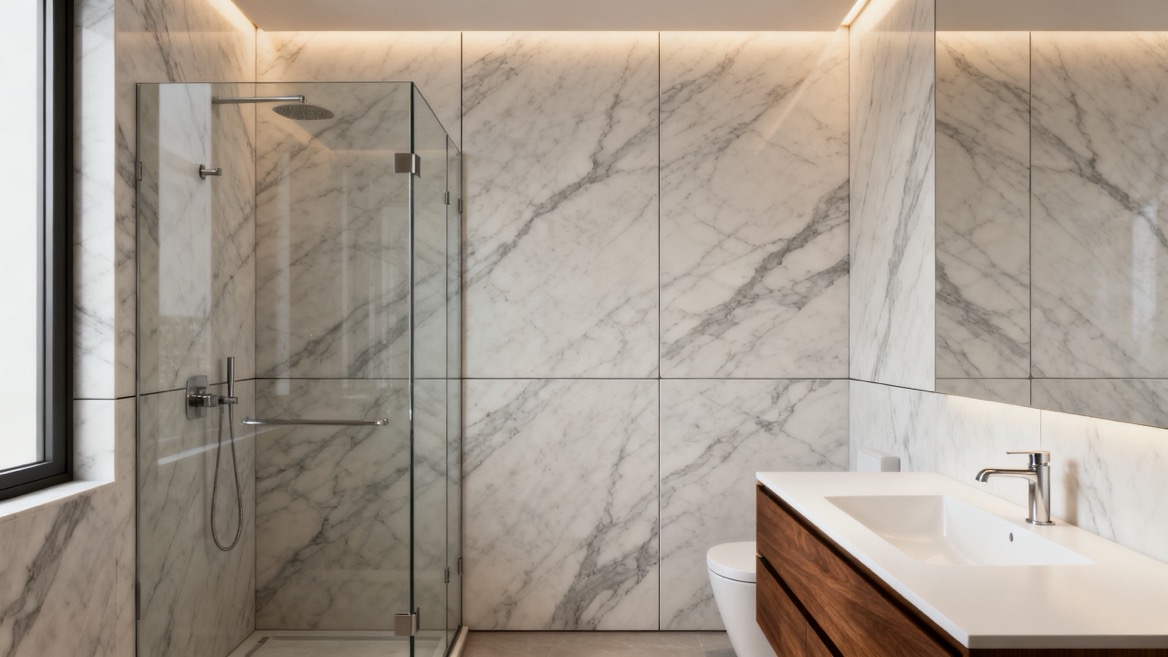
Cultured marble is a cast composite typically made from marble-derived mineral filler, polyester resin, and pigments. A protective gel coat forms the finished surface. The mixture is molded into products such as shower panels and vanity tops.
It is not quarried marble. Nor should buyers automatically treat it as interchangeable with engineered quartz or acrylic solid surface. Similar commercial names can hide different compositions, finishes, repair methods, and installation requirements.
For procurement, request the actual material description and care instructions. A label such as "engineered stone" is not a sufficient specification.
The gel coat provides the smooth, nonporous face associated with conventional cultured marble. Its condition matters because scratches, unsuitable chemicals, and impact damage can affect the finish.
This distinction changes the purchasing conversation. Instead of asking only whether the panel is durable, ask which cleaning agents are approved, how damage is assessed, and who performs authorized repairs.
Large panels reduce the number of grout lines compared with small-format tile. That simplifies routine wiping and creates a visually quieter shower enclosure.
However, groutless does not mean jointless. Panel intersections, base connections, and plumbing penetrations still need appropriate detailing and sealing. These locations deserve attention during installation and maintenance.
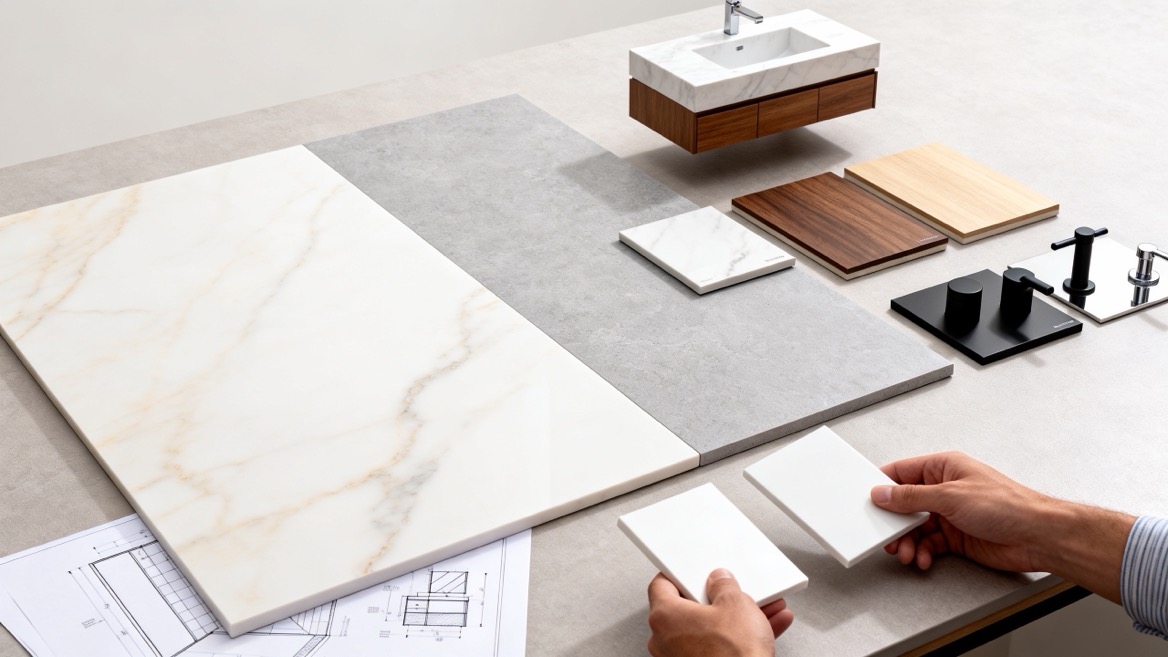
Marble-inspired colors can connect the shower enclosure with a vanity countertop, backsplash, cabinet finish, and hardware palette. This is particularly useful when developing a bathroom collection rather than selling unrelated components.
Do not approve coordination from screen images alone. Review physical samples together under representative lighting. A warm white countertop and a cool white shower panel may look inconsistent despite sharing the same color name.
Molded production can support different sizes, patterns, and configurations, depending on the supplier's tooling and process. Customization is therefore a discussion about manufacturing capability, not an unlimited promise.
Confirm maximum panel dimensions, finished edges, opening locations, and any restrictions before finalizing the design. Ask whether a change requires new tooling or can be handled through existing production methods.
The right choice depends on the intended appearance, installation conditions, maintenance expectations, and available support.
| Decision factor | Cultured marble panels | Ceramic or porcelain tile | Natural marble |
|---|---|---|---|
| Appearance | Molded colors and marble-inspired patterns | Extensive sizes, textures, and layouts | Naturally varying stone patterns |
| Joints | Panel joints and perimeter seals | Grout joints plus movement joints | Depends on slab or tile layout |
| Routine care | Gentle cleaning compatible with gel coat | Follow tile and grout instructions | Stone-specific cleaning guidance |
| Procurement priority | Finish consistency and panel dimensions | Tile caliber, layout, and grout selection | Slab selection and visual variation |
| Installation priority | Supported panels and sealed connections | Appropriate substrate and tile assembly | Suitable support and stone detailing |
Avoid universal claims that one material is always cheaper, lighter, or more durable. Comparable quotations must cover the same dimensions, installation scope, accessories, and delivery conditions.
A nonporous panel face does not make every connection watertight. Corners, penetrations, and the wall-to-base interface remain potential failure points if poorly detailed.
Request the complete installation instructions and clarify responsibility for the substrate, waterproofing approach, sealants, and base connection. Evaluate the installed assembly, not just the exposed surface.
Cultured marble can serve well in bathrooms, but its gel coat is not scratchproof. Abrasive pads and unsuitable cleaners can damage it.
Similarly, easier cleaning is not a guarantee against mold or mildew. Soap residue, persistent moisture, and neglected sealant joints still require attention. Marketing language should distinguish maintenance advantages from absolute protection.
Mineral filler alone does not prove recycled content or lower environmental impact. Resin production, manufacturing energy, packaging, freight, service life, and disposal all influence the result.
If environmental performance is part of your purchasing brief, request documented recycled content or product-specific environmental evidence. Without that information, describe the material accurately rather than making broad environmental promises.
This checklist supports coordination; it does not replace the selected manufacturer's instructions or local requirements.
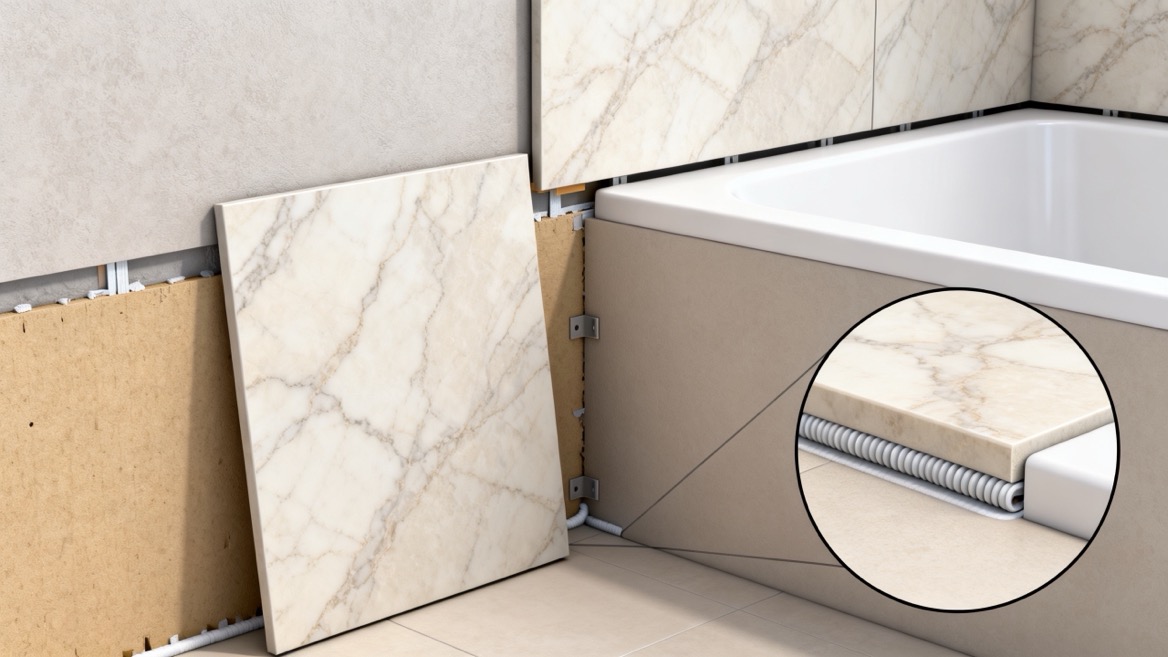
1. Verify site measurements. Record wall dimensions, corner conditions, shower base position, and plumbing locations before releasing production drawings.
2. Confirm the supporting assembly. Agree on an appropriate substrate and moisture-management approach with the installer. Do not assume the decorative panel corrects a damaged wall.
3. Inspect delivered panels. Check dimensions, visible damage, finish, and order identification before installation. Photograph concerns while packaging and labels remain available.
4. Dry-fit the layout. Confirm panel sequence, corner relationships, edge exposure, and opening positions before bonding.
5. Use approved materials. Follow the panel supplier's requirements for adhesives, sealants, preparation, and temporary support. Another manufacturer's instructions may not apply.
6. Detail every connection. Review corners, base interfaces, accessories, and plumbing penetrations. Confirm required clearances rather than assuming tight contact is desirable.
7. Respect curing and handover requirements. Follow specified cure times before use. Provide cleaning guidance and identify who handles sealant inspection and future repairs.
For large panels, also request actual unit weights and handling instructions. Panel dimensions and building access can matter as much as the nominal material weight.
For brands developing modern, high-end bathrooms, my preferred starting point is a shared specification sheet. It connects design intentions with production and installation decisions.
| Item | Information to confirm |
|---|---|
| Shower panels | Dimensions, thickness, finish, edges, and openings |
| Vanity cabinet | Overall size, mounting method, finish, and plumbing clearance |
| Countertop and basin | Material, bowl configuration, faucet holes, and overhang |
| Visual coordination | Approved samples, undertones, sheen, and pattern expectations |
| Documentation | Drawings, installation instructions, care guidance, and warranty terms |
| Delivery | Packaging, identification, inspection process, and replacement procedure |
Coordinate the cabinet and countertop drawings before approving adjacent bathroom details. Verify that drawers, plumbing, backsplashes, and wall interfaces work together rather than discovering conflicts during installation.
In an OEM brief, identify the buyer-controlled drawings and specifications. In an ODM discussion, identify which supplier-developed designs can be adapted and what development work remains necessary.
In either arrangement, document design ownership, approval stages, and change control. Do not let an approved color sample stand in for approval of dimensions, construction, or packaging.
A low unit quotation can become expensive when essential items are excluded. Ask suppliers to separate product price from tooling, accessories, packaging, freight, and other project-specific costs.
For internal comparison, use this purchasing framework:
Total project cost = products + development + packing and logistics + installation + maintenance + replacement allowance.
This is a budgeting framework, not a published market-price estimate. Populate it with quotations and assumptions relevant to your destination market.
For repeat programs, ask how replacement panels will be identified and how visual differences between production batches will be managed. Keeping approved samples and order records can make later discussions more precise.
A practical approval sequence is:
- Confirm the coordinated design brief and drawings.
- Approve physical finish samples.
- Review a representative product or mock-up where appropriate.
- Resolve installation and packaging questions.
- Record acceptance criteria before releasing the production order.
This is a proposed purchasing workflow, not a claim about a completed customer project. Its purpose is to make expectations explicit before mistakes are repeated across an order.
Routine care should be simple but consistent:
- Wipe with a soft cloth or sponge and mild soap.
- Rinse away cleaning residue.
- Dry or squeegee surfaces to reduce water spots.
- Remove cosmetic spills promptly.
- Check sealant joints for deterioration.
Avoid abrasive powders, scouring pads, acetone, and other chemicals prohibited by the manufacturer. Do not assume a cleaner suitable for tile is suitable for a gel-coated panel.
For gloss restoration or chip repair, contact the supplier before attempting treatment. Matte and gloss finishes may need different methods, and a repair that changes the sheen can remain conspicuous.
Jiaxing Miluo Smart Home Co., Ltd. focuses on customized modern bathroom products and solutions, including vanities, with OEM and ODM services for overseas brands, wholesalers, and manufacturers.
Planning a coordinated bathroom range? Send your target market, vanity drawings, preferred finishes, order quantities, and shower coordination requirements to Jiaxing Miluo for a project discussion.
Request confirmation of the proposed product scope, material options, sample process, and quotation inclusions before proceeding. Where shower surrounds are involved, establish supply availability and technical responsibilities rather than assuming every component comes from the same production line.
Their intact gel-coated faces are nonporous, but the shower's water resistance also depends on joints, penetrations, the base connection, and correct installation. Assess the entire assembly.
The gel-coated face generally does not require routine stone sealer. Panel joints and perimeter connections still need the specified sealant and periodic inspection.
Sometimes, but not automatically. A professional should assess the existing tile's bond, flatness, moisture condition, and compatibility with the proposed installation system before approval.
Some minor damage can be treated, but the method depends on depth, finish, and product construction. Ask the manufacturer for an approved repair procedure rather than using a universal filler.
It can be considered when its appearance, maintenance requirements, and installation system match the brief. Premium positioning should rest on the complete specification, not the material name alone.
There is no universal service-life guarantee. Installation quality, cleaning practices, impact damage, and joint maintenance affect performance. Compare written warranty terms and service support instead of relying on an unsupported lifespan claim.
1. [KingKonree — "The Charm of Cultured Marble Shower Surrounds"]. April 10, 2024. Original article reviewed for topic coverage, material claims, maintenance advice, and content gaps. The retrieved page contained no customer reviews. Its unsupported environmental and absolute performance claims have not been carried forward. [kingkonree]
2. [ARSTAR — "What Is Cultured Marble?"]. Updated April 2026. Manufacturer reference for composite construction, gel-coated surfaces, molded bathroom applications, and repair considerations. Supplier-specific pricing, weight, certification, and lifespan claims are not treated as universal industry facts. [arstarinc]
3. [ARSTAR — "Installation Guides"]. Updated April 2026. Manufacturer instructions covering inspection, substrate preparation, dry-fitting, adhesives, joint sealing, curing, and installation over existing tile. These requirements apply to the named supplier's products; other products require their own instructions. [arstarinc]
4. [Luis Guzmán Jr., ARSTAR — "How to Clean and Care for Cultured Marble Surfaces"]. March 29, 2026. Reference for mild cleaning, chemical restrictions, stain prevention, and different treatment of matte and gloss finishes. [arstarinc]
5. [Today's Homeowner — "How to Install a Cultured Marble Shower Stall"]. December 16, 2024. Supporting reference for material composition, adhesive-mounted wall panels, waterproof shower pans, and silicone-sealed joints. [todayshomeowner]
6. [Carolina Custom Surfaces — "How to Keep Your Cultured Marble Shower Looking Like New"]. January 5, 2026. Supporting reference for gentle cleaning, water-spot reduction, chemical precautions, and caulk maintenance. [carolinacustomsurfaces]


