
Views: 222 Author: Miluo Smart Home Publish Time: 2026-06-10 Origin: Site


Content Menu
● The New Benchmark for High‑End Bathroom Design
● Case Study: A Light‑Filled Primary Bathroom as a Product Development Blueprint
● Why Architects and Brands Rely on OEM/ODM Bathroom Partners
● Inside a Custom Bath Project: From Moodboard to Finished Tub
>> 5. Brand packaging and after‑sales
● Design Principles: What Makes a Bathroom Feel Truly "High‑End"?
● Practical Checklist: Working with an OEM/ODM Bathroom Partner
● Call to Action: Turn Your Next Bathroom Concept into a Custom Collection
● Frequently Asked Questions (FAQ)
In the last decade, the most memorable luxury bathrooms I have seen did not start from a catalog page—they started from a shared vision between architects, designers, and a manufacturing partner who understood how to turn a concept sketch into a buildable, durable product. As both a bathroom product manufacturer and a content strategist working with OEM/ODM brands, I've learned that the real magic happens where design storytelling meets engineering discipline. [blog.saleslayer]
Today's premium residential and hospitality projects demand much more than a beautiful bathtub or basin. Owners expect spaces that combine spa‑level comfort, sustainable materials, and precise detailing that withstands daily use for years. [dataintelo]
Forward‑thinking architectural studios like Addison Schierbeek Architects are setting this benchmark. In one Los Angeles westside residence, they transformed a compact lot into a light‑filled home built around a central core, using bold color, natural light, and thoughtful circulation to give each bathroom a clear purpose and "sense of joy." [venturestream.co]
These projects show a clear pattern:
- Architects lead with a strong narrative and spatial concept.
- OEM/ODM manufacturers translate that vision into customized tubs, basins, vanities, and hardware that comply with technical, safety, and installation constraints. [china-miluo]
- The result is a bathroom that feels like a one‑off work of art, but installs like a well‑engineered system. [blog.saleslayer]
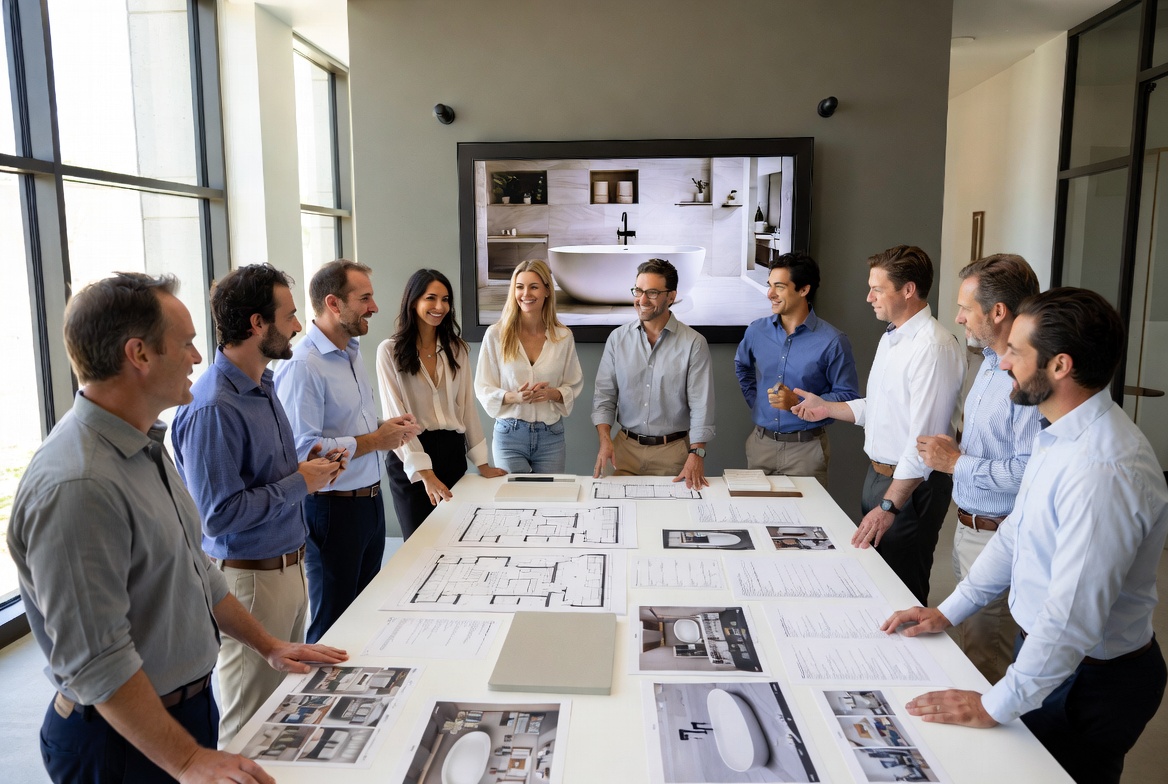
One of the most instructive examples comes from an LA residence where Addison Schierbeek Architects collaborated with a specialist bath manufacturer to shape both the primary and secondary bathrooms.
The architecture revolved around a second‑story addition organized around a central core, which acts as both horizontal and vertical circulation. This core becomes the backbone for daylight, movement, and the placement of the main bathroom features.
In the primary suite:
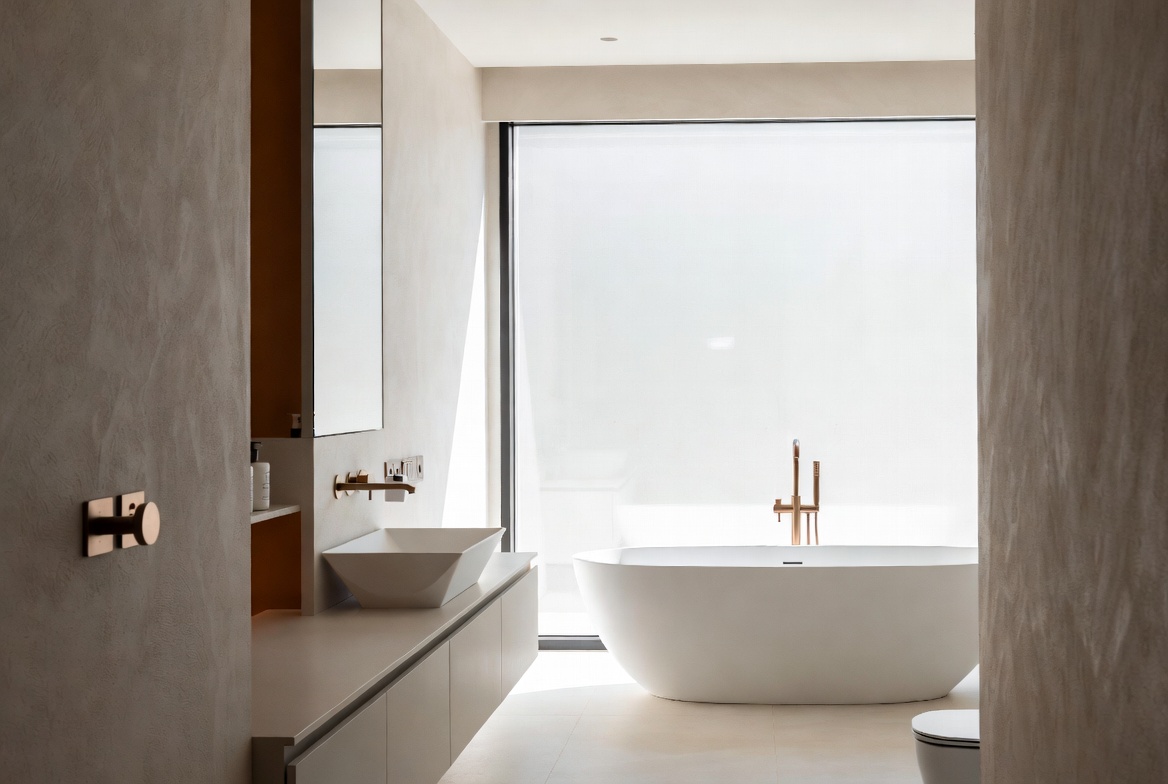
- The bath becomes an "oasis of calm" that visually extends from the bedroom, using warm tones and bold color accents.
- The tub is positioned in a cocoon of natural light, balancing intimacy and openness.
- The vanity is tucked into the spacious core, using geometry and proportion to make a functional element feel sculptural.
On the product side, the design team selected:
- A compact stone‑composite bathtub with a built‑in thermal air system, delivering a deep soaking experience within a tight footprint.
- A clean, block‑shaped sink that echoes the architecture's geometric lines.
- A secondary drop‑in tub with extra depth to enhance comfort in a smaller, shared bathroom.
For manufacturers like Jiaxing Miluo Smart Home Co., Ltd., this type of project is a blueprint for how to support demanding architects and global brands: provide a portfolio of modern, geometric forms, then customize dimensions, finishes, and functional details to match the project story. [china-miluo]
From an industry perspective, there is a clear shift toward customized bathroom systems supported by OEM/ODM partnerships rather than off‑the‑shelf sourcing. Several forces are driving this: [businessresearchinsights]
- Growing demand for modular and prefabricated bathroom pods, expected to grow steadily over the next decade as developers seek predictable quality and faster installation. [researchandmarkets]
- Pressure on brands to differentiate their product lines with exclusive designs and finishes while controlling inventory and tooling costs. [foremostmedia]
- Tight project timelines that require manufacturers who can handle engineering, sampling, and documentation in parallel. [marketveep]
An experienced OEM/ODM partner in bathtubs, basins, and integrated bathroom solutions can offer:
- Design flexibility: Custom molds, modified edge radii, overflow placement, and integrated ledges based on project drawings. [jxmiluo.en.made-in-china]
- Material expertise: From solid surface and stone composite to acrylic systems designed for thermal comfort and durability. [china-miluo]
- Production scalability: Ability to ramp from one‑off prototypes to stable, repeatable batches for branded collections. [miluobath.en.alibaba]
For brands and wholesalers, this partnership means they can launch high‑end, modern bathroom lines that feel exclusive while relying on the manufacturer's underlying engineering and quality system. [foremostmedia]
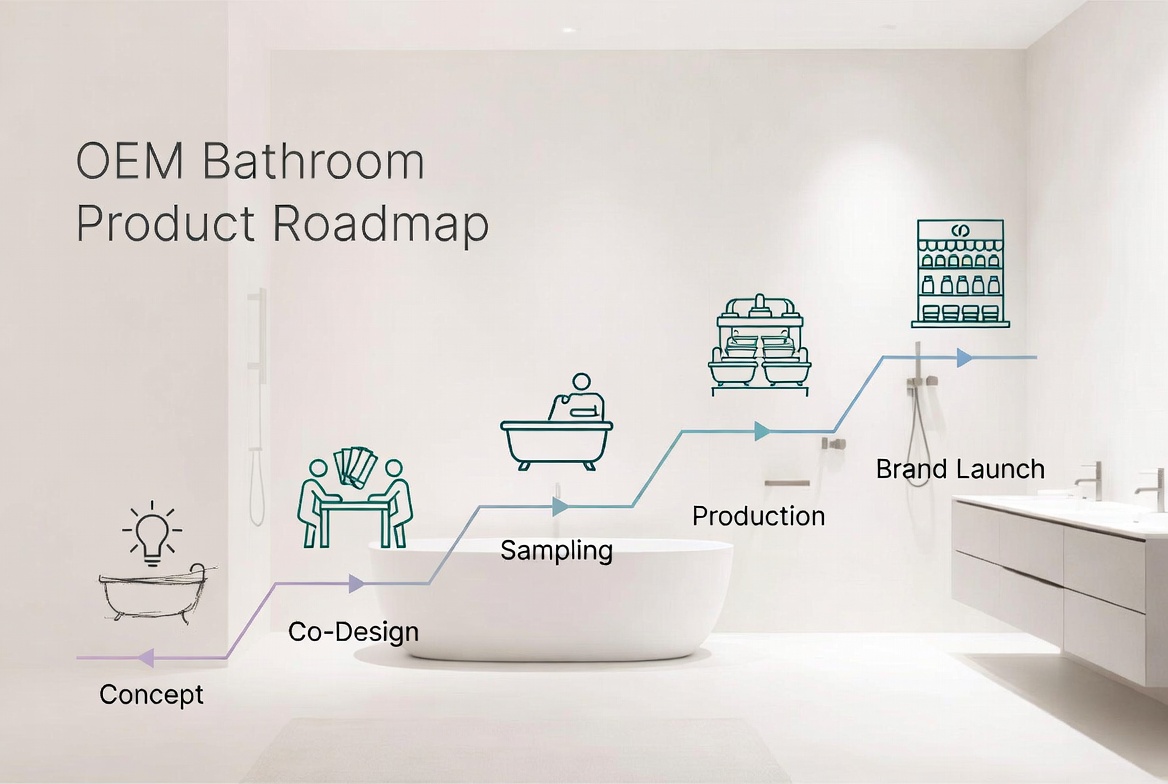
As someone who has worked closely with bathroom OEM/ODM teams, I see the same successful pattern repeat across high‑performing projects. You can think of the process in five practical stages. [blog.saleslayer]
Architects and brand owners start with:
- Reference projects and moodboards
- Target user profiles (e.g., luxury residential, boutique hotel, rental apartments)
- Clear constraints: room size, structural limitations, budget range
At this stage, a manufacturer like Jiaxing Miluo typically provides design consultation, sharing proven tub shapes, basin formats, and installation details that work well in similar projects. [china-miluo]
Next, the teams translate concept into specifications:
- Overall dimensions, soaking depth, and backrest angles
- Drain, overflow, and hardware positions to match local standards
- Wall thickness, reinforcement, and access panels for maintenance
This is where OEM experience is critical. A shape that looks perfect in renderings might be uncomfortable or difficult to demold and transport. Practical engineering feedback at this stage saves months later. [foremostmedia]
After 3D models and drawings are approved, the manufacturer:
- Produces initial samples or prototypes
- Runs functional tests (finish resistance, thermal behavior, load capacity)
- Adjusts ergonomics based on real‑world soaking tests, especially for freestanding tubs
For a high‑end project like the LA residence, details such as step‑in height, inner curve comfort, and edge thickness can make the difference between "nice tub" and truly memorable daily ritual. [blog.saleslayer]
Once the product design is locked, the OEM provides:
- Detailed installation guides and cut‑out templates
- BIM or CAD blocks for coordination with the architect and contractor
- Packaging standards to protect finishes during transport and construction
This technical backbone allows architects to integrate tubs and basins into their drawings with confidence, while contractors reduce on‑site surprises. [marketveep]
For brands and wholesalers, the final stage involves:
- Private‑label branding, colorways, and logo application
- Marketing imagery and detailed spec sheets
- Long‑term supply plan for replenishment and spare parts
A mature OEM/ODM partner will build this into their standard workflow, effectively acting as the invisible factory behind the brand. [jxmiluo.en.made-in-china]
Beyond materials and price, the projects that stand out share a few consistent design principles. [venturestream.co]
- Light choreography: Tubs placed where natural light can brush across the water surface, with privacy preserved through layout or glazing.
- Strong geometry: Basins and tubs echo the architecture—clean lines in modern homes, softer curves in more organic spaces. [china-miluo]
- Textural contrast: Stone‑like solid surface, warm metal fixtures, and soft textiles create a layered, tactile experience. [marketveep]
- Spatial continuity: The bathroom feels like a natural extension of the bedroom or suite, not a closed utility box.
The LA project demonstrates this clearly: a tub cradled in natural light, a vanity woven into the circulation core, and color used strategically to tie everything together. High‑end bathrooms are not only about products; they are about coherence.
If you are a brand owner, architect, or wholesaler planning your next bathroom collection or project, this is the process I recommend based on real OEM/ODM collaborations. [jxmiluo.en.made-in-china]
1. Define your niche clearly
- Premium residential, hospitality, prefab pods, or multi‑family?
- Decide on your hero categories: freestanding tubs, basins, vanities, or full bathroom sets.
2. Prepare a design brief
- Reference images, target price ranges, priority markets.
- Key differentiators: extra‑deep soaking, space‑saving footprints, integrated storage, or special finishes.
3. Select an OEM/ODM partner with aligned strengths
- Proven experience in bathtubs, basins, and bathroom solutions. [miluobath.en.alibaba]
- Ability to support both custom projects and ongoing brand collections.
4. Request samples and pilot runs
- Start with a limited set of SKUs, validate ergonomics and finish quality.
- Gather feedback from installers, distributors, and end users.
5. Build long‑term content and marketing assets
- Turn each completed project into a documented case study. [youtube]
- Use photography, floor plans, and technical drawings to demonstrate your capability and support E‑E‑A‑T. [semrush]
If you are a bathroom brand, wholesaler, or project developer, your competitive advantage will not come from one more generic tub model. It will come from tailored bathroom solutions that express your brand's identity while meeting the practical needs of designers, installers, and end users. [dataintelo]
By partnering with a focused OEM/ODM manufacturer like Jiaxing Miluo Smart Home Co., Ltd.—specialized in custom bathtubs, basins, and full bathroom sets—you can move from isolated product sourcing to a strategic, long‑term product roadmap. [china-miluo]
If you are already exploring new bathroom concepts, this is the moment to take the next step: refine your brief, shortlist your must‑have features, and start a direct conversation with an OEM/ODM team that can turn your ideas into production‑ready reality. [foremostmedia]
Q1: What is the difference between OEM and ODM for bathroom products?
OEM (Original Equipment Manufacturer) usually means the factory produces to your existing design and brand guidelines, while ODM (Original Design Manufacturer) develops new designs that you can then private‑label as your own collection. [china-miluo]
Q2: How early should architects involve an OEM/ODM bath manufacturer in a project?
Ideally, involve the manufacturer at the schematic design or early design development stage so tub and basin dimensions, clearances, and installation requirements are integrated into the layout from the beginning. [blog.saleslayer]
Q3: Which materials work best for high‑end modern bathtubs?
Solid surface and stone composite are popular for their smooth touch, thermal performance, and ability to realize crisp, modern geometries, often combined with advanced features such as thermal air systems. [china-miluo]
Q4: How can bathroom manufacturers improve their SEO in global markets?
They should publish in‑depth technical content, case studies, and FAQs, structure pages with clear headings, and follow E‑E‑A‑T best practices such as citing sources and showing real‑world experience. [semrush]
Q5: Why are prefabricated bathroom pods driving demand for OEM/ODM solutions?
Prefabricated pods require tightly coordinated, repeatable bathroom designs, and OEM/ODM partners are best equipped to deliver consistent, project‑specific tubs, basins, and accessories at scale. [businessresearchinsights]
- Addison Schierbeek Architects bath project with Hydro Systems – "A Close Look at Addison Schierbeek Architects' Captivating Bath Creations." [Link]
- Semrush – "Google E‑E‑A‑T: What It Is & How It Affects SEO." [Link] [semrush]
- Sitebulb – "5 Steps to Enhance E‑E‑A‑T for Better SEO Rankings." [Link] [sitebulb]
- Sales Layer – "SEO for Manufacturing Companies: The 2026 Strategy Guide." [Link] [blog.saleslayer]
- Foremost Media – "Google's E‑E‑A‑T Algorithm Rewards Quality Content." [Link] [foremostmedia]
- Venture Stream – "How to Demonstrate E‑E‑A‑T in Your Website Content." [Link] [venturestream.co]
- MarketVeep – "Best Website Design Tips for Manufacturing Companies." [Link] [marketveep]
- Dataintelo – "Modular Bathroom Pods Market Research Report 2034." [Link] [dataintelo]
- Research and Markets – "Prefabricated Bathroom Pods Market Size & Forecast to 2032." [Link] [researchandmarkets]
- China Miluo / Miluo Bath – Company and brand information. [Link] [china-miluo]
- Jiaxing Miluo Smart Home Co., Ltd. – Company profile and OEM/ODM capabilities. [Link] [jxmiluo.en.made-in-china]
- Jiaxing Miluo Smart Home Co., Ltd. – Alibaba overview. [Link] [miluobath.en.alibaba]
- Miluo Bath – Brand and news overview. [Link] [china-miluo]


