
Views: 263 Author: Miluo Smart Home Publish Time: 2026-09-20 Origin: Site


Content Menu
● What Defines Modern Minimalist Bathroom Design?
>> Core Principles of a Minimalist Luxury Bathroom
● Why Freestanding Bathtubs Matter in Minimalist Bathrooms
>> Choosing the Right Bathtub Shape
>>> Oval Freestanding Bathtubs
>>> Rectangular Freestanding Bathtubs
● Material Selection: The Foundation of Quiet Luxury
>> Natural and Stone-Look Surfaces
● The Evolution From Cold Minimalism to Warm Minimalism
>> Design Elements Shaping Today's Minimalist Bathrooms
● A Practical Minimalist Bathroom Layout Guide
>> Step 1: Define the Room's Primary Function
>> Step 2: Create Clear Circulation Zones
>> Step 3: Use Storage to Protect the Minimalist Look
● Designing for Comfort, Safety, and Long-Term Use
>> Features That Support Both Beauty and Usability
● How Brands Can Build a Cohesive Bathroom Collection
>> Key Questions for OEM and ODM Bathtub Sourcing
● Common Minimalist Bathroom Design Mistakes
>> Selecting a Bathtub That Is Too Large
>> Choosing Trendy Details Without a Long-Term Plan
>> Prioritizing Appearance Over Installation
● Create a Bathroom Collection With Lasting Value
>> What is minimalist bathroom design?
>> What bathtub style is best for a minimalist bathroom?
>> How can a minimalist bathroom still feel warm?
>> Are freestanding bathtubs difficult to clean around?
>> Which materials work best for luxury minimalist bathtubs?
>> Can accessible features fit into a minimalist luxury bathroom?
>> What should international buyers look for in an OEM bathtub supplier?
Minimalist bathroom design is no longer about creating a cold, empty white room. Today's most successful minimalist bathrooms combine clean architecture, tactile materials, purposeful storage, sculptural bathtubs, and everyday comfort. For brands, wholesalers, developers, and bathroom-product buyers, the opportunity lies in creating spaces that feel visually calm while delivering superior bathing performance, easy maintenance, and a premium customer experience.
A well-planned minimalist luxury bathroom removes visual noise—not useful functions. It gives every object a reason to exist. A freestanding bathtub becomes a focal point rather than just a fixture. A floating vanity creates visual space while providing concealed storage. A carefully selected faucet, drain, shower system, mirror, and lighting plan work together as one coherent experience.
For premium bathroom brands and project buyers, this design direction also creates a strong foundation for OEM and ODM bathroom product development. The goal is not simply to sell a bathtub or vanity. It is to offer a coordinated, modern bathroom solution that makes procurement easier and helps customers build a recognizable product collection.
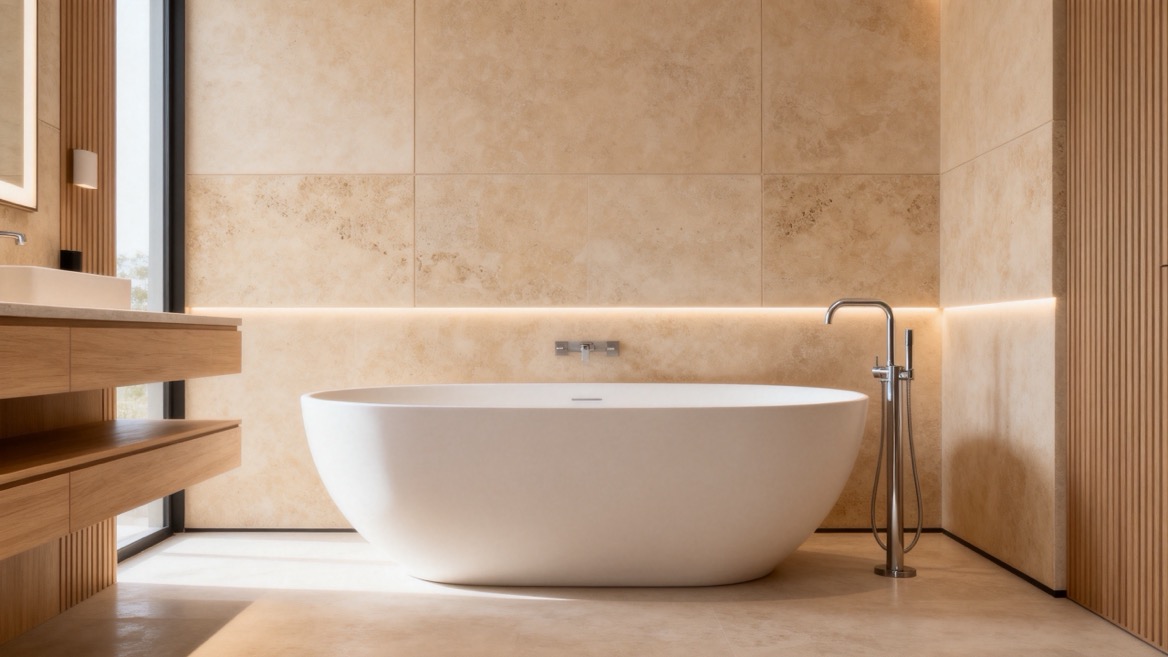
Minimalism is often misunderstood as "having less." In a bathroom, it is more accurately described as having only what improves the experience.
A minimalist bathroom usually combines simple lines, limited colors, integrated storage, high-quality materials, and a layout that supports easy daily movement. Instead of displaying many decorative items, it lets form, texture, light, and proportion create the visual impact.
The current direction is especially different from the stark, all-white bathrooms commonly associated with earlier minimalist interiors. Contemporary projects increasingly use warm neutrals, natural textures, rounded forms, matte surfaces, and quiet visual contrast. This approach is often called warm minimalism, organic minimalism, or quiet luxury.
For example, a matte white oval freestanding bathtub can be paired with sand-colored porcelain tile, brushed nickel fixtures, a light-oak floating vanity, and soft indirect lighting. The room remains simple, but it no longer feels clinical.
| Design Principle | What It Means | Practical Application |
|---|---|---|
| Visual clarity | Reduce unnecessary shapes, colors, and objects | Use concealed storage and coordinated finishes |
| Functional simplicity | Make daily use easy and intuitive | Choose easy-to-clean bathtubs, smooth surfaces, and accessible controls |
| Material quality | Let texture and finish create depth | Use matte solid-surface tubs, stone-look tile, wood grain, and brushed metal |
| Balanced proportion | Match fixture size to room size | Select a bathtub with the correct length, width, depth, and visual weight |
| Integrated comfort | Make luxury usable every day | Add ergonomic soaking depth, layered lighting, and comfortable circulation space |
| Timeless detailing | Avoid overly temporary decorative trends | Favor neutral palettes and durable, restrained fixture forms |
The best minimalist interiors do not feel empty. They feel intentional.
A freestanding bathtub is often the visual anchor of a modern luxury bathroom. Its standalone shape creates a focal point without requiring decorative clutter around it. When selected carefully, a tub can introduce softness into a room dominated by tile, glass, stone, and straight architectural lines.
For bathroom brands and distributors, freestanding tubs also offer strong product-development opportunities. They can be adapted through dimensions, overflow position, color, finish, drain configuration, packaging, logos, and accessory selections. This makes them particularly suitable for private-label collections, hospitality programs, residential developers, and premium retail brands.
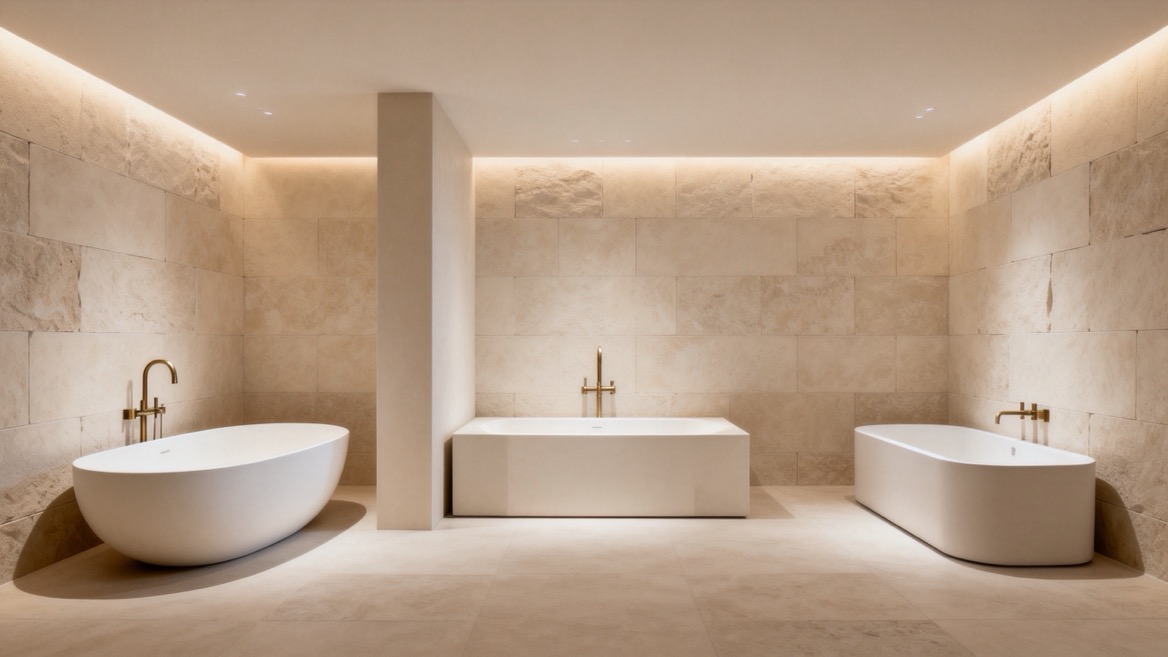
The shape of the tub influences both the room's visual language and the bather's comfort.
Oval tubs are one of the most versatile choices for minimalist bathroom design. Their soft curves reduce the hardness of rectilinear tiles, vanities, and shower enclosures.
They work especially well in:
- Modern primary bathrooms
- Spa-inspired residential interiors
- Boutique hotels and serviced apartments
- Premium apartment developments
- Private-label bathtub collections
An oval bathtub can look refined in both compact and large spaces. It also creates a softer, more welcoming appearance than a purely rectangular fixture.
Rectangular tubs offer a more architectural look. They suit interiors with strong linear geometry, such as wall-mounted vanities, large-format tile, recessed shelving, and frameless glass partitions.
These tubs are often selected for:
- Contemporary urban apartments
- High-end residential projects
- Luxury hotel bathrooms
- Minimalist black-and-white interiors
- Spaces with narrow or clearly defined bathtub zones
A rectangular model can appear highly sophisticated, but it requires careful attention to internal ergonomics. The outer form may be sharp and structured, while the inner basin should still support a comfortable reclining position.
Back-to-wall bathtubs combine the appearance of a freestanding tub with the installation efficiency of a wall-adjacent product. This can be valuable in compact bathrooms, renovation projects, and multi-unit developments where plumbing access, cleaning access, and floor-space efficiency matter.
They help reduce the gap between the tub and wall, which can make routine cleaning easier and limit the accumulation of dust and moisture in difficult-to-reach areas.
Minimalist bathrooms depend heavily on materials because there are fewer decorative elements competing for attention. Every surface is more visible. That means a bathtub finish, wall tile texture, faucet color, and vanity material must be selected as part of one complete material story.
Solid-surface bathtubs are a strong fit for modern luxury projects because they can deliver a seamless appearance, a smooth touch, and a consistent matte finish. Their visual simplicity supports minimalist design, while their material presence adds substance and quality.
For OEM and ODM programs, solid-surface bathtub development can include options such as:
- Matte white finishes
- Custom exterior colors
- Integrated overflow designs
- Coordinated pop-up drains
- Customized dimensions
- Private-label logos
- Different internal soaking depths
- Matching basins, shower trays, and vanity tops
A quality solid-surface bathtub should look refined from every viewing angle, including the rim, drain area, overflow detail, base, and exterior curve. In minimalist interiors, small imperfections are easier to notice because the overall design contains fewer distractions.
Acrylic bathtubs remain a practical choice for many brands and project buyers. They are relatively lightweight, widely adaptable in form, and suitable for a broad range of market positions.
For a premium presentation, buyers should evaluate more than the visible surface. Important factors include acrylic-sheet quality, reinforcement construction, base stability, insulation, edge consistency, drainage performance, and packaging protection.
A lightweight bathtub can simplify handling and installation, but it should still feel stable and substantial once installed. A minimalist bathroom may look effortless, but its product engineering should never be casual.
Natural stone, sintered stone, terrazzo, and stone-look porcelain can add depth without adding clutter. These materials work best when the color palette remains controlled.
Good combinations include:
- White bathtub with warm beige stone-look tile
- Matte black fixtures with pale limestone-look porcelain
- Light oak vanity with soft gray terrazzo flooring
- Off-white bathtub with travertine-inspired wall panels
- Brushed brass fixtures with warm ivory surfaces
The key is restraint. Choose one or two visual focal materials rather than using many competing patterns.
Earlier minimalist bathrooms often relied on glossy white tile, sharp edges, chrome fittings, and bright lighting. While clean, this formula could sometimes feel impersonal.
The newer approach is warmer and more sensory. It retains simplicity but introduces comfort through texture, natural colors, curves, and layered illumination. Recent bathroom-trend reporting points to continued demand for timeless, organic, contemporary, and minimalist spaces, with universal-design elements becoming more visually integrated into premium bathrooms.
| Earlier Minimalism | Today’s Warm Minimalism |
|---|---|
| Pure white and cool gray | Sand, cream, taupe, clay, warm gray, and soft green |
| High-gloss surfaces | Matte, honed, brushed, ribbed, and textured finishes |
| Sharp angular forms | Rounded edges, curved mirrors, oval tubs, and soft profiles |
| Decorative accessories | Fewer objects, but richer materials and better lighting |
| Visible storage | Recessed niches, floating vanities, and concealed cabinets |
| Purely visual luxury | Comfort, safety, durability, and ease of maintenance |
This shift matters for product suppliers. A bathtub collection designed only around basic white gloss may no longer meet the broader expectations of premium buyers. Buyers increasingly look for surfaces, colors, forms, and coordinated accessories that help them create a complete interior story.
A beautiful bathroom can still fail if the layout is inconvenient. The bathtub may look impressive in a product image, but the completed room must allow people to walk comfortably, clean around fixtures, use storage, and access controls without obstruction.
Before selecting products, project teams should assess the room's circulation, plumbing points, door swing, window position, drainage location, and intended users.
Start with the real use case.
Is the bathroom designed for:
- A compact apartment?
- A family home?
- A luxury villa?
- A hotel guest room?
- A senior-living environment?
- A high-end showroom?
- A developer's standard unit?
- A branded retail collection?
A compact city apartment may need a back-to-wall bathtub with integrated storage. A villa may support a sculptural freestanding soaking tub positioned near a window or feature wall. A hotel may prioritize easy cleaning, long-term durability, and consistent replacement availability.
A minimalist room needs visual openness, but it also needs real clearance around fixtures. Avoid selecting a large bathtub simply because it looks dramatic in a catalog image.
Consider:
- Door opening direction
- Space for entering and exiting the tub
- Cleaning access around the bathtub
- Vanity drawer clearance
- Shower-door swing
- Toilet privacy
- Towel reach
- Plumbing and electrical access
Accessibility guidance also emphasizes adequate clear floor area around bathing fixtures. In compliant bathtub layouts, clearance must extend along the full bathtub length and beyond the seat area where a seat is present.
For residential projects, requirements vary by country, market, and building type. Buyers should always confirm applicable local codes and project specifications before finalizing a layout.
A room cannot look calm if countertops are covered with bottles, appliances, towels, and cleaning products. Storage is therefore not an optional detail—it is part of the design concept.
Effective storage solutions include:
- Floating vanities with deep drawers
- Recessed shower niches
- Mirrored cabinets
- Tall integrated cabinets
- Under-bench storage
- Concealed laundry compartments
- Wall-mounted accessory rails
- Built-in towel shelves
Use open shelving carefully. It can add warmth, but it can also create visual clutter quickly. In a minimalist bathroom, closed storage usually delivers a more consistent result.
One overhead ceiling light is rarely enough for a premium bathroom. Layered lighting improves usability, visual comfort, and atmosphere.
A balanced lighting plan may include:
1. Ambient lighting for overall brightness.
2. Task lighting around the mirror for grooming.
3. Accent lighting for niches, wall texture, or the bathtub zone.
4. Low-level night lighting for safe nighttime movement.
Warm, indirect lighting can make matte materials, curved tubs, and natural finishes feel richer. It also helps a large bathtub become a destination within the room rather than simply another installed product.
Luxury is not only visual. It is also about how confidently and comfortably people can use the space over many years.
This is especially important as aging-in-place features become more common in mainstream bathroom projects. Current industry reporting indicates that designers increasingly treat wider doors, curbless entries, benches, and visually integrated support features as desirable elements of elevated bathroom design rather than purely institutional additions.
- Non-slip flooring helps reduce risk in wet areas.
- Rounded bathtub edges can create a softer visual and physical experience.
- Ergonomic soaking angles improve bathing comfort.
- Handheld shower systems support easier cleaning and flexible use.
- Lever-style controls are easier for many users to operate.
- Well-positioned lighting reduces shadows near wet zones.
- Concealed reinforcement points can allow future installation of support rails where appropriate.
- Generous circulation space improves comfort for users, children, caregivers, and guests.
In accessible housing guidance, durable, level, and non-slip bathroom floor finishes are recommended, along with sufficient maneuvering space around fixtures. These principles can be incorporated into a premium bathroom without compromising the minimalist look.
For wholesalers, importers, retailers, developers, and bathroom brands, the strongest product offer is usually not a single bathtub. It is a coherent system.
A modern minimalist collection may include:
- Freestanding bathtubs
- Back-to-wall bathtubs
- Solid-surface wash basins
- Wall-hung vanities
- Mirrors and mirror cabinets
- Shower trays
- Shower enclosures
- Faucets and shower systems
- Floor drains
- Pop-up wastes
- Bathroom accessories
- Coordinated packaging and installation materials
This approach helps buyers present a more complete solution to their own customers. It can also support higher average order value, improved visual consistency, and easier product merchandising.
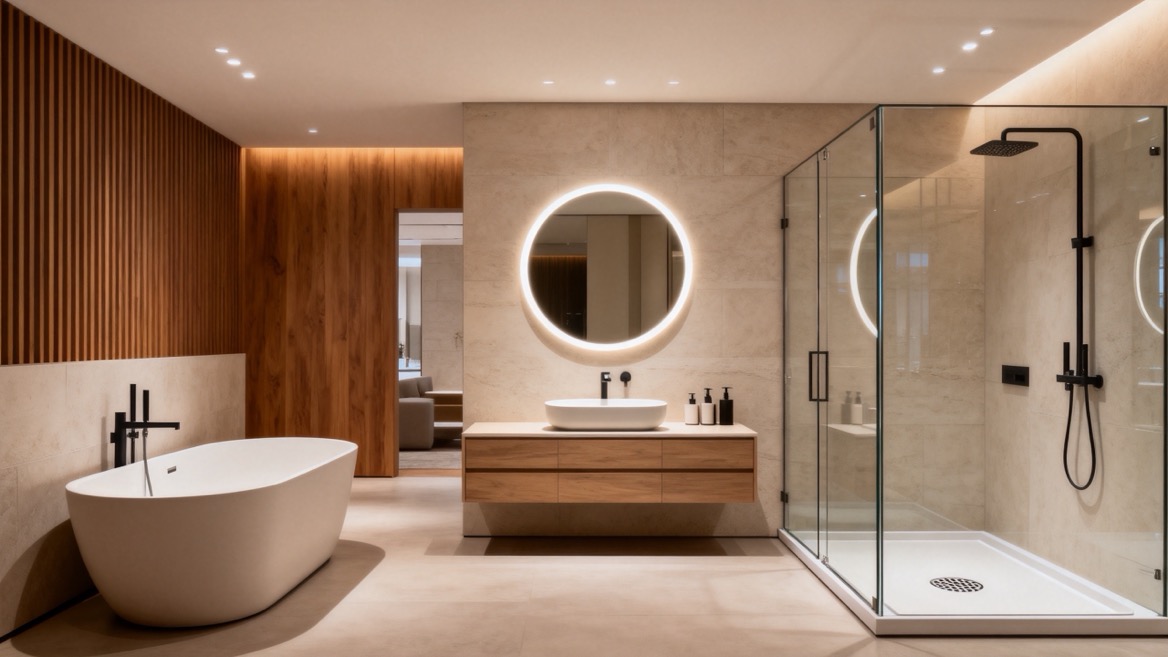
Before selecting a manufacturing partner, buyers should ask:
1. What customization options are available for dimensions, colors, finishes, drain position, and branding?
2. What materials are used, and how are they tested?
3. Can the supplier provide technical drawings, installation instructions, and packaging specifications?
4. What quality-control process is used before shipment?
5. How are bathtubs protected during container loading and international transportation?
6. Can the supplier coordinate matching basins, shower trays, vanities, and accessories?
7. What is the minimum order quantity for customized models?
8. Can the supplier support regional product requirements and project documentation?
For a brand, product consistency is as important as product appearance. A bathtub should arrive with stable quality, reliable dimensions, correct accessories, clear installation information, and packaging designed for the realities of international logistics.
Minimalist design requires discipline. The room may look simple at the end, but the planning phase should be detailed.
A large bathtub can dominate a small room and make circulation difficult. Measure not only the tub footprint but also the space required to walk, clean, and use adjacent fixtures.
Combining marble, terrazzo, wood, patterned tile, colored cabinetry, black metal, brass, and multiple decorative lights can create visual conflict. Limit the palette and let a few materials do the work.
A beautifully designed vanity is not useful if it cannot hold real bathroom essentials. Plan internal drawer organization, electrical access, linen storage, and concealed space for daily products.
Highly decorative colors, novelty hardware, and temporary visual trends may date quickly. Build the main room around lasting finishes, then use easier-to-change accessories for seasonal personality.
A freestanding bathtub must suit the project's plumbing layout, floor structure, drainage location, and access conditions. Confirm technical drawings early, especially for developments, hospitality projects, and customized orders.
A successful minimalist bathroom does not depend on empty space alone. It depends on considered products, precise proportions, durable materials, concealed functionality, and a bathtub that invites people to slow down.
For international bathroom brands, wholesalers, project buyers, and manufacturers, this creates a clear opportunity: develop complete modern bathroom collections that combine visual simplicity with measurable product value. A well-designed freestanding bathtub, matching basin, vanity, shower tray, and accessory program can help transform a basic product range into a recognizable premium solution.
Jiaxing Miluo Smart Home Co., Ltd. supports overseas brands, wholesalers, and project partners with customized bathtub and bathroom-product development for OEM and ODM programs. From modern freestanding bathtubs and back-to-wall models to coordinated bathroom solutions, the focus is on helping customers create collections that are functional, consistent, distinctive, and ready for international markets.
Contact Jiaxing Miluo Smart Home Co., Ltd. to discuss your next customized bathtub collection, private-label bathroom program, or integrated modern bathroom project.
Minimalist bathroom design uses a limited palette, clean forms, organized storage, and functional fixtures to create a calm and uncluttered environment. It focuses on proportion, material quality, light, and usability rather than excessive decoration.
An oval freestanding bathtub is often a versatile choice because its soft curves work with many modern interiors. Rectangular freestanding tubs suit more architectural spaces, while back-to-wall tubs are practical for compact bathrooms and renovation projects.
Use warm neutral colors, textured tile, wood or wood-look surfaces, matte finishes, indirect lighting, and rounded shapes. The goal is to keep the room simple while adding tactile and visual comfort.
They can require more cleaning access than wall-adjacent tubs, depending on their placement. Leave adequate space around the bathtub during planning, or consider a back-to-wall design where space and maintenance convenience are priorities.
Solid-surface materials are popular for their matte, seamless appearance and premium feel. Acrylic remains a versatile option because it is lightweight and supports a wide range of shapes. The best choice depends on positioning, budget, performance requirements, and desired customization.
Yes. Wider circulation areas, non-slip floors, integrated support features, handheld showers, comfortable controls, and thoughtful lighting can improve usability while preserving a refined appearance. The most successful projects make these details feel intentional rather than added afterward.
Evaluate customization capability, material specifications, technical support, quality control, packaging, lead time, testing, installation documentation, and the supplier's ability to provide a coordinated range of bathroom products.
- [U.S. Access Board — Chapter 6: Bathing Rooms]
- [Canada Mortgage and Housing Corporation — Accessible Housing by Design: Bathrooms]
- [National Kitchen & Bath Association — KBIS Releases Annual 2026 Bath Trends Report]
- [U.S. Department of Housing and Urban Development — Fair Housing Act Design Manual, Chapter 7]
- [Aquatica USA — The Evolution of Minimalist Bathroom Design: Embracing Simplicity and Luxury]
- [American Standard — The Accessible Beauty of ADA-Compliant Restrooms]
- [KBB Render — Modern Bathroom Design Trends: Luxury and Minimalism]


