
Views: 277 Author: Miluo Smart Home Publish Time: 2026-09-23 Origin: Site


Content Menu
● Why Bathroom Sink Material Matters
● Bathroom Sink Material Comparison at a Glance
● Ceramic and Vitreous China Sinks: The Everyday Standard
>> Why ceramic basins remain popular
>> What buyers should check before ordering
● Solid Surface Sinks: Seamless and Repairable Modern Design
>> Benefits of solid surface bathroom basins
● Engineered Stone and Quartz Composite: Premium Performance With Consistency
>> Advantages of engineered stone sinks
● Natural Stone Sinks: Unique Luxury With Real Maintenance Needs
>> The appeal of natural stone
● Glass Bathroom Sinks: A Sculptural Choice
● Stainless Steel Sinks: Durable, Clean and Commercially Practical
>> Why stainless steel can be a smart choice
● Concrete and Composite Basins: Architectural Freedom
>> When concrete is the right material
● How to Choose the Best Bathroom Sink Material
>> Choose ceramic or vitreous china if you need:
>> Choose solid surface if you need:
>> Choose engineered stone if you need:
>> Choose natural stone if you need:
>> Choose stainless steel if you need:
>> Choose glass or concrete if you need:
● Expert Checklist for OEM and ODM Bathroom Basin Projects
● Build a Bathroom Basin Collection That Fits Your Market
>> What is the best material for a bathroom sink?
>> Is vitreous china better than ceramic?
>> Are natural stone bathroom sinks difficult to maintain?
>> Do solid surface bathroom sinks scratch easily?
>> Are glass vessel sinks durable?
>> Which bathroom sink material is easiest to clean?
>> Can bathroom basins be customized for private-label brands?
Choosing the best bathroom sink material is not simply a style decision. For homeowners, it affects daily cleaning, long-term durability, water-spot visibility, and the overall feel of the bathroom. For brands, wholesalers, developers, and bathroom-product buyers, it also affects production consistency, packaging risk, installation requirements, return rates, and the flexibility to create a differentiated collection.
At Jiaxing Miluo Smart Home Co., Ltd., we work with bathroom brands and professional buyers who need more than a standard basin. They need materials, shapes, finishes, dimensions, and integrated bathroom solutions that match their market positioning. Whether the goal is a minimalist countertop basin, a durable hotel vanity sink, a stone-look statement piece, or an OEM bathroom collection, the material is the foundation of the final product.
This guide explains the most common bathroom sink materials, their practical advantages and limitations, and how to select the right option for residential, hospitality, retail, and customized projects.
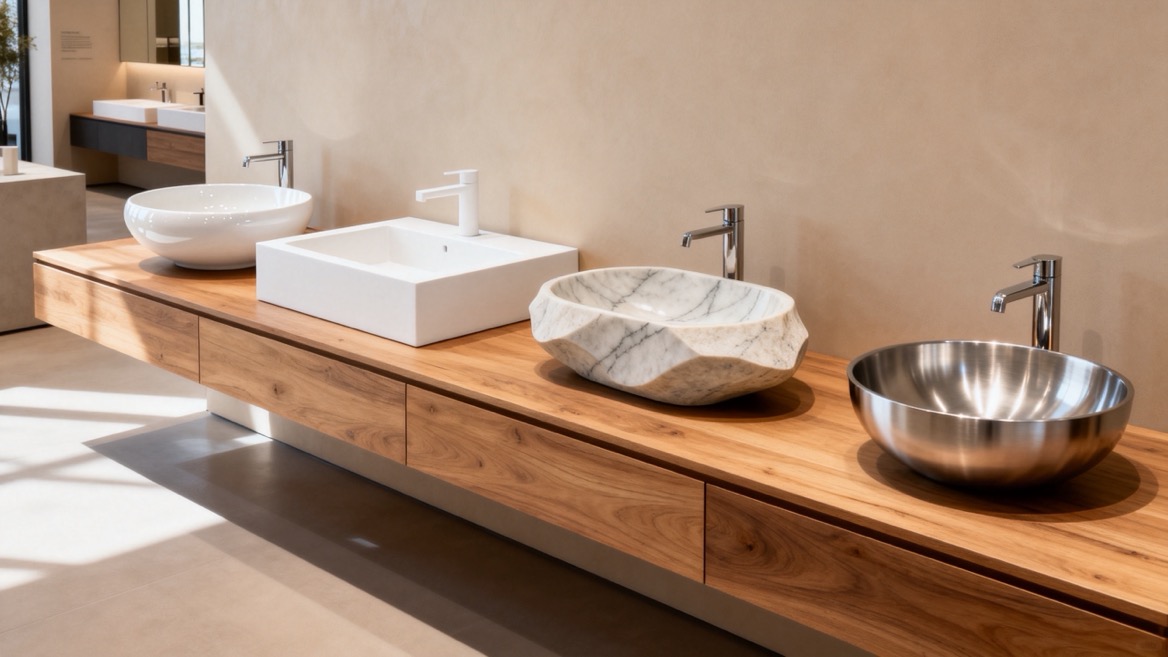
A bathroom basin may look simple, but it is exposed to water, soap residue, toothpaste, cosmetics, hair products, cleaning chemicals, and occasional impact every day. The wrong material can create avoidable maintenance issues, visible wear, breakage during logistics, or dissatisfaction after installation.
The best material depends on more than appearance. A successful basin selection should balance the following factors:
- Durability against daily use, scratches, stains, and accidental impacts
- Water resistance and performance in humid bathroom environments
- Cleaning effort, especially in hard-water areas
- Surface appearance, including gloss, texture, color depth, and pattern consistency
- Installation style, such as vessel, wall-mounted, under-mount, semi-recessed, or integrated vanity basin
- Customization potential for OEM and ODM projects
- Weight and packaging needs for international shipment
- Target price range and product positioning
For most mainstream residential projects, glazed ceramic and vitreous china remain reliable choices because they offer a familiar appearance, straightforward cleaning, and good long-term value. However, modern bathroom design has expanded far beyond conventional white ceramic. Solid surface, engineered stone, natural stone, glass, stainless steel, concrete, and composite materials now allow brands to build more distinctive collections.
| Material | Best For | Durability | Maintenance | Customization | Key Consideration |
|---|---|---|---|---|---|
| Ceramic / vitreous china | Everyday residential bathrooms | High | Low | Moderate | Can chip under hard impact |
| Porcelain | Classic and transitional designs | High | Low | Moderate | Surface may chip if struck sharply |
| Solid surface | Seamless modern vanity tops | Good | Low to medium | High | Can scratch, but many marks are repairable |
| Engineered stone | Premium modern projects | High | Low | High | Higher material and fabrication cost |
| Natural stone | Luxury statement bathrooms | High | Medium to high | High | Requires sealing and careful cleaning |
| Glass | Decorative vessel basins | Moderate | Medium to high | High | Water spots and edge damage need attention |
| Stainless steel | Commercial and minimalist spaces | Very high | Low | Moderate | May show water marks or fingerprints |
| Concrete | Architectural and custom interiors | High | Medium | Very high | Requires sealing and controlled production |
| Acrylic / composite | Lightweight and value-focused designs | Moderate | Low | High | Less resistant to deep scratching and heat |
Ceramic is one of the most widely used bathroom sink materials because it combines a clean surface, broad design compatibility, and practical maintenance. It is especially suitable for vanity basins, pedestal sinks, wall-hung sinks, and many countertop styles.
A ceramic basin is generally formed from clay-based materials, shaped, fired, and finished with a protective glaze. Vitreous china is a refined ceramic product with a glass-like enamel coating that helps create a smooth, glossy, low-porosity surface.
- Easy-to-clean surface that handles normal soap and cosmetic residue well
- Classic white finish that works with nearly every bathroom style
- Strong visual consistency across high-volume product collections
- Good value for residential, rental, and multi-unit projects
- Wide manufacturing flexibility in basin shape, overflow design, faucet-hole configuration, and installation method
For brand owners, ceramic also offers a practical balance between market acceptance and product differentiation. A standard rectangular basin can be enhanced with thinner edges, matte glazing, colored finishes, special drainage details, or custom logos.
Not all ceramic sinks are equal. For a more reliable specification, assess:
1. Glaze quality
The finish should be even, smooth, and free from pinholes, waviness, obvious color variation, or unglazed areas.
2. Drain opening accuracy
Drain-hole dimensions must match the intended waste fitting and allow efficient assembly in the destination market.
3. Overflow design
An overflow is important for many residential applications, but some minimalist vessel basins are designed without one.
4. Flatness and stability
A countertop basin must sit securely and evenly on the vanity surface.
5. Packaging protection
Ceramic products need strong internal foam support, drop-tested outer cartons, and palletized shipping where appropriate.
Ceramic and vitreous china are excellent choices for brands that need a dependable product range with broad customer appeal. They are not indestructible, however. A hard object dropped from height can chip or damage a glazed surface, so product design and packaging both matter.
Solid surface has become increasingly important in premium contemporary bathrooms. It is often used for integrated vanity tops, sculptural countertop basins, and minimalist basin-and-counter combinations.
This material typically uses mineral fillers combined with resins and pigments. The result can be a smooth, matte, stone-like surface with a refined and consistent visual appearance.
- Seamless appearance for integrated sink and countertop designs
- Non-porous surface that helps resist stains and moisture absorption
- Soft-touch matte finish suited to modern and luxury interiors
- High design freedom for custom dimensions, colors, bowl depth, and drainage
- Repairability, as light scratches can often be refinished rather than requiring full replacement
For hotel projects, high-end apartments, and design-led retail collections, a solid surface basin can provide a cleaner visual result than a separate drop-in sink. Eliminating joints between the basin and countertop also reduces areas where dirt and moisture can accumulate.
Solid surface is not as hard as some glazed ceramic or stone options. Sharp objects, abrasive pads, and excessive heat can leave marks. This does not make it unsuitable for bathrooms; it simply means that the product specification should be matched with realistic care expectations.
For example, a soft matte integrated basin may be ideal for a boutique hotel suite, but a high-traffic public washroom could require a more impact-resistant material and commercial-grade mounting system.
Engineered stone and quartz-based composites provide the visual presence of stone with a more controlled material composition. These products are often selected for premium vanity tops, integrated basins, and high-value residential developments.
Unlike natural stone, engineered materials can offer more uniform color, pattern, and production repeatability. This is important for brands that need multiple units to match across a project, showroom display, or retail collection.
- High resistance to everyday staining
- More consistent color and pattern than many natural stones
- Modern premium appearance
- Strong compatibility with custom vanity solutions
- Reduced need for regular sealing compared with many porous natural stones
This category is especially relevant for private-label bathroom brands that want a stone-inspired look without relying on the natural variation of quarried materials.
However, engineered stone products are usually heavier than ceramic or acrylic alternatives. Buyers should consider countertop support, handling procedures, carton strength, pallet configuration, and shipping weight before finalizing a design.
Natural stone basins can create a strong visual impression because every piece has individual veining, grain, texture, and tonal variation. Marble, travertine, granite, onyx, and limestone can all be used in bathroom applications, depending on the desired style and technical requirements.
A stone basin is often chosen for a powder room, luxury villa, spa, boutique hotel, or other design-focused setting where individuality is part of the value.
- One-of-a-kind appearance
- Strong association with luxury and craftsmanship
- Wide range of colors and natural patterns
- Excellent fit for sculptural vessel sinks
- Potential for highly customized shapes and finishes
But natural stone should be selected with realistic expectations. Many stones are porous or acid-sensitive. Without appropriate sealing and cleaning, they may absorb liquids, develop water marks, or become etched by acidic products.
Natural stone sinks should be maintained with a simple routine:
1. Wipe the basin dry after use, especially in hard-water areas.
2. Use a pH-neutral stone cleaner or mild soap.
3. Avoid acidic cleaners, bleach, abrasive powders, and rough scouring pads.
4. Reseal the surface according to the stone type, finish, usage level, and supplier recommendation.
5. Address cosmetics, hair dye, perfume, or colored liquids promptly.
A natural stone basin is best sold as a design investment, not as a zero-maintenance product. Brands that communicate this clearly can reduce post-purchase complaints and build more trust with customers.
Glass sinks are often selected for vessel-basin designs because they can add transparency, color, texture, and visual lightness to a bathroom. Tempered glass is commonly used to improve safety and strength.
A glass basin can be clear, frosted, tinted, patterned, hand-painted, or textured. It works particularly well in powder rooms, guest bathrooms, and interiors where the basin is intended to function as a focal point.
- Boutique hotels and premium guest bathrooms
- Decorative vanity collections
- Contemporary vessel sink ranges
- Projects requiring custom color or pattern options
- Small bathrooms where visual lightness is desirable
The main trade-off is maintenance. Glass makes water spots, fingerprints, soap residue, and mineral deposits more visible than many opaque materials. In regions with hard water, users may need to wipe the basin more frequently to maintain a clear finish.
Careful packaging is also essential. The basin edge, mounting area, and drain opening should be protected against impact during transit.
Stainless steel is familiar in kitchens, but it can also be a highly effective bathroom sink material. Its clean industrial appearance works well in modern homes, public facilities, commercial washrooms, clinics, gyms, and hospitality back-of-house areas.
High-quality stainless steel offers excellent resistance to corrosion, heat, and impact. It is also lightweight compared with stone, concrete, and cast iron.
- Excellent impact resistance
- Low risk of cracking
- Easy cleaning with mild soap and water
- Suitable for high-use commercial spaces
- Compatible with modern industrial design
- Lightweight shipping and installation advantages
The visual finish matters greatly. Brushed stainless steel can hide fingerprints and fine marks better than a mirror-polished surface. For branded projects, options such as PVD color finishes, satin brushing, embossed textures, and custom dimensions can create a more distinctive collection.
Concrete and mineral composite basins are often selected for contemporary interiors that value texture, bold geometry, and a handcrafted appearance. They can be produced in organic forms, long trough shapes, double-basin configurations, and oversized custom dimensions.
Concrete offers strong design personality, but it must be properly formulated, cured, sealed, and quality-controlled. The finished product may have natural variation in tone, pores, and texture, which should be positioned as part of its character rather than treated as a defect.
- Luxury residential projects
- Architectural hospitality interiors
- Custom vanity programs
- Retail collections built around textured, earthy design
- Projects requiring non-standard basin dimensions
Concrete is relatively heavy and needs durable mounting support. It also requires surface sealing and suitable care instructions. A well-designed composite or concrete basin can be highly distinctive, but it is better suited to buyers who understand the maintenance and installation requirements.
The easiest way to narrow your options is to begin with the intended user, not the product appearance.
- A proven material for everyday bathrooms
- Easy cleaning and broad consumer acceptance
- A balanced combination of cost, durability, and style
- A reliable option for large residential product ranges
- A seamless, minimalist look
- An integrated basin and countertop solution
- Custom sizes and shapes
- A matte, tactile premium finish
- A high-end stone look with more color consistency
- Strong performance in premium residential projects
- Low-porosity surfaces with reduced maintenance needs
- A coordinated vanity and basin collection
- A unique luxury statement
- Natural variation and visual depth
- A sculptural vessel sink
- A product positioned for design-conscious buyers
- High impact resistance
- A low-maintenance commercial solution
- A modern industrial aesthetic
- Lightweight and durable construction
- A visually distinctive centerpiece
- Strong customization potential
- A product collection with artistic or architectural character
- A design-led rather than purely utility-led solution
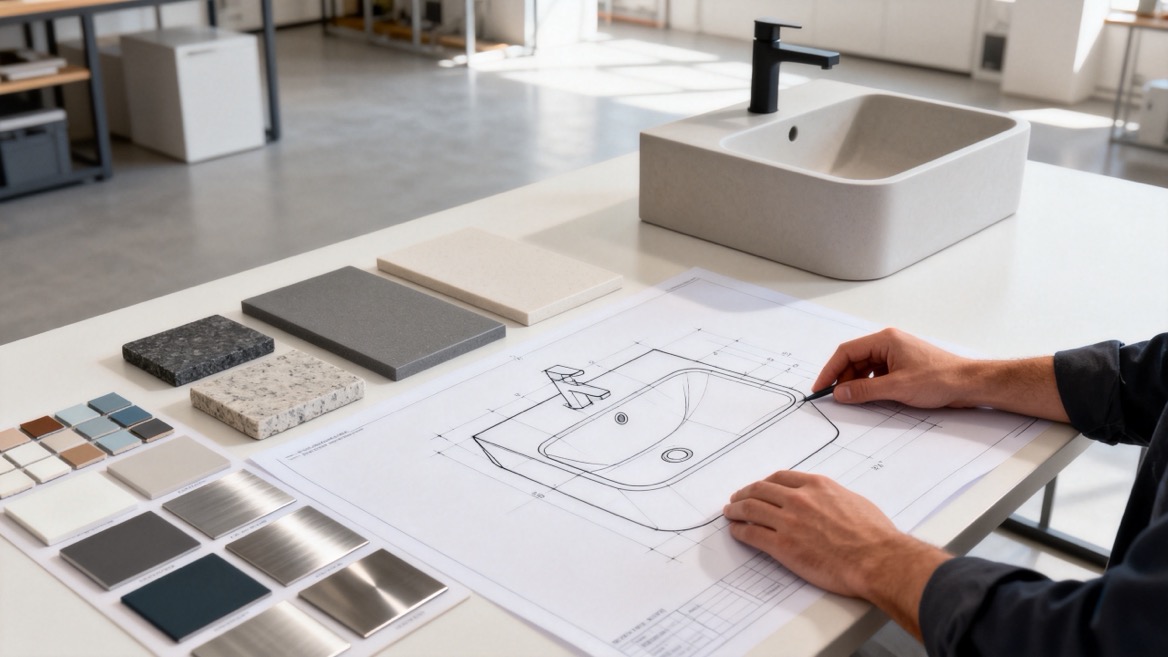
For professional buyers, selecting a material is only the first step. A successful custom basin program also requires technical alignment before tooling, sampling, and mass production.
Use this checklist when developing an OEM or ODM bathroom sink:
- Confirm the target market's drain and overflow requirements.
- Define the basin installation method before finalizing dimensions.
- Verify faucet-hole position, number, diameter, and center distance.
- Specify the preferred surface finish, such as glossy, matte, textured, brushed, or stone-look.
- Confirm color standards using approved physical samples.
- Evaluate water flow, drainage speed, and splash control during sample testing.
- Review wall thickness, rim strength, and structural support points.
- Match carton design and internal protection to the sink material and shipping method.
- Establish acceptable standards for color variation, natural pores, glaze imperfections, or stone pattern differences.
- Approve a pre-production sample before mass production begins.
In our experience, the strongest custom projects are not created by changing color alone. They are built by matching the basin material, dimensions, installation method, vanity design, faucet configuration, packaging, and target customer expectations as one complete system.
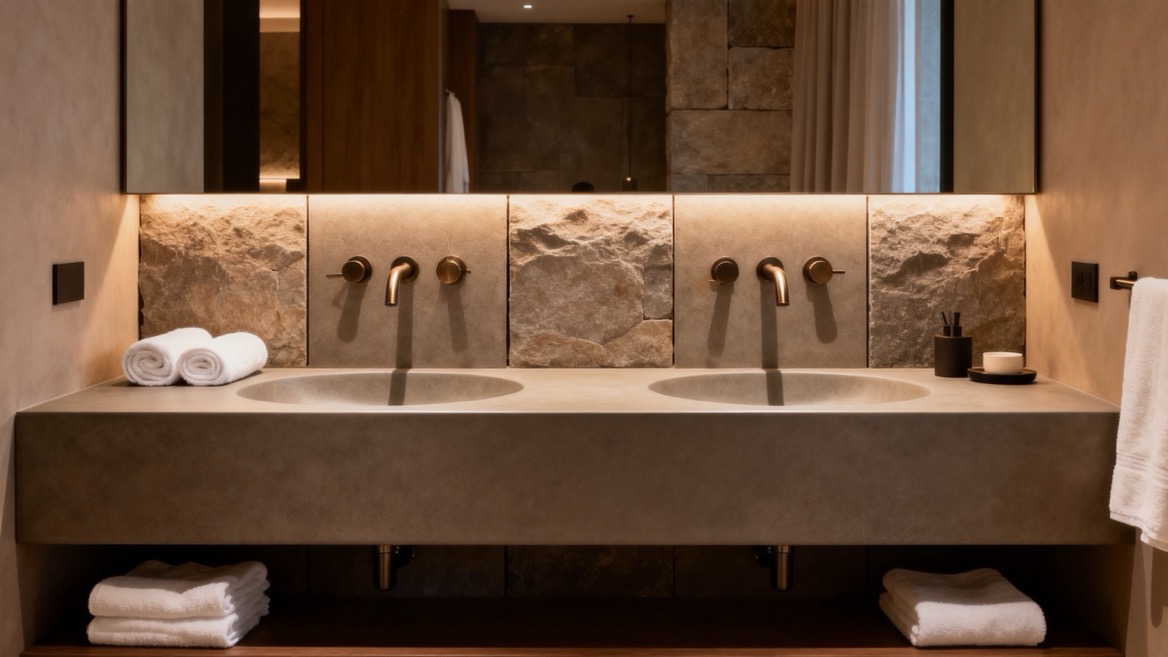
The best bathroom sink material is the one that matches how the product will actually be used, maintained, installed, shipped, and sold. A white ceramic basin may be the most practical choice for a high-volume residential range. A solid surface integrated countertop may better serve a premium hotel program. A natural stone vessel basin may become the centerpiece of a luxury collection.
Jiaxing Miluo Smart Home Co., Ltd. supports international brands, wholesalers, manufacturers, and project buyers with customized bathroom basin solutions. From product concept and material selection to size adjustment, color matching, private-label packaging, and coordinated bathroom products, we help turn a design direction into a market-ready collection.
Contact our team to discuss your OEM or ODM bathroom basin project, request product specifications, or develop a customized modern bathroom solution for your market.
For most everyday bathrooms, ceramic or vitreous china is often the most balanced option. It is durable, easy to clean, widely accepted by consumers, and available in many styles. The best material can change depending on whether the priority is luxury appearance, seamless design, commercial durability, or customization.
Vitreous china is a type of ceramic sanitary ware with a glass-like enamel finish. It is valued for its smooth surface, glossy appearance, and resistance to normal staining. In practice, both ceramic and vitreous china can perform very well when the firing process, glaze quality, and manufacturing standards are controlled properly.
Natural stone sinks require more care than ceramic or solid surface options. Many stones should be sealed, wiped dry after use, and cleaned with pH-neutral products. They are best for buyers who value natural character and are willing to follow a simple care routine.
Solid surface can develop fine scratches more easily than hard glazed ceramic, but light surface marks can often be refinished. It is a strong choice for modern integrated vanity designs because of its seamless appearance and flexible customization options.
Tempered glass vessel sinks can be durable for normal bathroom use. However, they should be protected from direct hard impact, especially around the rim and drain area. They also require regular wiping in hard-water areas because water spots can be more visible on glass.
Glazed ceramic, vitreous china, and many solid surface products are among the easiest materials to maintain. Their smooth surfaces reduce the chance of dirt and soap residue becoming trapped. Regular wiping and non-abrasive cleaners are usually sufficient for daily care.
Yes. Depending on the material and production method, custom options may include basin dimensions, shape, color, finish, logo, overflow configuration, faucet-hole layout, drain size, packaging, and coordinated vanity or bathroom accessory designs.
- [Aquatica Baths USA — Bathroom Sink Material: Your Guide to Choosing the Best Bathroom Sink Material]
- [Consumer Reports — Best Bathroom Sinks: Traditional to Trendy]
- [Signature Hardware — Bathroom Sink Material Buying Guide]
- [Trueform Concrete — Best Bathroom Sink Materials: Concrete, Porcelain and More]
- [Magnus Home Products — Vitreous China vs. Porcelain]


