
Views: 248 Author: Miluo Smart Home Publish Time: 2026-08-06 Origin: Site


Content Menu
● Understanding Weight vs Strength in Bathtub Engineering
● Why Weight Matters in Overseas Shipping Efficiency
>> Key Impacts of Weight on Export Operations
>> Example: Container Optimization
● Why Strength Cannot Be Compromised
● Materials Comparison: Weight vs Strength Performance
>> Insight
● Engineering Strategies to Optimize Weight Without Sacrificing Strength
>> 1. Structural Reinforcement Design
>> 2. Advanced Material Blending
>> 3. Finite Element Analysis (FEA) in Product Design
● Industry Case: Reducing Shipping Cost Without Compromising Quality
● Packaging Design: The Hidden Factor in Weight vs Strength
>> Optimized Packaging Strategies
>> Result
● Step-by-Step Approach for Buyers and Brands
>> 1. Define Your Market Requirements
>> 2. Evaluate Weight vs Strength Metrics
>> 3. Request Engineering Optimization
>> 4. Test Before Mass Production
● Emerging Trends in Lightweight and High-Strength Bathtub Design
>> 1. Lightweight Composite Materials
>> 2. Sustainable Manufacturing
● Expert Insight: Finding the True Balance
● Why OEM/ODM Expertise Matters
● FAQ
>> 1. Why is weight important in bathtub export?
>> 2. Can a lightweight bathtub still be strong?
>> 3. What is the best material for balancing weight and strength?
>> 4. How can packaging reduce shipping costs?
>> 5. What tests ensure bathtub strength?
In global sanitary ware manufacturing, especially for products like bathtubs, achieving the right balance between weight and strength is not just an engineering decision—it directly impacts shipping efficiency, cost control, and product integrity. From my experience working with overseas buyers and OEM/ODM projects, the most successful brands are those that understand how to optimize both factors simultaneously rather than treating them as trade-offs.
This article explores how weight vs strength influences overseas shipping performance, product durability, and long-term business competitiveness, with a focus on modern bathtub manufacturing and export logistics.

At its core, the debate of weight vs strength revolves around two critical product attributes:
- Weight: The mass of the bathtub, affecting shipping cost, handling, and installation.
- Strength: The ability to withstand mechanical stress, impact, and long-term usage without deformation or failure.
For export-oriented manufacturers, these two factors are tightly linked to:
- Freight cost per unit
- Container loading efficiency
- Damage rate during transit
- End-user satisfaction
A poorly balanced product may either be too heavy (increasing logistics cost) or too fragile (leading to returns and brand damage).
Shipping cost is heavily influenced by both actual weight and volumetric weight, especially in international logistics.
- Higher freight costs: Heavier bathtubs increase per-unit shipping expenses.
- Reduced container efficiency: Excess weight limits the number of units per container.
- Handling challenges: Heavier products require more labor or equipment.
- Increased carbon footprint: More weight means higher fuel consumption.
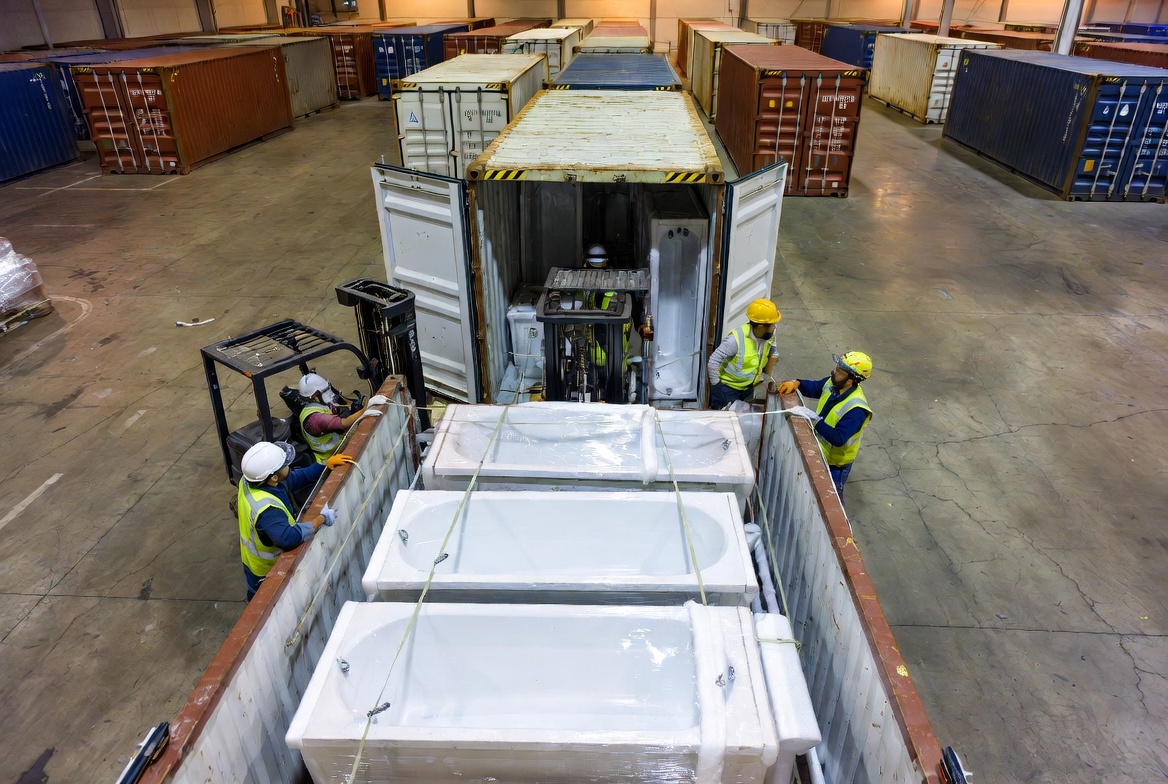
A standard 40HQ container has a payload limit of approximately 26–28 tons. If each bathtub weighs:
- 80 kg → ~320 units per container
- 100 kg → ~260 units per container
This difference can significantly affect cost per unit landed, especially in large-volume orders.
While reducing weight is attractive, insufficient strength leads to serious risks:
- Cracking during transit
- Surface deformation under pressure
- Reduced lifespan in end-use environments
- Warranty claims and brand reputation damage
For premium markets such as North America and Europe, buyers expect:
- High load-bearing capacity
- Resistance to temperature fluctuations
- Long-term structural stability
In other words, strength is directly tied to perceived product quality.
Material selection is the most critical factor in balancing weight and strength.
1. Acrylic (Reinforced)
- Lightweight and cost-effective
- Moderate strength when reinforced with fiberglass
- Ideal for large-scale export
2. Solid Surface
- Higher density and premium feel
- Excellent strength and durability
- Heavier, increasing shipping cost
3. Cast Iron
- Extremely strong and durable
- Very heavy, leading to high freight costs
- Limited suitability for modern export efficiency
4. Stone Resin
- Balanced strength and aesthetics
- Moderate-to-heavy weight
- Popular in high-end markets
From an engineering standpoint, reinforced acrylic and composite materials often provide the best balance between weight and strength for export-oriented production.
Modern manufacturers are no longer choosing between weight and strength—they are engineering both.
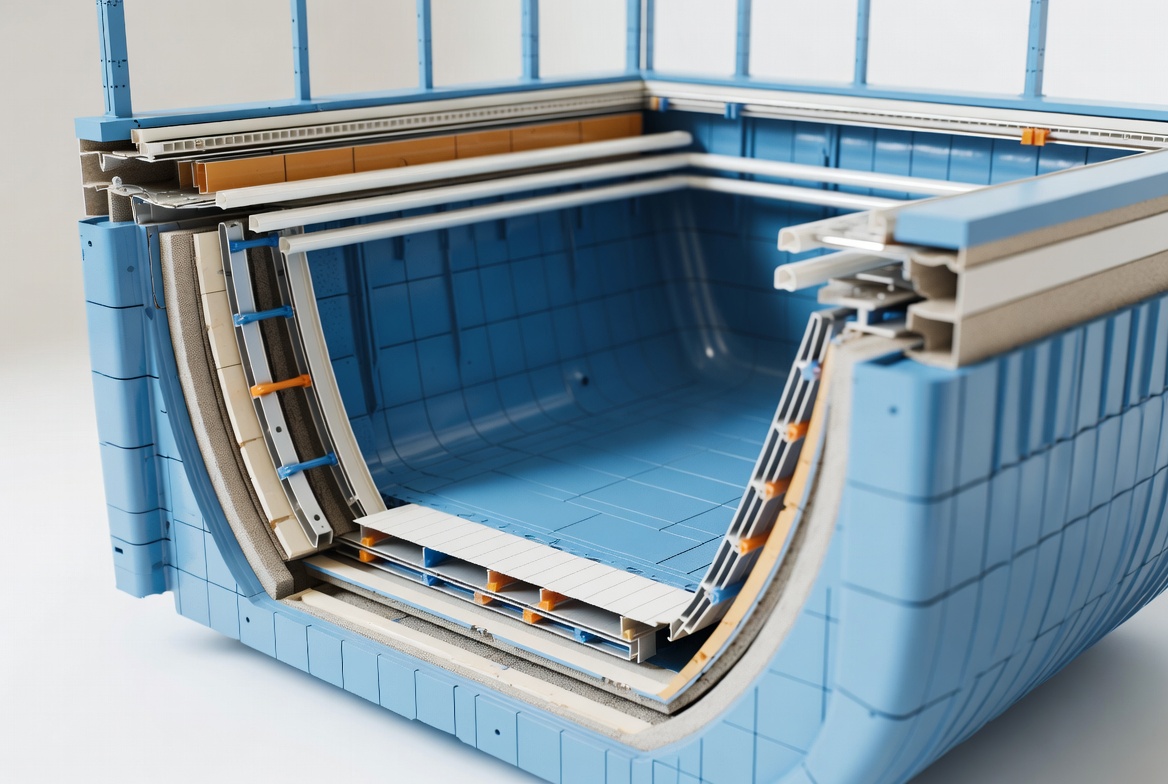
Instead of increasing overall thickness, engineers focus on:
- Targeted reinforcement zones (base, edges, stress points)
- Ribbed structures for load distribution
- Multi-layer composite construction
This approach reduces unnecessary mass while maintaining durability.
Combining materials allows manufacturers to achieve optimal performance:
- Acrylic + fiberglass reinforcement
- Resin + mineral fillers
- Lightweight core + rigid outer shell
This hybrid strategy delivers high strength-to-weight ratios, which is crucial for export products.
Leading manufacturers use simulation tools to:
- Predict stress distribution
- Identify weak points
- Optimize material usage
This reduces over-engineering and ensures precision strength where needed.
In a recent OEM project for a European brand, a bathtub model was redesigned with the following improvements:
- Reduced average weight by 18%
- Maintained load capacity above 250 kg
- Increased container loading by 22%
- Reduced damage rate during transit by over 30%
- Smart engineering can significantly improve logistics efficiency
- Weight reduction does not have to compromise product integrity
- Design optimization directly impacts profitability
Many overlook that packaging contributes significantly to total shipping weight.
- Use honeycomb cardboard instead of solid wood crates
- Apply foam-in-place technology for better protection with less material
- Design stackable packaging structures
- Reduced packaging weight by 10–25%
- Improved protection during long-distance transport
- Enhanced loading efficiency
If you are sourcing bathtubs for overseas markets, here is a practical framework:
- Target price range
- Quality expectations
- Regulatory standards
Ask suppliers for:
- Product weight per model
- Load-bearing test results
- Material composition details
Work with manufacturers to:
- Adjust thickness strategically
- Optimize reinforcement areas
- Improve packaging design
- Drop tests
- Load tests
- Transportation simulations
The industry is evolving rapidly with new technologies:
New composites offer:
- Higher strength-to-weight ratios
- Improved durability
- Better environmental performance
Reducing weight also contributes to:
- Lower emissions in transportation
- Reduced material consumption
- Improved lifecycle efficiency
Some manufacturers are exploring:
- Detachable components
- Flat-pack solutions
- Easier installation and shipping
From years of working with international clients, one key principle stands out:
The goal is not the lightest product, nor the strongest product—but the most efficient product.
Efficiency is defined by:
- Cost per shipped unit
- Damage rate
- Customer satisfaction
- Long-term performance
Manufacturers who master this balance gain a clear competitive advantage in global markets.
For overseas buyers, choosing the right manufacturing partner is critical.
An experienced OEM/ODM supplier can:
- Customize material composition
- Optimize structural design
- Improve packaging efficiency
- Align product specifications with market needs
At Jiaxing Miluo Smart Home Co., Ltd., the focus is on delivering integrated solutions, not just products—ensuring every bathtub is engineered for both performance and shipping efficiency.
If you are looking to reduce shipping costs while maintaining premium quality, it is time to rethink how your products are engineered. Partner with a manufacturer that understands the balance between weight vs strength and can deliver tailored solutions for your market.
Reach out today to explore customized bathtub designs that improve both logistics efficiency and product performance.
Weight directly affects shipping cost, container capacity, and handling efficiency, making it a key factor in overall profitability.
Yes. With advanced materials and structural design, lightweight bathtubs can achieve high strength and durability.
Reinforced acrylic and composite materials typically offer the best balance for export-focused products.
Optimized packaging materials and designs reduce total shipment weight and improve container utilization.
Common tests include load-bearing tests, impact resistance tests, and transportation simulation tests.
2. https://www.mordorintelligence.com
3. https://www.grandviewresearch.com
4. https://www.engineeringtoolbox.com


