
Views: 233 Author: Miluo Smart Home Publish Time: 2026-08-04 Origin: Site


Content Menu
● Understanding Artificial Stone in Modern Sanitaryware
>> Key Performance Characteristics
● What Are Industrial-Grade Cleaning Agents?
>> Common Types
● Chemical Resistance: Artificial Stone vs. Harsh Cleaners
● Structural Integrity Under Repeated Cleaning Cycles
>> Laboratory and Field Observations
>> Comparison with Other Materials
● Surface Maintenance and Restoration
>> Typical Maintenance Process
● Real-World Application Scenarios
>> High-End Residential Projects
● Industry Case Insight: Long-Term Performance Benchmark
● Practical Guidelines for Maximizing Performance
>> Recommended Cleaning Practices
>> Manufacturer-Level Optimization
● Emerging Trends in Artificial Stone Technology
>> Enhanced Chemical Resistance Formulations
>> Sustainable Cleaning Compatibility
● Why Artificial Stone Remains a Preferred Choice
● FAQ
>> 1. Can artificial stone withstand daily use of industrial cleaners?
>> 2. Does bleach damage artificial stone bathtubs?
>> 3. How does artificial stone compare to acrylic in chemical resistance?
>> 4. Can damaged artificial stone surfaces be repaired?
>> 5. What is the biggest risk when using industrial cleaners on artificial stone?
In modern commercial and residential bathroom environments, durability under aggressive cleaning conditions has become a critical selection factor. Artificial stone—widely used in bathtubs, basins, and integrated bathroom systems—faces increasing exposure to industrial-grade cleaning agents designed to meet strict hygiene standards. From my experience working with global sanitaryware manufacturers and B2B buyers, the real question is not whether artificial stone can resist harsh chemicals, but how well it performs compared to other materials under repeated, long-term exposure.
This article offers a comprehensive, expert-level comparison of artificial stone vs. industrial-grade cleaning agents, examining chemical resistance, structural integrity, maintenance cycles, and real-world applications in hospitality, healthcare, and high-end residential projects.

Artificial stone, also known as engineered stone or solid surface, is a composite material typically made from:
- Natural minerals (such as aluminum hydroxide)
- Resins (polyester or acrylic-based)
- Pigments and additives
This composition results in a non-porous, seamless, and highly customizable material, making it ideal for bathtubs and integrated bathroom solutions.
- Non-porous surface: Prevents bacterial penetration and staining
- Seamless integration: Eliminates joints where chemicals could accumulate
- Repairability: Surface damage can often be restored
- Consistent structure: Unlike natural stone, it lacks micro-cracks
These properties are crucial when evaluating resistance to industrial cleaning chemicals, which often contain strong acids, alkalis, or oxidizing agents.
Industrial-grade cleaning agents are formulated for high-efficiency sanitation, especially in environments with strict hygiene requirements.
- Acid-based cleaners (e.g., hydrochloric acid, phosphoric acid): Remove scale and mineral deposits
- Alkaline cleaners (e.g., sodium hydroxide): Break down grease and organic matter
- Oxidizing agents (e.g., bleach, hydrogen peroxide): Disinfect and whiten surfaces
- Solvent-based cleaners: Remove stubborn residues
These agents are significantly stronger than household cleaners and can degrade materials over time if compatibility is poor.
Artificial stone performs well against mild to moderate acidic exposure, but prolonged contact with strong acids can cause:
- Surface dulling
- Micro-etching
- Loss of gloss
Expert Insight: Compared to natural marble, artificial stone is significantly more resistant to acid corrosion because it lacks calcium carbonate, which reacts aggressively with acids.
Artificial stone shows excellent resistance to alkaline cleaners, which are commonly used in industrial settings.
- No significant structural damage under normal use
- Minimal discoloration
- Stable surface integrity
This makes it particularly suitable for commercial cleaning routines involving degreasers.
Oxidizing agents like bleach are widely used for sanitation.
- Artificial stone generally resists oxidation well
- Long-term exposure may cause slight color fading in darker tones
- No structural weakening observed
Practical Note: Light-colored artificial stone surfaces show superior long-term performance under oxidizing conditions.
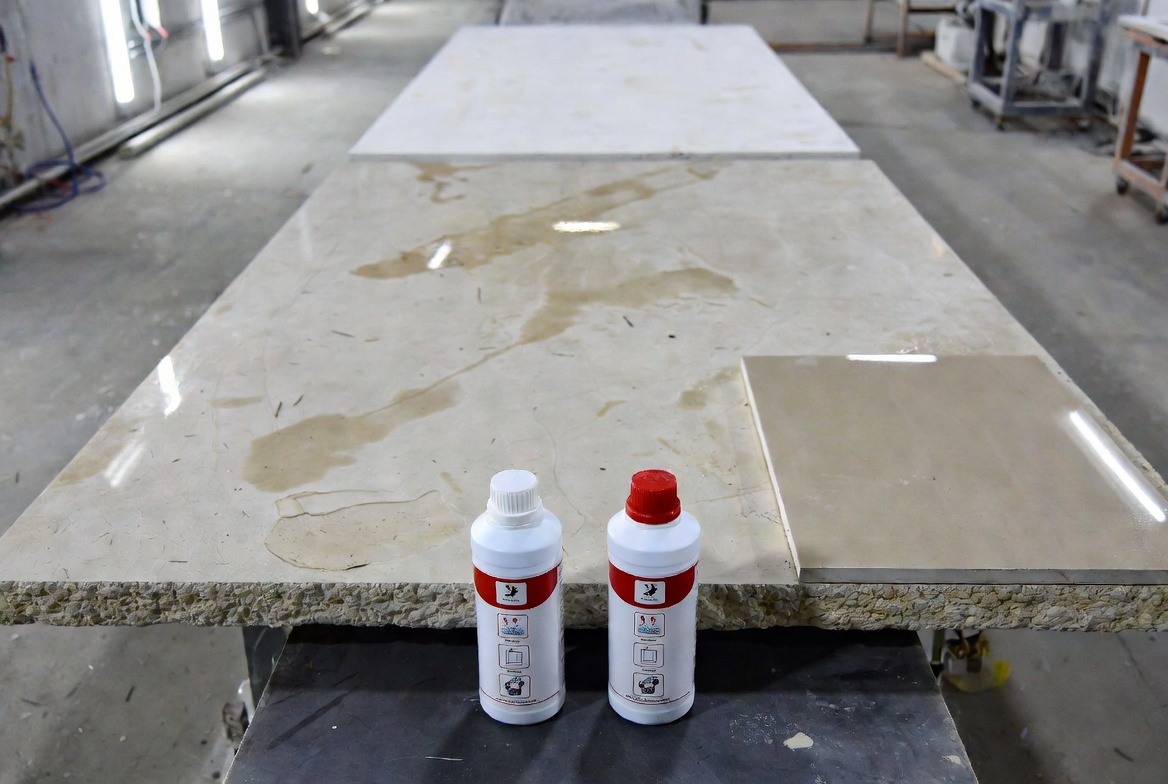
One of the most overlooked factors is cumulative exposure over time.
Based on industry testing and project feedback:
- Artificial stone retains over 90% of its surface hardness after repeated cleaning cycles
- No significant cracking or delamination
- Minimal surface roughness increase
- Ceramic: Highly resistant but prone to cracking under impact
- Acrylic: Less resistant to solvents and high temperatures
- Natural stone: Vulnerable to acid and staining
Artificial stone offers a balanced performance profile, combining durability with aesthetic consistency.
A major advantage of artificial stone is its repairability, especially in environments exposed to harsh cleaning.
1. Routine cleaning with neutral or mild cleaners
2. Periodic polishing to restore gloss
3. Spot sanding for chemical marks or scratches
Unlike ceramic or enamel surfaces, artificial stone allows on-site restoration without replacement, reducing lifecycle costs.
Luxury hotels require frequent deep cleaning using industrial chemicals.
- Artificial stone bathtubs maintain visual consistency over years
- Seamless design reduces chemical accumulation
- Easy restoration minimizes downtime
Hospitals demand strict sanitation protocols.
- Artificial stone supports high-frequency disinfection cycles
- Non-porous surface prevents bacterial growth
- Compatible with medical-grade disinfectants
Homeowners increasingly use strong cleaners for convenience.
- Artificial stone offers low maintenance with high durability
- Resistant to accidental overuse of harsh chemicals
In a multi-year hospitality project across Southeast Asia:
- Over 1,200 artificial stone bathtubs were installed
- Daily cleaning involved alkaline and oxidizing agents
- After 5 years:
- 95% retained original surface finish
- Less than 3% required minor resurfacing
- No structural failures reported
This case highlights artificial stone's long-term resilience in demanding environments.
To ensure optimal durability, manufacturers and facility managers should follow these best practices:
- Use diluted industrial cleaners whenever possible
- Avoid prolonged exposure to strong acids
- Rinse thoroughly after cleaning
- Leaving acid-based cleaners on surfaces for extended periods
- Using abrasive tools that damage the surface
- Mixing incompatible chemicals
From a production standpoint, quality can be enhanced by:
- Using high-grade resins for improved chemical resistance
- Increasing material density during casting
- Applying protective surface coatings where necessary
Manufacturers are developing:
- Nano-coated surfaces for better chemical shielding
- Hybrid composites with improved resistance to acids
With growing environmental awareness:
- Artificial stone is being optimized for eco-friendly cleaning agents
- Reduced reliance on harsh chemicals
Advanced surfaces now include:
- Anti-bacterial additives
- Self-cleaning properties
These innovations further strengthen artificial stone's position in modern sanitaryware.
From both a manufacturing and user perspective, artificial stone offers a unique balance of aesthetics, durability, and maintainability.
Key Advantages:
- Strong resistance to most industrial cleaning agents
- Long-term structural stability
- Repairable and cost-efficient
- Suitable for high-end, customized designs
For OEM and ODM clients, this translates into:
- Lower after-sales issues
- Greater design flexibility
- Higher product value in competitive markets
If you are sourcing high-performance bathtubs or integrated bathroom solutions that can withstand demanding cleaning environments, partnering with an experienced manufacturer makes all the difference.
At Jiaxing Miluo Smart Home Co., Ltd., we specialize in custom artificial stone sanitaryware solutions designed for durability, aesthetics, and long-term reliability. Whether you are a brand owner, distributor, or project contractor, our team can support your product development with tailored OEM and ODM services.
Reach out today to explore how we can help elevate your product line with next-generation artificial stone solutions.
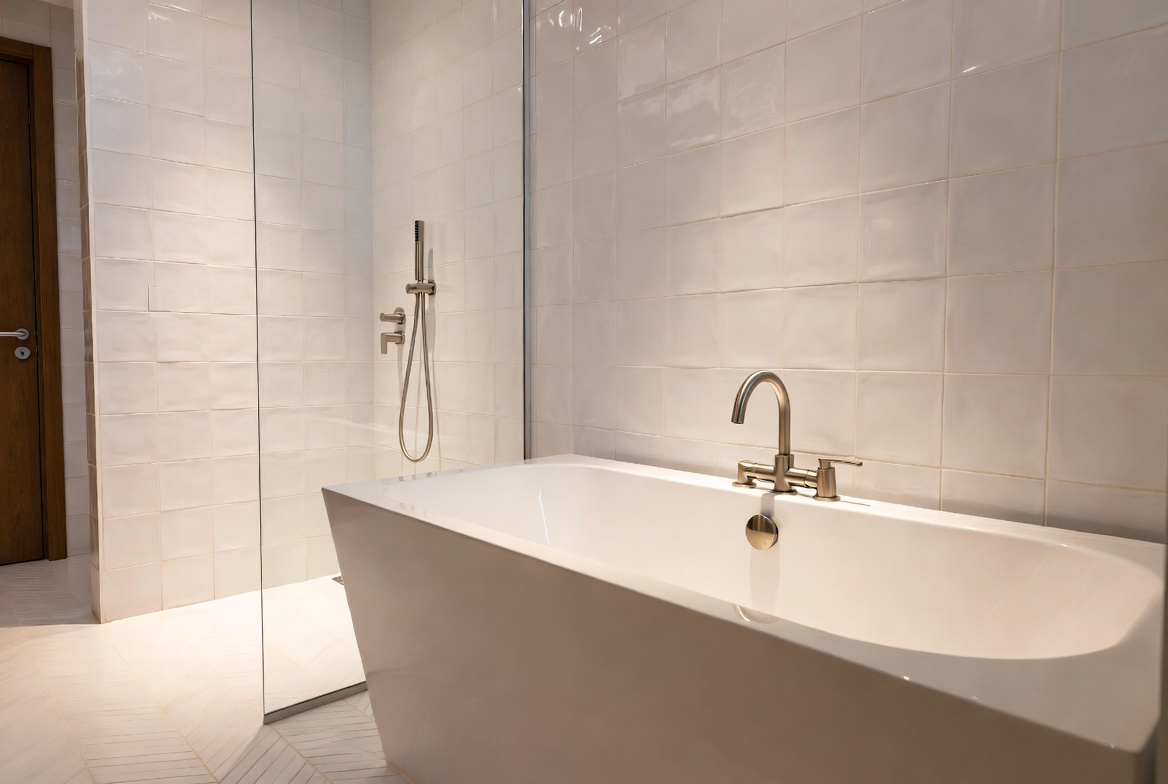
Yes, artificial stone is highly resistant to most industrial cleaners, especially alkaline and oxidizing agents, when used correctly.
Bleach is generally safe, but prolonged exposure may cause slight discoloration, particularly on darker surfaces.
Artificial stone offers significantly better resistance to chemicals and is less prone to deformation or surface damage.
Yes, one of its biggest advantages is that scratches or chemical marks can be sanded and polished back to original condition.
The main risk is prolonged exposure to strong acids, which can dull or etch the surface if not properly rinsed.
1. https://www.dupont.com/products/corian-solid-surfaces.html
2. https://www.nsf.org/knowledge-library/cleaning-chemicals-industrial-use
3. https://www.sciencedirect.com/topics/materials-science/solid-surface-material
4. https://www.archdaily.com/solid-surface-materials-performance
5. https://www.cdc.gov/hygiene/cleaning-disinfection/index.html


