
Views: 248 Author: Miluo Smart Home Publish Time: 2026-07-30 Origin: Site


Content Menu
● Why Bathtub Color Matters in Luxury Projects
● Grey Resin Stone Bathtub Applications
● Black Resin Stone Bathtub Applications
>> Best-fit black applications
● Dual-tone Resin Stone Bathtub Applications
>> Best-fit dual-tone applications
>> Why buyers choose dual-tone
● Side-by-Side Color Comparison
● Material and Finish Considerations
>> Practical checks before mass production
● Market Positioning by Buyer Type
● Expert Recommendation for Projects
● FAQ
>> 1. Which resin stone bathtub color sells best internationally?
>> 2. Is black harder to maintain than grey?
>> 3. Where does a dual-tone bathtub work best?
>> 4. Is resin stone suitable for luxury bathrooms?
>> 5. Can the color be customized for OEM or ODM orders?
When a buyer asks which resin stone bathtub color works best, the real answer depends on the project, the market, and the interior design language. Grey, black, and dual-tone resin stone bathtubs each solve different commercial and visual needs, from boutique hotels to luxury homes and high-end retail collections.
Color is not just a style choice. In premium bathroom design, it influences perceived value, spatial balance, maintenance expectations, and how easily the bathtub fits with surrounding materials such as stone, wood, tile, and metal. Grey and black are especially popular because they support modern, calm, and upscale interiors, while dual-tone designs add stronger visual identity for brands that want a signature look.
From a manufacturing and sourcing perspective, bathtub color also affects product positioning. A neutral tone may suit wide distribution channels, while a customized color strategy can help a brand stand out in hotel projects, developer packages, and private-label retail lines. For OEM and ODM buyers, this makes color selection a commercial decision, not only a design decision.

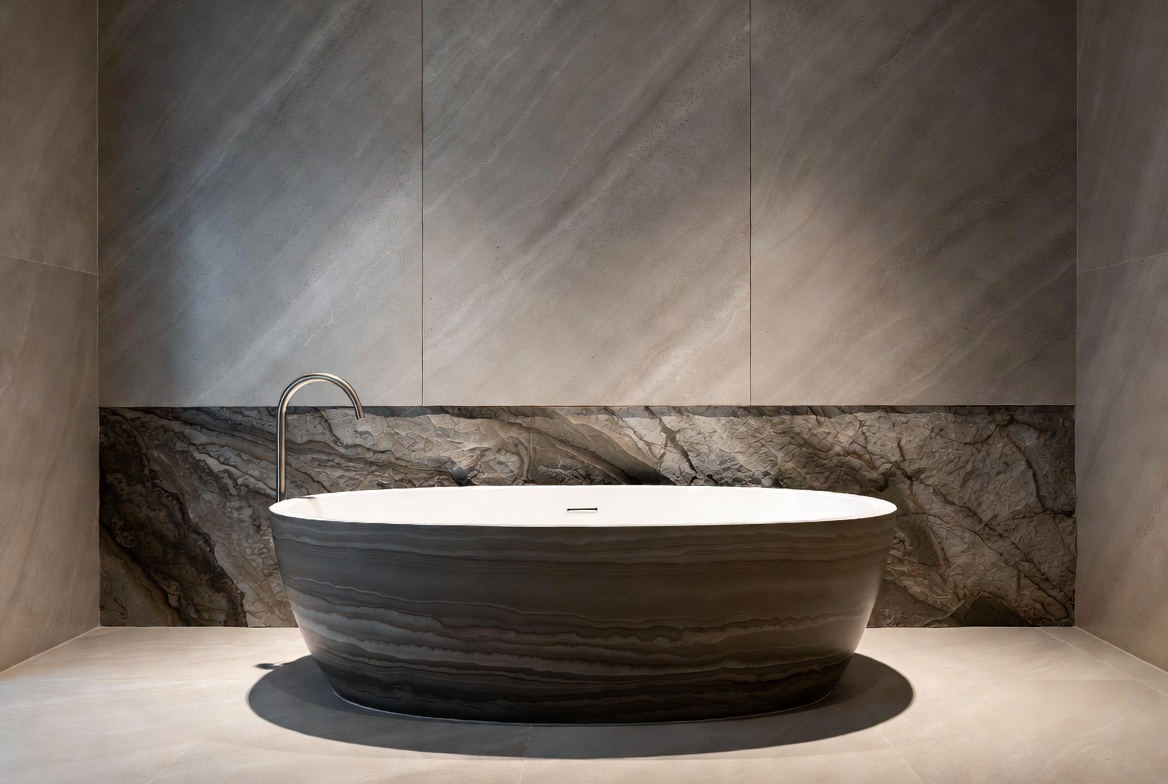
Grey resin stone bathtubs are the most versatile option in many international markets. They pair well with Scandinavian, minimalist, Japandi, industrial, and contemporary interiors because grey feels restrained, balanced, and easy to coordinate. In residential projects, grey tubs often help the bathroom feel softer and more architectural at the same time.
Grey also works well in hospitality projects. Hotels often want a look that feels premium without overpowering the room, and grey delivers that middle ground. In practical terms, grey can hide minor water spots, dust, and everyday wear better than very light finishes, which supports long-term presentation in busy environments.
- Modern apartments and condos.
- Boutique hotels and serviced apartments.
- Spa-style master bathrooms.
- Showrooms that need a broad-market neutral sample.
- It is easy to match with wall tiles and vanities.
- It creates a calm, upscale atmosphere.
- It supports both matte and polished design directions.
- It usually has broad acceptance across export markets.
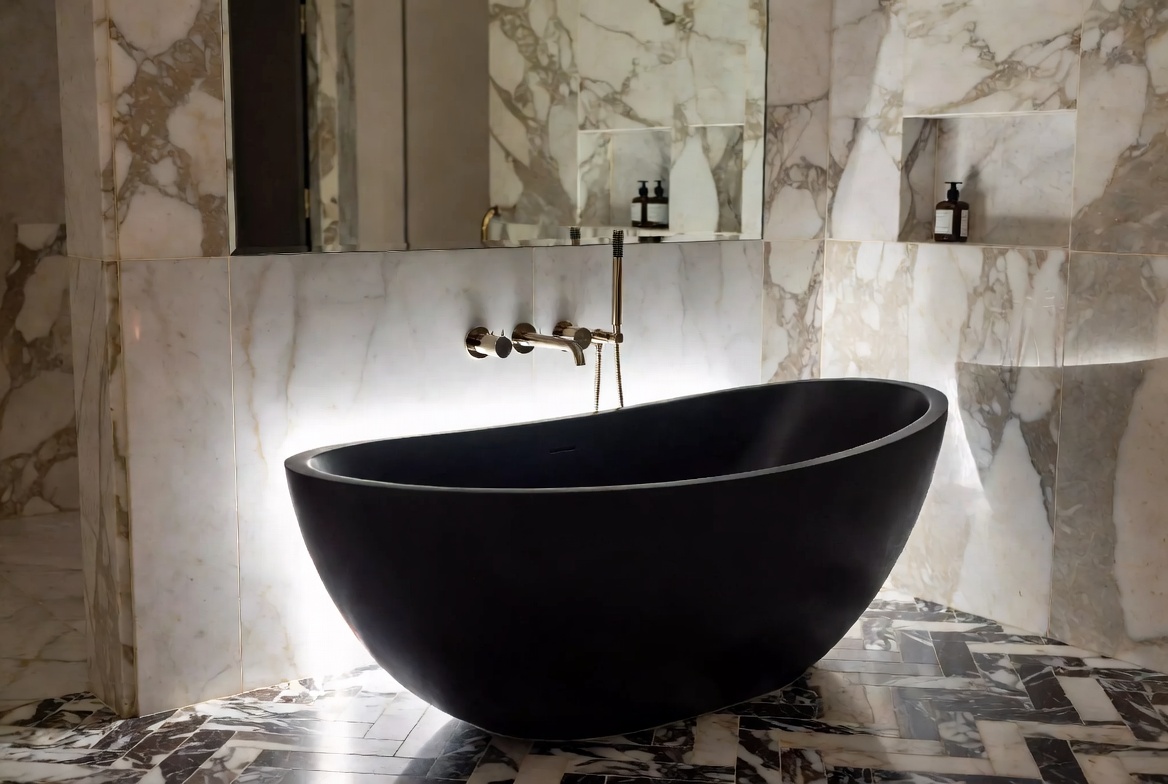
Black resin stone bathtubs are chosen when a project needs stronger contrast, deeper luxury, and a more dramatic focal point. Black instantly creates a high-end mood, especially when paired with brass, chrome, marble-look surfaces, or warm wood accents. For designers, black is often the color that turns the bathtub into the hero element of the room.
Black tubs are particularly effective in modern villas, luxury suites, concept bathrooms, and editorial-style interiors. They also work well for brands that want a bold product line with clear visual distinction. However, black can show soap residue, limescale, and fingerprints more easily than grey, so it often requires stronger cleaning discipline in real-world use.
- Luxury hotel suites.
- Private villas and penthouses.
- Designer showrooms and display rooms.
- High-impact retail collections.
- It creates strong visual contrast.
- It communicates premium positioning.
- It suits monochrome and masculine design themes.
- It makes a bathroom feel more customized and exclusive.
Dual-tone resin stone bathtubs are ideal for brands and projects that need differentiation. By combining two finishes or two color areas, the tub gains depth, identity, and a more customized appearance. This approach works especially well for premium collections where the buyer wants the product to feel less standard and more design-led.
In commercial practice, dual-tone tubs are useful for branded collections, flagship retail displays, and hospitality projects with a strong interior concept. They can also help visually separate the tub from the floor or wall, which is useful in compact bathrooms where a single-color object might look too heavy. Dual-tone treatment can also support limited editions or market-specific product lines.
- Boutique hotel bathrooms.
- High-end retail and launch collections.
- Designer-led residential projects.
- Private-label brand differentiation.
- It adds personality without losing sophistication.
- It improves product memorability.
- It supports premium storytelling.
- It allows more flexible design coordination.
| Color option | Visual effect | Best applications | Commercial advantage | Design risk |
|---|---|---|---|---|
| Grey | Calm, balanced, versatile | Apartments, hotels, showrooms | Broad market appeal | Can feel too safe if not styled well |
| Black | Dramatic, luxurious, bold | Villas, suites, premium retail | Strong premium perception | Shows residue more easily |
| Dual-tone | Distinctive, customized, layered | Brand collections, concepts, hospitality | Strong differentiation | Needs careful design execution |
Grey is the safest all-around choice. Black is the strongest statement choice. Dual-tone is the best choice when the goal is brand identity and visual originality.
For resin stone bathtubs, the color decision should always be tied to the finish, not just the pigment. Matte surfaces often feel softer and more architectural, while smoother finishes can look more polished and reflective. Material consistency, surface quality, and edge detailing matter because buyers in the luxury segment notice touch, depth, and visual uniformity very quickly.
Color stability is also important for export projects. A good production process should control mixing ratios, curing, and finishing so the final color tone remains consistent from sample to mass production. That matters especially when a brand wants the same grey or black across different model sizes or even across a full bathroom collection.
1. Confirm the target finish: matte, satin, or smooth.
2. Review the color sample under warm and cool light.
3. Test the color next to tiles, taps, and vanities.
4. Verify cleaning behavior and surface visibility of marks.
5. Approve a production standard before bulk order.
Different buyer groups respond differently to each color family. Distributors often prefer grey because it sells across a wider audience, while premium brand owners may favor black or dual-tone models to create stronger shelf impact. Hotel procurement teams usually look for a balance of style, durability, and maintenance convenience, which makes grey and selected dual-tone options especially attractive.
For OEM and ODM projects, the smartest strategy is often to develop a color ladder. That means one neutral hero color, one premium statement color, and one custom design option for special projects. This gives the buyer a cleaner product architecture and improves the chance of winning different customer segments at the same time.
In practice, the best choice depends on the project goal. If the objective is volume and broad market appeal, grey is usually the safest. If the aim is luxury impact and strong visual identity, black is more powerful. If the brand wants a more distinctive, curated, or launch-ready collection, dual-tone creates the most differentiation.
For manufacturers like Jiaxing Miluo Smart Home Co., Ltd., the strongest strategy is to support all three with flexible customization in size, finish, and tone. That allows brand clients, wholesalers, and project developers to select the right bathtub for each market rather than forcing one universal style.
Before placing an order, buyers should confirm the following:
- Target market and project type.
- Required color tone and surface finish.
- Bath size, shape, and installation style.
- Cleaning and maintenance expectations.
- Packaging and private-label requirements.
- Sampling approval process.
A structured approval process reduces rework and helps ensure the final bathtub matches both the design intent and the commercial brief. For export buyers, that saves time during sample development and helps avoid costly inconsistencies during production.
Grey, black, and dual-tone resin stone bathtubs each serve a different purpose in the market. Grey is versatile, black is premium and bold, and dual-tone is customized and distinctive. The right selection depends on whether the project needs mass appeal, visual drama, or brand differentiation.
For OEM and ODM sourcing, the best approach is to choose a manufacturer that can control color consistency, surface quality, and customization flexibility. That is what turns a bathtub from a single product into a scalable bathroom solution.
For project-based sourcing, sample development, or private-label customization, request a color-matched resin stone bathtub solution tailored to your market and brand position.
Grey usually has the broadest appeal because it fits many design styles and is easier to place in both residential and hospitality projects.
Yes. Black surfaces can show residue, water marks, and fingerprints more easily, so cleaning discipline matters more.
Dual-tone bathtubs work best in brand collections, boutique hotels, private-label launches, and projects that need a stronger signature look.
Yes. It is widely used in premium bathrooms because it supports strong form, a refined surface, and good long-term presentation when properly made and maintained.
Yes. A manufacturer with customization capability can adjust color tone, finish, size, and shape to match brand and project requirements.
1. [Miluo Bath official website] [china-miluo]
2. [Miluo product information on Made-in-China] [jxmiluo.en.made-in-china]
3. [Stone resin bathtub manufacturing process] [badeloft]
4. [Bathtub color trend insights for 2025] [horow]
5. [Luxury bathroom color trend article] [kitchensinsideout]
6. [Gray stone resin bathtub product listing] [homedepot]
7. [Stone resin bathtub value and maintenance overview] [magnushomeproducts]
8. [Miluo sustainable artificial stone article] [china-miluo]
9. [Miluo OEM/ODM customization note on social profile] [facebook]
10. [Premium bathroom vanity and project solution reference] [lamoobathroom]


