
Views: 222 Author: Miluo Smart Home Publish Time: 2026-05-31 Origin: Site


Content Menu
● What Is a Stainless Steel Sink?
● What Is a Granite Composite Sink?
● Side‑by‑Side Comparison: Stainless Steel vs Granite Composite
>> Material Performance Snapshot
● Durability and Lifespan in Real‑World Use
● Noise, Comfort, and Daily User Experience
● Maintenance, Cleaning, and Hygiene
● Design, Color, and Aesthetic Flexibility
● Installation Types and Countertop Compatibility
● Cost, Value, and Total Ownership
● Expert Insights from the Field
● Practical Selection Checklist for Homeowners and Brands
● How an OEM/ODM Partner Adds Value
● Step‑by‑Step Guide to Choosing the Right Sink for Your Project
● Call to Action for Brands, Wholesalers, and Manufacturers
● Frequently Asked Questions (FAQ)
Stainless steel and granite composite sinks each offer distinct advantages in durability, aesthetics, and cost, and the "best" option depends on how your customers cook, clean, and design their kitchens or bathrooms. As a manufacturer and OEM/ODM partner, you can use both materials strategically to match different segments—from budget-friendly stainless steel projects to high-end, design‑driven granite composite installations. [blockrenovation]
Choosing between stainless steel and granite composite sinks is one of the most important decisions for homeowners, designers, and overseas brands planning new kitchen or bathroom collections. From my perspective as a long‑time sink supplier working with international OEM and ODM partners, the right material should balance performance, design, and lifecycle cost—not just price. [kingkonree]
In this guide, we will break down how stainless steel and granite composite sinks compare in durability, noise, maintenance, aesthetics, installation, and total cost of ownership, using both industry references and real‑world project experience. We will also share actionable selection checklists and professional tips that brands and wholesalers can use to make more confident purchasing decisions. [livingetc]
A stainless steel sink is typically made from a chromium–nickel steel alloy (often 18/8 or 18/10) that provides strength, corrosion resistance, and a characteristic metallic finish. These sinks have been a staple in residential and commercial kitchens for decades due to their versatility and competitive cost. [consumerreports]
Key characteristics of stainless steel sinks: [vizzzio]
- Lightweight construction, often in the range of 15–25 lbs for standard residential sizes
- Brushed or satin finishes that help disguise small scratches
- Wide range of bowl configurations (single, double, triple) and shapes
- Compatible with topmount and undermount installations on many countertop types
Because stainless steel is relatively easy to form, it is ideal for custom OEM sink designs that require specific bowl geometry, radius corners, or integrated accessories such as drainboards. [kkrsolid]
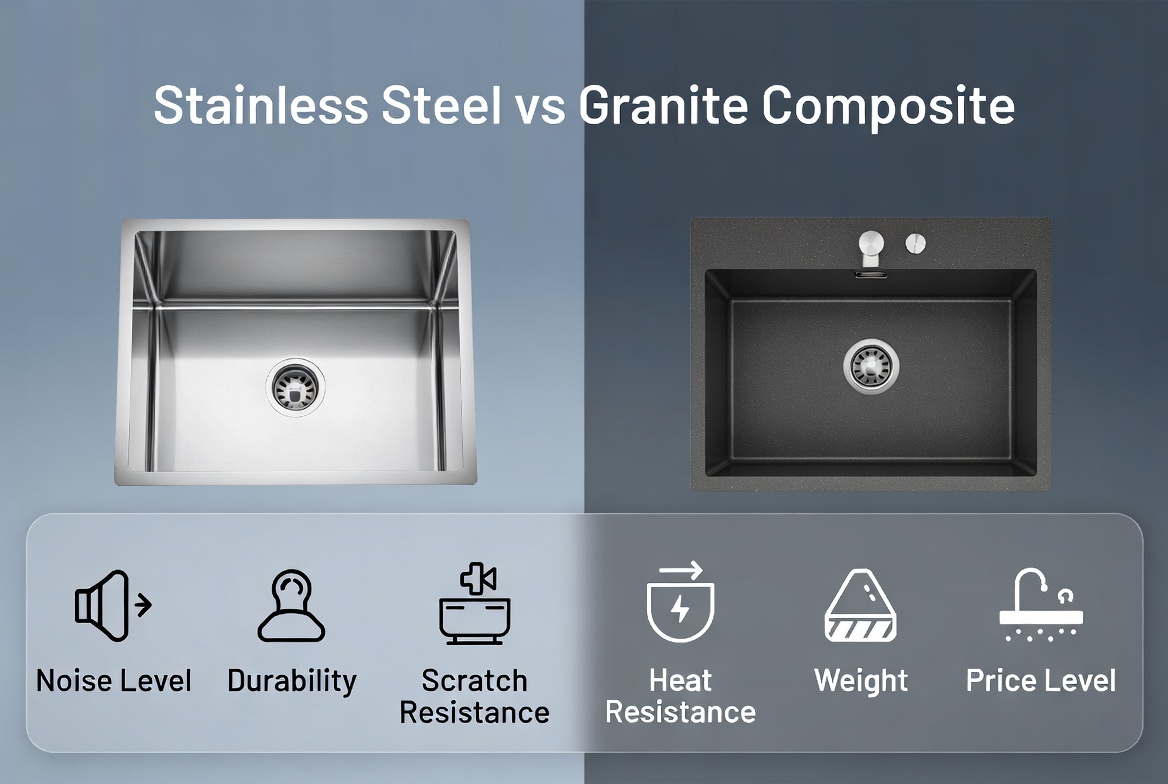
A granite composite sink is manufactured from a blend of finely crushed stone (often granite or quartz, around 70–80 percent by content) and durable acrylic resins that bind the material into a solid mass. The result is a dense, non‑porous sink with a matte or softly textured finish, available in multiple colors. [cectops]
Core attributes of granite composite sinks: [blockrenovation]
- High resistance to scratching, staining, and heat compared with many traditional stainless steel sinks
- Color‑through material, so minor scuffs are less obvious because the surface and interior are the same shade
- Naturally quieter than metal sinks due to material density
- Typically heavier than stainless steel, which may require stronger cabinet or support structures
These sinks are often positioned as premium or design‑focused options, especially in dark tones such as black and charcoal that complement contemporary interiors. [vizzzio]
The table below summarizes the main differences between stainless steel and granite composite sinks based on industry data and market observations. [cectops]
| Feature | Stainless Steel Sink | Granite Composite Sink |
|---|---|---|
| Core material | Chromium–nickel steel alloy (e.g., 18/8, 18/10) (blockrenovation) | ~80% stone (granite/quartz) + ~20% acrylic resin (blockrenovation) |
| Durability | Good; can dent or show scratches (blockrenovation) | Very high scratch and impact resistance (blockrenovation) |
| Heat resistance | High but may discolor under extreme heat (vizzzio) | High heat tolerance; generally stable under normal use (blockrenovation) |
| Noise | Louder; needs sound‑deadening pads (blockrenovation) | Naturally quieter due to density (blockrenovation) |
| Stain resistance | Good; water spots visible, especially with hard water (blockrenovation) | Excellent; highly stain‑resistant surface (blockrenovation) |
| Color options | Metallic finishes only (blockrenovation) | Wide range: black, white, beige, grey, etc. (blockrenovation) |
| Weight | Lightweight; easier to handle onsite (blockrenovation) | Heavier; requires careful installation (blockrenovation) |
| Typical cost range | Lower entry price; strong value (blockrenovation) | Higher initial cost; premium segment (blockrenovation) |
| Eco‑friendly options | Recyclable metal materials (consumerreports) | Can use eco‑friendly stone/resin formulas (blockrenovation) |
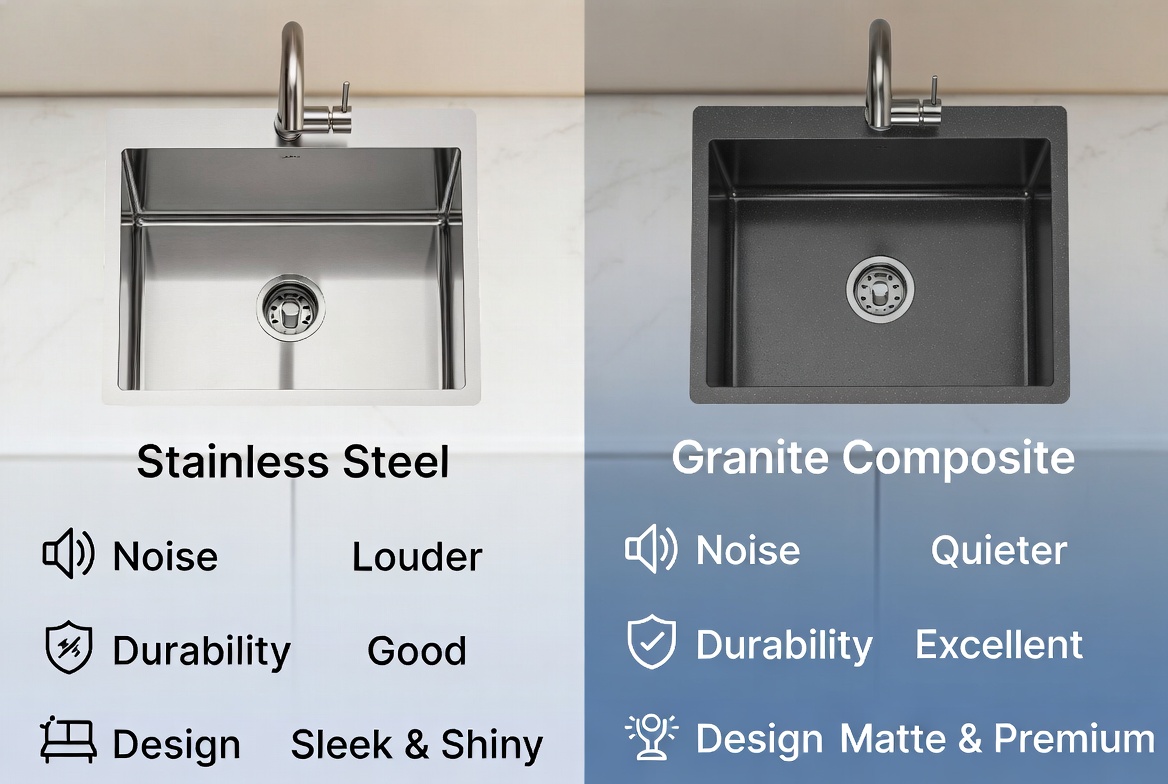
From the perspective of a manufacturer supplying sinks to export markets, durability claims must be tested, not just marketed. Industry testing and field feedback show that granite composite sinks can be up to significantly more scratch‑resistant than standard stainless steel, particularly when users frequently drag cookware across the surface. [kingkonree]
However, stainless steel has its own strengths: [consumerreports]
- It tolerates thermal shocks (switching from hot to cold) very well.
- It is less likely to chip compared with some stone‑based materials.
In heavy‑duty environments—like small commercial kitchens or rental properties—high‑quality stainless steel remains a reliable, forgiving choice. For design‑led residential projects that demand long‑term color and scratch stability, granite composite often delivers superior visual performance. [blockrenovation]
When we evaluate sinks from a user experience perspective, acoustic comfort is a major differentiator. Stainless steel, especially in lighter gauges, can be noticeably noisier when water or cookware hits the surface, which is why better models use sound‑deadening pads or undercoating. [consumerreports]
Granite composite sinks are naturally quieter because of their density and structure. Users who value a calm kitchen or open‑plan living space often give very positive feedback on the "solid" and quiet feel of these sinks, especially compared with entry‑level stainless models. [vizzzio]
From after‑sales service experience, cleaning expectations are often where customer satisfaction is won or lost. Stainless steel sinks are relatively low maintenance, but they tend to show water spots, fingerprints, and minor scratches, particularly in regions with hard water. Brushed finishes help hide light marks, and deeper scratches can often be improved with manufacturer‑recommended polishing methods. [kkrsolid]
Granite composite sinks offer excellent stain resistance, and their matte finishes make everyday smudges less obvious. Regular cleaning with mild detergents is usually enough, though abrasive cleaners should be avoided to maintain surface integrity. [cectops]
For both materials, proper installation and sealing around the sink cut‑out is critical to prevent moisture penetration and hygiene issues at the countertop interface. [kohler]
Stainless steel provides a timeless, professional look that suits both residential and commercial kitchens. It pairs easily with other metal finishes, appliances, and a wide variety of countertop materials, from laminate to natural stone. [livingetc]
Granite composite sinks, in contrast, appeal strongly to designers and homeowners seeking: [blockrenovation]
- Color‑matched installations with countertops and cabinetry
- A softer, matte visual that hides water marks better than mirrored metal
- Distinctive, high‑end aesthetics for modern or minimalist interiors
As an OEM/ODM partner, you can position stainless steel as the reliable standard line and granite composite as an upgrade or "design collection," giving your distributors clear upsell paths. [kingkonree]
Both stainless steel and granite composite sinks support multiple installation types, but countertop material and budget will guide the best choice. [kohler]
Topmount (drop‑in) sinks: [consumerreports]
- Suitable for laminated or Formica countertops that may not support undermount designs.
- Typically more cost‑effective to install.
- Available in both stainless steel and granite composite configurations.
Undermount sinks: [kohler]
- Commonly paired with solid surface, stone, or engineered countertops such as granite and marble.
- Provide a seamless, easy‑to‑wipe surface from countertop to sink.
- Often used in higher‑end projects and demand careful sealing and support.
Because granite composite sinks are heavier, professional installation is strongly recommended to ensure long‑term stability and to protect both the cabinet and countertop. [cectops]
Industry pricing data and market observation show that stainless steel sinks generally start at lower price points, making them attractive for volume projects, entry‑level housing, and cost‑sensitive renovations. Granite composite sinks usually cost more upfront but offer enhanced aesthetics, noise performance, and scratch resistance. [vizzzio]
For brands and wholesalers, it is useful to think in terms of total cost of ownership: [blockrenovation]
- Stainless steel may require more frequent cosmetic maintenance but is easy to refurbish and replace.
- Granite composite may reduce callbacks related to noise and visible scratching, especially in premium segments.
By offering both options under your product line, you enable customers to trade up based on lifestyle rather than guesswork, improving both satisfaction and margin. [kkrsolid]
Drawing on experience as a manufacturer working with overseas brands, three patterns appear consistently in feedback and project outcomes: [kingkonree]
1. Usage intensity matters more than marketing labels.
Busy family kitchens with heavy cookware use may benefit from granite composite's scratch resistance, while smaller apartments or rental units often perform perfectly with mid‑gauge stainless steel. [vizzzio]
2. Water quality and regional habits affect satisfaction.
In areas with hard water, customers often complain about visible spots on stainless steel unless they are prepared to wipe dry regularly. Granite composite, especially in darker colors, can visually mask these spots more effectively. [blockrenovation]
3. Design alignment drives purchase decisions.
Designers and higher‑budget homeowners are willing to pay more for a sink that visually integrates with countertops and cabinetry; this is where granite composite colors and textures provide clear added value. [vizzzio]
These real‑world trends align with independent buying guides, which emphasize matching sink material to lifestyle, budget, and design intent rather than searching for a single "perfect" material. [livingetc]
To help your customers make quick, informed decisions, you can share a straightforward decision path. [livingetc]
Choose stainless steel if: [blockrenovation]
- You prioritize affordability and proven performance.
- You prefer a professional, metallic look that complements most appliances.
- You need lightweight sinks for easier transport and installation.
Choose granite composite if: [vizzzio]
- You want a quieter, more solid‑feeling sink.
- You need strong scratch and stain resistance with long‑term color stability.
- You have a design‑driven project and want specific sink colors or textures.
For B2B partners, combining this guidance with sample boards or small showroom displays can significantly shorten decision cycles and reduce post‑sale questions. [kohler]
As a specialized basin and sanitary ware manufacturer, your role is not only to produce sinks but also to help overseas brands and wholesalers build coherent product lines. That means advising on material selection, model mix, and positioning for different markets. [kkrsolid]
Key ways an OEM/ODM supplier can support clients: [kingkonree]
- Custom design development: tailoring bowl shapes, mounting options, and accessories to brand requirements.
- Material optimization: recommending stainless steel thickness or granite composite formulas matching local usage patterns.
- Compliance and testing support: ensuring sinks meet regional standards and providing test data where needed.
By offering modern, high‑end integrated bathroom and kitchen solutions, including basins, countertops, and coordinated accessories, you can help clients differentiate in increasingly competitive global markets. [kkrsolid]

For end‑users or project managers, the following simple sequence can make the decision clearer. [livingetc]
1. Define the space and usage.
Identify whether the sink is for a main kitchen, prep area, rental unit, or bathroom, and estimate daily usage intensity. [consumerreports]
2. Set a realistic budget range.
Determine whether the project is cost‑driven, mid‑range, or premium, leaving some room for faucets and accessories. [livingetc]
3. Confirm countertop material and installation type.
Decide between topmount and undermount based on countertop construction and desired aesthetics. [kohler]
4. Prioritize features.
Rank noise control, scratch resistance, color, and maintenance in order of importance for this project. [blockrenovation]
5. Select stainless steel or granite composite accordingly.
Use the comparison table and checklists above to align the chosen material with your priorities. [vizzzio]
6. Consult your manufacturer or supplier.
For larger projects or brand product lines, discuss configurations, lead time, and any customization options. [kingkonree]
If you are planning your next bathroom or kitchen collection and need a reliable partner for both stainless steel and granite composite sinks, now is the right time to review your lineup and upgrade where necessary. By collaborating with an experienced OEM/ODM sanitary ware manufacturer, you can refine your material mix, enhance product value, and deliver a better everyday experience to your customers. [kkrsolid]
Whether you require custom‑designed basins, integrated countertops, or complete modern sanitary solutions, our team can support you from concept to mass production. Get in touch to discuss your next project and explore how optimized sink materials can strengthen your brand's position in international markets. [kingkonree]
1. Are granite composite sinks more durable than stainless steel sinks?
Granite composite sinks are generally more resistant to scratches and everyday wear than many standard stainless steel sinks, especially when users frequently place heavy cookware in the basin. However, high‑quality stainless steel remains highly durable and can outperform lower‑grade composites in some heavy‑impact or commercial scenarios. [consumerreports]
2. Do stainless steel sinks rust over time?
Quality stainless steel sinks are designed to resist rust thanks to their chromium content, which forms a protective oxide layer on the surface. Rust‑like stains are usually caused by external contaminants, such as metal particles from cookware or cleaning pads, and can often be removed with proper cleaning. [cectops]
3. Are granite composite sinks difficult to install because of their weight?
Granite composite sinks are heavier than stainless steel models and usually require professional installation to ensure adequate support and proper sealing. With correct preparation of the cabinet and countertop, installation is straightforward and results in a very stable fixture. [cectops]
4. Which sink material is best for hard water areas?
In hard water regions, stainless steel can show more visible water spots unless users wipe it dry regularly. Granite composite sinks, especially in darker colors, tend to hide spots more effectively, which many homeowners find easier to maintain aesthetically. [blockrenovation]
5. Can I use abrasive cleaners on granite composite or stainless steel sinks?
Harsh abrasives and aggressive scouring pads are not recommended for either material, as they can dull finishes and create micro‑scratches. Mild, non‑abrasive cleaners and soft cloths or sponges are generally sufficient to keep both stainless steel and granite composite sinks clean and hygienic. [consumerreports]
1. KingKonree. "Stainless Steel Vs Granite Composite Sinks."
https://www.kingkonree.com/stainless-steel-vs-granite-composite-sinks.html [blockrenovation]
2. Block Renovation. "Stainless Steel vs. Granite Composite Sinks – What to Know Before You Choose."
https://www.blockrenovation.com/guides/stainless-steel-vs.-granite-composite-sinks-what-to-know-before-you-choose [blockrenovation]
3. Vizzzio. "Which Sink Material Is Better: Stainless Steel or Granite Composite?"
https://vizzzio.com/which-sink-material-is-better-stainless-steel-or-granite-composite/ [vizzzio]
4. Consumer Reports. "Best Sink Buying Guide."
https://www.consumerreports.org/home-garden/sinks/buying-guide/ [consumerreports]
5. Kohler. "Bathroom Sink Buying Guide."
https://www.kohler.com/en/inspiration/buying-guides/bathroom-sinks-buying-guide [kohler]
6. Livingetc. "How to Buy the Right Bathroom Sink – The Expert Guide."
https://www.livingetc.com/advice/how-to-choose-a-bathroom-sink [livingetc]


