
Views: 222 Author: Miluo Smart Home Publish Time: 2026-06-01 Origin: Site


Content Menu
● What Is a Solid Surface Bathtub?
● How Solid Surface Bathtubs Are Made
● Solid Surface vs Acrylic Bathtubs: Key Differences
>> Heat Retention and Bathing Comfort
>> Durability, Scratches, and Repairs
>> Installation, Weight, and Logistics
>> Cost, Service Life, and Long‑Term Value
● Design Flexibility and Aesthetics
● Cleaning, Maintenance, and Hygiene
● Where Solid Surface Bathtubs Are Used
● Environmental and Sustainability Considerations
● How to Choose Between Solid Surface and Acrylic
● Working With OEM/ODM Bathtub Manufacturers
● Practical Maintenance Tips for End Users
● Summary Table: Solid Surface vs Acrylic Bathtubs
● FAQs About Solid Surface Bathtubs
A solid surface bathtub is a premium, stone‑like tub made from resin and minerals, offering better heat retention, design flexibility, and long‑term durability than standard acrylic bathtubs for mid‑ to high‑end projects. For brands and importers working with OEM/ODM manufacturers, solid surface tubs are an ideal choice when you want a spa‑level experience, a long service life, and a stronger visual statement in modern bathrooms. [pmmag]
A solid surface bathtub is made from a blend of resin and natural minerals such as aluminum trihydrate (ATH), quartz, or marble powder, cast into a single, solid shell. Unlike enamel steel or thin acrylic shells, this mineral‑filled composite produces a dense, stone‑like body with a smooth, non‑porous surface that is warm to the touch. [pmmag]
The material was originally developed as a solid surface sheet for countertops and interior applications and later adapted to bathtub molding, allowing manufacturers to produce freestanding tubs that visually imitate natural stone such as marble or granite. Today, solid surface bathtubs are widely used in luxury homes, boutique hotels, spas, and high‑end residential projects because they combine aesthetics, comfort, and durability in a single product. [pmmag]
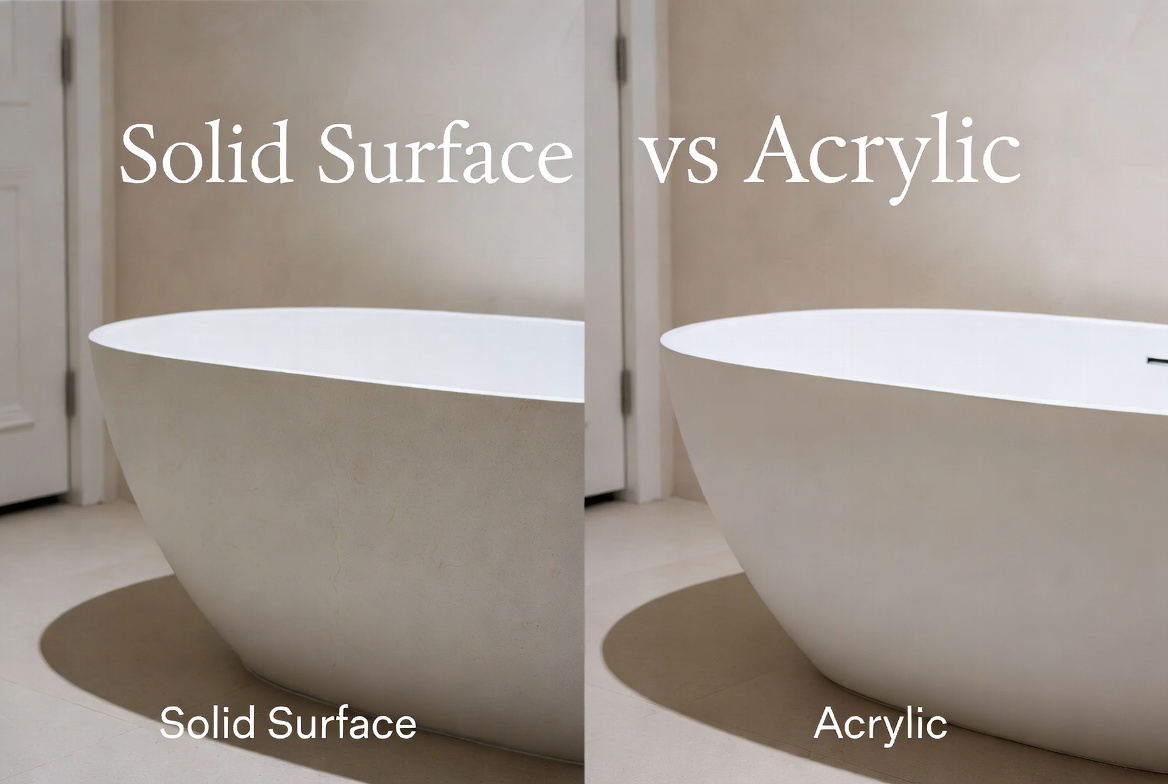
Solid surface tubs are typically manufactured by pouring a precisely mixed slurry of resin and mineral fillers into a closed mold, then curing and demolding the bathtub body. A common composition is about 33% resin and 66% mineral content, which creates a dense, stable structure that resists deformation in daily use. [pmmag]
After demolding, the tub is dry‑sanded and finished rather than painted or coated, which means the color and texture run through the entire thickness of the material. Standard finishes include: [pmmag]
- Matte finish achieved with coarser sanding for a soft, velvety touch. [pmmag]
- Satin or semi‑gloss finish produced with finer grit and buffing for a more polished, stone‑like look. [pmmag]
Because the material is homogeneous, minor surface damage can usually be removed by re‑sanding and buffing, restoring the original finish without visible color mismatch. [pmmag]
From an end‑user and specifier perspective, the main question is how solid surface tubs compare to acrylic tubs in real‑world projects. Both are non‑porous and relatively easy to clean, but they differ significantly in structure, feel, and long‑term performance. [pmmag]
- Solid surface tubs
- Cast from resin plus minerals (e.g., ATH, quartz, marble dust) into a thick, single‑piece shell. [pmmag]
- Provide a substantial, stone‑like feel with excellent shape stability and low flex under load. [pmmag]
- Acrylic tubs
- Formed by vacuum‑thermoforming a thin acrylic sheet over a mold, then reinforced with fiberglass on the back. [pmmag]
- Lighter and more flexible, which can make installation easier but may also introduce some "give" when a user steps in. [pmmag]
Bathing comfort is one of the strongest arguments in favor of solid surface tubs.
- Thermal conductivity
- Acrylic: around 0.17 W/(m·K). [pmmag]
- Solid surface: slightly lower, around 0.15 W/(m·K), meaning it transfers heat more slowly. [pmmag]
Because of this lower thermal conductivity and higher mass, a solid surface tub can hold water temperature comfortably for 30–60 minutes, helping create a spa‑like, soaking experience without constantly topping up with hot water. Acrylic tubs cool down more quickly, which may be acceptable in entry‑level or quick‑shower‑plus‑bath scenarios but is less ideal for deep soaking or hydrotherapy‑style use. [pmmag]
- Scratch behavior
- Acrylic surfaces are relatively hard but have a glossy finish that makes scratches more visible, especially in bright lighting. [pmmag]
- Solid surface material hides minor marks better, and even deeper scratches can be buffed out with fine sandpaper and polishing, thanks to the through‑body material. [pmmag]
- Shape retention
- Solid surface tubs offer excellent resistance to warping and indentation, even under high water temperature and repeated use. [pmmag]
- Acrylic tubs can deform under heavy loads or improper support, particularly if installation or floor leveling is inadequate. [pmmag]
- Repairability
- Solid surface tubs are among the most repairable bathtub types: professionals can sand, fill, and refinish localized damage so it almost disappears. [pmmag]
- With acrylic, deeper scars or cracks may require patch kits, and color‑matching the high‑gloss surface is more challenging. [pmmag]
- Weight
- Solid surface tubs are significantly heavier than acrylic equivalents, which can affect transport and handling on site. [pmmag]
- Acrylic tubs are easier to carry up stairs and into tight spaces, making them practical for budget renovations or projects without structural reinforcement. [pmmag]
- Installation requirements
- Both types require proper floor leveling and support to avoid stress points and eventual cracking or deformation. [pmmag]
- For solid surface tubs, it is especially important to review floor load capacity and logistics planning on multi‑story buildings, while acrylic tubs are more forgiving in this respect. [pmmag]
Acrylic and solid surface tubs occupy different price segments, especially in retail environments. Typical price bands are: [pmmag]
- Acrylic bathtubs
- Basic: 300–600 USD
- Mid‑range: 600–1,200 USD
- Luxury: 1,200–3,000+ USD
- Typical lifespan: 10–15 years with normal use and maintenance. [pmmag]
- Solid surface bathtubs
- Basic: 1,500–2,500 USD
- Mid‑range: 2,500–4,000 USD
- Luxury: 4,000–8,000+ USD
- Typical lifespan: 20–30 years, often matching the life of the bathroom itself when cared for correctly. [pmmag]
When you calculate cost per year of service, solid surface tubs frequently deliver better long‑term value, particularly for high‑usage installations like hotels and spas where replacement cycles are disruptive and expensive. [pmmag]

For designers and overseas brand owners, solid surface offers far greater design freedom than thermoformed acrylic. Because the material is cast in molds, it allows: [pmmag]
- Sculptural, organic silhouettes that would be difficult or impossible to pull from a sheet via vacuum forming. [pmmag]
- Thicker, monolithic rims that visually echo carved stone basins, creating a strong, architectural focal point in the bathroom. [pmmag]
Acrylic tub design is constrained by the depth of draw and mold angle limits of vacuum forming, which restrict how extreme curves and sharp edges can be. Solid surface, by contrast, supports thin‑rim minimalist ovals, asymmetric freestanding forms, integrated overflow details, and even customized branding or design language when working with an OEM/ODM partner. [pmmag]
For mid‑ to high‑end projects, this design freedom translates directly into brand differentiation in catalog photography, showrooms, and online product pages.
Both acrylic and solid surface bathtubs are 100% non‑porous and therefore inherently more hygienic than traditional porous materials because they do not absorb water or harbor hidden bacteria inside the material. However, cleaning tolerance and maintenance methods differ slightly. [pmmag]
- Solid surface tubs
- Can be cleaned with a soft cloth, warm water, and mild soap for everyday care. [pmmag]
- Tolerate diluted bleach and many standard bathroom cleaners better than acrylic because there is no fragile surface coating. [pmmag]
- Allow easy removal of stubborn watermarks and minor scratches by sanding and buffing, restoring the original finish. [pmmag]
- Acrylic tubs
- Require gentler, non‑abrasive cleaners to avoid dulling or scratching the glossy surface. [pmmag]
- Are less forgiving if aggressive chemicals or scouring pads are used, which can cause permanent matting or discoloration. [pmmag]
For hospitality and multi‑family real estate, the robustness of solid surface under repeated cleaning cycles can be a decisive advantage over a 10–20‑year period. [pmmag]
Because of their luxurious appearance and long service life, solid surface tubs are increasingly specified for:
- Luxury homes and villas where owners want a spa‑like centerpiece in a spacious bathroom. [pmmag]
- Boutique hotels, resorts, and high‑end farmhouses that differentiate their guest experience through superior bathroom design and comfort. [pmmag]
- Spas and wellness centers requiring deep soaking tubs with excellent heat retention and high resistance to cosmetic wear. [pmmag]
In these scenarios, the tub becomes more than a sanitary fixture: it is a design and brand statement that supports higher nightly room rates or property values. [pmmag]
Many solid surface formulations use low‑VOC resins and can incorporate recycled mineral content, which reduces environmental impact compared with some purely plastic solutions. Because these tubs routinely deliver 25+ years of service life, they also help lower replacement frequency and waste over the lifetime of a building. [pmmag]
Compared with some steel‑enamel or low‑grade plastic tubs that may chip, rust, or yellow, solid surface is dimensionally stable and colorfast, which reduces the need for premature replacement purely for aesthetic reasons. For architects and developers working on green building certifications, this longer life and reparability support more sustainable specifications. [pmmag]
From an expert perspective, the choice between solid surface and acrylic bathtubs comes down to project positioning, user expectations, and lifecycle cost rather than just initial purchase price. [workshopdigital]
Consider solid surface tubs when:
1. Positioning is mid‑ to high‑end
- You are designing modern, minimalist, or luxury bathrooms where the tub is a focal point.
- Your brand or project needs a stronger visual identity and "wow factor" in photography and showrooms. [pmmag]
2. User experience is critical
- Guests or homeowners expect long, relaxing soaks and a warm, stone‑like touch rather than a hollow feel. [pmmag]
- The project is in hospitality or wellness, where bathroom experience directly affects guest satisfaction and reviews. [workshopdigital]
3. Lifecycle cost matters
- You plan for 20+ years of service life without major replacements. [pmmag]
- You want surfaces that can be refreshed and repaired instead of thrown away when scratched. [pmmag]
Acrylic tubs remain a smart choice when:
- The project is budget‑sensitive, such as mass‑market residential developments or rental renovations. [pmmag]
- Site logistics are constrained (no elevator, tight stair cores) and lighter tubs reduce installation complexity and cost. [pmmag]
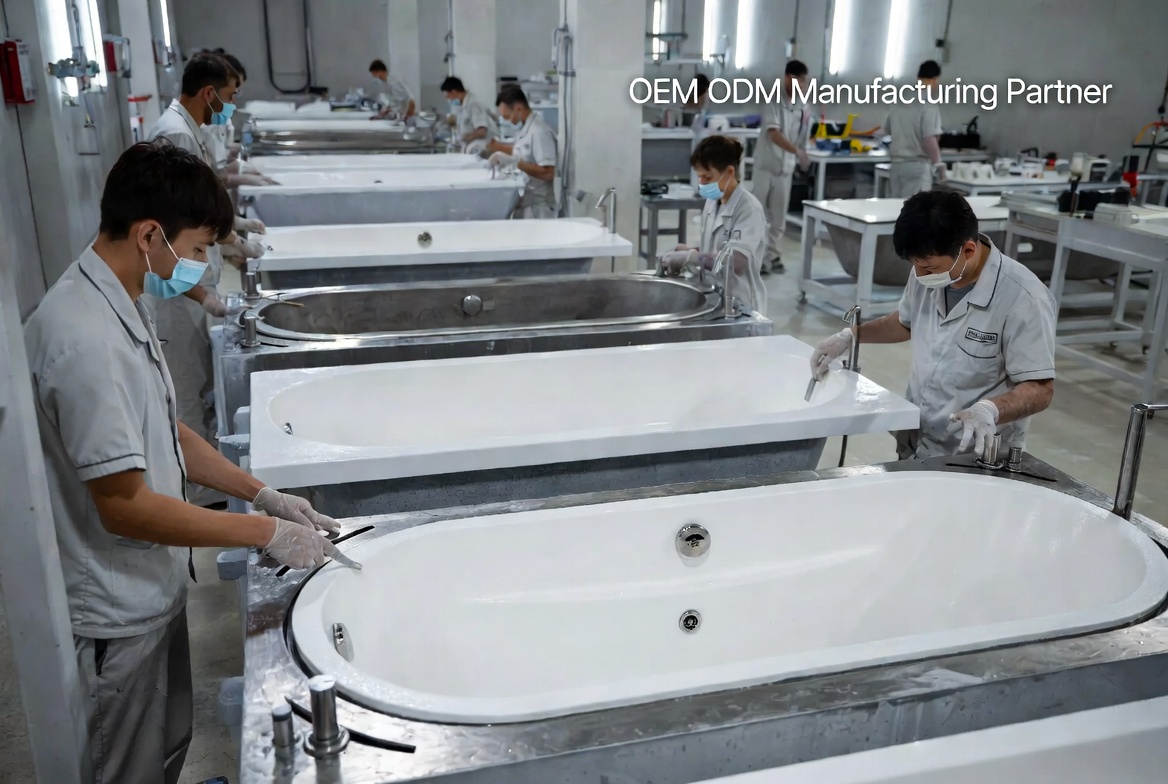
For overseas brands, wholesalers, or project‑based buyers, choosing the right OEM/ODM manufacturing partner is as important as choosing the material itself. Leading solid surface manufacturers can provide: [workshopdigital]
- A broad mold library with over 100–150 standard bathtub designs, plus the ability to develop custom molds for unique shapes. [pmmag]
- Scalable production capacity via large‑scale facilities (for example, factories of around 15,000 m² or more) to support batch orders and project delivery schedules. [pmmag]
- Integrated support for freestanding tubs, matching basins, shower trays, and other coordinated solid surface products, ensuring a unified aesthetic across the bathroom portfolio. [pmmag]
When assessing potential partners, look for:
- Documented manufacturing experience in solid surface, not only in acrylic.
- Clear quality control processes, including material traceability and surface inspection.
- Experience exporting to your target markets and familiarity with certification requirements (such as water‑saving and safety standards).
These factors help you reduce risk, shorten development cycles, and deliver a consistently high‑quality product range under your own brand. [workshopdigital]
To maximize the lifespan and appearance of a solid surface bathtub, provide your customers or project owners with simple, clear care instructions: [pmmag]
1. Daily or weekly cleaning
- Rinse the tub with warm water after use and wipe dry with a soft cloth to reduce watermarks. [pmmag]
- Use mild, pH‑neutral bathroom cleaners when needed, avoiding harsh solvents unless the manufacturer confirms compatibility. [pmmag]
2. Stain and watermark removal
- For light stains or limescale, apply a mild cleaner or diluted bleach, let it sit briefly, then rinse and wipe. [pmmag]
- For persistent marks, use fine non‑metallic scouring pads as recommended by the manufacturer, followed by rinsing and drying. [pmmag]
3. Scratch repair
- Minor scratches can often be removed with 1500‑grit sandpaper, applied in circular motions, followed by buffing with a polishing pad. [pmmag]
- Deeper damage should be repaired by a qualified technician who can fill, sand, and re‑polish the affected area. [pmmag]
By communicating these steps clearly in your product documentation and online content, you reinforce the long‑term value proposition of solid surface tubs to both B2B buyers and end users. [workshopdigital]
| Aspect | Solid Surface Bathtub | Acrylic Bathtub |
|---|---|---|
| Core material | Resin plus mineral fillers, cast into solid shell (pmmag) | Thermoformed acrylic sheet with fiberglass backing (pmmag) |
| Feel and aesthetics | Stone‑like, substantial, highly sculptural designs (pmmag) | Lightweight, more standard shapes due to forming limits (pmmag) |
| Heat retention | Lower thermal conductivity, holds heat 30–60 minutes (pmmag) | Cools faster, less ideal for long soaks (pmmag) |
| Scratch visibility | Minor scratches less visible, easy to sand and buff (pmmag) | Scratches show clearly on glossy surface, harder to disguise (pmmag) |
| Repairability | Excellent, color‑through material can be refinished (pmmag) | Limited; deeper damage often remains visible (pmmag) |
| Weight and logistics | Heavier, needs strong floor support and careful handling (pmmag) | Lighter, easier to transport and install (pmmag) |
| Typical price range | Roughly 1,500–8,000+ USD depending on segment (pmmag) | Roughly 300–3,000+ USD depending on segment (pmmag) |
| Typical lifespan | Around 20–30 years with care (pmmag) | Around 10–15 years with normal use (pmmag) |
| Best suited for | Luxury homes, boutique hotels, spas, high‑end projects (pmmag) | Budget to mid‑range residential or light‑duty projects (pmmag) |
| Cleaning tolerance | Tolerates mild abrasives and diluted bleach, very easy to maintain (pmmag) | Needs gentle cleaners to protect glossy finish (pmmag) |
1. Are solid surface bathtubs safe for daily family use?
Yes. Solid surface tubs are non‑porous, chemically stable, and highly resistant to everyday wear, making them well suited for daily use in family bathrooms when installed correctly. [pmmag]
2. Do solid surface tubs feel cold like real stone?
No. Although they visually resemble stone, the composite material has lower thermal conductivity than natural stone, so it feels pleasantly neutral and warms up quickly when filled with warm water. [pmmag]
3. Can a solid surface bathtub be customized for my brand?
In cooperation with an experienced OEM/ODM factory, you can customize shapes, dimensions, rim details, and sometimes colors or textures, allowing strong brand differentiation in your product line. [workshopdigital]
4. How often should a solid surface tub be refinished?
Under normal residential use, many owners never need a full refinish; localized sanding and polishing are only required if noticeable scratches or dull patches appear. [pmmag]
5. Is a solid surface bathtub worth the higher upfront cost?
For mid‑ to high‑end properties, hotels, and design‑driven projects, the combination of longer lifespan, superior heat retention, and premium aesthetics often makes solid surface tubs more cost‑effective over the full life of the bathroom. [pmmag]
1. KingKonree. "What Is a Solid Surface Bathtub? and What Is the Difference to Acrylic Tubs?"
https://www.kingkonree.com/blog/what-is-a-solid-surface-bathtub-and-vs-acrylic-tubs.html [pmmag]
2. iO Digital. "Google E-E-A-T: Creating Content That Puts People First."
https://www.iodigital.com/en/insights/blogs/google-e-e-a-t-creating-content-that-puts-people-first [iodigital]
3. Workshop Digital. "An SEO Guide to E-E-A-T."
https://www.workshopdigital.com/blog/googles-e-e-a-t-and-seo-guidelines/ [workshopdigital]
4. Helium SEO. "Effective SEO for Plumbing Companies: Top Tips to Boost Your ..."
https://helium-seo.com/blog/seo-for-plumbing-companies/ [helium-seo]
5. Connor Gillivan (LinkedIn). "How to Optimize Blog Content for SEO."
https://www.linkedin.com/posts/connorgillivan_13-must-take-steps-before-you-publish-your-activity-7301601764045164544-5QG8 [linkedin]


