
Views: 222 Author: Miluo Smart Home Publish Time: 2026-05-30 Origin: Site


Content Menu
● What Is a Japanese‑Style Tub?
● Japanese Bathtub vs Japanese‑Style Tub: Key Differences
>> Feature comparison at a glance
● User Experience: How Each Tub Feels in Real Life
● Design and Space Planning Considerations
● Materials, Durability, and Maintenance
● OEM vs ODM: How Global Brands Bring Japanese‑Style Tubs to Market
● Why Many International Buyers Choose Japanese‑Style Tubs
● How Jiaxing Miluo Supports Custom Japanese‑Style Bathtub Projects
● Practical Buying Guide: Choosing Between Japanese and Japanese‑Style Tubs
● Design Trends: Japandi, Minimalism, and Wellness Bathrooms
● Maintenance Tips to Extend Tub Lifespan
● Call to Action: Build Your Next Japanese‑Style Tub Line With a Professional OEM/ODM Partner
● FAQs About Japanese Bathtubs and Japanese‑Style Tubs
Japanese soaking culture has inspired a new generation of deep, compact bathtubs that promise spa‑level relaxation even in small spaces. For international brands, wholesalers, and project developers, understanding the difference between authentic Japanese bathtubs and Japanese‑style tubs is essential for making the right product and sourcing decisions. [thestylesaloniste]

A traditional Japanese bathtub, often called an *ofuro*, is a compact, deep soaking tub designed for seated, upright bathing rather than lying down. In Japanese culture, you typically shower and clean your body before entering the tub, which is reserved purely for quiet, meditative soaking. [medunjess]
Key characteristics:
- Shorter length, greater depth to submerge the body up to the shoulders. [worldcoppersmith]
- Upright seating position with bent knees rather than stretching out. [thestylesaloniste]
- Traditionally made from aromatic wood like hinoki, or from stone, though modern versions also use acrylic and metal. [cedartubs]
- Designed for relaxation, ritual, and recovery more than quick, functional washing. [cedartubs]
For design‑driven residential and hospitality projects, authentic Japanese bathtubs offer a unique sensory experience: warm water, enveloping depth, compact footprint, and a strong cultural narrative. [streamlinebath]
A Japanese‑style tub is a modern bathtub inspired by the form and ergonomics of traditional ofuro tubs, but adapted for global bathrooms, plumbing standards, and contemporary materials. These tubs borrow the deep‑soak, upright posture concept while integrating features expected by international users. [streamlinebath]
Typical traits:
- Deep soaking profile with an integrated or ergonomic seat. [worldcoppersmith]
- Made from durable materials such as acrylic, composite, fiberglass, or metal for easier mass production and maintenance. [streamlinebath]
- Often sized and plumbed to fit standard Western bathroom layouts and drainage systems. [medunjess]
- May include modern add‑ons: jets, chromotherapy lighting, overflow systems, or insulation for heat retention. [cedartubs]
In practice, Japanese‑style tubs bridge the gap between authentic tradition and the technical, regulatory, and usability requirements of today's global bathroom projects. [worldcoppersmith]
From an end‑user perspective, both tub types aim to provide a deep, restorative soak; from a product manager or buyer perspective, the underlying differences in materials, installation, and positioning are crucial. [thestylesaloniste]
| Aspect | Japanese Bathtub (Ofuro) | Japanese‑Style Tub |
|---|---|---|
| Primary concept | Cultural, ritual soaking | Modern, globally adapted soaking |
| Typical depth | Very deep (shoulder‑level when seated) (thestylesaloniste) | Deep, but often slightly shallower for comfort and safety (streamlinebath) |
| Length & footprint | Short, compact, space‑saving (thestylesaloniste) | Compact to mid‑size; can fit standard layouts (streamlinebath) |
| Bathing position | Upright seated, knees bent (thestylesaloniste) | Upright or semi‑reclined, often with ergonomic backrest (streamlinebath) |
| Materials | Wood (e.g., hinoki), stone, sometimes metal (thestylesaloniste) | Acrylic, fiberglass, composite, metal, sometimes wood accents (streamlinebath) |
| Aesthetic | Traditional, warm, spa‑like | Contemporary, minimalist, Japandi, or luxury design (streamlinebath) |
| Features | Generally minimal, focus on still soaking (thestylesaloniste) | Can include jets, lighting, digital controls (streamlinebath) |
| Installation | Often fully custom, higher craftsmanship requirement (streamlinebath) | More standardized; easier to integrate in international projects (streamlinebath) |
| Maintenance | Wood and stone require careful upkeep (thestylesaloniste) | Acrylic/composites are easier to clean and maintain (streamlinebath) |
| Ideal buyer | Boutique hotels, luxury spas, design‑led homeowners | Brands, wholesalers, and builders seeking scalable, modern solutions (streamlinebath) |
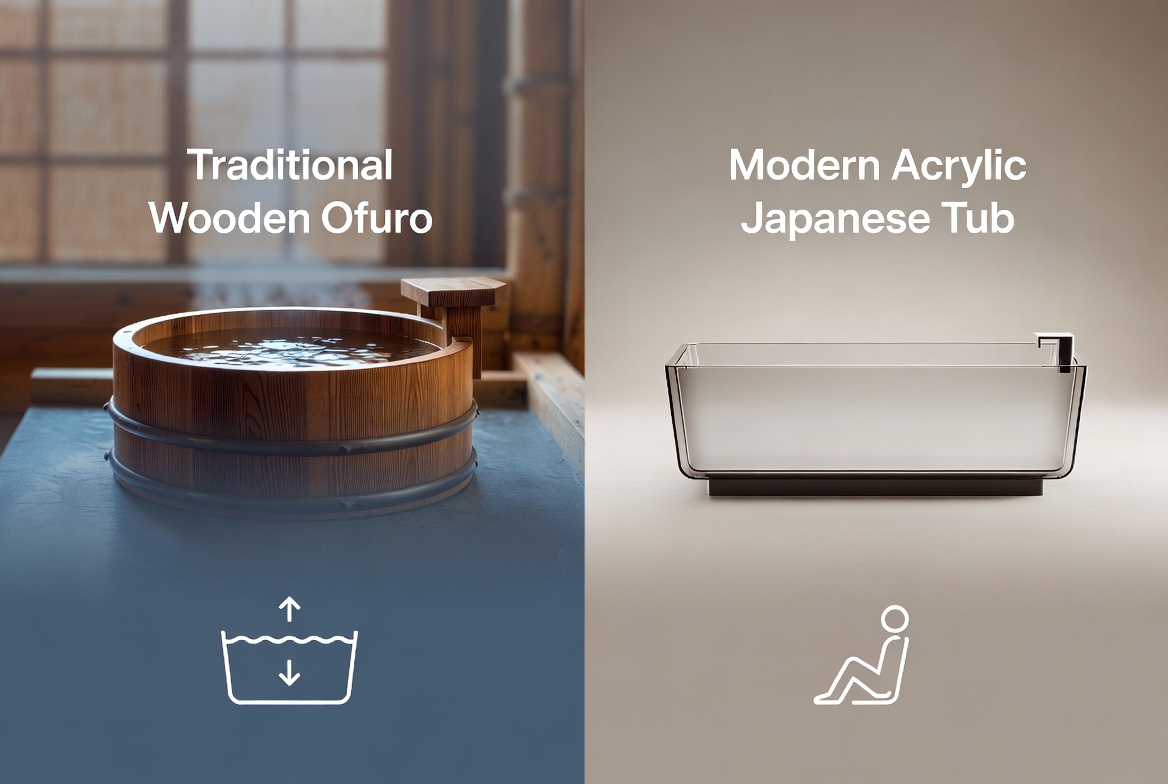
From a user standpoint, the biggest difference is the overall ritual and feel of the soak.
- An authentic Japanese bathtub often feels like entering a private hot spring: still water, enveloping depth, and warm natural materials such as wood that give off a subtle aroma. [thestylesaloniste]
- A Japanese‑style tub offers many of the same ergonomic benefits but tends to feel more like a high‑end spa fixture, with smooth acrylic surfaces and optional hydrotherapy or lighting features. [streamlinebath]
In both cases, you sit rather than lie down, which allows a deep soak in a smaller floor area and supports longer, more relaxing sessions. This upright immersion is particularly attractive for users looking to relieve muscle fatigue, support mindfulness, or create a compact wellness corner in a limited‑size bathroom. [medunjess]
For architects, designers, and project owners, footprint and layout are critical.
- Compact footprint: Japanese‑inspired tubs typically require less length than standard Western tubs, freeing up space for double vanities, storage, or a walk‑in shower. [medunjess]
- Vertical emphasis: The added depth requires attention to step‑in height, safety, and hand‑grip placement, especially in hospitality or multi‑family applications. [cedartubs]
- Placement flexibility: Freestanding or corner installations can turn the tub into a visual focal point in master suites or hotel bathrooms. [worldcoppersmith]
For renovation projects, Japanese‑style tubs in acrylic or composite are often easier to position over existing plumbing compared with fully custom Ofuro tubs, which may demand more structural planning. [streamlinebath]
Material choice impacts not only the look and feel but also cost, weight, and lifespan.
- Authentic Japanese bathtubs traditionally use woods like cedar or hinoki that are valued for their scent and natural warmth, but these require regular maintenance, proper ventilation, and careful water management. [thestylesaloniste]
- Modern Japanese‑style tubs frequently use reinforced acrylic or composites that resist staining, ease daily cleaning, and reduce total installed weight. [medunjess]
From a sourcing perspective, acrylic and composite Japanese‑style tubs are often the most practical option for large‑scale international projects, where consistency, repeatability, and warranty support are key. [luxuryhomefaucet]
For overseas brands and wholesalers, the strategic question is not only *which* tub type to sell, but *how* to bring it to market efficiently and profitably.
Two common cooperation models are:
- OEM (Original Equipment Manufacturer): You provide the design or detailed specifications, and the factory produces bathtubs under your brand, following your drawings, finishes, and packaging guidelines. [spark-faucet]
- ODM (Original Design Manufacturer): The manufacturer develops their own bathtub designs and engineering, then you customize selected models with your branding, finishes, and configuration. [spark-faucet]
For Japanese and Japanese‑style bathtubs, OEM is attractive if you already have a distinct brand DNA and need unique forms, while ODM is ideal if you want to move faster with proven ergonomics and structures that already meet global plumbing and safety standards. [luxuryhomefaucet]
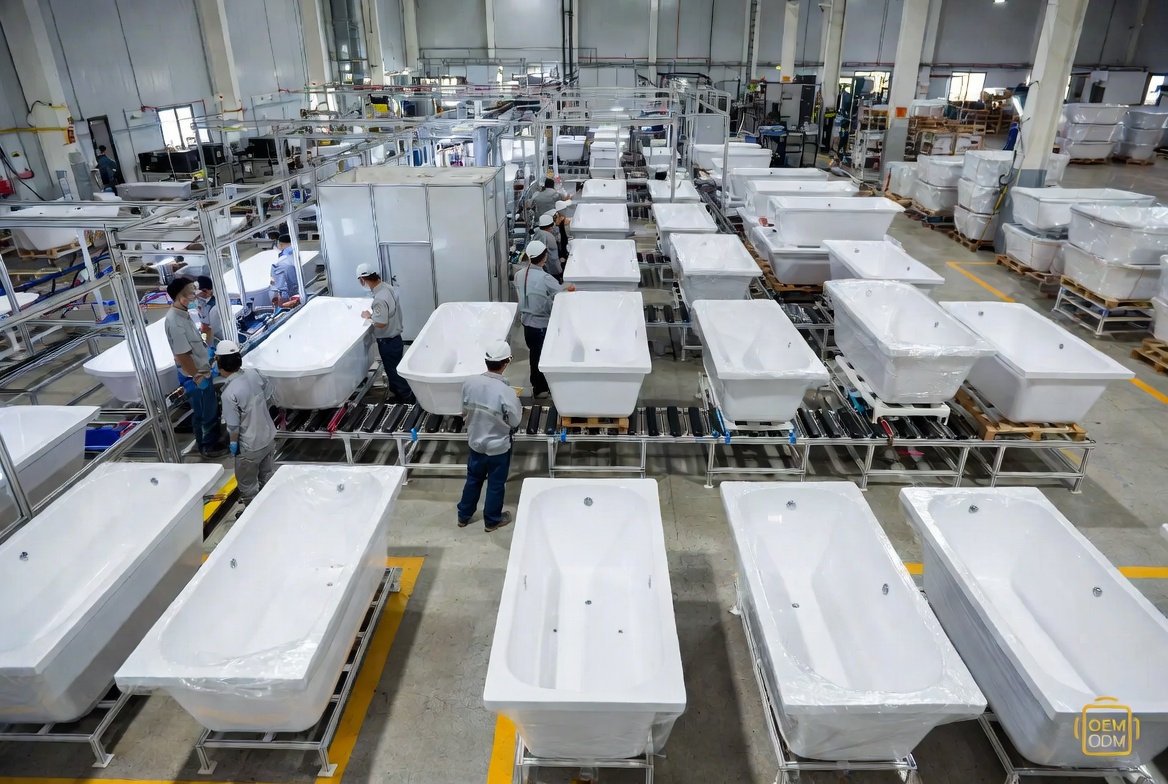
Across residential, hospitality, and wellness projects, Japanese‑style tubs are increasingly preferred because they balance authentic inspiration with modern practicality. [worldcoppersmith]
Common decision drivers:
- Easier compliance with international plumbing and building codes. [luxuryhomefaucet]
- Scalable manufacturing with quality control for consistent large orders. [luxuryhomefaucet]
- More flexible styling: minimalist, hotel‑luxury, Japandi, or contemporary spa. [wesmoindustries]
- Lower maintenance burden for property managers compared with natural‑wood tubs. [cedartubs]
For brands and wholesalers, this category also opens space for differentiated product lines: from entry‑level acrylic models to premium composite or metal tubs with designer finishes. [wesmoindustries]
Jiaxing Miluo Smart Home Co., Ltd. is a Chinese manufacturer specializing in independent bathtubs, basins, bathroom cabinets, mirrors, and accessories for global customers. Located in Jiaxing, Zhejiang, with convenient access to major seaports, Miluo supports international shipments and long‑term OEM/ODM cooperation for bathroom brands and distributors. [miluobath.en.alibaba]
For Japanese and Japanese‑style tubs, a partner like Miluo can help you:
- Develop or refine deep‑soaking bathtub designs tailored to your target market's dimensions, aesthetics, and price‑points.
- Select optimal materials (e.g., reinforced acrylic or composite) to balance durability, weight, and cost for each channel. [miluobath.en.alibaba]
- Coordinate finishes and colors that align with your broader bathroom collections, such as vanities, basins, and accessories. [wesmoindustries]
This integrated approach lets overseas customers build coherent, high‑end bathroom series where tubs, cabinets, and accessories share a consistent design language. [miluobath.en.alibaba]
When advising end clients—or planning your own portfolio—use the following steps to select the right type of tub.
1. Clarify the primary use case
- Ritual relaxation and cultural storytelling for boutique properties may favor more traditional, wood‑inspired Japanese tubs. [thestylesaloniste]
- High‑turnover hospitality, multifamily housing, and mainstream retail favor Japanese‑style tubs for easier maintenance and standardization. [streamlinebath]
2. Evaluate space and layout
- Very compact bathrooms benefit from a shorter, deeper tub to maximize usable area. [medunjess]
- Larger bathrooms may use Japanese‑style tubs as a sculptural centerpiece with surrounding dry and wet zones. [worldcoppersmith]
3. Decide on materials and maintenance tolerance
- If your project team or end user is prepared for careful maintenance and loves natural materials, consider traditional woods and stones. [cedartubs]
- For most international projects, acrylic or composite Japanese‑style tubs provide the best mix of aesthetics, comfort, and upkeep. [streamlinebath]
4. Align with your brand positioning
- Premium wellness brands can differentiate with custom OEM shapes, finishes, and integrated lighting or jets. [wesmoindustries]
- Value‑oriented collections often succeed with clean, minimalist ODM designs that are easy to repeat at scale. [spark-faucet]
By working through these steps, you can match the correct product concept to your users' expectations and your market strategy.
Current bathroom design trends make Japanese‑style bathtubs especially timely.
- The Japandi trend blends Japanese serenity with Scandinavian minimalism, emphasizing clean lines, warm neutrals, and tactile textures that pair beautifully with deep soaking tubs. [wesmoindustries]
- Wellness‑oriented bathrooms increasingly favor dedicated soaking zones, dimmable lighting, and natural finishes that echo spa environments. [thestylesaloniste]
- In urban apartments and compact homes, designers use vertical bathing solutions to deliver luxury experiences in limited square footage. [medunjess]
For brands and wholesalers, aligning your bathtub collections with these design directions can significantly improve product storytelling, merchandising, and perceived value. [wesmoindustries]
End‑user satisfaction and review scores often depend on how easy a tub is to care for over time.
- Encourage users to rinse the tub after each use and gently wipe surfaces to prevent soap scum and mineral buildup. [streamlinebath]
- For wooden tubs, emphasize correct drying, ventilation, and periodic treatment with suitable oils or sealants, following manufacturer guidance. [cedartubs]
- For acrylic and composite Japanese‑style tubs, recommend non‑abrasive cleaners and soft cloths to protect the surface sheen. [medunjess]
Clear care instructions, ideally branded and customized for each model, can reduce warranty claims and strengthen your reputation as a reliable bathtub supplier. [miluobath.en.alibaba]
If you are planning a new Japanese or Japanese‑style bathtub collection for your brand or distribution network, partnering with an experienced OEM/ODM factory can dramatically reduce development risk and time‑to‑market. [spark-faucet]
By collaborating with a specialized manufacturer such as Jiaxing Miluo Smart Home Co., Ltd., international buyers can customize dimensions, ergonomics, and finishes while leveraging established production lines, quality systems, and export experience for bathtubs and related bathroom products. For your next project, consider specifying deep soaking, Japanese‑inspired tubs as a signature element in modern wellness‑focused bathrooms. [china-miluo]
1. Are Japanese soaking tubs comfortable for taller users?
Yes, many Japanese and Japanese‑style tubs are designed with a deep interior and integrated seat so that even taller users can sit upright with water near shoulder level, though very tall users may prefer slightly larger or custom models. [thestylesaloniste]
2. Can Japanese‑style tubs replace a standard Western bathtub in renovations?
In many cases they can, especially when using acrylic or composite models that fit normal plumbing rough‑in dimensions, but designers should always confirm footprint, drain position, and local code requirements before replacement. [streamlinebath]
3. Are wooden Japanese bathtubs suitable for hotels or only for private homes?
Wooden tubs can be used in boutique hotels and luxury suites, but they demand strict maintenance routines and good ventilation; many hospitality projects instead choose Japanese‑style acrylic or composite tubs to simplify upkeep. [cedartubs]
4. What is the main advantage of choosing an OEM Japanese‑style tub over an ODM design?
OEM allows brands to fully control shape, ergonomics, and styling so the bathtub becomes a unique, ownable product, while still benefiting from the manufacturing partner's engineering and production capabilities. [spark-faucet]
5. How do Japanese‑style tubs support wellness and recovery?
Because they are deep and compact, Japanese‑style tubs let users soak in hot water up to the shoulders, which can help relieve muscle tension, encourage relaxation, and create a daily ritual similar to a private spa experience. [worldcoppersmith]
1. "Japanese Soaking Tub vs Regular Tub: Key Differences" – The Style Saloniste. [thestylesaloniste]
2. "Japanese Bathtubs vs. Japanese-Style Tubs: The Ultimate Comparison Guide" – Streamline Bath. [streamlinebath]
3. "Japanese Soaking Tub Guide: Design, Sizes & Benefits" – Medunjess. [medunjess]
4. "What is a Japanese Style Bathtub?" – World CopperSmith. [worldcoppersmith]
5. "Japanese Ofuro Soaking Tubs vs Modern Acrylic Hot Tubs" – Cedar Tubs. [cedartubs]
6. "The difference between OEM and ODM faucet manufacturers" – Spark Faucet. [spark-faucet]
7. "Luxury Bath Accessories Set | Wesmo OEM & ODM Manufacturer." [wesmoindustries]
8. "China Faucet Manufacturer & Supplier | Custom OEM & ODM ..." – Luxury Home Faucet. [luxuryhomefaucet]
9. "Company Overview - Jiaxing Miluo Smart Home Co., Ltd." – Alibaba Company Profile. [miluobath.en.alibaba]
10. "Miluo Bath: Customized Bathtub, Wash Basin, Bathroom Vanity ..." – Official Site. [china-miluo]


