
Views: 243 Author: Miluo Smart Home Publish Time: 2026-08-19 Origin: Site


Content Menu
● Why Small Corner Bathtubs Appeal to Modern Buyers
>> A Small Corner Tub Is Not Always "Small"
● Corner Bathtub vs. Standard Freestanding Bathtub
● How to Choose the Right Small Corner Bathtub Size
>> The Five Measurements That Matter
● Material Choices That Influence Product Performance
>> Composite and Reinforced Structures
● Installation Details Buyers Should Confirm Early
>> Water Weight and Floor Considerations
● OEM and ODM Considerations for Bathtub Brands
● Features That Improve the End-User Experience
>> Effective Internal Geometry
● Questions to Ask a Corner Bathtub Supplier
● Build a Distinctive Corner Bathtub Collection
● FAQ
>> 1. What is the best size for a small corner bathtub?
>> 2. Are freestanding corner bathtubs suitable for small bathrooms?
>> 3. Which material is best for a corner soaking tub?
>> 4. Do corner bathtubs need special plumbing?
>> 5. Can a corner bathtub be customized for private-label sales?
>> 6. How much floor strength does a filled bathtub require?
>> 7. What should wholesalers check before placing a bulk bathtub order?
A small corner bathtub can turn an underused bathroom corner into a comfortable, high-value bathing zone. For brands, wholesalers, developers, and bathroom-product buyers, the right freestanding corner tub combines compact planning, deep-soaking comfort, distinctive design, and dependable manufacturing quality.
At Jiaxing Miluo Smart Home Co., Ltd., we work with bathroom-product partners who need more than an attractive bathtub design. They need adaptable dimensions, material options, stable quality control, packaging suited to international transport, and OEM/ODM support that helps their collection stand out in a competitive market.
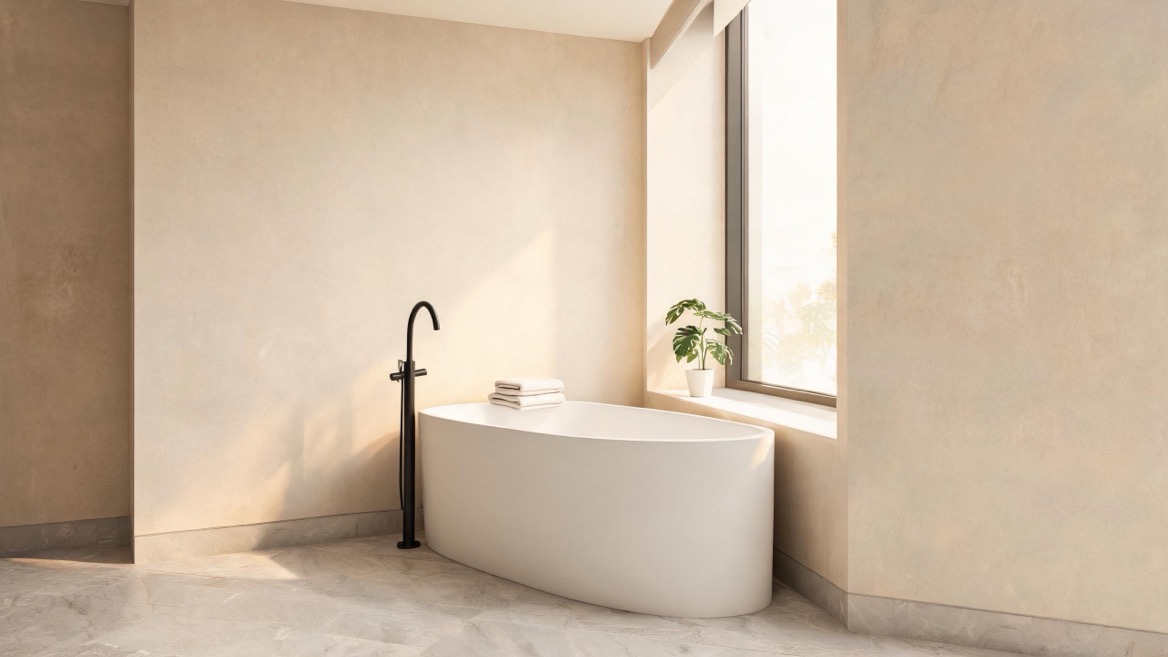
A corner bathtub is designed to use two adjoining walls while leaving its front edge visible. This layout makes it especially useful in apartments, ensuite bathrooms, boutique hotels, renovation projects, and compact luxury residences.
Unlike a standard rectangular alcove bath, a freestanding corner bathtub can create a more architectural focal point. It can also provide a generous internal soaking area without occupying the center of the room.
Typical corner bathtub layouts include:
- Symmetrical corner tubs, with equal-length sides and a centered bathing position
- Asymmetrical corner tubs, designed for left- or right-hand installation
- Compact freestanding corner tubs, with finished exterior panels and a sculptural profile
- Corner soaking tubs, focused on deeper water depth and reclined comfort
- Corner tubs with deck space, offering convenient room for bath products or decorative accessories
For buyers developing a premium collection, this category offers a valuable balance: it answers the need for compact planning while maintaining the visual impact associated with luxury bathrooms.
One common mistake is assuming that every corner bathtub is suitable for a very limited floor plan. A corner layout may use an awkward corner efficiently, but its diagonal front can still require meaningful floor area.
Common corner bathtub dimensions are often around 48 × 48 inches to 60 × 60 inches (approximately 1220 × 1220 mm to 1524 × 1524 mm), while many mainstream corner models are closer to 60 × 60 inches. Compact freestanding tubs are commonly available in lengths from roughly 55 to 72 inches, depending on the silhouette and bathing configuration.
The right question is not simply, "Will the bathtub fit?" It is:
> Will the bathtub fit while preserving safe circulation, easy cleaning access, and a visually balanced room?
That distinction matters to end users and should also guide product development, catalog presentation, and sales consultation.
A freestanding tub and a corner bathtub can both create a premium look, but they solve different layout challenges.
| Factor | Small Corner Bathtub | Standard Freestanding Bathtub |
|---|---|---|
| Primary placement | Uses two adjacent walls | Positioned away from walls or near one wall |
| Best for | Unused corners, compact ensuite layouts, irregular rooms | Larger bathrooms with open floor space |
| Visual effect | Integrated, space-conscious, sculptural | Standalone focal point |
| Access requirement | Clear access needed at the front | Clearance needed around the visible sides |
| Typical design options | Symmetrical, left-hand, right-hand, triangular or rounded | Oval, rectangular, slipper, egg-shaped or oval |
| Product-development focus | Footprint efficiency and internal comfort | Exterior silhouette and all-around finish |
A standard freestanding bathtub normally needs clear space around it to retain its visual effect and allow cleaning. General planning guidance often recommends several inches of clearance between a freestanding bathtub and nearby walls or fixtures.
For projects with restricted dimensions, the most successful solution is often not the shortest tub. It is the model that creates the best usable bathing volume within the available footprint.
Before selecting a bathtub model, measure the room as a complete system—not just the available corner. The bath must work with the door swing, shower zone, toilet clearance, vanity depth, water supply, drainage location, and access route for installation.
1. Available wall length
Measure both walls that meet at the bathtub location. Do not assume they are equal, particularly in renovation projects.
2. Front clearance
Leave sufficient open space in front of the bathtub for entry, exit, cleaning, and daily movement. A clear front zone is especially important in family bathrooms and hotel projects.
3. Internal bathing length
Exterior size can be misleading. A compact tub with a well-designed internal profile may feel more comfortable than a larger model with thick walls or inefficient geometry.
4. Soaking depth
A deeper water line can improve immersion without increasing the bathtub's overall length. This is a major advantage for compact luxury bathrooms.
5. Drain and faucet position
Confirm whether the project requires a left-hand, right-hand, centered, or end drain. Faucet placement should be coordinated before finalizing the tub design.
A useful benchmark is that compact corner designs can start around 48 inches per side, while many standard corner products are closer to 60 inches per side. However, dimensions should always be evaluated against the room plan and the bathtub's technical drawing.
Imagine an apartment bathroom with a corner that cannot accommodate a 1700 mm freestanding oval tub without narrowing the walkway.
A custom 1400 × 1400 mm corner soaking tub may provide a more efficient solution when it includes:
- A deep, ergonomically shaped interior
- A sloped backrest
- A centered or offset drain based on user position
- A compact outer profile
- A left- or right-hand version matched to the plumbing layout
The result is a bathtub that feels intentional rather than oversized for the room.
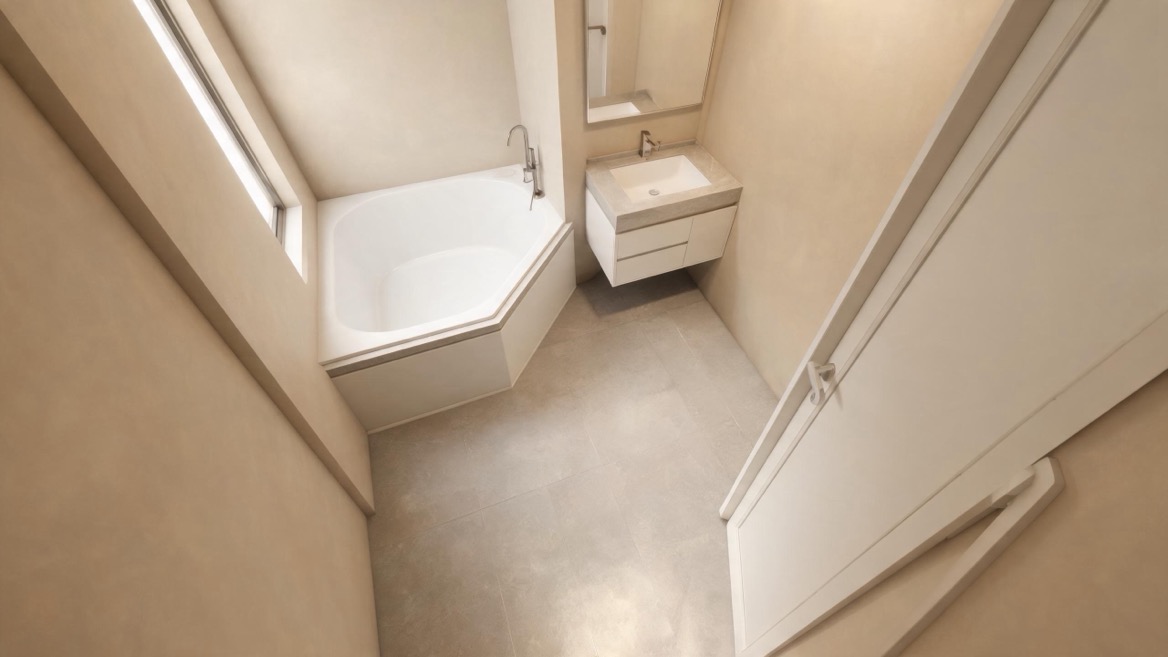
For bathtub brands and procurement teams, material selection affects much more than appearance. It determines weight, thermal comfort, surface feel, production flexibility, repairability, shipping requirements, and price positioning.
Acrylic remains a popular option for modern freestanding and corner bathtub collections because it can support smooth curves, glossy surfaces, lighter handling weight, and diverse mold designs.
High-quality acrylic construction should be assessed beyond the surface layer. Buyers should review:
- Acrylic sheet grade and thickness
- Reinforcement method
- Base-board and frame construction
- Load-bearing performance
- Surface consistency
- Drainage-area reinforcement
- Color stability and finish quality
Acrylic can be especially suitable for OEM projects requiring multiple shapes, color options, and custom dimensions.
Solid surface materials are often selected for premium collections because of their matte appearance, dense feel, seamless visual quality, and contemporary appeal.
This material category is well suited to brands seeking:
- A refined, minimalist aesthetic
- Matte white, cream, gray, black, or custom-color finishes
- Deep soaking designs
- Strong visual differentiation
- Premium residential, hotel, and villa applications
The trade-off is typically greater product weight and more careful logistics planning. For a supplier, this means the packaging design, pallet structure, corner protection, and container-loading plan are as important as the bathtub itself.
Some bathtub constructions combine decorative outer layers with reinforced composite structures. This can help balance design flexibility, durability, and cost control.
For any construction type, buyers should request clear technical documentation covering:
- Net weight and gross weight
- Water capacity
- Recommended floor-loading review
- Drain specification
- Overflow specification
- Installation instructions
- Cleaning and maintenance guidance
- Packaging dimensions
- Product inspection standards
A beautiful corner bathtub can become a costly problem when installation conditions are ignored. The best procurement process connects product selection with technical planning before an order is released.
Water is heavy. A bathtub's installed load includes the empty tub, water, and the user. Some freestanding tubs can hold approximately 50 to 90 gallons, while corner tubs may hold roughly 60 to 90 gallons or more depending on size and depth.
For example, a tub holding 75 gallons of water contains about 625 lb / 283 kg of water before adding the bathtub itself or the bather. This is why projects involving upper floors, timber structures, or renovations should be reviewed by a qualified building professional.
The bathtub should sit level so water drains correctly and does not pool inside the basin. Before installation, verify:
- The floor waste position
- The drain diameter and trap compatibility
- Access for future maintenance
- The bathtub's outlet orientation
- The finished floor level
- Whether flexible or rigid plumbing connections are required
A model designed for a left-hand drain should not be substituted with a right-hand version after rough plumbing is completed unless the full installation plan is reassessed.
Freestanding corner tubs may work with:
- Floor-mounted tub fillers
- Wall-mounted faucets
- Deck-mounted faucets
- Integrated faucet ledges, where applicable
Each option affects the bathtub mold, wall construction, water-supply position, and user experience. For OEM/ODM projects, faucet compatibility should be considered during the design stage rather than treated as an accessory decision.
A product that looks strong in a showroom also needs to perform in manufacturing, shipment, installation, and after-sales service. That is where an experienced bathtub supplier creates meaningful value.
For private-label and custom programs, the development conversation should cover more than exterior styling.
- Custom length, width, height, and soaking depth
- Symmetrical, left-hand, or right-hand corner configuration
- Matte, gloss, textured, or custom-color finishes
- Drain cover design and material
- Overflow style and position
- Built-in shelf or deck configuration
- Optional accessories, such as headrests or coordinated hardware
- Private-label logo, carton design, manuals, and care cards
- Custom foam, carton, crate, or pallet packaging
A consistent quality-control process should include checks for:
- Surface smoothness, color consistency, and visible defects
- Dimensional accuracy against approved drawings
- Drainage performance
- Water-leak testing
- Overflow function
- Structural stability
- Edge finishing
- Hardware fitment
- Packaging integrity before shipment
For international buyers, a clear pre-shipment inspection standard helps reduce uncertainty. It also gives distributors and brand owners a more reliable foundation for customer service and warranty planning.

The strongest bathtub products solve everyday problems without becoming visually complicated. In a compact corner bathtub, several details can make a significant difference.
A gently angled backrest supports longer soaking sessions and prevents the tub from feeling like a large container rather than a relaxation product. Dual-backrest designs are useful where couples or shared household use is part of the product positioning.
A slim outer rim can preserve internal room. A carefully designed basin can also create comfortable shoulder space, leg space, and water depth without forcing the external footprint to become excessive.
A non-porous, smooth finish makes daily cleaning simpler. For product brands, care instructions should clearly state which cleaners are safe and which abrasive products should be avoided.
A built-in corner ledge or deck can hold toiletries, candles, towels, or bath accessories. This feature may appear simple, but it can eliminate the need for additional shelving in a compact bathroom.
Before confirming a sourcing partner, ask for specific, practical answers:
- What are the exact external and internal dimensions?
- What is the usable soaking depth?
- What is the water capacity?
- What is the net product weight and packed shipping weight?
- Which material and reinforcement structure are used?
- Can the model be made in left-hand and right-hand versions?
- Is a custom mold required for the requested design?
- What tests are completed before shipment?
- How is the product protected for sea freight?
- Can the supplier provide installation drawings, care instructions, and branded packaging?
- What is the lead time for samples and bulk production?
- What after-sales support is available for replacement parts or damage claims?
Clear answers to these questions help buyers compare suppliers based on total project value rather than only unit price.
A small corner bathtub is a smart category for bathroom brands that want to serve apartment living, renovation projects, hospitality spaces, and compact luxury homes. The winning product is not defined by size alone. It is defined by the relationship between footprint, internal comfort, materials, design language, installation simplicity, and supply reliability.
Jiaxing Miluo Smart Home Co., Ltd. supports international brands, wholesalers, and manufacturers with customized modern bathtub solutions. Whether you are developing a compact freestanding corner tub, an asymmetrical soaking bath, or a complete premium bathroom collection, our team can help turn your design direction into a manufacturable, market-ready product.
Contact us to discuss your OEM or ODM bathtub project, request technical drawings, and explore custom materials, dimensions, finishes, packaging, and branding options.
For compact applications, corner tubs may begin around 48 × 48 inches (1220 × 1220 mm). However, the best size depends on front clearance, door swing, plumbing location, internal bathing space, and the user's comfort requirements. Many common corner tubs are closer to 60 × 60 inches.
They can be, especially when the bathroom has an unused corner or an irregular layout. However, the diagonal front edge can occupy more floor area than expected, so a scaled bathroom plan should be reviewed before ordering.
Acrylic is widely used for its design flexibility, relatively light weight, and smooth finish. Solid surface is often chosen for a denser feel and a premium matte aesthetic. The right choice depends on the target market, price position, desired appearance, shipping plan, and project requirements.
They do not necessarily require special plumbing, but the floor drain, overflow, faucet position, and left- or right-hand configuration must match the technical drawing. These decisions should be finalized before installation begins.
Yes. OEM/ODM customization can include dimensions, shape, soaking depth, finish, colors, drain cover, overflow, accessories, logo application, installation manuals, cartons, and other brand elements.
The total load includes the bathtub, water, and user. Because a filled bathtub can weigh several hundred kilograms, projects on upper floors or in renovation settings should be reviewed by a qualified professional before installation.
Confirm the approved drawings, materials, dimensions, water capacity, drainage configuration, quality-control requirements, packaging method, container loading plan, labeling, lead time, and after-sales spare-parts process.
1. [Aquatica USA — Small Corner Bathtubs: Free-Standing Corner Tubs]
2. [Wayfair — How to Choose the Right Bathtub Dimensions]
3. [This Old House — Standard Bathtub Sizes: Dimensions and Types]
4. [Badeloft — Standard Bathtub Dimensions Guide]
5. [Boise Bath — Bathtub Dimensions and Sizes Reference Guide]
6. [Buildmat — Corner Bathtub Buying Guide]
7. [KitchenSource — Aquatica Olivia 55-Inch Small Corner Acrylic Bathtub Specifications]


