
Views: 277 Author: Miluo Smart Home Publish Time: 2026-08-16 Origin: Site


Content Menu
● Why Bathtub Drains Become Clogged
● Tools for Snaking a Bathtub Drain
● How to Snake a Bathtub Drain Through the Overflow
>> Step 1: Assess the Drain Before Starting
>> Step 2: Protect the Bathtub Surface
>> Step 3: Remove the Overflow Plate Carefully
>> Step 4: Feed the Drain Snake Slowly
>> Step 5: Break Up or Extract the Blockage
>> Step 6: Flush, Reassemble, and Test
● Common Snaking Problems and Fixes
>> The Snake Will Not Go Down the Drain
>> The Drain Still Runs Slowly
● Safer Alternatives for Minor Clogs
>> Be Cautious With Chemical Cleaners
● Preventing Future Bathtub Drain Clogs
>> Design Considerations for Premium Bathrooms
● When to Call a Licensed Plumber
● Upgrade the Bathtub Experience
● FAQs
>> 1. What is the best way to snake a bathtub drain?
>> 2. Should I snake a bathtub drain through the main drain or overflow?
>> 3. Can a drain snake damage a bathtub or pipe?
>> 4. Why does my bathtub drain keep clogging?
>> 5. Is it safe to use chemical drain cleaner in a modern bathtub?
>> 6. How do I know whether the clog is deeper than the bathtub drain?
>> 7. How often should I clean a bathtub drain?
>> 8. Can I wash clothes in a bathtub without clogging the drain?
A slow or fully clogged bathtub drain is usually caused by a compact mix of hair, soap residue, body oils, lint, and mineral scale. Learning how to snake a bathtub drain correctly can restore normal flow without exposing the bathtub surface, drain fittings, or plumbing connections to unnecessary damage.
For homeowners, property managers, and installers of modern freestanding bathtubs, the safest approach is usually to remove visible debris first, access the drain through the overflow opening, and use a compact hand-crank auger with steady, controlled motion. This guide explains the process, common mistakes, maintenance routines, and the warning signs that mean it is time to contact a licensed plumber.
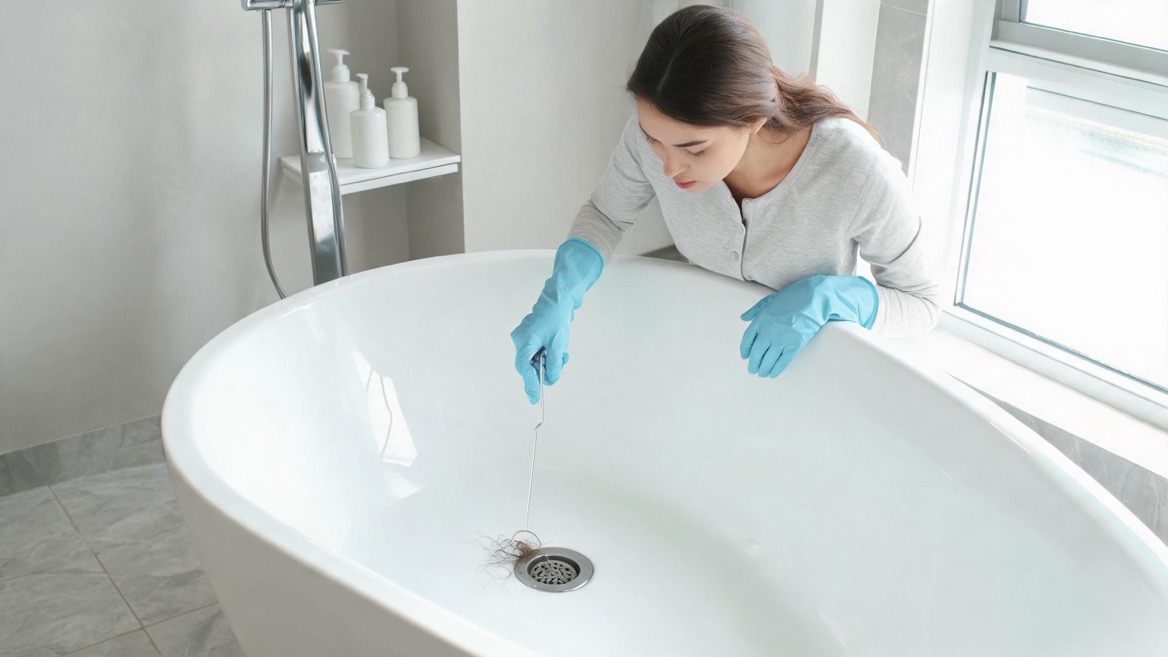
A bathtub drain rarely blocks all at once. In most homes, flow gradually slows as debris sticks to the inside of the drain assembly and trap.
The most common causes include:
- Hair accumulation: Long hair, pet hair, and loose fibers can form a web inside the stopper, crossbars, overflow linkage, or drain trap.
- Soap and conditioner residue: Products containing oils, waxes, and heavy moisturizers can bind hair and lint together.
- Hard-water minerals: Calcium and magnesium deposits may narrow the effective inside diameter of plumbing lines over time.
- Laundry lint: Hand-washing towels, knitwear, or shedding fabrics in a bathtub can introduce fibers that combine with soap residue.
- Small objects: Jewelry, cotton swabs, toy fragments, razor caps, and similar items can create a physical obstruction.
- Infrequent cleaning: A small amount of debris near the stopper can become a deeper clog when left in place.
Hair is especially problematic because it catches soap scum and oils, forming a dense, sticky mass that water cannot easily pass through.
> Important: A bathtub that drains slowly is often easier to clear than one that has completely stopped draining. Address reduced flow early, before debris reaches a deeper branch line.
Prepare the work area before taking apart the drain. This improves control, protects the tub finish, and reduces the chance of losing screws or small components.
| Tool | Why it matters |
|---|---|
| 1/4-inch hand-crank drain auger | Flexible enough for many bathtub drain bends and traps |
| Screwdriver | Removes the overflow plate |
| Rubber gloves | Protects hands from debris and sharp edges |
| Safety glasses | Helps protect against splashback |
| Bucket and absorbent towels | Controls standing water and catches debris |
| Flashlight | Helps inspect the overflow opening and linkage |
| Plastic hair-removal tool | Useful for shallow hair clogs near the drain opening |
| Soft cloth or protective mat | Protects acrylic, composite, and coated bathtub surfaces |
For many bathtub applications, a 1/4-inch cable auger is a practical choice because larger, stiffer tools may be harder to guide through tight turns. Keep the tool close to the opening to reduce cable whipping and improve handling.
In many conventional bathtub configurations, the overflow opening gives the auger a more direct route toward the drain line than the floor drain. The overflow plate is generally located below the tub spout and above the main drain.
Check whether the problem affects only the bathtub.
If the tub drains slowly but the sink and toilet work normally, the blockage may be local to the bathtub drain or trap. If water backs up into other fixtures, makes gurgling sounds, or creates sewage-like odors, stop and arrange a professional inspection.
Remove standing water with a bucket or absorbent towels when possible. This makes the work cleaner and lets you see whether water begins moving after debris is removed.
Place a thick towel, rubber mat, or folded cloth in the bottom of the tub.
A metal cable can scratch or mark a bathtub finish if it is dropped, dragged, or allowed to whip across the surface. This matters especially for contemporary acrylic, solid-surface, stone-resin, and coated freestanding bathtubs.
Wear gloves and safety glasses before handling the drain assembly.
Use a screwdriver to remove the screws securing the overflow plate.
If the bathtub uses a lever-operated drain stopper, the plate may be connected to a linkage assembly. Pull it out gently and keep the parts together in a safe place. Do not force the linkage; older components may be delicate or coated with residue.
Inspect the removed components for:
- Hair wrapped around the linkage
- Soap buildup
- Loose screws
- Corrosion
- Damaged seals or gaskets
Sometimes this simple inspection solves the problem without needing an auger.
Insert the cable into the overflow opening. Feed it gradually while rotating the handle in the recommended direction for your tool.
Keep the first section of cable as straight as possible. Use gentle forward pressure, not force. You may feel resistance when the cable reaches a bend, the trap, or the clog itself.
If the snake stops:
1. Retract it a few centimeters.
2. Rotate slowly.
3. Advance again with light pressure.
4. Repeat until the cable moves through the bend or grips the obstruction.
Do not shove the cable aggressively. A forceful approach can kink the cable, damage fittings, or send the tool in the wrong direction.
When you reach resistance that feels different from a normal pipe bend, rotate the cable steadily. The auger head may either break up the debris or catch it.
Pull back a short distance and check the cable. If hair, lint, or residue appears, clean it off with a rag before feeding the snake forward again.
Repeat this cycle until the cable moves more freely:
- Feed slowly
- Rotate steadily
- Withdraw slightly
- Inspect the cable
- Remove debris
- Continue as needed
A successful pass often brings out a wet cluster of hair mixed with soap residue. Dispose of the debris in a bin rather than rinsing it back into the drain.
After removing the auger, reassemble the overflow plate and stopper linkage carefully.
Run warm water for several minutes to flush loosened residue and confirm that water drains normally. A clear drain should empty consistently without pooling, gurgling, or backing up.
If flow improves only slightly, repeat the process once. If the drain remains slow after a second careful attempt, the obstruction may be deeper than a household auger can safely reach.
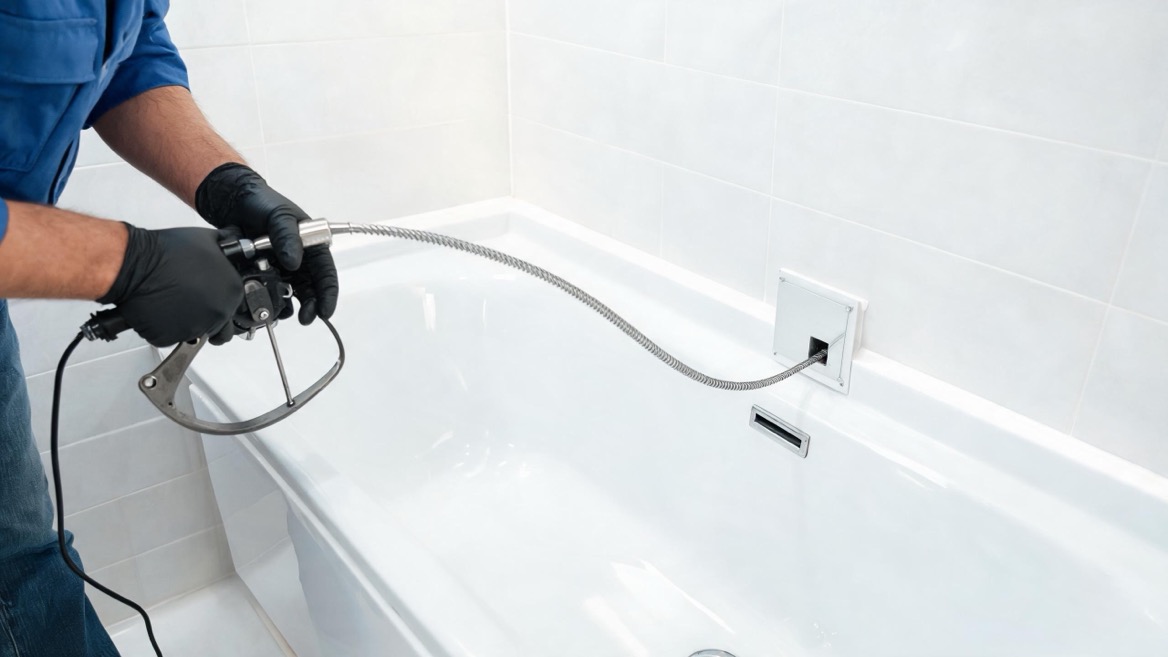
First, confirm that you are working through the overflow opening, rather than forcing the cable through the main floor drain. The overflow route often provides better access to the drain line.
Other possible reasons include:
- The cable is too thick or rigid
- The cable is meeting a normal bend
- The auger is being advanced too quickly
- The cable has become kinked
- The overflow linkage has not been fully removed
Withdraw the cable, clean it, straighten the exposed section, and try again with slower rotation.
Do not pull hard or yank the cable.
Instead, rotate gently while applying light backward pressure. If using a powered tool, follow the manufacturer's instructions carefully; uncontrolled rotation can damage the cable or fixture.
A stuck cable may indicate that it has caught on a fitting, entered an incorrect passage, or become tightly wrapped around debris. If it cannot be removed smoothly, stop and call a plumber.
A partial improvement may mean there is residual debris near the stopper, a deeper clog, or mineral buildup in the line.
Try these checks:
- Remove and clean the stopper again
- Use a plastic hair-removal tool near the drain opening
- Flush with warm water
- Confirm the overflow plate and linkage were reinstalled correctly
- Observe whether other bathroom fixtures are also affected
Avoid repeatedly forcing the auger farther into the plumbing system. More length does not always mean better results.
Not every slow bathtub drain needs a drain snake. For shallow or mild clogs, start with the least invasive method.
Lift out the stopper or drain cover and remove visible hair by hand while wearing gloves. A plastic barbed drain tool can reach hair near the upper section of the drain.
This approach is fast, inexpensive, and less likely to scratch a finished bathtub surface.
A plunger can work when the clog is soft and close to the drain.
1. Add a few inches of water to the tub.
2. Cover the overflow opening with a damp cloth or sealed cover.
3. Place the plunger firmly over the drain.
4. Pump several times with controlled force.
5. Test the drain with warm water.
Sealing the overflow helps the plunger direct pressure toward the clog instead of losing pressure through the upper opening.
Strong chemical drain cleaners can create safety hazards, damage some plumbing materials, and leave corrosive liquid in the pipe for the next person who opens the drain. They may also be unsuitable for particular bathtub finishes or manufacturer care requirements.
Many bathtub care guides advise avoiding harsh chemicals and using mild, non-abrasive cleaning products instead. Always follow the bathtub manufacturer's care instructions and never mix cleaning products.
A good drain-maintenance routine protects both the plumbing system and the bathing experience.
- Remove hair from the stopper or drain screen.
- Rinse away visible bath-product residue.
- Avoid letting cotton, wipes, razor covers, or small objects enter the drain.
- Rinse the tub after using heavy bath oils, masks, or conditioners.
- Remove and clean the stopper or visible drain components.
- Check that the overflow plate is secure.
- Flush the drain with warm water.
- Inspect for early signs of slow drainage.
For bathtub brands, project contractors, and hospitality buyers, drainage performance should be considered alongside visual design. A well-designed modern bathtub should support accessible drain components, compatible overflow hardware, reliable seals, and clear care guidance.
For OEM and ODM bathtub projects, details such as drain opening compatibility, stopper style, overflow configuration, surface durability, and maintenance access should be discussed early in product development. These decisions help protect the end-user experience after installation.

A drain snake is useful for ordinary hair-and-residue clogs, but it cannot solve every drainage problem.
Call a professional when you notice:
- Water backing up into a sink, shower, or toilet
- Repeated clogs returning within days or weeks
- Strong sewer-like odors
- Gurgling noises from nearby fixtures
- A drain snake that becomes stuck
- A suspected broken, collapsed, offset, or poorly vented pipe
- A bathtub that remains fully blocked after careful snaking
These signs can point to a deeper branch-line obstruction, venting issue, or structural plumbing problem. A licensed professional can inspect the system with specialized equipment and recommend the appropriate repair.
A bathtub should deliver more than a beautiful appearance—it should also support easy cleaning, reliable drainage, and long-term everyday use. Jiaxing Miluo Smart Home Co., Ltd. provides customized modern bathtub and bathroom solutions for overseas brands, wholesalers, and manufacturers seeking OEM and ODM support.
Whether you are developing a freestanding soaking tub, integrated smart bathroom collection, or a tailored private-label product range, work with a supplier that understands both product design and practical ownership needs. Contact Miluo Smart Home to discuss your customized bathtub project.
For many bathtub drains, remove the overflow plate and feed a 1/4-inch hand-crank auger through the overflow opening. Advance it slowly while rotating, then withdraw it carefully to remove hair and debris.
The overflow opening is often the better access point because it can offer a more direct path into the drain line and past the trap. Remove the overflow plate and any connected linkage carefully before inserting the auger.
Yes, if it is forced, used carelessly, or allowed to scrape the bathtub surface. Protect the tub with a towel, use a suitable cable size, and apply only gentle pressure when advancing the tool.
Recurring clogs are usually caused by hair, soap residue, conditioner, bath oils, lint, or mineral deposits. A drain screen, routine cleaning, and prompt removal of visible hair can reduce repeat blockages.
It depends on the product, pipe materials, and bathtub manufacturer's care instructions. Harsh chemicals may be unsuitable for some bathtub finishes and can create hazards during later maintenance. Use caution and avoid mixing products.
If multiple fixtures back up, the drain gurgles, odors persist, or the problem returns quickly after cleaning, the blockage may be in a shared or deeper plumbing line. Contact a licensed plumber.
Remove visible hair weekly, inspect the stopper and drain opening monthly, and address slow drainage as soon as it appears. The right frequency depends on household size, hair length, bath-product use, and water hardness.
Yes, but use a mesh drain catcher and avoid draining large amounts of lint, loose fibers, or heavily shedding fabrics. Clean the catcher immediately after use and rinse the tub afterward.
1. [Aquatica USA — How to Snake a Bathtub Drain and Keep It Flowing Smoothly]
2. [This Old House — How to Snake a Clogged Drain]
3. [This Old House — How You Can Unclog Any Drain: Sink, Toilet, and Tub]
4. [The Spruce — Unclog a Bathtub Drain Using a Snake]
5. [Roto-Rooter — How Do I Get a Snake Down a Clogged Tub Drain?]
6. [American Home Shield — How to Prevent and Clear Clogged Drains]


