
Views: 218 Author: Miluo Smart Home Publish Time: 2026-08-28 Origin: Site


Content Menu
● Why Modern Luxury Bathtub Design Matters
● The Design Principles Behind a Premium Bathtub
>> 1. Form Should Support the Body
>> 2. Proportion Creates Visual Luxury
>> 3. Material Defines the User Experience
● How to Choose the Right Bathtub Size
>> A Practical Sizing Framework
● Freestanding Bathtubs: Design Opportunity and Installation Reality
>> Installation Factors That Should Not Be Overlooked
● From Concept to Bathtub OEM Production
>> Step 1: Define the Product Positioning
>> Step 2: Develop the Technical Specification
>> Step 3: Review Samples Before Tooling Approval
>> Step 4: Build Quality Control Into Production
● Designing a Complete Bathroom Collection
● Create a Bathtub Collection Built for Your Market
● FAQ
>> 1. What is the best material for a modern luxury bathtub?
>> 2. What is the difference between bathtub OEM and ODM?
>> 3. How do I choose a freestanding bathtub size?
>> 4. Are solid-surface bathtubs suitable for hotels?
>> 5. What information should I provide for a custom bathtub inquiry?
>> 6. Can a bathtub supplier create a full bathroom product collection?
>> 7. What should be checked before mass production?
A modern luxury bathtub is no longer just a bathroom fixture. It is a defining product that influences perceived brand value, bathroom comfort, and the commercial appeal of an entire collection. For brands, wholesalers, and project buyers, the right bathtub design must balance visual impact, body support, material performance, installation practicality, and consistent manufacturing quality.
At Jiaxing Miluo Smart Home Co., Ltd., we work with international partners seeking custom bathtub OEM and ODM solutions for contemporary residential, hospitality, and premium sanitaryware markets. From freestanding soaking tubs to coordinated bathroom collections, successful product development begins by translating a design concept into a reliable, scalable, buyer-ready product.
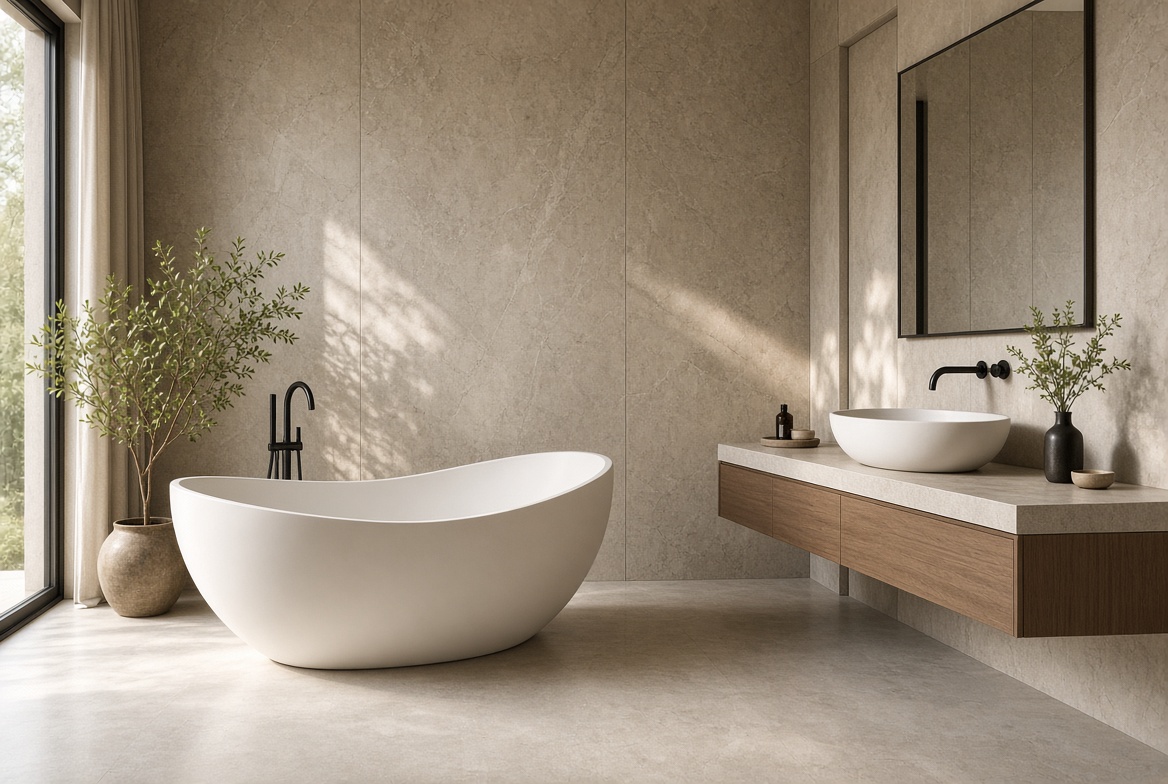
A bathtub often becomes the visual center of a bathroom. Its silhouette, finish, proportions, and tactile quality can determine whether a space feels ordinary, spa-inspired, minimalist, or genuinely premium.
The strongest designs do more than follow a trend. They solve real user needs:
- Comfortable body positioning for longer soaking sessions
- Easy cleaning through smooth, low-joint surfaces
- Visual versatility across different interior styles
- Material durability for daily use and long-term brand reputation
- Installation compatibility for distributors, contractors, and end users
- Coordinated product language with basins, faucets, vanities, and shower systems
Freestanding bathtubs remain especially influential in premium bathroom design because they create a focal point without requiring a surrounding deck structure. Recent market reporting also points to continued demand for acrylic models, while solid-surface and stone-resin products maintain strong appeal in higher-end applications due to their weight, finish quality, and heat-retention characteristics.
For a sanitaryware brand, this means bathtub development should be treated as a strategic product decision—not simply a sourcing exercise.
A successful luxury bathtub has to perform in three ways at once: it must look distinctive, feel comfortable, and remain practical to manufacture and install.
A beautiful outline is not enough. The internal geometry determines how users experience the product.
Key ergonomic considerations include:
- Backrest angle that supports a relaxed recline
- Water depth that enables immersive soaking without excessive water use
- Shoulder room for comfort across different body types
- Lumbar support to reduce pressure during extended baths
- Rim width that is visually balanced and functional for faucets or accessories
- Drain position that avoids discomfort beneath the user's body
An oval bathtub may look simple from the outside, but its interior curves require careful refinement. If the walls are too vertical, the tub can feel restrictive. If the slope is too shallow, the user may slide forward. The best designs create a natural resting position while maintaining enough water depth for a true soaking experience.
For brands developing a private-label collection, ergonomic prototyping should happen before final tooling. A small adjustment to interior depth, back angle, or overflow placement can meaningfully improve customer satisfaction and reduce complaints after launch.
Luxury often comes from restraint. A bathtub does not need excessive decoration to feel premium; it needs proportion.
Modern bathtub designs commonly use:
- Soft oval and capsule-shaped silhouettes
- Slim but visually substantial rims
- Low, grounded profiles
- Symmetrical freestanding forms
- Organic curves inspired by natural stones or water-worn surfaces
- Matte white, gloss white, black, beige, gray, or custom-color finishes
A compact tub with the right proportions can look more upscale than an oversized model that overwhelms the room. This is particularly important for urban apartments, boutique hotels, and renovation projects where bathroom footprints are limited.
Before choosing a model, buyers should assess the full space—not only the bathtub's external dimensions. A practical planning guideline is to maintain clear floor space in front of fixtures, helping users move safely and allowing the bathtub to remain visually open rather than crowded.
Material selection affects nearly every aspect of bathtub performance: weight, thermal feel, repairability, cost, production flexibility, and shipping requirements.
| Material | Main Advantages | Considerations | Suitable Market Position |
|---|---|---|---|
| Acrylic | Lightweight, versatile, cost-effective, broad shape flexibility | Requires well-designed reinforcement and stable structure | Mid-range to premium volume programs |
| Solid surface | Seamless appearance, matte feel, repairable surface, strong heat retention | Heavier and typically higher cost | Premium residential and hospitality |
| Stone resin | Substantial feel, refined finish, excellent visual presence | Requires careful handling and logistics planning | Luxury collections and design projects |
| Cast iron | Durable, traditional, classic heat retention | Very heavy, limited flexibility, complex transport | Heritage or specialist product lines |
Acrylic remains a major category because it provides strong flexibility for modern shapes, manageable freight weight, and scalable manufacturing. Solid-surface and stone-resin bathtubs, meanwhile, are often selected for high-end collections where a seamless matte aesthetic and sculptural presence are central to the brand story.
The correct choice is not universal. It depends on the target buyer, market price point, installation environment, and the brand's desired identity.
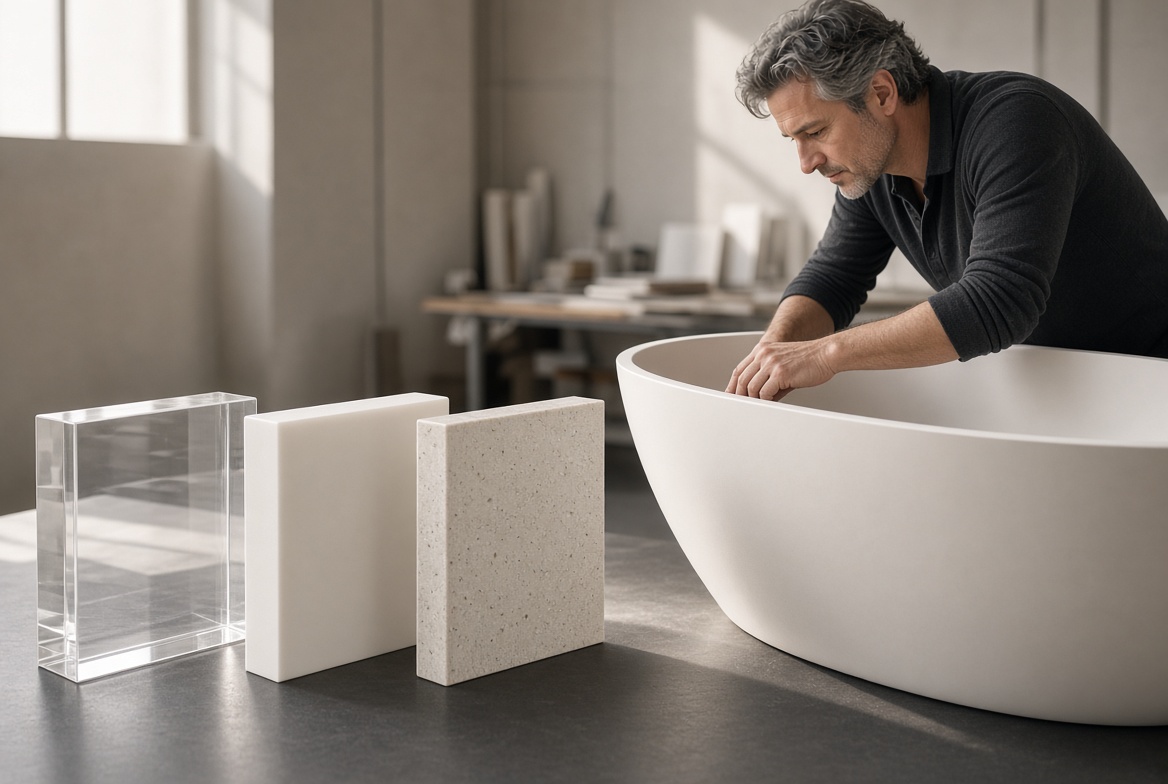
Bathtub sizing should be based on the user, the bathroom layout, and the installation method.
Before selecting or developing a bathtub, ask:
1. Who is the intended customer: homeowner, hotel guest, developer, or wellness-focused buyer?
2. Is the product designed for compact apartments, family homes, villas, or hospitality projects?
3. Will the tub be installed against a wall, in a corner, or as a freestanding centerpiece?
4. Does the bathroom have enough clearance for safe entry, cleaning, and maintenance?
5. Where will the floor-mounted or wall-mounted faucet be positioned?
6. Can the floor structure support the filled bathtub weight?
7. Is the drain location compatible with the selected model?
For accessible applications, planning should go beyond standard layout habits. U.S. accessibility guidance specifies clearance requirements around bathtubs and identifies features such as seats and grab-bar support in applicable bathing environments. Even when a project does not require formal compliance, considering mobility, safe entry, and future adaptability can make a bathroom more inclusive and commercially relevant.
| Bathroom Scenario | Recommended Direction | Why It Works |
|---|---|---|
| Compact apartment | Compact freestanding or wall-adjacent bathtub | Preserves circulation space while adding a premium feature |
| Family bathroom | Medium-length tub with comfortable internal width | Supports regular use by different household members |
| Master suite | Large freestanding soaking bathtub | Creates a focal point and supports a spa-style experience |
| Boutique hotel | Durable, easy-clean model with strong visual identity | Enhances guest perception while simplifying maintenance |
| Luxury villa | Sculptural solid-surface or stone-resin bathtub | Matches high-value interiors and creates a statement piece |
A product may look exceptional in a showroom but perform poorly if it does not fit realistic installation conditions. For this reason, product pages, catalogs, and technical drawings should clearly show external dimensions, internal dimensions, net weight, gross weight, drain location, overflow height, water capacity, and installation clearance.
Freestanding bathtubs have become a leading category in contemporary bathroom design because they allow brands to express a recognizable visual identity.
A well-developed freestanding bathtub can communicate:
- Calm minimalism
- Boutique-hotel luxury
- Organic contemporary design
- Japanese-inspired soaking culture
- Sculptural European styling
- High-end wellness positioning
However, this category also requires more technical coordination than many buyers expect.
Floor structure: A bathtub's installed load includes the product itself, water, and the user. Heavier solid-surface or stone-resin models require early confirmation of structural capability.
Drain alignment: Freestanding installations often depend on precise floor drainage positioning. Clear technical drawings reduce field modifications and installation delays.
Faucet coordination: A floor-mounted faucet requires planning for supply lines, reach, height, and placement. A poorly positioned faucet can compromise both appearance and usability.
Cleaning access: The gap between tub and wall should look intentional while still allowing practical cleaning.
Packaging protection: Premium tubs need packaging designed for long-distance transport. Corner protection, reinforced crates or cartons, moisture control, and reliable palletization are essential for export programs.
A product is only truly premium when it arrives safely, installs smoothly, and performs as expected after the first year of use.
For international brands and wholesalers, customization should be managed through a clear development process. This reduces uncertainty and helps ensure consistency across repeat orders.
Start with the commercial purpose of the collection.
Clarify:
- Target retail or project price range
- Main sales markets
- Preferred materials and finishes
- Target size range
- Desired visual language
- Required certifications or testing expectations
- Expected annual volume
- Packaging and branding requirements
For example, a distributor serving urban residential renovation projects may prioritize compact dimensions and acrylic construction. A design-led hospitality supplier may prefer a heavier matte solid-surface tub with a distinctive sculptural profile.
A complete bathtub specification should include more than a product image.
It should address:
- Overall dimensions and tolerances
- Internal soaking depth
- Drain and overflow configuration
- Surface finish
- Color standard
- Material composition
- Reinforcement structure
- Base construction and leveling feet
- Weight and water capacity
- Packaging method
- Brand marks, labels, manuals, and carton artwork
This stage protects both the buyer and manufacturer. It establishes a shared standard before samples and mass production begin.
Sampling is where concept meets reality. Buyers should examine more than appearance.
A useful sample review checklist includes:
- Is the surface smooth and visually consistent?
- Does the bathtub sit level on a flat floor?
- Are seams, joints, and overflow details cleanly finished?
- Is the internal space comfortable for the intended user?
- Does the drain assembly fit correctly?
- Does the color match the approved standard?
- Is the packaging sufficient for the intended export route?
- Does the product align with the approved drawings?
This process is especially important for OEM bathtub programs, where even small detail changes can affect tooling, production efficiency, or user experience.
Quality assurance should not be limited to the final inspection. It should run through the entire production process.
For premium bathtubs, key control points may include:
- Raw material verification
- Mold condition checks
- Surface-finish inspection
- Dimensional measurement
- Drainage and leakage testing
- Stability checks
- Color consistency assessment
- Packing inspection
- Pre-shipment sampling
Clear quality criteria help protect the buyer's reputation in their own market. A bathtub is a large, visible, high-value product. Even one avoidable defect can create expensive reverse logistics and damage customer trust.
A bathtub sells more effectively when it belongs to a coordinated product story.
Instead of treating the bathtub as an isolated item, brands can create a unified modern bathroom collection that includes:
- Freestanding bathtubs
- Countertop and freestanding wash basins
- Bathroom vanities
- Mirrors and mirror cabinets
- Shower enclosures
- Smart toilets
- Faucets and shower systems
- Storage accessories
This approach increases average order value and gives distributors more reasons to work with one supplier. It also creates a more cohesive visual presentation in showrooms, catalogs, websites, and project proposals.
For a luxury collection, consistency is crucial. The bathtub's curves, edge radii, finish, and color palette should connect naturally with the basin and vanity range. A soft oval tub paired with sharply angular fixtures can feel visually disconnected unless the contrast is deliberate and carefully managed.
In our experience with international bathroom product development, serious buyers rarely choose a supplier based on product images alone. They evaluate whether the manufacturer can convert design intent into dependable commercial delivery.
They commonly look for:
- Flexible customization without unclear specifications
- Stable quality across repeat production orders
- Professional technical drawings and product information
- Responsive communication during sampling and production
- Reliable export packaging suitable for long-distance shipping
- Consistent lead-time management
- Branding support for private-label programs
- A broad product range that supports collection-based sourcing
The most successful buyer-manufacturer relationships are collaborative. The buyer contributes market knowledge, channel requirements, and design direction. The manufacturer contributes engineering insight, material knowledge, production control, and product-development support.
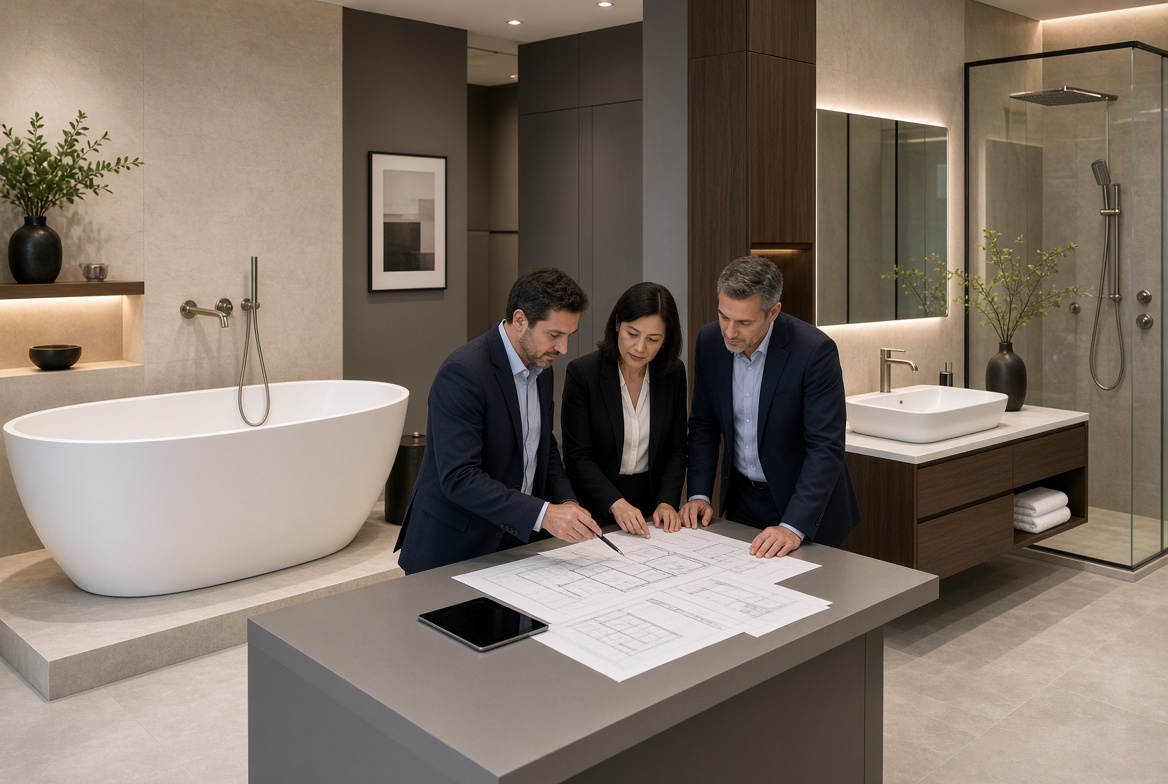
A well-designed bathtub can help a brand stand out in a crowded sanitaryware market. But lasting success comes from combining design appeal with ergonomic comfort, reliable material selection, accurate technical development, and disciplined production quality.
Jiaxing Miluo Smart Home Co., Ltd. supports international brands, wholesalers, developers, and sanitaryware manufacturers with bathtub OEM and ODM services, including custom design development, material and finish selection, private-label packaging, coordinated bathroom collections, and export-oriented production support.
Contact our team to discuss your next modern luxury bathtub project, request technical information, or develop a tailored OEM or ODM bathroom collection for your market.
The best material depends on your target market and product positioning. Acrylic is lightweight, versatile, and cost-efficient for volume programs. Solid surface and stone resin are commonly used for premium collections because they offer a substantial feel, matte finishes, and strong visual appeal.
OEM production follows the buyer's existing product design, drawings, brand requirements, and specifications. ODM development combines the manufacturer's design and engineering capability with buyer customization, such as dimensions, finishes, branding, packaging, and product features.
Start with the available bathroom footprint, required access space, user needs, plumbing location, and desired visual effect. Always review technical drawings before purchase or installation and consider the total filled weight of the bathtub.
Yes. Solid-surface bathtubs can be a strong choice for boutique hotels and luxury hospitality projects because of their seamless appearance, premium feel, and potential for surface repair. The project should confirm weight limits, handling requirements, and maintenance procedures before final selection.
Provide your target market, preferred dimensions, material preference, estimated quantity, required finishes, drain and overflow requirements, brand logo needs, packaging requirements, and reference images or drawings. This enables faster and more accurate technical evaluation.
Yes. A supplier with broad sanitaryware capabilities can support coordinated collections that combine bathtubs with basins, vanities, mirrors, shower systems, toilets, and accessories. This approach helps brands achieve a consistent design language and simplify sourcing.
Confirm the approved drawing, material standard, color sample, surface finish, hardware, drain system, packaging, labels, instruction manual, quality requirements, and inspection standards. A pre-production sample should be approved before full production begins.
- [Aquatica Bath — *A Journey Through the Design Excellence of Aquatica Bathtubs*]
- [U.S. Access Board — *Chapter 6: Bathing Rooms*]
- [Dura Supreme — *Bathroom Design: Top 7 Bathroom Guidelines*]
- [Design Milk — *Aquatica Redefines the Art of Bathing*]
- [Business Research Insights — *Freestanding Bathtub Market Size, Share & Growth*]
- [SkyQuest — *Bathtub Market Size, Share & Analysis Report*]


