
Views: 277 Author: Miluo Smart Home Publish Time: 2026-08-23 Origin: Site


Content Menu
● What Makes a Freestanding Bathtub High Quality?
● Freestanding Tub Materials Compared
>> Acrylic Freestanding Tubs: What to Inspect
>> Solid Surface and Mineral Composite Tubs
>> Cast Iron Tubs: Durable but Demanding
● Comfort Is More Than Tub Length
>> Evaluate These Ergonomic Details
● The Installation Factors Buyers Often Miss
● How to Judge Value Beyond the Purchase Price
>> Questions That Reveal Supplier Capability
● Current Design Directions for Freestanding Tubs
● A Supplier Checklist for Brands and Wholesalers
● Why Work With Jiaxing Miluo Smart Home Co., Ltd.?
>> What is the best material for a freestanding bathtub?
>> Are freestanding acrylic tubs durable?
>> Do freestanding tubs require floor reinforcement?
>> What size freestanding tub is most practical?
>> Can a freestanding bathtub be customized for a private label?
>> What should wholesalers check before placing a bathtub order?
A freestanding bathtub should do more than create a visual focal point. For homeowners, hotels, developers, and bathroom brands, the best freestanding tubs combine dependable construction, comfortable soaking geometry, installation-ready engineering, and a finish that continues to look refined after years of daily use.
At Jiaxing Miluo Smart Home Co., Ltd., we work with international brands, wholesalers, and manufacturers on custom modern bathroom collections. From that perspective, choosing a high-quality freestanding bathtub is not simply about selecting an attractive silhouette. It is about evaluating the material system, wall structure, drainage design, production consistency, packaging protection, and the real experience of the person who will use it.
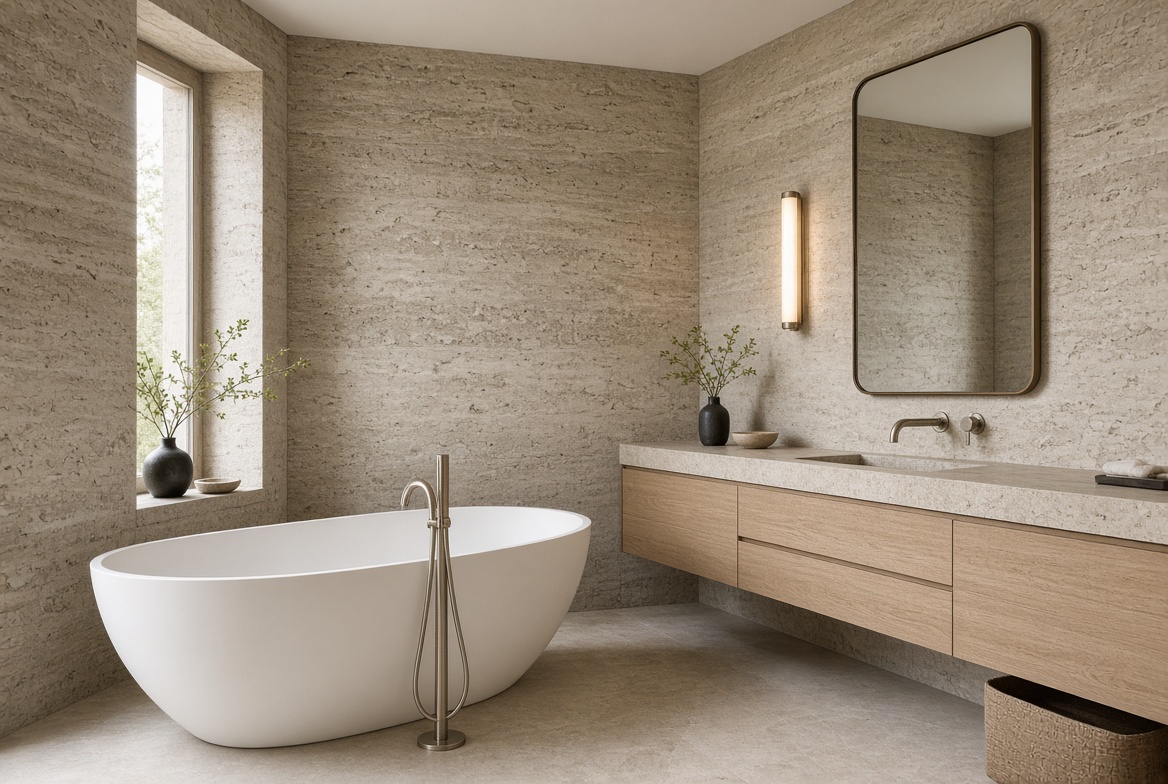
A premium freestanding tub is defined by the details that are often invisible in a showroom: material thickness, reinforcement, load-bearing design, dimensional accuracy, surface finishing, and quality control.
A beautiful tub can still become a costly problem if it flexes under body weight, drains slowly, arrives damaged, or does not align correctly with the supplied waste system.
When assessing a model, focus on five essential areas:
- Material performance: resistance to impact, staining, discoloration, and everyday cleaning.
- Structural stability: a solid, supported base that does not rock, flex, or feel hollow.
- Ergonomic comfort: adequate back support, water depth, shoulder room, and a practical drain location.
- Installation compatibility: correct dimensions, accessible plumbing, integrated overflow, and adjustable feet where needed.
- Manufacturing consistency: reliable finish quality across orders, especially for retail, project, and hospitality programs.
For brands and importers, quality also includes repeatability. One excellent sample is not enough. The same product must be manufacturable at scale, packed safely, and delivered with consistent dimensions and surface quality.
Material affects nearly every part of the buyer experience: price, weight, heat retention, design freedom, maintenance, transport risk, and installation requirements.
| Material | Key Strengths | Considerations | Best Fit |
|---|---|---|---|
| Acrylic | Lightweight, versatile, warm to the touch, cost-efficient | Quality varies greatly by sheet thickness and reinforcement | Retail collections, apartments, broad-market projects |
| Solid surface | Smooth seamless appearance, substantial feel, matte luxury finish | Heavier and generally higher-cost than acrylic | Premium residential, hospitality, design-led brands |
| Cast iron | Exceptional durability and strong heat retention | Very heavy; may require structural assessment | Heritage, luxury, long-term renovation projects |
| Stone resin / mineral composite | Sculptural appearance, thermal mass, refined surface | High freight weight and more demanding handling | High-end bathrooms, boutique hotels, statement spaces |
Acrylic remains one of the most widely used materials for modern freestanding tubs because it is lightweight, readily formed into different shapes, and generally easier to install than heavy cast iron or composite alternatives. However, "acrylic" alone does not indicate quality. The acrylic sheet, backing system, reinforcement method, base construction, and final polishing standard all matter.
A well-made acrylic freestanding tub should feel stable when a person steps inside. The shell should not noticeably flex around the rim, backrest, or floor area.
Ask the supplier for specific answers to these questions:
1. What is the acrylic sheet thickness before forming?
2. What reinforcement materials are used behind the visible shell?
3. Is the base supported by a frame, board, resin reinforcement, or a combination of systems?
4. Are adjustable feet included for uneven finished floors?
5. Is the drain pre-installed and tested before packing?
6. What inspection standard is used for scratches, pinholes, bubbles, and color consistency?
A lightweight bathtub is useful for upstairs installation and reduces handling complexity, but it should never feel thin or unstable. A quality acrylic model balances manageable weight with sufficient structural support.
Solid surface and mineral composite tubs are favored for their continuous, architectural appearance. They can offer a substantial feel, a modern matte surface, and a minimal visual profile with concealed drain and overflow details.
These tubs are particularly suitable when a brand wants to position a collection around quiet luxury, tactile finishes, and sculptural bathroom design. Their higher weight, however, should be addressed early in project planning. Confirm floor load capacity, delivery access, installation manpower, and packaging specifications before placing an order.
Cast iron remains a strong option where longevity and heat retention are the highest priorities. Its enamel-coated surface is durable and easy to clean, but the material's substantial weight can complicate transport and upper-floor installation.
For most contemporary brands, cast iron is best positioned as a specialized premium option rather than the core of a broad freestanding tub program. The product may offer outstanding long-term value, but the total installed cost can be much higher than that of acrylic.
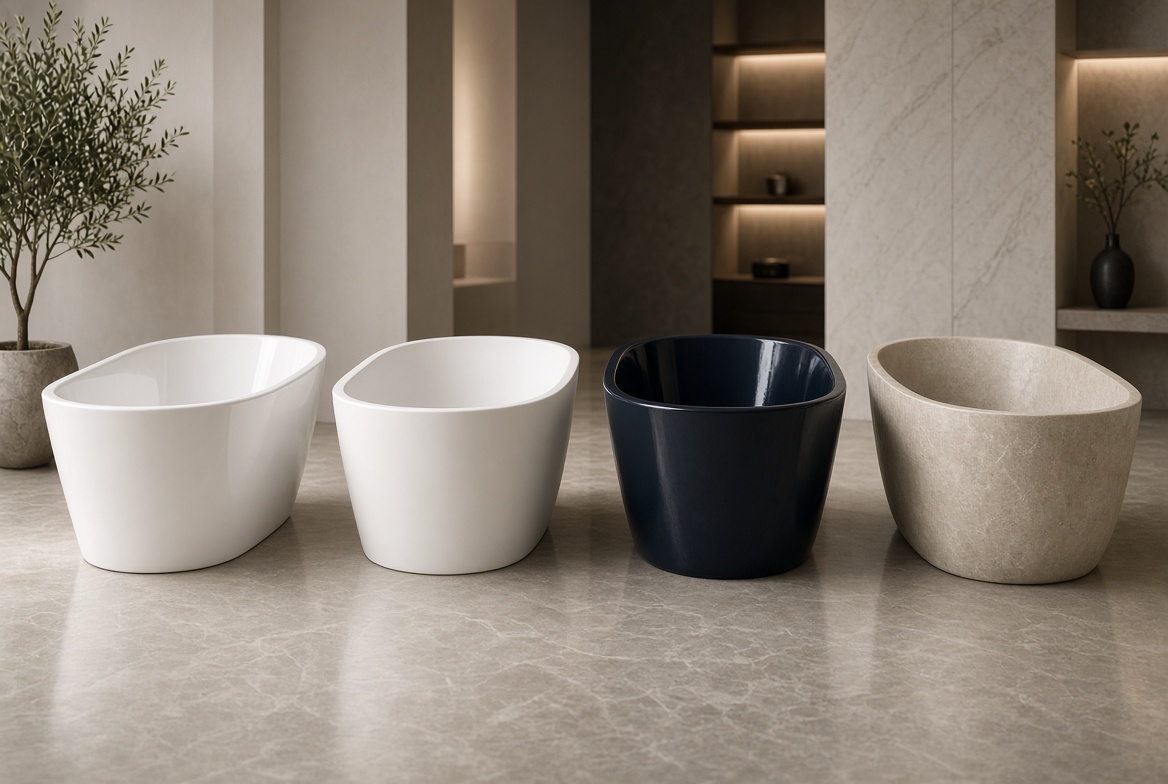
Many buyers focus first on external dimensions, such as 1500 mm, 1600 mm, or 1700 mm. Yet interior geometry has a larger effect on whether the tub actually feels comfortable.
A 1600 mm bathtub with a well-shaped lumbar support can provide a better soaking experience than a longer tub with flat walls and an awkward drain placement.
- Backrest angle: A gentle recline supports the lower back without forcing the user to slide forward.
- Internal depth: Deeper water capacity creates a more immersive soaking experience, but the height must still allow safe entry and exit.
- Shoulder room: Narrow interiors may look elegant but can feel restrictive for taller users.
- Drain position: A center drain is practical for two-sided soaking and reduces the chance of sitting directly on the drain.
- Overflow height: This determines usable soaking depth and should be designed together with water volume and safety considerations.
- Rim profile: A refined rim improves appearance, but it should not create a difficult-to-clean ledge or weak edge.
For product development, the most useful method is simple: build a full-size prototype, fill it to the overflow, and ask people with different body types to test entry, recline, arm position, and exit. Digital drawings alone cannot reveal every comfort issue.
A freestanding tub can look simple because it is not enclosed by walls or decking. In reality, it requires careful coordination among the tub supplier, plumber, contractor, and designer.
Before purchasing, confirm the following:
| Installation Check | Why It Matters |
|---|---|
| Finished floor location | The drain must align with the final plumbing position, not only a preliminary drawing |
| Faucet configuration | Floor-mounted, wall-mounted, deck-mounted, or tub-mounted options require different clearances |
| Tub weight when filled | The floor supports the tub, water, and occupant—not only the empty product |
| Access route | Stairways, elevators, door openings, and turning areas can prevent delivery |
| Drain and overflow compatibility | Incorrect components can cause leaks, slow drainage, or difficult servicing |
| Cleaning clearance | Leave practical space around the tub for cleaning and maintenance |
For example, a solid-surface tub may look ideal in a second-floor primary bathroom, but the project can fail if the installation team discovers too late that the bathtub cannot pass through the stairwell or that the floor structure requires reinforcement.
A capable supplier should provide a technical drawing with overall dimensions, net weight, water capacity, drain location, overflow location, and installation guidance before production begins.
The lowest quoted bathtub price is rarely the lowest total cost.
For a distributor or project buyer, real value includes the rate of damage during transport, customer complaints, replacement costs, installation issues, lead time reliability, and the ability to reorder matching products later.
A better purchasing approach is to compare the total ownership value:
Total Value=Product Performance+Service Reliability−Risk and After-Sales Cost
- Can the supplier provide material specifications rather than only product photos?
- Are sample approval and mass-production approval managed separately?
- Is each tub water-tested before packing?
- Are drain kits, overflows, and adjustable feet included or optional?
- What packaging protects the rim, base, corners, and glossy surfaces?
- Can the supplier support custom colors, dimensions, branding, and matching basins?
- Is there a documented process for handling defects or shipping damage?
For OEM and ODM programs, these questions matter as much as the bathtub design itself. A supplier that can develop a signature silhouette but cannot control dimensional tolerance or packaging quality may create expensive problems after launch.
Modern freestanding bathtub design is moving toward softer forms, restrained color palettes, integrated details, and material finishes that feel calm rather than overly decorative.
Popular directions include:
- Oval soaking tubs with deep interiors and centered drains.
- Soft rectangular forms with rounded corners for contemporary architecture.
- Matte white solid-surface finishes that create a spa-inspired appearance.
- Compact Japanese-style soaking tubs for smaller but design-conscious bathrooms.
- Custom colors and exterior finishes that coordinate with vanities, basins, and hardware.
- Thin-edge silhouettes that appear visually light while retaining adequate structural support.
Acrylic continues to lead in accessibility and design flexibility, while solid surface and mineral composite materials are increasingly selected for premium collections that emphasize tactile finishes and seamless contemporary forms.
For international buyers, a freestanding bathtub should be evaluated as both a consumer product and a supply-chain product.
Before confirming a factory, request:
1. Detailed technical drawings with tolerances, drain position, net weight, water capacity, and installation dimensions.
2. Material samples that show gloss level, color, texture, and scratch resistance.
3. A physical pre-production sample for visual, functional, and ergonomic approval.
4. Inspection standards for surface defects, color variation, dimensions, and water leakage.
5. Packaging photos and drop-test information where available.
6. Certification documentation applicable to the target market.
7. Clear warranty terms covering manufacturing defects and component issues.
8. Customization options for size, color, logo, overflow, drain finish, and matching bathroom products.
This process helps a brand move from purchasing an individual tub to creating a dependable, differentiated bathroom collection.
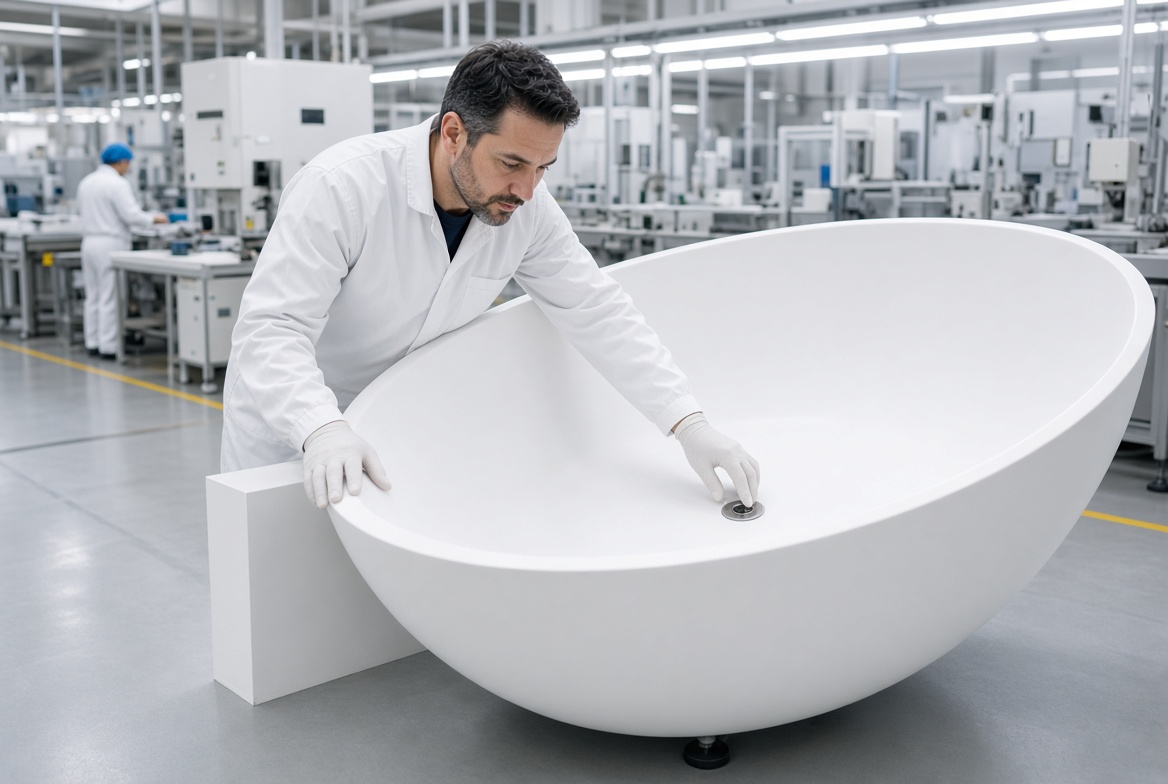
Jiaxing Miluo Smart Home Co., Ltd. supports overseas bathroom brands, wholesalers, and manufacturers with modern customized bathtub and bathroom-product solutions.
Our approach is built around the needs of B2B customers:
- OEM and ODM support for distinct market positioning.
- Modern freestanding bathtub development for residential and project applications.
- Custom sizing, finishes, colors, logo options, and coordinated bathroom collections.
- Product-focused technical communication before production.
- Attention to packaging, inspection, and export-ready delivery requirements.
Whether you are developing an entry-level acrylic tub collection, a premium solid-surface range, or a coordinated bathroom program, the right solution starts with a detailed discussion of your market, customer profile, target price, installation requirements, and visual direction.
Contact Jiaxing Miluo Smart Home Co., Ltd. to discuss your next custom freestanding bathtub project, request technical specifications, or develop an OEM/ODM bathroom collection for your market.
There is no single best material for every project. Acrylic is a strong all-around choice for lightweight installation, flexible styling, and competitive pricing. Solid surface and mineral composite offer a more premium tactile experience, while cast iron is ideal for buyers who prioritize durability and heat retention.
Yes, provided they use quality acrylic sheets, proper reinforcement, and a stable base structure. Durability depends on manufacturing quality, not simply the word "acrylic."
Not always. Lightweight acrylic tubs often work without structural changes, but heavy cast iron, solid-surface, and stone-resin models may require a structural review—especially on upper floors. The calculation should include the empty tub, water volume, and occupant weight.
A 1500–1700 mm long tub is practical for many residential bathrooms, but internal depth, backrest angle, and shoulder width matter more than external length alone. Always review the internal dimensions before selecting a model.
Yes. Depending on the supplier and material, customization may include dimensions, colors, exterior finishes, drain and overflow finishes, logos, packaging, and matching basins or bathroom furniture.
Wholesalers should inspect the sample, verify technical drawings, confirm packaging protection, review quality-control procedures, test drainage and stability, and clarify warranty and replacement processes before mass production.
1. [Aquatica USA — Are These the Best Freestanding Tubs? How to Evaluate Quality & Value]
2. [Signature Hardware — Buying Guide for Freestanding Tubs]
3. [Block Renovation — Bathtub Material Comparison: Fiberglass, Porcelain & More]
4. [Kingston Brass — Solid Surface Bathtubs: Are They Your Ideal Type of Tub?]
5. [Vanity Art — Acrylic vs. Cast Iron Tub: Which Is the Better Fit for Your Bathroom]
6. [Medunjess — Freestanding Tub Trends 2026: Shapes, Materials & Colors]
7. [Market Research Future — Bathtub Market Size, Share, Growth, Trends Analysis]


