
Views: 243 Author: Miluo Smart Home Publish Time: 2026-10-11 Origin: Site


Content Menu
● What Makes a Freestanding Bathtub Truly Luxurious?
● Luxury Freestanding Bathtub Designs for Different Bathroom Collections
>> Oval Bathtubs for Contemporary Interiors
>> Rectangular Bathtubs for Architectural Bathrooms
>> Slipper Bathtubs for Reclined Soaking
>> Compact and Deep Soaking Bathtubs
● Choosing Materials for a Luxury Freestanding Bathtub
>> Acrylic Freestanding Bathtubs
>> Solid Surface and Resin Composite Bathtubs
● Verify Comfort Through Dimensions, Not Marketing Language
>> Match the Bath Filler to the Tub
● Installation Planning: Check More Than the Footprint
>> Calculate the Filled Operating Load
>> Confirm Drainage and Service Access
● OEM and ODM Bathtub Development: From Concept to Approved Sample
>> Step 1: Define the Collection
>> Step 2: Establish Technical Requirements
>> Step 3: Approve a Representative Sample
>> Step 4: Document Acceptance Criteria
● Use Customer Feedback Without Inventing Evidence
● Verify Standards, Maintenance, and Packaging Before Ordering
>> Match Documentation to the Product
>> Provide Realistic Care Instructions
>> Protect the Product in Transit
● Develop Your Next Luxury Bathtub Collection with Miluo
>> What is the best material for a luxury freestanding bathtub?
>> Can a freestanding bathtub fit in a small bathroom?
>> What should buyers check before ordering a custom bathtub?
>> What is the difference between OEM and ODM bathtub services?
>> Do all freestanding bathtubs need floor reinforcement?
>> How should brands use bathtub customer reviews?
A luxury freestanding bathtub should deliver more than a striking silhouette. It needs to feel comfortable, fit the finished bathroom, work with the planned plumbing, and remain practical after installation. For brands and wholesale buyers, the strongest luxury freestanding bathtub designs balance visual appeal with reliable specifications and repeatable manufacturing.
At Jiaxing Miluo Smart Home Co., Ltd., our focus is customized modern bathroom products and OEM and ODM solutions for international business customers. This guide approaches bathtub selection from a product-development perspective: how to turn an attractive concept into a collection that buyers can confidently specify, install, and maintain.
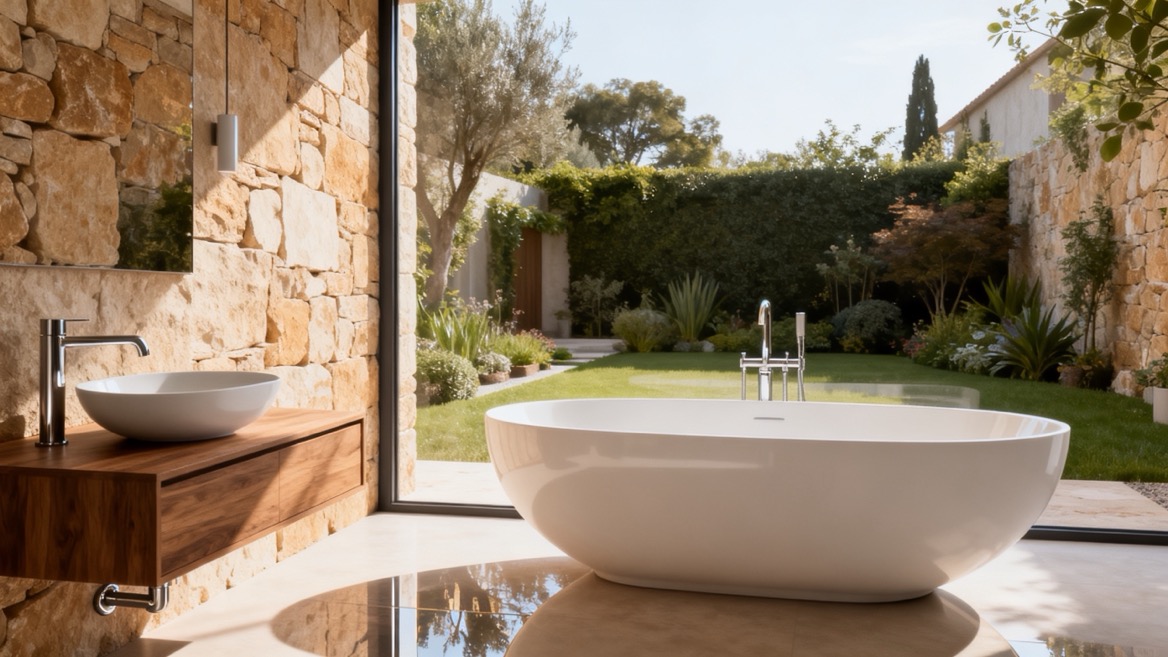
Luxury is not simply a larger size, a heavier material, or a higher price. It is the relationship between appearance, comfort, finish quality, and everyday usability.
A beautifully photographed tub can still disappoint if its backrest feels awkward, its drain connection complicates installation, or its surface requires care that customers do not expect.
When reviewing a premium bathtub, evaluate four areas:
- Design: Does the shape support the intended bathroom aesthetic?
- Comfort: Do the interior dimensions suit the intended users?
- Construction: Are material, finish, and performance claims documented?
- Ownership: Can customers install, clean, and service it without unnecessary difficulty?
For commercial buyers, I would start with these questions before discussing decorative details. They help separate genuine product value from presentation alone.
An oval freestanding bathtub offers a softened profile that works across many contemporary bathroom styles. Its curved outline can complement rectangular vanities, linear tiles, and angular fixtures.
However, the exterior shape does not establish comfort. Compare the usable floor length, backrest geometry, shoulder space, and rim profile.
For coordinated bathroom collections, an oval tub also provides a useful starting point for matching basin shapes and consistent finishes.
Rectangular freestanding bathtubs suit projects built around clear lines and geometric forms. Their appearance can reinforce a minimalist or architectural interior.
The important distinction is between the outer shell and the bathing cavity. A sharply defined exterior can contain a gently curved interior.
Request sectional drawings rather than relying on front-view photographs. They reveal details that influence both comfort and manufacturing feasibility.
A slipper bathtub features a raised end intended to support a reclined position. A double-ended design may provide sloping backrests at both ends.
Assess the backrest angle, neck contact area, foot position, and drain location together. A dramatic raised profile does not automatically provide comfortable support.
For showroom evaluation, a dry sitting trial is useful, although it cannot fully reproduce the experience of bathing in water.
A compact freestanding bathtub can help create a bathing area in a restricted layout. A deeper, more upright design provides a different experience from a long reclining tub.
Japanese-inspired soaking designs illustrate this distinction: depth and seated posture become central considerations.
Check entry height, internal seating, water depth, and the intended user's mobility. A smaller footprint should not be presented as universally easier to use.
Material selection affects appearance, handling, maintenance, and product positioning. Compare the actual construction rather than assuming that a material name guarantees a particular performance level.
| Material or finish | Potential advantages | What buyers should verify |
|---|---|---|
| Acrylic | Relatively lightweight construction and a smooth, easy-to-clean finish | Reinforcement, support structure, surface quality, and care instructions |
| Solid surface or resin composite | Sculptural shapes and varied finish possibilities | Composition, actual weight, repair limitations, and tested performance |
| Concrete-look finish | An architectural appearance without necessarily using structural concrete | Underlying material, coating durability, and cleaning requirements |
| Colored or coated surface | Collection differentiation and coordinated bathroom styling | Color consistency, coating specifications, and touch-up procedures |
Acrylic can be a practical option where handling weight and installation logistics matter. However, finished products differ in their reinforcement and support arrangements.
Ask for construction details and inspect the complete sample. Do not judge the bathtub solely by the visible shell.
These descriptions cover different formulations and manufacturing systems. Buyers should establish what the supplier means by each term.
Request the product's material specification, empty weight, approved cleaning method, and repair guidance. If refinishing is possible, determine which defects can be repaired and who should perform the work.
Avoid transferring performance claims from one composite formulation to another.
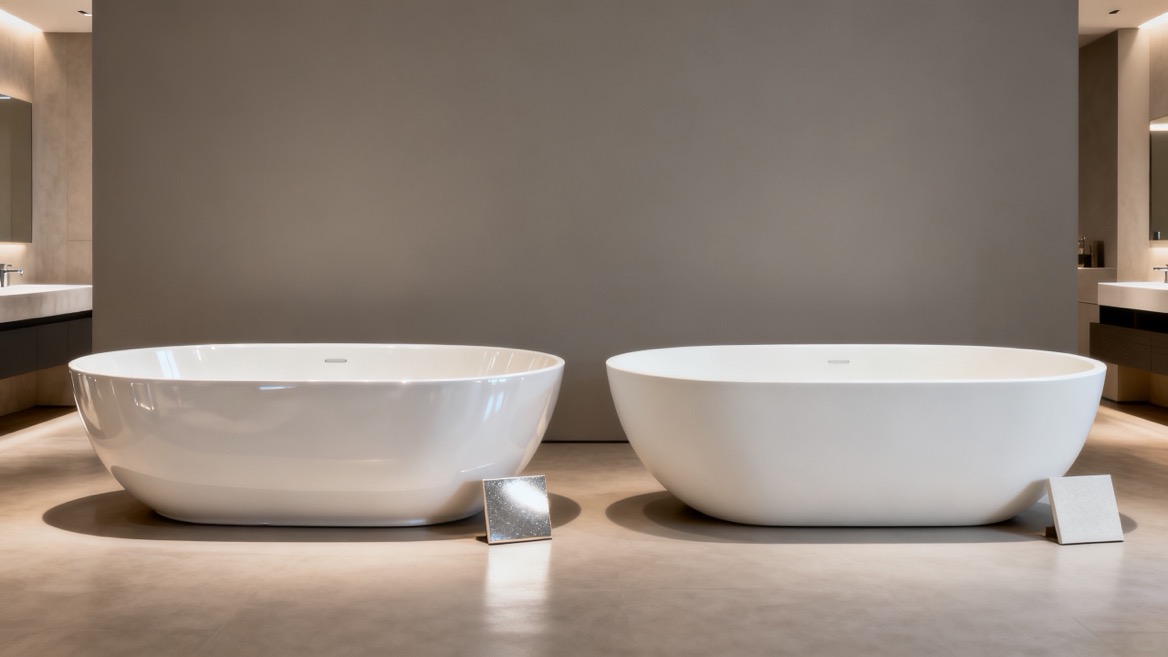
External length is useful for layout planning, but it does not tell buyers how much usable bathing space a tub provides.
A complete drawing package should identify:
- Overall length, width, and height.
- Interior floor dimensions.
- Backrest shape and slope.
- Water depth at the overflow.
- Drain and overflow positions.
- Support points and base geometry.
A tub developed for compact urban apartments may prioritize a different bathing posture from one intended for spacious residential suites.
Consider the user's height, preferred position, and ability to step over the rim. For a broad retail audience, evaluate samples with people of different sizes rather than relying on one person's impression.
Comfort is a fit question, not a universal label.
Check the filler's reach against the interior basin, not just the outside edge. An attractive combination can become inconvenient if water strikes the rim or controls are difficult to reach.
Confirm whether the design requires a floor-mounted or wall-mounted filler, or permits a deck-mounted arrangement. Not every freestanding bathtub accommodates every mounting method.
Freestanding does not mean installation-independent. The floor, drain connection, water supply, and service access still require planning.
For an initial estimate, combine:
Operating load=empty tub mass+water mass+bather massFor example, a hypothetical 100 kg bathtub containing 200 liters of water and occupied by an 80 kg person creates approximately 380 kg of total mass.
This example is illustrative, not a Miluo product specification. Actual water volume also depends on the bathing level and displacement.
The total is only a screening figure. Support geometry determines how the load transfers to the floor, so a qualified professional should assess structural suitability where necessary.
Before finalizing the bathroom layout, verify:
1. The drain location against the approved drawing.
2. Connection compatibility with local plumbing.
3. Clearance for the specified fittings.
4. Access for installation and future servicing.
5. The required procedure for checking leaks before completion.
Manufacturer instructions should control the installation. Do not substitute a generic clearance recommendation for model-specific requirements.
Measure doorways, corridors, stair turns, and lift access before ordering. Include packaging dimensions and handling requirements.
A bathtub that fits the bathroom may still be difficult to move into it.
For international brands, customization should begin with a written brief rather than a photograph alone.
OEM commonly involves production to a buyer's established design and specifications. ODM generally includes supplier-led design development or adaptation for the buyer's brand. The exact scope must be agreed contractually.
Specify the target market, customer profile, retail positioning, intended installation, and product range.
Clarify whether the bathtub should coordinate with basins, vanities, or other bathroom products. A consistent collection requires agreed colors, finishes, and design details.
Provide dimensions, material expectations, drain configuration, finish references, packaging needs, and destination-market requirements.
Also clarify tooling ownership, design rights, minimum order quantities, sample charges, and change-control procedures.
Use the sample to evaluate appearance, dimensions, surface condition, stability, and functional performance under an agreed test procedure.
A display sample is not automatically a production reference. Record the approved material, finish, components, and revision.
Replace vague requirements such as "premium finish" with inspection criteria that both parties understand.
Define visible-defect limits, dimensional tolerances, color references, functional checks, packaging requirements, and the process for resolving nonconformities.
An approved reference sample supports consistency, but it should accompany written specifications.
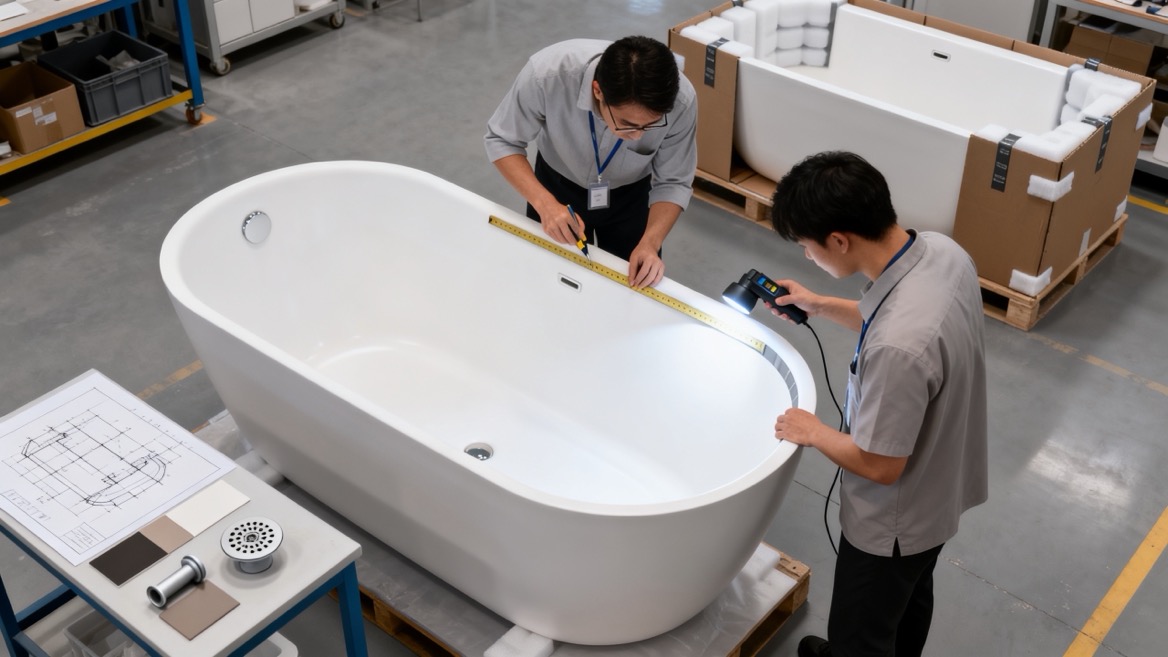
Customer reviews can reveal ownership problems that product photographs overlook. They should inform development without becoming unsupported marketing claims.
Because no verified customer reviews were supplied for this article, no testimonial is presented here.
For future review analysis, group feedback into practical categories:
- Comfort and usable space.
- Installation and drain compatibility.
- Cleaning and surface appearance.
- Delivery condition.
- Service response and replacement parts.
Investigate recurring complaints against the product model, installation conditions, and batch information. Several similar comments warrant attention, but they do not establish a defect rate without sales and return data.
If a review becomes a case study, confirm permission, preserve its meaning, and explain the relevant context. Do not rewrite a limited customer experience into a universal product claim.
For plastic plumbing fixtures intended for North American markets, CSA B45.5/IAPMO Z124 is a relevant standard covering requirements including materials, construction, performance, testing, and markings.
Applicability depends on the product and destination requirements. Ask for documentation identifying the manufacturer, model, standard edition, and scope.
A factory management-system certificate is not the same as product certification. Likewise, a test report does not necessarily establish an active product listing.
Cleaning instructions should reflect the actual surface system. Do not assume the same cleaner or repair method suits acrylic, coated products, and every resin composite.
Prepare customer-facing guidance that identifies approved cleaning methods, prohibited products, and the warranty process.
Review packaging around the rim, base, drain area, and other vulnerable points. Agree handling marks, stacking limitations, and inspection procedures.
For wholesale orders, packaging belongs in the product specification. Damage prevention should be considered before shipment, not after a complaint.
The strongest freestanding bathtub collection connects distinctive design with documented product requirements and a workable installation experience.
Jiaxing Miluo Smart Home Co., Ltd. provides customized modern bathroom products and OEM and ODM services for international brands, wholesalers, and manufacturers.
Start with a clear development brief: target market, preferred design, dimensions, material, finish, estimated quantity, and compliance expectations.
Contact our team to discuss drawings, sample development, and quotation requirements. Establish the specification first, then use approved samples and agreed inspection criteria to guide the order.
There is no universally best material. Acrylic may suit projects prioritizing handling weight, while solid surface or resin composites may suit sculptural designs. Compare the actual construction, documented performance, maintenance requirements, and installation conditions.
Yes, depending on the model and layout. Verify circulation space, filler placement, drain access, cleaning access, and the delivery route. Overall bathtub dimensions alone are insufficient.
Confirm drawings, material specifications, finishes, drain details, destination requirements, packaging, and acceptance criteria. Also agree tooling ownership, design rights, sample approval, and change-control procedures.
OEM typically follows an established buyer design. ODM generally includes supplier-led design or adaptation. Contracts should clarify development responsibilities, intellectual property, and whether the design is exclusive.
No universal answer applies. Suitability depends on the filled load, support arrangement, and existing floor structure. Follow the installation instructions and obtain a qualified assessment when required.
Use verified feedback to identify recurring comfort, installation, maintenance, and delivery issues. Separate customer impressions from measurable findings, and avoid publishing invented testimonials or unsupported satisfaction figures.
1. Aquatica, "A Deep Dive into Aquatica's Best Free Standing Baths Designs." Source for the original design categories, including acrylic, clawfoot, compact, concrete-look, and Japanese-inspired soaking tubs. Its brand-specific claims have not been transferred to Miluo products. [aquaticausa]
2. Kohler, "Freestanding Tubs | Bathroom Design Inspiration." Supports the discussion of acrylic's relatively lightweight construction and bath-filler mounting options. [kohler]
3. Kohler, "Installation Instructions — Freestanding Bath," document 1420044-2. Supports the need for a level, adequately supported floor and model-specific installation planning. [techcomm.kohler]
4. IAPMO, "Current IAPMO American National Standards," entry for CSA B45.5/IAPMO Z124-2022e1. Supports the standard's stated coverage of materials, construction, performance, testing, and markings for plastic plumbing fixtures. [iapmostandards]
5. Miluo Bath, official company website. Supplier-provided source for the company's customized bathroom product positioning and OEM/ODM offering; it is not independent verification of individual product performance. [china-miluo]
6. Miluo Bath, "Designing the Modern Home Spa Bathtub Experience with OEM and ODM Solutions." Supplier-provided source for the distinction between its OEM production and ODM development services. [china-miluo]


