
Views: 297 Author: Miluo Smart Home Publish Time: 2026-06-20 Origin: Site


Content Menu
● Standard Bathtub Dimensions Many Homeowners Start With
● Bathtub Length by Type – Quick Size Overview
>> Typical Length Ranges by Tub Style
● Depth, Volume and Comfort – Why Length Isn't Everything
>> Typical Bathtub Water Capacity
● Compact Bathtubs for Small Bathrooms and Urban Projects
● Freestanding Bathtubs – Dimensions and Layout Considerations
>> Layout Guidelines for Freestanding Tubs
● Choosing the Right Bathtub Size for Your Lifestyle
>> Key Factors to Measure and Evaluate
>> Comfort, Accessibility and Age Considerations
● Expert OEM/ODM Insight – Custom Bathtub Lengths for Global Projects
>> Typical Custom Size Ranges in Manufacturing
>> Brand Differentiation Through Custom Dimensions
● 2025–2026 Design Trends Shaping Bathtub Sizes
>> Quiet Luxury and Sculptural Forms
>> Wellness‑Driven and Space‑Saving Concepts
● Practical Steps to Choose Your Ideal Bathtub Size
>> Step‑by‑Step Size Selection
● Why Work With a Custom Bathtub Manufacturer
● Call to Action – Turn Dimensions Into Differentiated Products
● FAQs
When you ask "how long is a bathtub?", you're really asking a design, comfort and engineering question at the same time. In residential projects, the standard bathtub size is typically 60 inches long, 30–32 inches wide and about 14–16 inches high, but real‑world projects today use a much wider range of dimensions depending on layout, target users and market positioning. For brands, wholesalers and project developers sourcing from China, partnering with a specialist manufacturer like Jiaxing Miluo Smart Home Co., Ltd. means those dimensions can be precisely customized while still staying within practical installation and plumbing constraints. [kdy-bath]
Most renovation guides and retailers still treat the standard alcove bathtub as the benchmark for planning a bathroom. [lowes]
- Length: around 60 inches (5 feet)
- Width: 30–32 inches
- Height: typically 14–16 inches
These measurements are common in alcove tubs installed into a three‑wall recess and in tub‑shower combos used in family bathrooms and rental properties. A slightly shorter 54‑inch tub works for tight urban spaces, while 66–72‑inch models provide a more generous soaking experience, especially for taller users or couples. [modernize]

Different bathtub types follow slightly different length and width patterns. [thisoldhouse]
| Bathtub type | Common length range | Typical width range | Typical height/depth |
|---|---|---|---|
| Alcove | 54–60 in | 30–32 in | 14–16 in |
| Drop‑in deck tub | 45–72 in | 30–32 in | 14–20 in |
| Freestanding | 55–72 in | 27–32 in | 15–20 in |
| Soaking tub | 60–72 in | 30–40 in | 20–24 in |
| Corner tub | ~60 × 60 in | — | 20–22 in |
| Walk‑in tub | 48–60 in | 28–36 in | 30–38 in |
| Tub‑shower combo | 60–72 in | 30–36 in | 14–20 in |
These ranges reflect what most global buyers see in North American and European reference guides, but OEM and ODM suppliers routinely adapt them in centimeters for specific building codes, hotel standards or brand collections. [homedepot]
Homeowners often focus on length, but depth and water capacity have just as much impact on comfort and running costs. [homedepot]
For typical family tubs, water depth is usually around 14–16 inches, which is enough for quick daily baths and safe use by children. By contrast, soaking tubs push depth to 20–24 inches, and specialized designs can reach 27–34 inches for shoulder‑deep immersion. [lux4home]
That depth difference significantly changes the bathing experience:
- Standard tubs: partial body immersion, efficient for everyday use. [homedepot]
- Soaking tubs: full‑body immersion, more spa‑like relaxation, higher water consumption. [homedepot]
Capacity scales with both length and depth. [homedepot]
- Standard alcove tubs: about 40–60 gallons
- Soaking tubs: roughly 90–120 gallons
- Larger freestanding or whirlpool tubs: often 100–120+ gallons
Understanding these numbers helps homeowners check whether their water heater size and plumbing infrastructure can support a deeper, larger tub without running out of hot water mid‑bath. [homedepot]
In many city apartments, there simply isn't room for a 72‑inch tub, and even a 60‑inch unit can feel tight once clearances are factored in. [modernize]
Popular space‑saving bathtubs often fall into the ranges below. [homedepot]
- Length: 48–60 inches
- Width: 28–30 inches
- Height: around 12–18 inches
At the extreme end, mini and Japanese‑style sitting tubs can be as short as 40–48 inches in length while increasing depth to still provide a comfortable soak. These formats are ideal for powder rooms, small guest bathrooms and high‑density developments where every square foot matters. [homedepot]
For international brands working with an OEM partner, compact tubs are an opportunity to launch special collections targeted at urban living, student housing and micro‑apartment projects without sacrificing comfort. [chinese.alibaba]
Freestanding bathtubs have become the visual centerpiece in many luxury bathroom schemes, especially in villa, boutique hotel and high‑end residential projects. [goodhousekeeping]
Typical freestanding sizes include:
- Compact: around 55 × 27 inches
- Standard: around 60 × 30 inches
- Oversized: up to 72 × 32 inches
Because freestanding tubs are often made from heavier materials like solid surface, stone resin or cast iron, it's essential to account for both footprint and load‑bearing capacity when planning the space. [lux4home]
Designers usually recommend:
- Keeping at least 4 inches of clearance between tub and wall. [homedepot]
- Ensuring the floor structure can support heavier tubs. [lux4home]
- Positioning plumbing for center‑ or end‑drain configurations early in the design phase. [homedepot]
These layout details are especially important when ordering custom sizes, as even a small change in length or width can shift how the tub sits relative to windows, vanities and entry doors. [paris-spa]
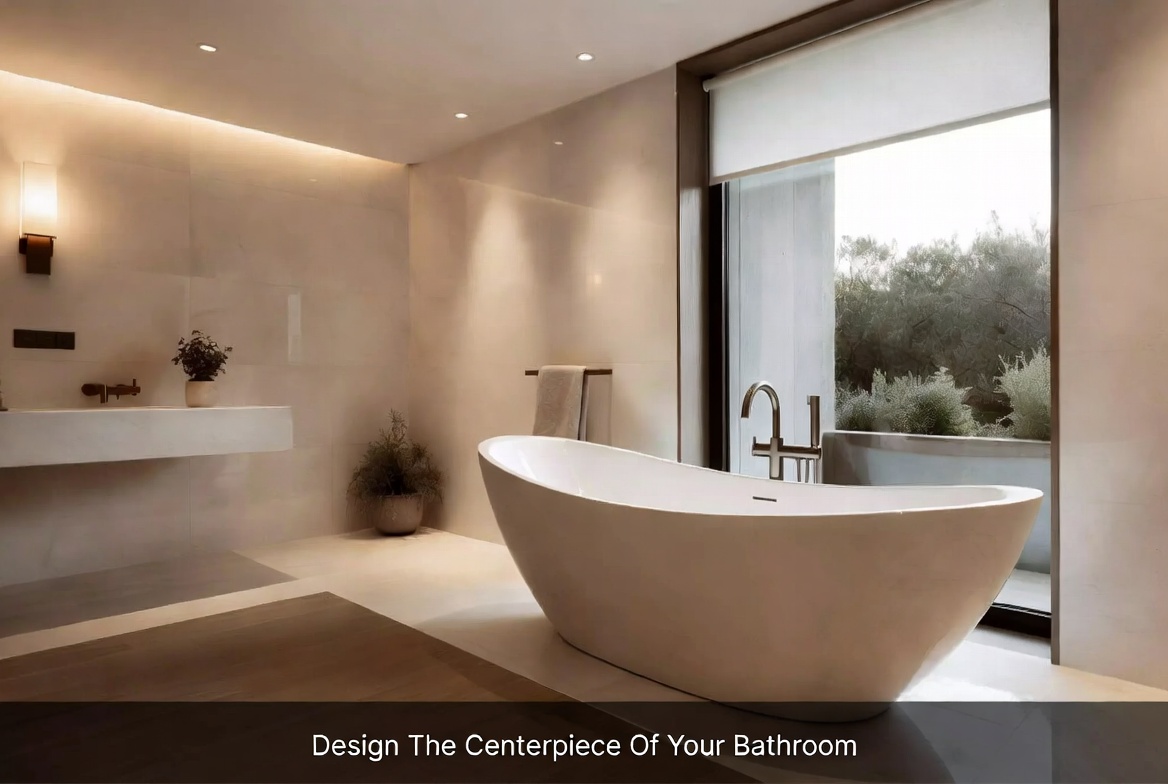
The most practical question in real projects is less "what is the standard size?" and more "which size fits my room and the way I actually bathe?" [thisoldhouse]
Before finalizing dimensions, homeowners and designers typically consider:
- Room length and width: wall‑to‑wall available space for the tub. [homedepot]
- Clearance: at least 24–30 inches in front of the tub for safe entry and cleaning. [homedepot]
- Surrounding fixtures: space near toilets, vanities and doors. [homedepot]
- Drain and supply locations: alignment with planned tub design. [homedepot]
From an expert viewpoint, length should be chosen based on body height, bathing posture and intended usage (short functional baths vs. long wellness sessions), rather than just copying a standard size. [bnonews]
Different households have different priorities:
- Families with young children often prefer shallower tubs for easier, safer bathing. [homedepot]
- Older adults or users with limited mobility benefit from walk‑in tubs with higher sides but built‑in doors and anti‑slip features. [homedepot]
- Wellness‑oriented homeowners increasingly choose deep soaking tubs or combined air‑massage systems to bring spa‑style therapies into the home. [bnonews]
Matching tub length and depth to these needs helps avoid expensive changes later and supports long‑term usability.
From an industry perspective, standard dimensions are only the starting template. Leading manufacturers now routinely support OEM and ODM customization of bathtub length, width, depth and geometry. [portuguese.alibaba]
Many high‑end suppliers offer flexible ranges such as:
- Length: roughly 1200–1800 mm (about 47–71 inches) for freestanding and alcove tubs. [kdy-bath]
- Width: 680–1500 mm depending on style and installation method. [kdy-bath]
- Height/depth: 500–900 mm for massage and soaking tubs, adjusted to target immersion levels. [kdy-bath]
Stone and solid surface bathtubs, in particular, can be cut and finished to bespoke lengths for hotel suites, luxury villas and branded residential developments. [maisonvalentina]
For international brands and wholesalers, custom bathtub length is a strategic design lever:
- Developing signature oversized soaking models for flagship projects. [maisonvalentina]
- Offering short, deep compact tubs tailored to Asian or European urban apartments. [my-bette]
- Adjusting widths and heights to match regional bathroom norms and local plumbing standards. [my-bette]
OEM/ODM partners like Jiaxing Miluo Smart Home Co., Ltd. support this differentiation by combining precision dimension control, material expertise (acrylic, solid surface, composite) and branding options such as logo placement or custom colors. [chinese.alibaba]

Current bathroom design trends also influence how long and how large bathtubs are specified. [shopping.yahoo]
Designers report a shift toward "quiet luxury"—clean lines, sculptural tubs and surfaces wrapped in single, high‑end materials like stone or solid surface. This look often favors: [goodhousekeeping]
- Rounded or softly curved freestanding tubs in the 60–72‑inch range. [goodhousekeeping]
- Deeper soaking profiles that emphasize a spa‑like experience at home. [bnonews]
Even when some projects reduce the number of bathtubs in favor of larger showers, the tubs that remain are more carefully chosen as statement pieces, making length, proportion and ergonomics critical. [shopping.yahoo]
Recent trend reports highlight wellness‑driven design and hybrid bathrooms that combine functional daily use with retreat‑style comfort. This leads to: [bnonews]
- Flexible use of compact tubs in smaller rooms paired with upgraded materials and finishes. [modernize]
- Thoughtful integration of deep tubs where the layout and energy use can support them. [bnonews]
For brands working with contract projects, tracking these trends helps decide whether to prioritize standard 60‑inch formats, oversized 72‑inch freestanding models, or special deep compact tubs in upcoming collections. [maisonvalentina]
To translate all these numbers into a real‑world decision, both homeowners and professional specifiers can follow a simple sequence.
1. Measure the room and installation zone. Capture wall‑to‑wall length, usable width and front clearance. [homedepot]
2. Decide the tub type. Alcove, drop‑in, freestanding, corner, soaking or walk‑in. [homedepot]
3. Match typical length ranges for that type to your available space. [lowes]
4. Choose depth based on comfort preferences and energy budget. [homedepot]
5. Verify plumbing and water heater capacity against expected water volume. [homedepot]
Following these steps prevents common mistakes such as choosing a 66‑inch tub that physically fits but leaves too little clearance for safe movement in the bathroom. [homedepot]
From a professional point of view, partnering with an experienced OEM/ODM supplier ensures that bathtub length, width and depth are not only aesthetically pleasing but also engineered for long‑term performance. [paris-spa]
A specialist manufacturer can help:
- Translate design intent into precise technical drawings with clear dimensional tolerances. [my-bette]
- Recommend optimal material combinations for the desired length and profile. [paris-spa]
- Adjust sizes to local market expectations and building codes. [my-bette]
For international buyers in the bathtub and broader bathroom product segment, this level of collaboration is what transforms length from a simple measurement into a competitive advantage in design, comfort and branding. [portuguese.alibaba]
Once you understand how long a bathtub should be for different users and spaces, the next step is to turn those insights into actual products and projects.
Whether you are:
- A bathroom brand planning a new freestanding tub collection.
- A wholesaler or importer building a global catalog.
- A developer or contractor specifying tubs for hotels or residential towers.
Working with a dedicated bathtub manufacturer allows you to define exact lengths and profiles that align with your market strategy, from compact urban formats to oversized spa‑style models. If you are ready to move beyond generic standard sizes, engaging a custom OEM/ODM partner is the most effective way to ensure every bathtub in your portfolio fits its target bathroom—and its target customer—perfectly. [chinese.alibaba]
Q1: What is the most common bathtub length in modern homes?
The most common bathtub length in many markets is about 60 inches, especially for alcove tubs and tub‑shower combinations in standard family bathrooms. [thisoldhouse]
Q2: How long should a soaking bathtub be for a comfortable deep bath?
Most soaking bathtubs fall between 60 and 72 inches in length, with increased depth of around 20–24 inches to provide full‑body immersion. [lux4home]
Q3: What length is recommended for very small bathrooms?
Compact tubs in small bathrooms often range from 48 to 60 inches in length, and ultra‑small Japanese‑style tubs can be as short as 40–48 inches with greater depth. [homedepot]
Q4: Can a 66‑inch bathtub fit in a typical residential bathroom?
A 66‑inch bathtub can fit in many residential bathrooms if the layout allows sufficient front clearance and compatibility with existing plumbing, but full measurements must be taken before ordering. [homedepot]
Q5: How does bathtub length affect water and energy consumption?
Longer and deeper tubs hold more water, often moving from 40–60 gallons for standard models to 90–120 gallons or more for soaking and spa‑grade tubs, which increases both water use and heating demand. [homedepot]
1. Aquatica – “How Long Is a Bathtub? Complete Guide to Standard & Custom Tub Sizes”. https://aquaticausa.com/blogs/aquatica/how-long-is-a-bathtub
2. Home Depot – “Bathtub Buying Guide: Sizes & Types”. https://www.homedepot.com/c/ab/types-of-bathtubs/9ba683603be9fa5395fab90209ab53e
3. Modernize – “Standard Bathtub Sizes by Type to Help You Choose the Perfect Tub”. https://modernize.com/bathroom-remodel/bathtubs/sizes
4. Lowe’s – “How to Choose a Bathtub”. https://www.lowes.com/n/buying-guide/how-to-choose-bathtub
5. This Old House – “Standard Bathtub Sizes: A Complete Guide to Dimensions and Types”. https://www.thisoldhouse.com/bathrooms/standard-bathtub-sizes
6. KDY Bath – “Bathtub Manufacturer and Supplier – 19 Years China Factory”. https://kdy-bath.com/bathtub/
7. Lux4Home – “Custom Bathtubs – Made to Order Stone Manufacturer”. https://www.lux4home.com/custom-bathtubs/
8. Bette – “Baths”. https://www.my-bette.com/zh/products/baths
9. Aquatica – Product and material pages. https://www.aquaticausa.com
10. Paris Spa – “Freestanding Tub Manufacturer – China Professional Bathtub Supplier”. https://www.paris-spa.com/freestanding-tub/
11. Alibaba – Miluo and custom stone bathtub listings. https://chinese.alibaba.com/product-detail/MILUO-Freestanding-Italian-Bathtub-Acrylic-Large-1600813161004.html
12. Alibaba – Custom shell‑shape marble bathtub listing. https://portuguese.alibaba.com/product-detail/Unique-shape-of-shell-white-marble-62222661912.html
13. Good Housekeeping – “Bathroom Design Trends 2026”. https://www.goodhousekeeping.com/home/decorating-ideas/g69849549/bathroom-design-trends-2026/
14. Maison Valentina – “Luxury Bathroom Design Trends for 2026”. https://www.maisonvalentina.net/blog/luxury-bathroom-design-trends-for-2026/
15. BNO News – “Top Bathtub Trends Transforming Bathrooms in 2026”. https://bnonews.com/index.php/2026/04/top-bathtub-trends-transforming-bathrooms-in-2026/
16. Yahoo – “Bathtubs Are Going Out Of Style In 2026”. https://shopping.yahoo.com/home-garden/home-improvement/articles/bathtubs-going-style-2026-heres-090000248.html


