
Views: 226 Author: Miluo Smart Home Publish Time: 2026-09-01 Origin: Site


Content Menu
● Why Freestanding Bathtub Safety Needs Special Attention
>> Freestanding Bathtub vs. Built-In Bathtub: Child Safety Comparison
● The First Principle: Supervision Cannot Be Replaced
>> A Better Bath-Time Routine for Caregivers
● Stability: The Core Freestanding Bathtub Requirement
>> What Installers Should Verify Before Handover
>> OEM and ODM Design Opportunities
● Slip Prevention Around the Bathtub
>> Practical Anti-Slip Measures
>> Choosing a Child-Friendly Bathtub Interior
● Water Temperature and Scald Prevention
>> Child-Safe Temperature Practices
>> Why Faucet Selection Matters
● Bathroom Access Control When the Tub Is Not in Use
>> Household Access-Control Checklist
● Designing a Safer Freestanding Bathtub Zone
>> Recommended Layout Considerations
● A Supplier's Perspective: Safety Begins Before Production
>> What Professional Buyers Should Request
● A Practical Child Safety Inspection Before Every Bath
● Build a Safer Premium Bathroom Collection
>> Is a freestanding bathtub safe for homes with young children?
>> Can a bath seat prevent bathtub drowning?
>> What is the safest water temperature for a child's bath?
>> How can I stop a freestanding bathtub from rocking?
>> Should I use a non-slip mat inside a freestanding bathtub?
>> How do I make a freestanding bathtub area safer for toddlers?
>> What should bathroom brands include with a freestanding bathtub?
A freestanding bathtub can be the visual centerpiece of a modern bathroom, but families with young children must consider far more than style, material, or bathing comfort. Child safety in freestanding bathtub environments depends on the combined performance of the bathtub, floor, faucet system, surrounding layout, installation quality, and—most importantly—active adult supervision.
For importers, bathroom brands, wholesalers, developers, and project buyers, a child-safe freestanding bathtub is not simply a product with smooth edges. It is part of a complete bathroom safety strategy. Jiaxing Miluo Smart Home Co., Ltd. supports OEM and ODM partners with modern, premium bathroom solutions designed around practical installation requirements, customizable product details, and long-term user comfort. This includes helping brands specify freestanding bathtub designs that balance visual impact with stability, accessibility, cleanability, and family-oriented safety features.
Child drowning remains a serious home-safety risk. Public-health guidance consistently emphasizes that children should be supervised closely and continuously whenever they are in or near water, including bathtubs. Children aged 1 to 4 face particularly high drowning risk, and bathtub incidents can occur quickly and quietly in only a small amount of water.
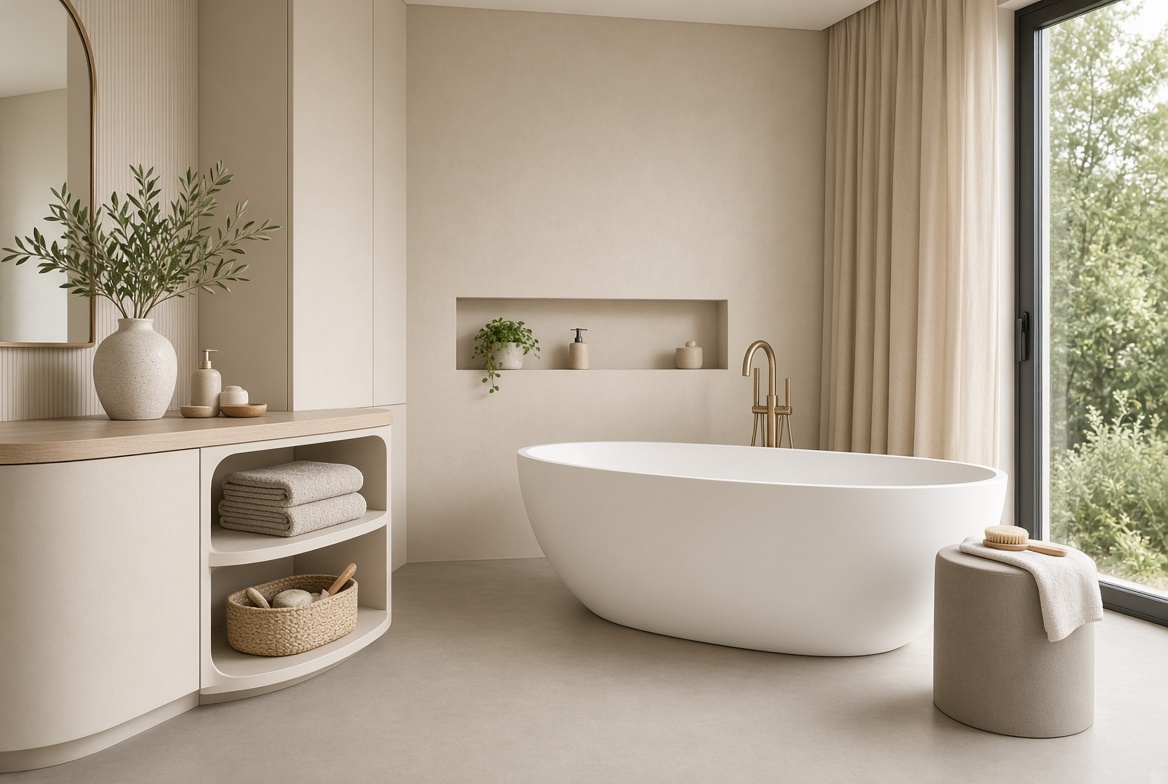
Freestanding bathtubs differ from built-in bathtubs in both appearance and installation. A built-in model is normally positioned against one or more walls, while a freestanding bathtub is installed as an independent fixture with visible space around it. This creates a premium, open look—but also introduces safety considerations that buyers, designers, and installers should evaluate before finalizing a project.
A freestanding bathtub environment usually includes:
- An exposed or floor-mounted tub filler
- Open walking paths around the bathtub
- A floor-mounted drain connection
- A visible bathtub base or supporting feet
- Larger areas of wet flooring
- More cleaning access around the exterior shell
- Potentially more than one entry point for a child approaching the bathtub
The tub itself may be made from acrylic, solid surface, cast stone, resin composite, or other bathroom-grade materials. However, material selection alone does not determine safety. The complete environment must work together.
2222
Neither bathtub type is automatically safer. A well-designed freestanding bathtub installation can be highly practical for family bathrooms. However, it requires more deliberate planning around floor traction, tub stability, water temperature, access control, and adult supervision.
No bathtub design, bath seat, anti-slip mat, drain system, or smart sensor can replace a responsible adult's direct attention. The most important rule is simple: never leave a child alone in or near a bathtub—even briefly.
This means avoiding common interruptions such as:
- Answering a phone call
- Opening the door for a delivery
- Looking for a towel in another room
- Checking a message
- Preparing clothing elsewhere in the home
- Asking an older child to "watch the baby"
- Leaving the bathroom to answer another child
The American Academy of Pediatrics advises close supervision for children under 6 in bathtubs. For infants and toddlers, the supervising adult should remain within arm's reach and be able to provide immediate physical assistance. Bath seats and infant bath supports may help with positioning, but they are not safety devices and must never be treated as a substitute for hands-on supervision.
Before turning on the water, place everything needed within immediate reach:
1. Towel
2. Washcloth
3. Mild child-appropriate cleanser
4. Clean diaper or clothing
5. Bath toys
6. Non-slip mat, if used
7. Cup or rinse container
8. Thermometer, if used
9. Phone set aside or silenced
This simple preparation reduces the chance that a caregiver will step away. In a family bathroom, the safest operational system is usually not the most complicated one—it is the routine that is easy to repeat every day.
A freestanding bathtub must sit firmly on a properly prepared floor. Even minor rocking, movement, or uneven support can create a serious concern for users of all ages, especially when an adult is lifting or supporting a wet child.
A tub that feels unstable may cause a caregiver to lose balance while entering, exiting, leaning over the rim, or holding a child. It may also stress plumbing connections, damage flooring, or lead to water leakage over time.
A premium freestanding bathtub installation should include a documented stability check. The installer should confirm:
- The finished floor is level
- The subfloor can support the full filled bathtub weight
- The bathtub base has full and stable contact where required
- Adjustable feet, if included, are properly set
- The tub does not rock under normal body movement
- Drain and overflow connections are sealed and tested
- The bathtub is aligned with the faucet and plumbing rough-in
- Sealing materials are applied according to the product manual
- The bathtub is filled and inspected for leakage before handover
An uneven floor can cause a bathtub to shift or rock over time. Installation guidance for freestanding tubs commonly stresses a level surface, confirmed structural support, correct drain alignment, and final leak testing after the tub is filled.
For bathroom brands creating child-conscious product lines, several customization options can improve the final installation experience:
- Wider, more stable integrated bases
- Adjustable leveling feet with concealed access
- Floor anchoring brackets where appropriate
- Lower center-of-gravity profiles
- Rounded external edges
- Reinforced bottom structures
- Clearly marked drain and overflow locations
- Installation templates for plumbing coordination
- High-contrast installation labels for contractors
- Product manuals with family bathroom guidance
For project buyers, the key question is not only, "Does this bathtub look stable?" It should also be, "Can an installer consistently achieve a stable result in real residential conditions?"
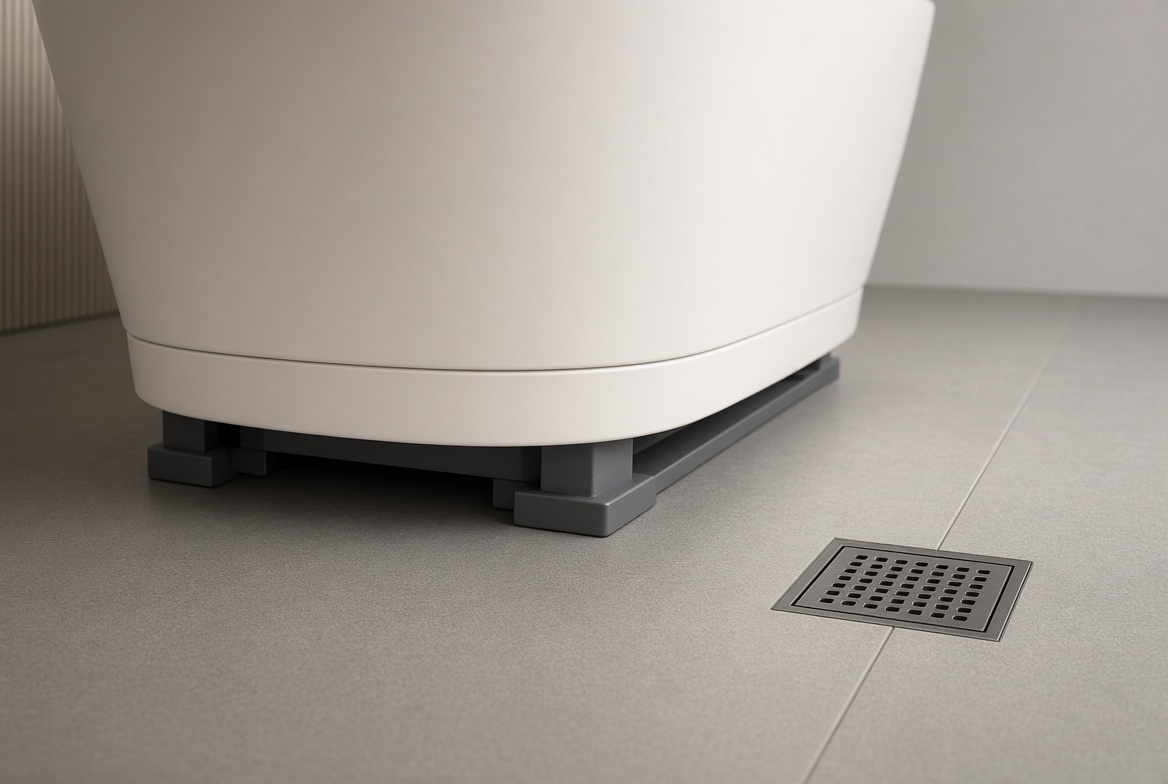
Children, caregivers, and older family members are all vulnerable to slips in wet bathroom environments. In a freestanding bathtub layout, water may splash onto flooring from more than one side, especially when children play in the bath or when a caregiver lifts a child out.
A safe bathtub environment should include both surface-level traction and water-management planning.
- Select bathroom flooring with suitable wet-area slip resistance
- Use a secure, non-curling bath mat outside the bathtub
- Keep the bathtub entry path clear of baskets, toys, and loose rugs
- Avoid glossy flooring that becomes highly slippery when wet
- Use rounded-edge storage units instead of sharp-edged furniture
- Provide a nearby towel rail or hook to reduce dripping across the room
- Check that floor drainage and waterproofing are appropriate for the room design
- Dry the floor immediately after bathing
A bath mat should lie flat and remain stable. Loose mats with curled edges can become a tripping hazard rather than a protective feature. For young children, safety products should be inspected regularly because suction cups, rubber backing, and adhesives can degrade with repeated exposure to water, soap, and cleaning chemicals.
The interior floor of a freestanding bathtub should be considered carefully. A very smooth, high-gloss surface may be visually attractive, but users may need additional traction support, especially when assisting children.
Possible options include:
- A removable non-slip bath mat designed for bathtub interiors
- A textured standing zone, where appropriate for the product design
- A bathtub profile that allows stable seated bathing
- Smooth but gently contoured back support areas
- Easy-to-clean surfaces that avoid excessive residue buildup
Brands should avoid overpromising that any surface is "slip-proof." In real bathroom conditions, soap, shampoo, body oils, and water can reduce traction. The more responsible message is that the product should be combined with correct supervision, clean surfaces, and appropriate accessories.
Drowning is not the only bathtub safety concern. Hot water can cause scald injuries rapidly, and children's skin is more sensitive than adult skin. Water temperature must therefore be managed at both the plumbing level and the bath-time level.
A widely used household safety benchmark is to set water heating systems no higher than 120°F, or approximately 49°C. Research cited in public safety discussions indicates that hotter water can cause serious burns much faster: water at 140°F can cause severe injury within seconds, while the injury time at 120°F is substantially longer.
- Set the water heater at or below 120°F / 49°C
- Use thermostatic or pressure-balancing mixing valves where required
- Test bathwater before placing a child inside
- Check water with a bath thermometer, wrist, or elbow
- Run cold water first, then add hot water carefully
- Turn off hot water first after filling
- Keep children away from faucet handles and controls
- Avoid placing infants in a tub while water is still running
Many caregivers prefer bathwater close to body temperature for babies and young children, often around 100°F / 37–38°C. However, the final temperature should always be checked before the child enters the tub.
In a freestanding bathtub environment, floor-mounted fillers are frequently used because they complement the independent tub silhouette. These fittings should be selected not only for style but also for safe temperature control and child-resistant operation.
A suitable faucet specification may include:
- Thermostatic temperature control
- Anti-scald protection
- A maximum temperature limiter
- Smooth, easy-to-clean handles
- Stable mounting
- Spout placement that reduces accidental contact
- Reliable diverter operation, if a hand shower is included
- Durable finishes that withstand frequent cleaning
For OEM and ODM bathroom brands, coordinating the bathtub and tub filler as a complete solution creates a more coherent customer experience. It also helps reduce mismatches between bathtub size, faucet reach, water flow, and installation requirements.
A child may enter a bathroom long before bath time begins. Therefore, safety should continue after the water is drained and the room is cleaned.
Young children can be attracted by water, shiny fixtures, containers, bath toys, and faucet handles. A safe bathroom design considers unsupervised access as a separate risk.
- Keep bathroom doors closed when not in use
- Use child-resistant door knob covers or safety latches where appropriate
- Consider removing the drain plug when the bathtub is not in use
- Store buckets, basins, and cleaning containers empty and upside down
- Keep bath toys dry and stored away after use
- Secure cleaning products in locked cabinets
- Avoid leaving standing water in the bathtub
- Keep toilet lids closed and use toilet locks for toddlers if needed
- Store electrical appliances away from the bathtub area
The American Academy of Pediatrics recommends keeping bathroom doors closed and considering safety latches or knob covers to reduce unsupervised access. It also advises pulling the bathtub plug and considering removing it when the bathtub is not in use.
For architects, developers, and bathroom brands, the bathtub should be evaluated as part of a complete zone rather than as an isolated product. The surrounding clearance, storage placement, lighting, and access route matter as much as the bathtub shell.
| Design element | Safer planning approach |
|---|---|
| Bathtub position | Maintain sufficient space for an adult to stand, kneel, and assist a child comfortably |
| Faucet location | Position controls where the caregiver can operate them without reaching dangerously across the child |
| Floor finish | Specify wet-area flooring with reliable traction and easy cleaning |
| Lighting | Provide bright, shadow-free lighting around the tub and exit path |
| Storage | Place towels and child-care items within arm’s reach |
| Corners and edges | Choose rounded furniture edges near the bathing area |
| Ventilation | Use adequate ventilation to reduce moisture, condensation, and slippery surfaces |
| Drainage | Confirm waterproofing, floor slope, and drainage requirements for the project |
| Door swing | Ensure the bathroom door does not block emergency access or strike a caregiver near the tub |
| Electrical safety | Keep electrical outlets and portable devices away from wet areas |
A freestanding bathtub often works best in larger bathrooms because open clearance around the fixture helps with access, cleaning, and visual balance. Still, clearance should not become unused space that encourages children to run, climb, or leave toys scattered around the wet zone.
From a manufacturing perspective, product safety is shaped during design development, prototyping, material selection, and quality control—not after the bathtub reaches the end customer.
For a supplier serving overseas brands, wholesalers, and manufacturers, the practical responsibility is to provide accurate technical information and consistent production quality. A bathtub may be sold under a private label, installed in a hotel residence, included in a developer project, or specified for a high-end home. In every case, the buyer needs product documentation that supports correct installation and responsible use.
At Jiaxing Miluo Smart Home Co., Ltd., OEM and ODM cooperation can help buyers develop modern freestanding bathtub programs with project-specific requirements, including dimensions, material preferences, colors, finishes, drainage configurations, packaging, accessories, and brand presentation.
Before selecting a freestanding bathtub supplier, request:
- Detailed product drawings
- Net weight and filled-weight information
- Material specifications
- Load-bearing guidance
- Drain and overflow details
- Installation instructions
- Floor preparation requirements
- Recommended faucet reach and placement
- Packaging and handling guidance
- Cleaning and maintenance instructions
- Quality-control standards
- Customization options
- Sample evaluation procedures
A manufacturer should be able to explain not only how a bathtub looks, but also how it is installed, supported, transported, maintained, and used in realistic bathroom environments.
The following two-minute inspection is useful for families, hospitality operators, show homes, and rental-property managers.
1. Confirm that an adult will remain present throughout the bath.
2. Place towels, soap, clothing, and supplies within reach.
3. Check that the floor is dry and the bath mat is secure.
4. Remove hard or sharp objects from the tub area.
5. Test the water temperature before the child enters.
6. Confirm that the bathtub is clean and free from slippery residue.
7. Check that the tub does not move or rock.
8. Keep the water level appropriate for the child's age and needs.
9. Keep phones and distractions away.
10. Drain the bathtub completely after use.
This checklist should be treated as a routine, not an emergency response. The goal is to prevent risky conditions before the child enters the bathroom.
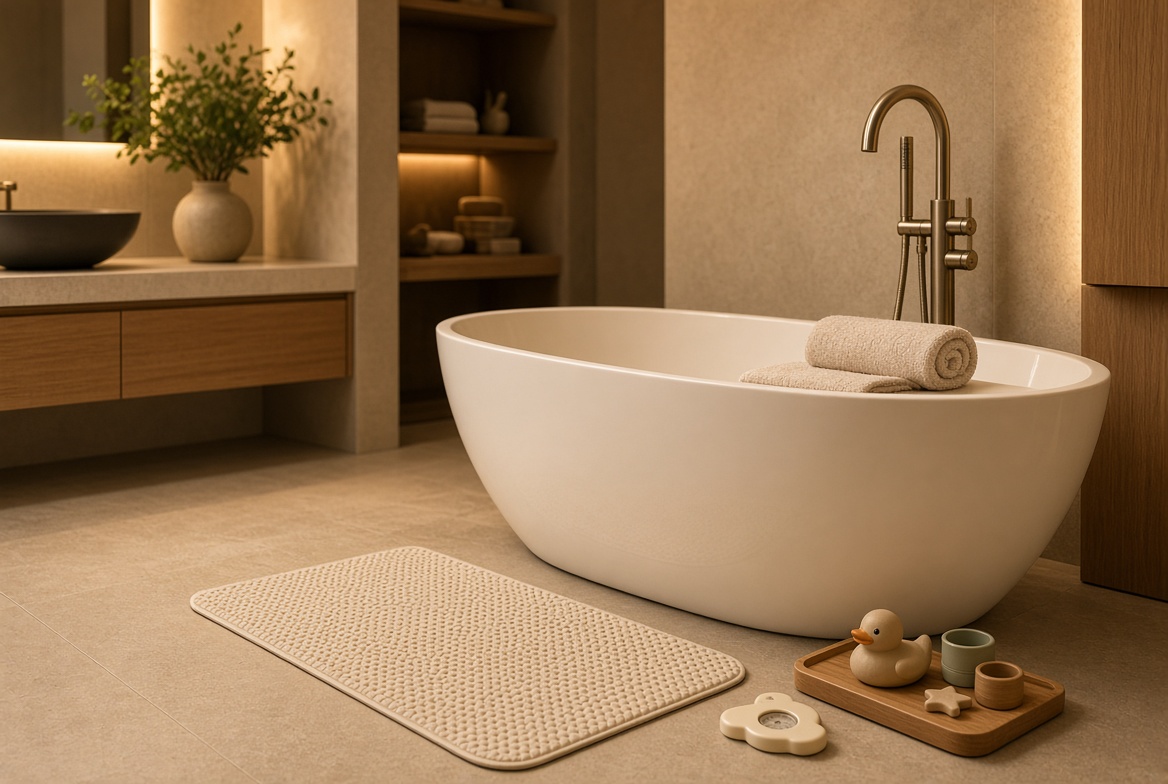
A beautiful freestanding bathtub should create relaxation, not uncertainty. For brands and project buyers, the best product strategy combines refined design with stable installation, controlled water temperature, easy-clean surfaces, practical layouts, and clear safety guidance for end users.
Jiaxing Miluo Smart Home Co., Ltd. can support your next OEM or ODM freestanding bathtub project with customized modern bathroom products and coordinated solution development. Share your target market, preferred bathtub dimensions, materials, style direction, packaging needs, and technical requirements to begin creating a premium bathroom collection that is designed for real-world use.
Yes, a freestanding bathtub can be suitable for a family home when it is installed securely on a level floor, combined with appropriate anti-slip measures, fitted with safe temperature-control fixtures, and used under continuous adult supervision. No bathtub style can eliminate the need for direct supervision.
No. A bath seat may support positioning during bathing, but it is not a drowning-prevention device. Seats can tip, shift, or allow a child to slip out. A responsible adult should remain within arm's reach at all times.
Many child-care resources recommend bathwater close to body temperature, around 100°F / 37–38°C, while household hot-water systems are commonly recommended to be set no higher than 120°F / 49°C. Always test the bathwater before placing a child in the tub.
The bathroom floor must be level and structurally capable of carrying the filled tub's weight. Installers should adjust any leveling feet, follow the manufacturer's securing instructions, confirm stable contact at the base, and test the bathtub after filling it with water.
A properly secured bathtub mat can improve traction, particularly for children and caregivers. Choose a mat designed for bathtub use, inspect it regularly, keep it clean, and do not rely on it as a substitute for supervision.
Keep bathroom doors closed, use child-resistant latches where appropriate, empty the bathtub after use, remove or secure the drain plug, keep the floor dry, store cleaners securely, and never allow a toddler into the bathroom alone.
Brands should provide clear installation instructions, product drawings, weight information, plumbing requirements, cleaning guidance, safety notes, and technical support. For family-oriented markets, brands can also provide practical bathtub safety checklists for end users.
1. Centers for Disease Control and Prevention. "[Preventing Drowning]." Guidance on close and constant supervision around water, including bathtubs.
2. Centers for Disease Control and Prevention. "[Drowning Prevention]." Data and prevention context for drowning risks among children.
3. American Academy of Pediatrics. "[Prevention of Drowning]." Guidance on touch supervision, bathtub safety, and the limits of bath seats.
4. HealthyChildren.org, American Academy of Pediatrics. "[Infant Drowning Prevention & Water Safety]." Bath-time safety, drain-plug guidance, bathroom door control, and caregiver preparation.
5. U.S. Consumer Product Safety Commission. "[CPSC Warns of Drowning Dangers in Bathtubs, Bath Seats and Buckets]." Home water hazards and prevention messaging.
6. American Red Cross. "[Drowning Prevention and Facts]." Information on young children and bathtub drowning risks.
7. Shields, W. C., et al. "[Still Too Hot: Examination of Water Temperature and Scald Burns]." Research discussing water temperature, burn injury timing, and 120°F water-heater guidance.
8. KidsHealth. "[Bathroom Water Safety]." Parent guidance on water-heater temperature settings and bathwater testing.
9. Vintage Tub & Bath. "[How to Install Freestanding Tubs]." Installation considerations for floor levelness, load support, drainage, and stability.
10. Kingston Brass. "[How to Install a Freestanding Tub]." Practical installation checks for leveling, securing, sealing, and leak testing.


