
Views: 241 Author: Miluo Smart Home Publish Time: 2026-09-06 Origin: Site


Content Menu
● What Makes a Bathroom Sustainable?
>> Sustainable Does Not Mean Compromised Comfort
● Start With a Water-Efficient Bathroom Plan
>> Choose Efficient Faucets and Aerators
>> Select Shower Systems That Protect the Experience
>> Specify High-Efficiency Toilets
● Choose Durable, Responsible Bathroom Materials
>> Bathtubs: Design for Long-Term Use
>> Recyclable and Recycled Materials Need Clear Documentation
>> Avoid Short-Lived Surface Trends
● Design a Bathroom That Lasts Longer
>> Build Repairability Into the Product
>> Consider Packaging and Transport Early
● A Practical Sustainable Bathroom Checklist
>> A Three-Step Selection Process for Buyers
● Create a Better Daily Bathroom Experience
● Partner With a Custom Bathroom Manufacturer
>> What is an eco-friendly bathroom?
>> Are freestanding bathtubs sustainable?
>> Do water-efficient faucets feel weaker?
>> What should brands ask an OEM bathroom supplier?
>> Which bathroom products have the greatest effect on water use?
>> How can a bathroom product last longer?
>> Why is packaging important for sustainable bathroom products?
A truly eco-friendly bathroom is not defined by a single low-flow fixture or a recycled-material label. It is a carefully planned system in which water efficiency, durable materials, intelligent manufacturing, repairability, comfort, and visual coherence work together for the long term.
For bathroom brands, wholesalers, developers, and project buyers, sustainable bathroom design is now closely linked to product quality and commercial value. A well-designed bathtub, vanity, basin, shower enclosure, faucet, toilet, and storage system should reduce unnecessary resource use without making the daily experience feel restricted. The goal is not to create a bathroom that feels "less luxurious." The goal is to create one that is more considered, longer lasting, easier to maintain, and more valuable over its service life.
At Jiaxing Miluo Smart Home Co., Ltd., we see the modern sustainable bathroom as an integrated product strategy. It combines customized bathtub solutions, coordinated sanitaryware, practical material choices, and OEM/ODM development for overseas brands, wholesalers, and manufacturing partners.
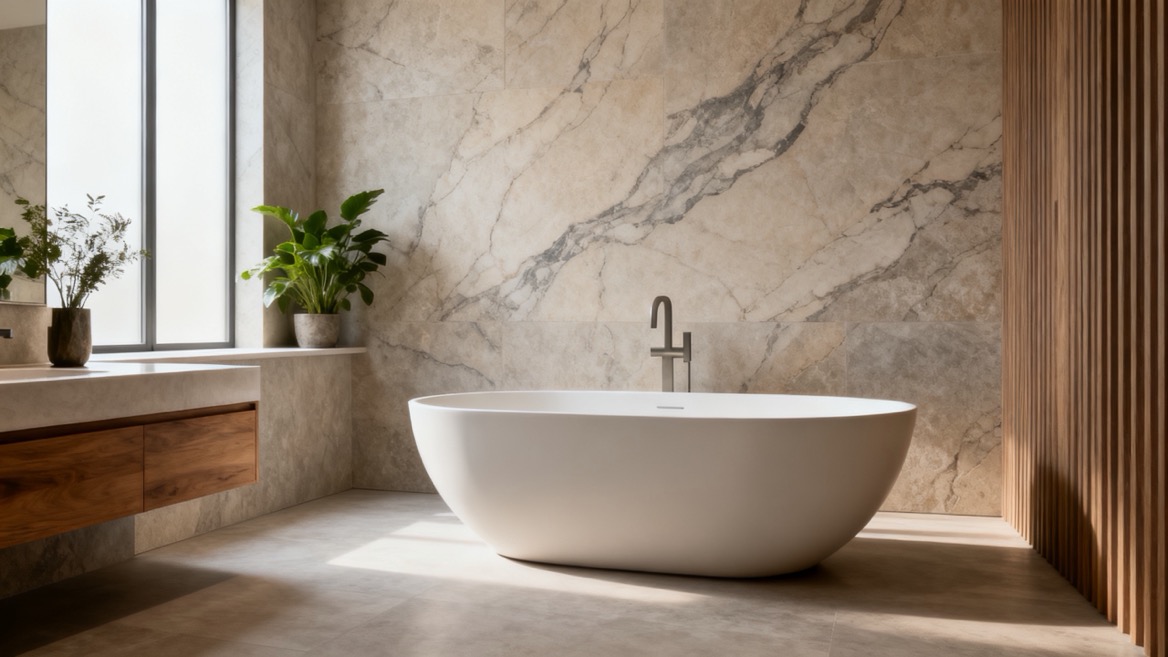
A sustainable bathroom considers the full lifecycle of every product—not only the moment it is installed.
This means evaluating:
- How much water fixtures use during everyday operation
- How much energy is required to heat that water
- Whether materials are durable enough for long-term use
- Whether products can be repaired instead of replaced
- Whether components can be separated, recycled, or responsibly handled at end of life
- How efficiently products are designed, packaged, transported, and installed
- Whether the final space remains comfortable and practical for real users
The bathroom is one of the most resource-intensive rooms in a home or hospitality project because it combines frequent water use, heated water, ceramics, metals, glass, electrical components, and moisture-sensitive surfaces. In the United States, approximately 70% of household water use occurs indoors, and bathrooms are the largest indoor water-use area. Toilets alone may account for approximately 27% of indoor household water use.
That makes bathroom specification an important opportunity for brands and project decision-makers. A better bathtub design, efficient faucet, shower system, toilet, or ventilation strategy can influence both user satisfaction and long-term operating costs.
One common misconception is that resource-efficient bathroom products must feel weak, basic, or unsuitable for premium interiors.
In practice, high-quality engineering can deliver both performance and conservation. A properly designed faucet aerator can maintain a comfortable, controlled water stream while reducing excess flow. A pressure-compensating shower system can improve spray consistency. A well-insulated bathtub can help retain water temperature longer, potentially reducing the need to add hot water during a bath.
The strongest products deliver a balance of:
- Reliable everyday performance
- Comfortable water pressure and user experience
- Durable construction
- Easy cleaning and maintenance
- A timeless visual language
- Efficient use of water and energy
For premium bathroom brands, this balance is especially important. A buyer should never have to choose between an elegant freestanding bathtub and responsible material selection, or between a refined shower experience and lower water consumption.
Water efficiency is often the most visible part of sustainable bathroom design because water use happens every day. However, effective planning requires more than simply choosing "low-flow" fixtures.
A better approach is to evaluate the bathroom as a connected water system.
Bathroom faucets are used repeatedly throughout the day for handwashing, grooming, cleaning, and other routines. Small improvements in flow rate can create meaningful long-term savings, especially in hotels, apartments, multi-family developments, and commercial washrooms.
WaterSense-labeled bathroom sink faucets and faucet accessories use no more than 1.5 gallons per minute and can reduce sink water flow by 30% or more compared with a standard 2.2 gallons-per-minute faucet, while maintaining performance.
For product teams and procurement managers, the specification process should consider more than the listed flow rate. Ask practical questions:
- Does the faucet maintain a stable stream across different water pressures?
- Is the aerator easy to remove and replace?
- Does the cartridge have a proven service life?
- Are replacement parts available for future maintenance?
- Does the finish resist water spots, fingerprints, corrosion, and cleaning chemicals?
- Can the design be adapted for different regional plumbing requirements?
A faucet that saves water but becomes difficult to service is not a strong long-term solution. Repairability must be built into the product decision.
Showers combine water use and water-heating energy, so they should be specified carefully. A showerhead with an efficient flow rate can reduce utility demand, but the spray pattern, coverage, pressure performance, and temperature stability all affect whether users accept and enjoy the product.
Replacing one older showerhead with an efficient model can save an average family more than 2,700 gallons of water per year and reduce water and energy costs.
For a luxury shower environment, consider a coordinated system that includes:
- A high-performance showerhead with controlled flow
- A hand shower for flexibility and easier cleaning
- Thermostatic temperature control where appropriate
- Easy-clean silicone nozzles
- Durable hoses, valves, and connection components
- A concealed or surface-mounted configuration suited to the target market
- A finish selected for local water conditions and cleaning habits
The lesson for brands is clear: water efficiency must be engineered into the user experience, not added as an afterthought.
Toilets are a major source of indoor water use. Older models may use 3.5 to 7 gallons per flush, while standard toilets use 1.6 gallons per flush. High-efficiency models can use 1.28 gallons per flush or less.
For a complete bathroom range, toilet selection should include performance testing, flush consistency, bowl wash, noise level, comfort height, seat quality, cleaning access, and compatibility with local installation standards.
A dual-flush toilet may be appropriate for certain markets and projects, but the decision should be based on actual user behavior, local codes, maintenance requirements, and the product's flushing performance. A lower flush volume is valuable only when the system clears waste reliably and avoids repeated flushing.
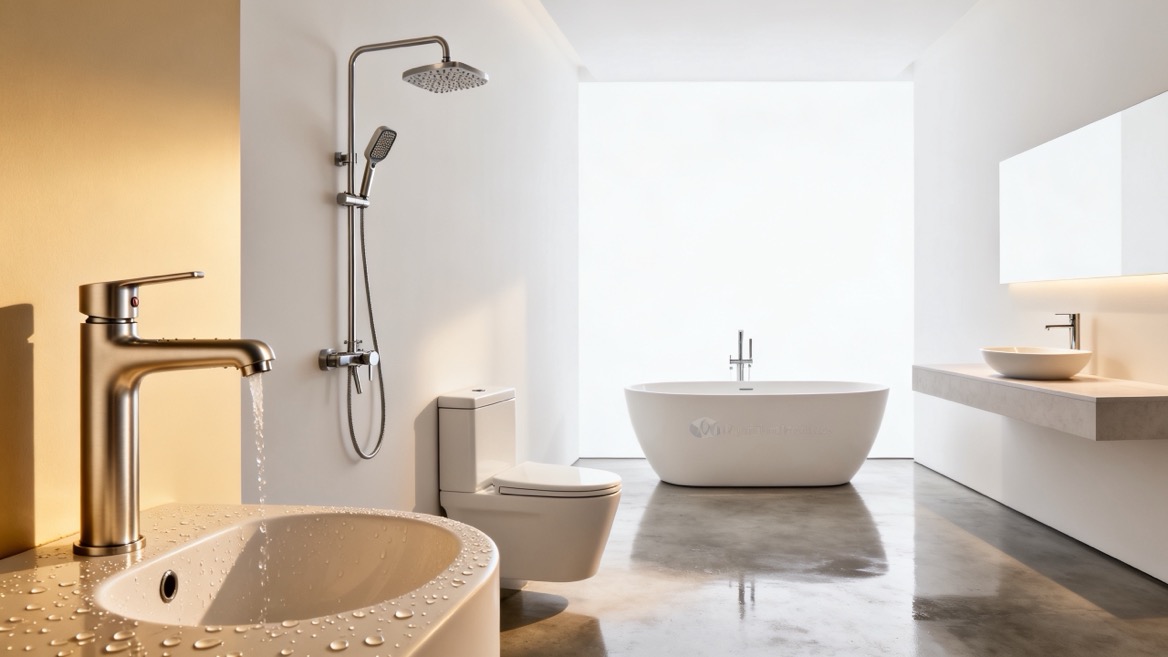
Material selection has a major influence on a bathroom's service life, maintenance needs, visual quality, and replacement cycle. Sustainable design is often less about choosing a fashionable "green" material and more about selecting materials that remain functional and attractive for many years.
A bathtub is usually one of the largest and most visually important elements in a bathroom. It should be designed for longevity, comfort, and straightforward care.
For freestanding bathtubs and customized bathtub programs, buyers should consider:
- Material durability and structural stability
- Resistance to staining, discoloration, and everyday cleaning products
- Heat retention
- Surface repair options
- Weight and logistics requirements
- Installation practicality
- Drainage configuration
- Overflow integration
- Color, finish, and shape consistency across production batches
- Compatibility with surrounding bathroom collections
A well-made bathtub can remain in service for many years, which reduces the environmental burden associated with early replacement. This is particularly important in hospitality, residential development, and high-end renovation projects, where installation disruption and replacement costs can be significant.
For OEM and ODM partners, customization should not mean unnecessary complexity. The strongest product development programs create a flexible platform: proven internal structures, consistent quality standards, adaptable dimensions, controlled color options, and market-specific accessory configurations.
Terms such as "recyclable," "recycled," "natural," and "eco-friendly" can be useful, but buyers should request clear product information rather than relying only on broad claims.
A responsible supplier should be prepared to explain:
- The primary material composition
- Whether recycled content is used and in what proportion
- Whether the product can realistically be recycled in the destination market
- Which components can be separated at end of life
- How the material performs under heat, moisture, impact, and cleaning
- What quality controls support consistent production
For example, a bathtub or basin made from durable recyclable material may offer a longer service life and a more manageable end-of-life pathway than a product that requires frequent replacement. However, recyclability depends on local collection and processing infrastructure, so claims should be accurate and specific.
Bathrooms experience moisture, temperature changes, abrasion, soap residue, cosmetics, and cleaning chemicals. A surface that looks impressive at launch but deteriorates quickly may create more waste than a quieter, more durable alternative.
For long-term projects, prioritize:
- Stable finishes with reliable adhesion
- Scratch-resistant and stain-resistant surfaces
- Materials that do not require aggressive cleaning
- Replaceable hardware where possible
- Classic forms that remain visually relevant over time
- Neutral base colors with customizable accents
A timeless bathroom does not have to be plain. It means the core fixtures are designed to remain desirable beyond a single seasonal trend.
The most sustainable product is often the one that does not need to be replaced prematurely.
This principle should guide every stage of bathroom product development—from material selection and mold design to packaging, installation manuals, spare parts, and after-sales support.
A bathtub, vanity, faucet, shower enclosure, or toilet should not become waste simply because one component fails or becomes worn.
Brands and suppliers can improve product longevity by planning for:
- Replaceable faucet cartridges
- Replaceable aerators
- Serviceable drains and overflow systems
- Standardized seals and connection parts
- Replaceable shower hoses and hand showers
- Accessible concealed components where possible
- Clear maintenance instructions
- Spare-part availability for reasonable service periods
This approach benefits both end users and B2B buyers. It reduces warranty pressure, supports customer confidence, and helps protect a brand's reputation after installation.
For export-oriented bathroom products, sustainability also depends on how efficiently products move through the supply chain.
Large sanitaryware products can create shipping challenges because volume, weight, fragility, and packaging all affect logistics costs and material use. A bathtub supplier should consider packaging as part of product engineering, not only as a final warehouse step.
Effective packaging strategies may include:
- Right-sized cartons that reduce empty space
- Reinforced corner protection for vulnerable areas
- Recyclable paper-based outer packaging where practical
- Reduced use of unnecessary plastic materials
- Clear handling instructions
- Stackable designs that improve container utilization
- Product structures designed to reduce breakage risk in transit
For wholesalers and private-label brands, better packaging can lower damage rates, reduce replacement shipments, and make warehouse handling more efficient.
Use this checklist when developing a new bathroom collection, sourcing products for a project, or reviewing an existing supplier range.
| Category | Key Questions to Ask | Better Long-Term Outcome |
|---|---|---|
| Bathtub | Is the material durable, repairable, comfortable, and suitable for export logistics? | Longer service life and lower replacement risk |
| Faucet | Does it provide efficient flow without sacrificing usability? | Reduced water use and reliable daily performance |
| Shower system | Is spray quality maintained at an efficient flow rate? | Better user acceptance and lower hot-water demand |
| Toilet | Does it flush effectively at a lower water volume? | Lower indoor water consumption |
| Basin and vanity | Are surfaces moisture-resistant and easy to maintain? | Fewer maintenance issues and longer visual life |
| Hardware | Can key parts be replaced without replacing the full product? | Easier repair and lower waste |
| Packaging | Is packaging protective, efficient, and appropriate for container loading? | Less damage and reduced material use |
| Supplier support | Are specifications, drawings, samples, and spare parts managed professionally? | More dependable project delivery |
1. Define the project's performance requirements.
Clarify target market, certification needs, water-use expectations, installation conditions, finish preferences, price positioning, and delivery schedule.
2. Evaluate the product lifecycle.
Compare material durability, maintenance needs, replacement-part availability, packaging efficiency, and expected service life—not only the purchase price.
3. Validate manufacturing capability.
Review samples, quality standards, customization options, lead times, inspection procedures, and communication processes before scaling an order.
This process is especially valuable for overseas brands that want to develop exclusive bathroom collections while protecting consistency across multiple production orders.
Sustainable bathrooms succeed when people actually enjoy using them. The room should feel calm, comfortable, clean, and intuitive.
A warm bath in a well-designed freestanding bathtub can be part of a low-waste routine when the tub is durable, appropriately sized, easy to clean, and designed for long-term use. A shower can feel luxurious with thoughtful spray engineering rather than excessive water volume. A vanity can feel premium through intelligent storage, durable surfaces, and purposeful lighting instead of unnecessary materials.
Consider the following design principles:
- Use layered lighting to create a calm, functional environment.
- Choose storage that reduces countertop clutter and simplifies cleaning.
- Select moisture-resistant materials around wet areas.
- Provide enough ventilation to reduce mold and preserve finishes.
- Use easy-clean surfaces to reduce reliance on harsh cleaning chemicals.
- Specify products in coordinated collections to avoid mismatched replacements.
- Prioritize ergonomic dimensions for real daily use.
A sustainable bathroom should never feel like a sacrifice. It should feel quietly intelligent—a space where every component performs a clear purpose.
For brands, importers, wholesalers, and project buyers, the best sustainable outcomes begin with a supplier that understands both product design and manufacturing realities.
Jiaxing Miluo Smart Home Co., Ltd. supports customized modern bathroom solutions for international partners seeking OEM and ODM bathtub and sanitaryware products. From product concept and dimension development to material selection, finish coordination, packaging considerations, and production consistency, a capable manufacturing partner can help turn sustainability goals into practical, market-ready collections.
Whether you are building a private-label bathtub range, sourcing a coordinated luxury bathroom collection, or developing customized products for a hospitality or residential project, focus on decisions that will still make sense years after installation.
Contact Jiaxing Miluo Smart Home Co., Ltd. to discuss your custom bathtub, bathroom product, OEM, or ODM requirements and develop a collection designed for lasting performance, refined aesthetics, and responsible resource use.
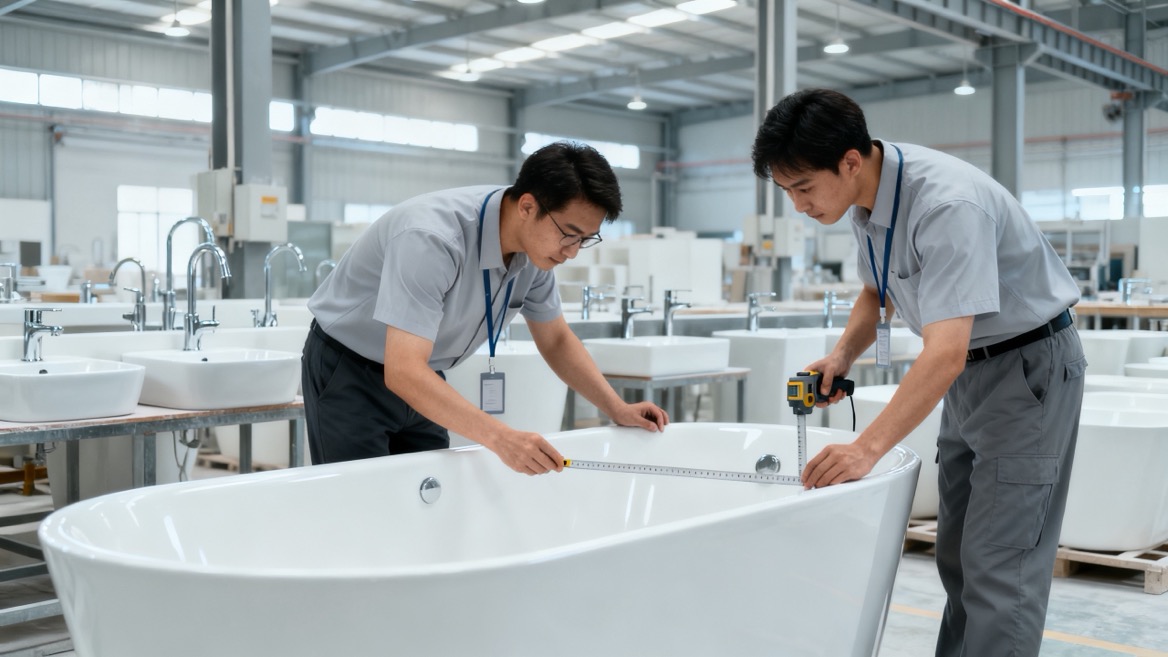
An eco-friendly bathroom is designed to reduce unnecessary water use, energy use, material waste, and replacement frequency. It typically includes efficient fixtures, durable products, responsible material choices, repairable components, and practical maintenance considerations.
A freestanding bathtub can be a responsible long-term choice when it is made from durable materials, designed for many years of use, easy to maintain, and supported with replaceable drainage or accessory components. Material quality, product lifespan, transport efficiency, and user habits all influence the overall outcome.
Not necessarily. A well-designed efficient faucet can use aeration and flow control to create a comfortable stream while reducing unnecessary water use. Buyers should evaluate actual performance, pressure compatibility, and user experience instead of selecting products based only on a flow-rate number.
Brands should ask about material specifications, product dimensions, customization possibilities, mold development, minimum order quantities, quality-control processes, packaging, lead times, spare parts, testing, export experience, and post-order communication.
Toilets, shower systems, and faucets are key products because they are used frequently. Toilets are particularly important because they can account for a significant portion of indoor household water use.
Choose durable materials, stable finishes, serviceable parts, easy-clean surfaces, correct installation, proper ventilation, and products with available replacement components. Regular maintenance also helps avoid leaks, corrosion, staining, and premature failure.
Bathroom products such as bathtubs, basins, mirrors, and shower enclosures can be large and fragile. Efficient protective packaging helps reduce breakage, replacement shipments, excess material consumption, and unnecessary logistics costs.
- [Aquatica USA — Eco-Friendly Bathroom Solutions: Embracing Sustainability in Your Sanctuary]
- [U.S. Environmental Protection Agency — Bathroom Faucets: WaterSense]
- [U.S. Environmental Protection Agency — WaterSense Products]
- [U.S. Environmental Protection Agency — Indoor Water Use in the United States]
- [U.S. Environmental Protection Agency — WaterSense Statistics and Facts]
- [U.S. Department of Energy — Purchasing Water-Efficient Plumbing Products]
- [Oatey — Five Meaningful Ways to Create an Eco-Friendly Bathroom]


