
Views: 268 Author: Miluo Smart Home Publish Time: 2026-09-04 Origin: Site


Content Menu
● What Is a Chromotherapy Bathtub?
● Why Color-Changing Bathtub Lights Matter
>> Create a stronger emotional product story
>> Differentiate a bathtub collection
>> Enhance the perceived depth of water
● Color Choices for a Better Bathing Atmosphere
● How to Specify Chromotherapy Lighting for OEM and ODM Bathtubs
>> 1. Select the right lighting location
>> 2. Match the control method to the target market
>> 3. Prioritize waterproof construction and electrical safety
>> 4. Build serviceability into the design
● A Practical Bathing Routine With Chromotherapy Lights
● Designing a High-End Chromotherapy Bathtub Collection
● Common Buyer Questions Before Ordering
>> Is chromotherapy lighting suitable for every bathtub?
>> Does a chromotherapy bathtub need more maintenance?
>> Can we customize the LED colors and lighting programs?
>> Can bathtub chromotherapy lights make medical claims?
>> What should importers confirm before placing an order?
>> Are chromotherapy bathtubs appropriate for hotels?
● Build a Bathing Product That Stands Out
● FAQ
>> What is the difference between chromotherapy lighting and red-light therapy?
>> Which chromotherapy bathtub color is best for relaxation?
>> Can chromotherapy lights be installed in an existing bathtub?
>> Are LED bathtub lights safe around water?
>> Can I order a private-label chromotherapy bathtub?
>> Do chromotherapy lights increase the value of a bathtub?
A chromotherapy bathtub combines warm-water bathing with integrated color-changing LED lighting to create a more personal, visually immersive bathroom experience. For luxury brands, wholesalers, hospitality projects, and bathroom-product manufacturers, the value lies not in exaggerated health promises, but in customizable atmosphere, differentiated product design, and a more memorable bathing ritual.
At Jiaxing Miluo Smart Home Co., Ltd., we develop modern bathtubs and coordinated bathroom solutions for international brands, wholesalers, and manufacturers seeking flexible OEM and ODM production. From the bathtub silhouette and material selection to control panels, lighting programs, packaging, and brand presentation, chromotherapy lighting can turn a standard soaking tub into a high-value centerpiece for a modern bathroom collection.
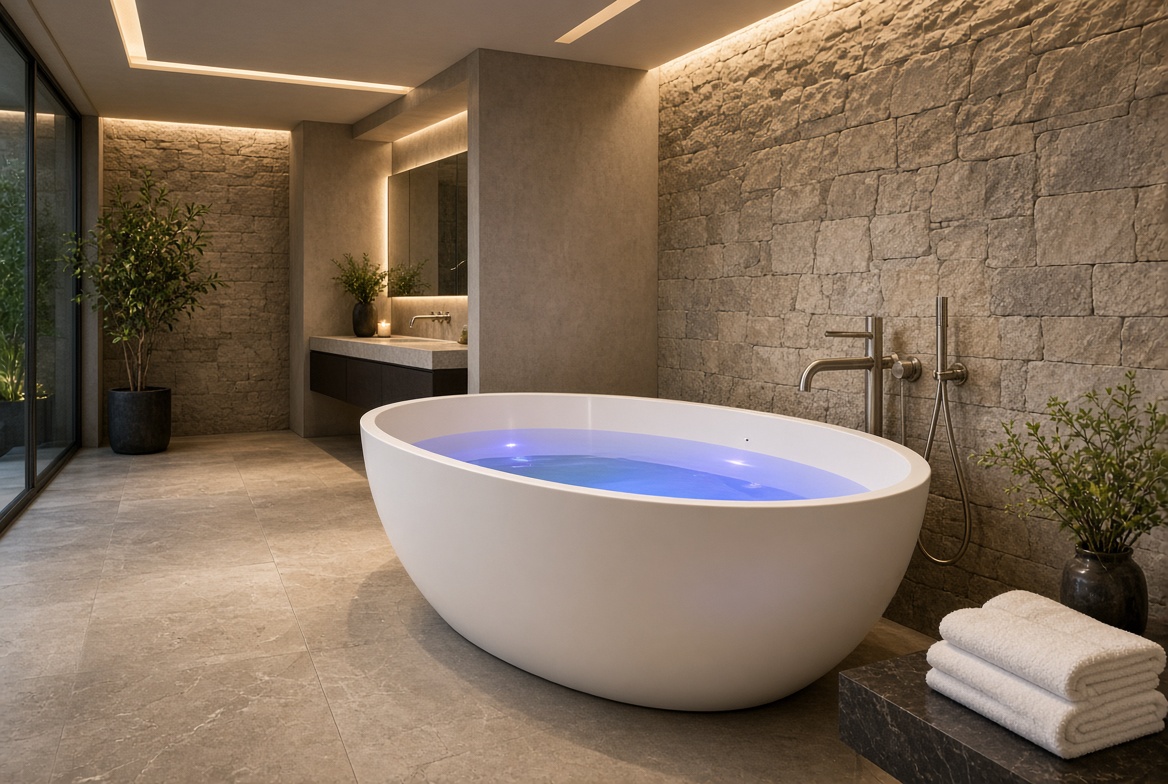
A chromotherapy bathtub is a bath fitted with waterproof, low-voltage LED lights that display one or more colors during bathing. Depending on the system, the user may choose a fixed color, switch between preset scenes, or activate a gradual color-changing sequence.
In practical bathroom design, chromotherapy is best understood as ambient color lighting for bathing. The light reflects through water, acrylic surfaces, stone-resin textures, and surrounding finishes to make a bathroom feel calmer, warmer, brighter, or more dramatic.
Many premium bathtub systems combine chromotherapy lights with other comfort features, such as:
- Air massage systems
- Whirlpool or water-jet systems
- Inline heaters
- Ozone or self-cleaning functions
- Digital control panels
- Bluetooth audio
- Overflow and drainage upgrades
- Freestanding, corner, alcove, or drop-in installation formats
A well-designed LED bathtub system gives the bather more control over the mood of the room. A soft blue-green scene may suit a quiet evening soak, while warm amber or red tones can make the water appear more intimate and spa-like. Bright white lighting may also help showcase the tub's clean lines in a hotel suite, showroom, or luxury rental property.
The original Aquatica article correctly identifies chromotherapy lighting as a feature associated with air-massage bathtubs and multi-color bathing options. However, the subject deserves a more balanced and useful discussion: buyers need to understand the difference between visual ambience, product engineering, installation safety, customization potential, and medical claims.
Modern bathroom buyers increasingly expect the bathroom to function as more than a utility room. In upscale residential projects, boutique hotels, serviced apartments, wellness-oriented developments, and premium renovation projects, the bathroom is often designed as a private retreat.
A chromotherapy tub helps brands sell that experience.
A conventional bathtub is evaluated mainly by size, comfort, material, and price. A bathtub with integrated LED lighting gives sales teams and distributors another story to tell: the tub is not simply a fixture; it is part of a personal wind-down routine.
This matters particularly in showrooms and online product listings. Water, light, and reflective surfaces create immediate visual impact in photographs and video. When buyers can see a color-changing bath in use, they can more easily imagine the finished bathroom in their own home or project.
For OEM and ODM customers, chromotherapy lighting can help create clear product tiers:
| Product Tier | Typical Configuration | Buyer Value |
|---|---|---|
| Entry luxury | Freestanding soaking tub with single-color or white LED light | Adds visual interest without a complex control system |
| Mid-range wellness | Multi-color LED lighting with remote or integrated controller | Gives users mood-selection options and supports premium positioning |
| High-end spa | Chromotherapy, air massage, heater, digital controls, cleaning functions | Creates a comprehensive home-spa proposition |
| Hospitality project | Durable lighting modules, simplified controls, service-friendly components | Supports a consistent luxury guest experience |
Rather than offering one generic illuminated bathtub, manufacturers can build a modular platform. A single tub mold may support different lighting configurations, control systems, jet layouts, logos, and packaging options for separate markets.
Underwater or perimeter lighting changes how people perceive the bathing environment. Light moving through water can make the bath feel deeper, more luxurious, and more engaging, especially in a darker bathroom or during evening use.
This is particularly effective with:
- Deep soaking tubs
- Round or oval freestanding tubs
- Japanese-style soaking tubs
- Hydrotherapy bathtubs
- Hotel-suite bathtubs
- Outdoor tubs in protected, professionally installed locations
- Statement tubs placed near textured stone, timber, or dark tile finishes
The effect does not require a complicated color program. In many projects, a carefully selected warm white, soft blue, or slow-transition mode is more appealing than fast-changing colors.
Color preferences are personal, cultural, and context dependent. A useful chromotherapy system should therefore give users simple, intuitive control rather than forcing one "correct" color for every situation.
Below is a practical design guide for how colors are commonly used in a bathing environment.
| Light Color | Typical Bathroom Mood | Best Use Scenario |
|---|---|---|
| Warm white | Clean, premium, welcoming | Daily bathing, hotel bathrooms, product photography |
| Soft blue | Cool, quiet, visually refreshing | Evening soaking, minimalist interiors |
| Green | Natural, balanced, restorative-looking | Spa-inspired bathrooms, biophilic design themes |
| Amber or yellow | Warm, cheerful, intimate | Morning use, darker bathrooms, hospitality suites |
| Red | Dramatic, warm, bold | Feature moments, luxury showrooms, couples’ suites |
| Purple or violet | Artistic, indulgent, atmospheric | Contemporary bathrooms and premium lifestyle collections |
| Slow color cycle | Dynamic and playful | Demonstrations, family use, wellness-themed products |
It is important to use careful language when describing these colors. Standard bathtub LEDs can shape atmosphere and personal comfort, but they should not be marketed as proven treatments for illness, depression, chronic pain, insomnia, detoxification, hormonal conditions, or other medical concerns.
Research and commentary on chromotherapy often mix together several very different subjects: decorative colored lighting, color psychology, clinical light treatment, and specialized red-light devices. These are not interchangeable technologies. A responsible manufacturer should describe bathtub chromotherapy as a sensory and environmental feature, not as a medical device.
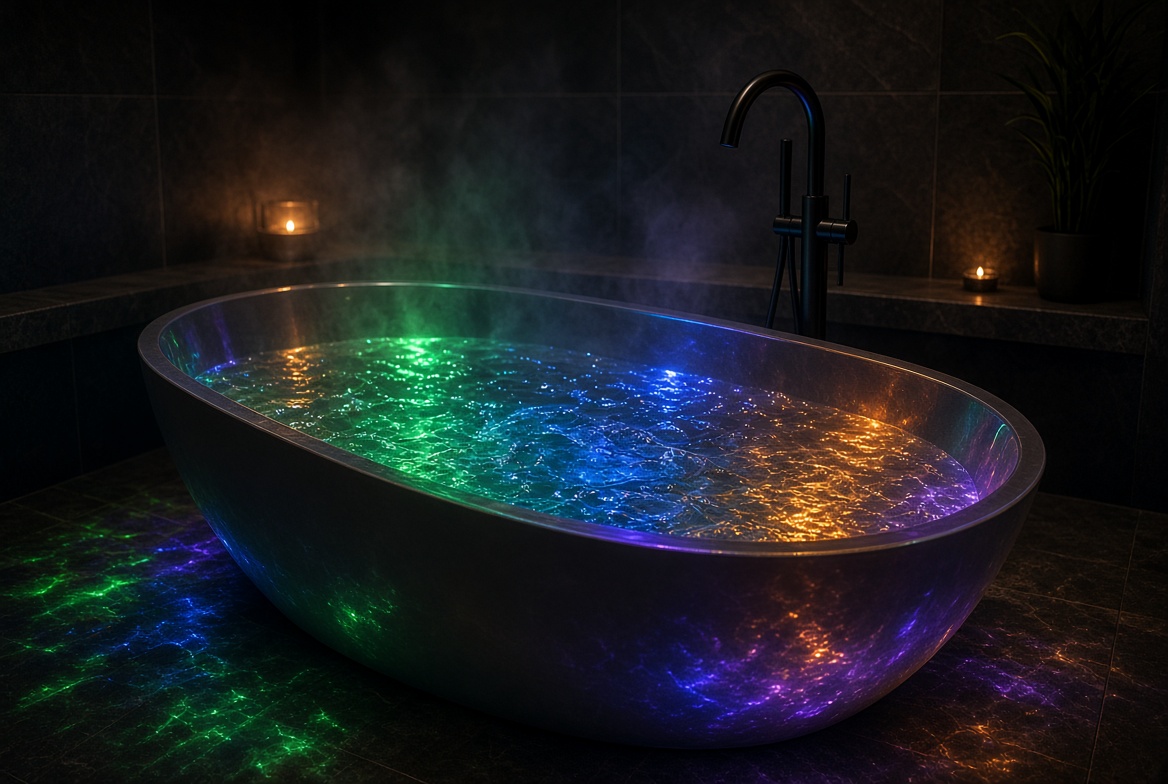
For professional buyers, the visible color is only one part of the decision. A dependable chromotherapy bathtub must be engineered for wet-area conditions, straightforward installation, long-term serviceability, and compatibility with the overall bathtub system.
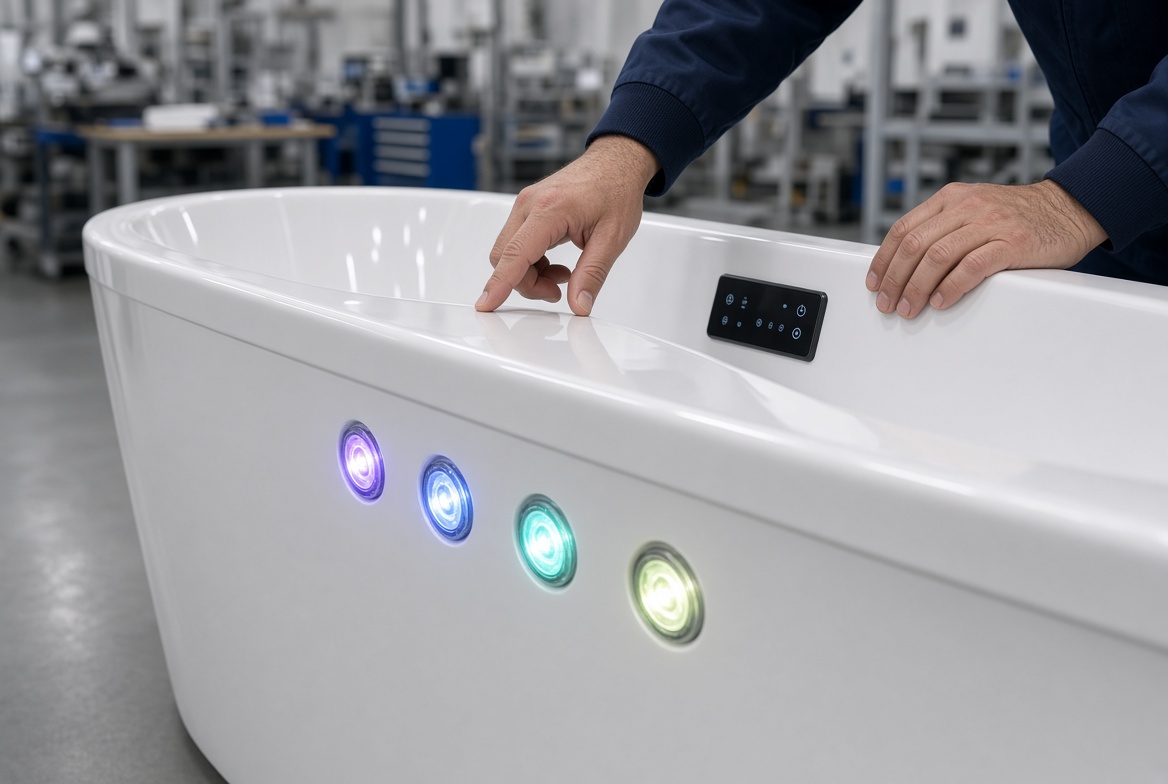
Common LED placement options include:
- Underwater light modules positioned inside the tub wall
- Perimeter lighting around the bathtub rim
- Backlit overflow zones
- Lighting near massage outlets or air jets
- Under-base lighting for a floating visual effect
- External accent lighting for showroom-oriented models
Underwater lighting provides the strongest interaction with water. Perimeter lighting can deliver a more restrained, architectural look. Under-base lighting is especially popular for freestanding acrylic bathtubs because it makes the tub appear lighter and more sculptural.
For a modern high-end collection, combining a subtle underwater glow with concealed base lighting can create a layered effect without making the product look overly decorative.
The best control system depends on the product price point and end-user expectations.
| Control Method | Advantages | Suitable Applications |
|---|---|---|
| Pneumatic button | Familiar and simple | Basic massage tubs and value-focused ranges |
| Waterproof push-button | Clean appearance and direct operation | Residential freestanding or built-in tubs |
| Wired digital keypad | Supports multiple functions and settings | Air-massage and whirlpool systems |
| Remote control | Convenient for mood-light selection | Premium residential baths |
| Touch display | Modern user experience and visible differentiation | Flagship smart-bath collections |
| App-connected control | Supports advanced branding concepts | Specialized smart-home projects |
A control panel should be easy to understand while bathing. Complicated menus create frustration. The most successful interface often includes just a few essential choices: power, color, brightness, color cycle, massage, heat, and cleaning mode.
Bathrooms are wet environments. Therefore, lighting design must be treated as an electrical and installation issue, not merely a decorative feature.
A reliable chromotherapy bathtub specification should address:
- Low-voltage LED components
- Wet-area-rated lighting modules
- Sealed cable connections
- Proper insulation and grounding requirements
- Accessible service areas where appropriate
- Compatibility with local electrical standards
- Clear installation instructions for professional installers
- Testing of the complete bathtub system before shipment
Ingress Protection ratings are widely used to indicate how well electrical enclosures resist contact, dust, and water. Wet-zone lighting requires a rating appropriate to its exact location and exposure. Buyers should confirm the relevant local requirements with qualified electrical and building professionals before installation.
For export projects, it is also important to confirm voltage, plug type, frequency, certification requirements, and controller compatibility early in product development. A bathtub configured for one regional market may need different electrical components for another.
Luxury products must remain practical after installation. A bath with hidden components may look elegant, but distributors and project buyers also need to consider maintenance access.
Ask these questions before finalizing a chromotherapy tub design:
1. Can the control unit be replaced without removing the entire bathtub?
2. Are LED modules standardized across multiple models?
3. Is there sufficient access for pumps, transformers, drains, and electrical connectors?
4. Are wiring diagrams included in the technical package?
5. Can replacement parts be stocked efficiently by the distributor?
6. Does the bathtub pass water and functional testing before packing?
7. Are service instructions written clearly for installers and after-sales teams?
A thoughtfully designed access solution can reduce post-sale service cost and improve buyer confidence—particularly for hotels, property developers, and wholesale customers managing many units.
Chromotherapy lighting works best when it supports a deliberate bathing environment rather than becoming the only feature of the experience.
Here is a simple, realistic routine for home users:
1. Fill the bathtub to a comfortable and safe level.
2. Set the water temperature according to personal comfort and relevant health guidance.
3. Dim the main bathroom lights to reduce glare.
4. Choose one calm color rather than rapidly cycling through every mode.
5. Use a warm white, green, blue, or amber tone based on personal preference.
6. Keep towels, drinking water, and a non-slip bath mat within easy reach.
7. End the session if dizziness, overheating, discomfort, or irritation occurs.
For evening use, softer and warmer lighting may be more comfortable than intense, blue-rich lighting. Light timing, brightness, duration, and spectrum can influence how people experience an evening environment; that does not mean standard bathtub LEDs should be presented as a treatment.
A strong OEM or ODM project starts with the end market. A European distributor may prioritize minimalist styling and compliance documentation. A North American brand may need larger dimensions, familiar controls, and model differentiation. A hotel supplier may value durability, simplified operation, and easy replacement parts above a long feature list.
At Jiaxing Miluo Smart Home Co., Ltd., a customized chromotherapy bathtub program can be developed around the following decisions:
- Bathtub type: freestanding, wall-adjacent, corner, drop-in, or soaking tub
- Material: acrylic, reinforced composite, stone-resin look, or other selected construction
- Size and depth: adapted to the target market and bathroom layout
- Lighting: fixed color, RGB multi-color, underwater, perimeter, or under-base LEDs
- Wellness functions: air massage, water jets, heater, ozone, or cleaning options
- Controls: button, keypad, remote, or smart interface
- Branding: logo placement, private-label control panel, manuals, cartons, and inserts
- Technical configuration: voltage, frequency, drainage, overflow, and outlet location
- Packaging: export-protective packaging designed for container shipment and local delivery
The goal is not simply to add more functions. It is to create a coherent product: one where the shape, materials, lighting, controls, performance, packaging, and brand identity all support the same market position.
A compact oval tub with quiet air massage and a warm-white-to-amber lighting program may be ideal for an urban apartment brand. A large hydrotherapy model with multi-color LEDs, heating, and a digital control panel may suit a luxury villa or resort collection. Both can be successful, but they require different specifications, pricing logic, and after-sales planning.
Not necessarily. It is most effective in premium soaking tubs, air-massage tubs, whirlpool tubs, and models positioned as a spa-oriented experience. For entry-level projects where price sensitivity is very high, a simple white-light option or no lighting may be more appropriate.
The lighting system adds electrical components, so quality sealing, reliable connectors, proper testing, and accessible service design are important. However, a professionally designed low-voltage LED system should be manageable when it uses dependable components and clear technical documentation.
Yes. Depending on the controller and lighting module, OEM and ODM buyers can often select fixed-color options, RGB color ranges, automatic transition programs, brightness settings, and control interfaces. The available customization should be confirmed during product development.
No. Decorative or ambient bathtub lighting should not be promoted as a cure, detox method, or substitute for medical care. Claims should remain focused on user-controlled ambience, visual comfort, relaxation-oriented routines, and bathroom design appeal.
Importers should review dimensions, material construction, voltage, frequency, drainage orientation, lighting location, control method, certification needs, packing method, spare-parts plan, warranty terms, and the exact testing process used before shipment.
Yes, when the design is durable, the controls are intuitive, and the system is easy to service. Hotel projects should prioritize reliability, simplified user operation, technical documentation, and access to replacement parts.
A chromotherapy bathtub can transform a bathing product from a standard fixture into a memorable lifestyle experience. The most successful designs balance visual appeal with safe engineering, easy controls, reliable components, service access, and realistic product messaging.
If you are a bathroom brand, wholesaler, project supplier, or manufacturer looking to develop a modern LED bathtub collection, Jiaxing Miluo Smart Home Co., Ltd. can support your OEM and ODM requirements—from tub design and functional configuration to private-label packaging and export-ready production.
Contact our team to discuss your target market, preferred bathtub style, lighting configuration, massage functions, branding requirements, and customized production plan.
Chromotherapy bathtub lighting uses colored LEDs primarily to create an atmosphere and personalize the bathing environment. Red-light therapy or photobiomodulation uses specialized devices with defined wavelengths and dosimetry for specific researched applications. They should not be treated as the same product category.
There is no universally best color. Many users prefer soft blue, green, violet, or warm amber tones for a quieter bathing atmosphere. The best choice is the color that feels most comfortable in the user's bathroom and at their chosen bathing time.
In some cases, retrofit lighting may be possible, but it depends on the bathtub material, wall thickness, access space, electrical design, waterproofing requirements, and local regulations. In most cases, integrated lighting designed during manufacturing provides a cleaner and more reliable result.
They can be safe when the system uses appropriate low-voltage components, wet-area-rated modules, sealed wiring, correct installation, and compliance with applicable local electrical requirements. Installation should be completed by qualified professionals.
Yes. OEM and ODM programs can include customized bathtub dimensions, colors, LED systems, massage features, control panels, logos, manuals, packaging, and technical configurations for the destination market.
They can increase perceived value when the lighting system fits the product's design, price point, and target buyer. The feature is especially useful for premium retail, hospitality, residential development, and showroom-focused bathtub collections.
1. Azeemi, S. T. Y., & Raza, S. M. (2005). [A Critical Analysis of Chromotherapy and Its Scientific Evolution].
2. Aquatica Baths USA. (2016). [Bathing Bathrooms in Brightness with Chromotherapy Lights].
3. Bathrooms.com. [Transform Your Well-Being With Bathroom Chromotherapy].
4. Sauna Steam Center. (2026). [Chromotherapy Sauna: Light Colors, Benefits & Color Chart].
5. Sauna Cloud. (2026). [Chromotherapy vs Red Light Therapy in Saunas].
6. Aquatica Baths USA. [Chromotherapy Tubs: Luxury Color Therapy Bathtubs].
7. Baths of Distinction. [What Is Chromotherapy Lighting?].


