
Views: 222 Author: Miluo Smart Home Publish Time: 2026-06-15 Origin: Site


Content Menu
● What Is Bathtub Resurfacing?
● Resurfacing vs Refinishing: Key Differences that Actually Matter
● Step‑by‑Step: How Professional Bathtub Resurfacing Works
>> 3. Curing and Final Inspection
● When Resurfacing Makes More Sense Than Replacement
>> For Hotels, Apartments, and Commercial Projects
● Resurfacing vs Replacement: Cost, Time, and Sustainability
>> Environmental Considerations
● How Much Does Bathtub Resurfacing Typically Cost?
● Expert Lifespan and Maintenance Insights
● Real‑World Project Perspective: Resurfacing and Luxury OEM/ODM Bathtubs
● When You Should Skip Resurfacing and Choose a New Bathtub
● How to Decide: A Simple 5‑Step Checklist
● Why Work with an OEM/ODM Bathtub Manufacturer on Your Next Upgrade
● Clear Call to Action: Discuss Your Bathtub Upgrade Strategy
● FAQ
As a manufacturer working daily with high‑end solid surface bathtubs and OEM/ODM bathroom projects, I see a recurring confusion among homeowners, designers, and brands: should you choose bathtub resurfacing, tub refinishing, or full replacement when a tub starts to look tired? This guide breaks down each option in practical, expert terms so you can match the right solution to your project's design, budget, and long‑term maintenance goals. [bathrefinishingsolutions]
Bathtub resurfacing is a restoration process where technicians apply a new coating over the existing tub surface to make it look fresh, glossy, and clean again. Think of it as giving your bathtub a new "skin" that hides stains, discoloration, and light surface wear without touching the internal structure.
During resurfacing, the focus is on visual renewal and basic protection, not on rebuilding the tub from the inside. For owners of older but structurally solid tubs, this can be a highly cost‑effective way to extend the life of the fixture while postponing a full remodel.
Tub refinishing goes one level deeper than resurfacing. In a refinishing project, the professional first repairs chips, cracks, and surface damage, then applies a durable coating system on top of that repaired base.
You can think of refinishing as a two‑stage process: restoration plus coating. Because the damage is addressed before the topcoat, refinishing can solve minor structural issues that resurfacing alone will not fix, helping the bathtub last longer under daily use.
Although many contractors use "resurfacing" and "refinishing" interchangeably, there are practical differences you should understand before making a decision.
| Factor | Resurfacing | Refinishing |
|---|---|---|
| Core focus | Visual renewal and new coating | Repair + coating system |
| Repairs | Minimal, usually light prep only | Chips, cracks, and defects repaired first |
| Typical use case | Aesthetically tired but solid tubs | Tubs with visible wear and minor structural defects |
| Longevity | Good when tub is already in decent shape | Often better for heavily used or older tubs |
| Cost level | Generally lower | Slightly higher but still far below replacement |
Both methods can dramatically improve appearance, but refinishing is usually the better choice when you see chips, hairline cracks, or rough spots that you can feel with your hand.
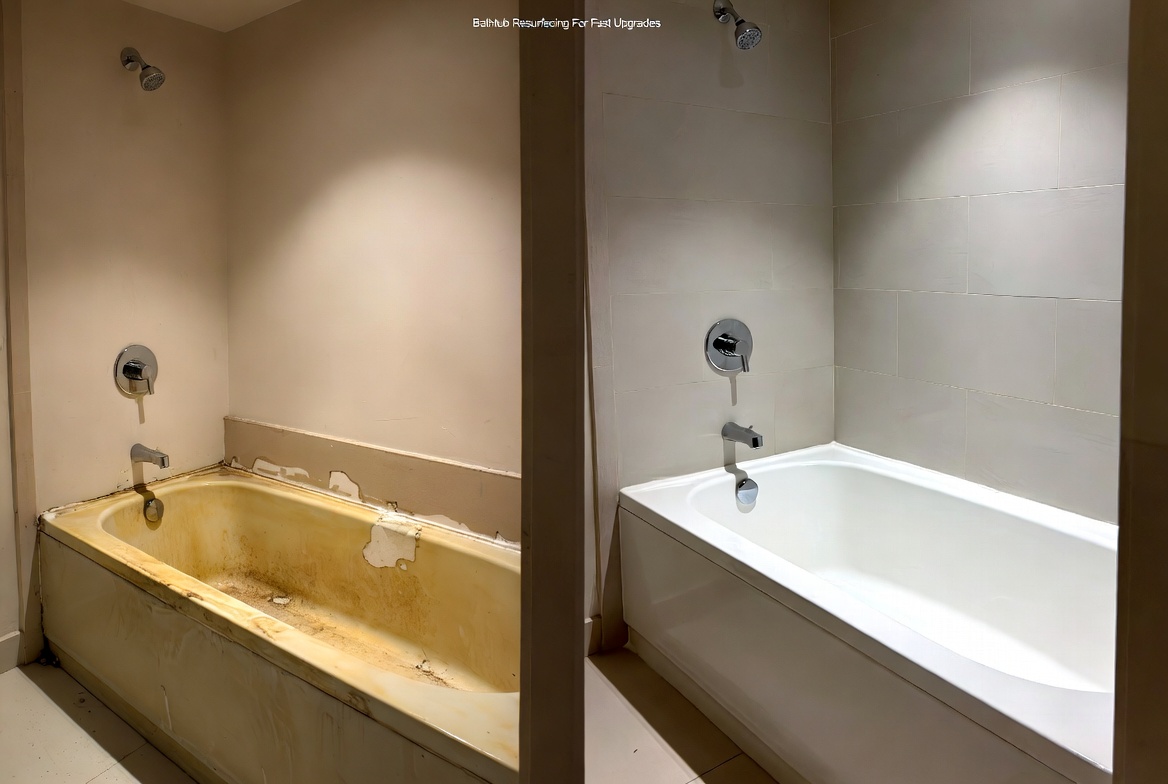
From an OEM/ODM manufacturer's perspective, the quality of resurfacing depends less on the coating brand and more on how carefully each step is executed.
Preparation is the foundation of a long‑lasting resurfaced tub.
- The tub is deep‑cleaned to remove mineral deposits, soap scum, body oils, and old residues.
- Small chips and scratches are filled and smoothed to create an even substrate.
- The surface is etched or lightly sanded so that the new coating can bond securely.
If this stage is rushed, the coating may peel, bubble, or wear prematurely, no matter how expensive the product is.
Once the surface is prepared, the technician builds a new finish layer by layer.
- A primer is applied to improve adhesion and create a uniform base.
- A high‑gloss, durable topcoat is sprayed or rolled in multiple passes for even coverage.
- In many projects, custom colors can be used to match updated bathroom schemes or coordinate with premium vanities and basins. [bathrefinishingsolutions]
For modern high‑end bathrooms, this is where consistent color and gloss level become important, especially when the bathtub is paired with luxury solid surface countertops or marble‑look finishes. [bathrefinishingsolutions]
After coating, the bathtub must cure so that the finish bonds and hardens.
- Typical curing time is 24–48 hours, depending on product type and room conditions.
- During this period, the tub should not be touched or used to avoid imprints, dust, or fingerprints on the fresh surface.
- A final inspection checks for smoothness, gloss, color consistency, and any visible defects.
When done correctly, the bathtub looks almost like a new fixture straight from the factory floor, without demolition or plumbing work.
From a project owner's standpoint, resurfacing is often the smartest "middle path" between living with an ugly tub and paying for a full remodel.
Resurfacing is ideal when:
- The bathtub is structurally solid but looks dated, dull, or stained.
- You see minor surface damage, not deep structural cracks.
- You want to upgrade appearance without touching the existing layout or plumbing.
In these cases, resurfacing avoids the costs of demolition, new tub purchase, plumbing changes, and tile repair around the tub surround.
In commercial properties, downtime and disruption often matter more than absolute material cost.
- Replacing multiple bathtubs across rooms or units can take weeks and generate noise, dust, and guest complaints.
- Resurfacing, by contrast, is cleaner, quieter, and usually returns units to service within a few days.
For operators managing multi‑unit properties, this can mean better occupancy rates and a smoother renovation schedule.
When you compare resurfacing to full replacement, the differences in cost, disruption, and environmental impact are significant.
Industry benchmarks and project experience show that resurfacing can be around 75% cheaper than complete replacement once you factor in the tub, labor, demolition, structural repair, and finishing. Resurfacing is often completed in one working day plus 1–2 days of curing, while replacement can stretch to a week or more when tile, plumbing, and finishing are included.
| Aspect | Resurfacing | Replacement |
|---|---|---|
| Cost | Around 75% less than replacement once all project costs are included | Higher due to new tub, demolition, plumbing, and finishing trades |
| Time on site | Often completed in 1 day; ready for use in 24–48 hours | Several days to weeks depending on scope and coordination |
| Disruption | Minimal mess, no demolition, reduced dust and noise | Major construction, noise, debris, and possible water shutoffs |
| Environmental impact | Keeps existing tub out of landfill and reduces material use | Generates waste and increases demand for new materials |
From a sustainability perspective, resurfacing reuses the existing bathtub body instead of sending it to landfill. For property owners and brands positioning themselves as eco‑conscious, this reduced waste can become a genuine value point in marketing and ESG reporting.
Exact cost varies by region and contractor, but several factors consistently influence pricing.
- Tub material: Acrylic and fiberglass are generally simpler to refinish than heavy cast iron or clawfoot tubs, which require more skill and material.
- Damage level: Deep cracks, large chips, or previous failed coatings increase prep time and cost.
- Location: Labor and material prices differ from city to city and country to country.
From a budgeting standpoint, the most reliable approach is to have a professional inspect the tub and issue a written quote, especially if you manage multiple units or premium suites.
With proper surface preparation, professional application, and basic care, a resurfaced bathtub can last about 5–15 years before needing another treatment. The actual lifespan depends heavily on how the tub is used and cleaned.
To extend the life of the new finish:
- Use non‑abrasive cleaners and soft sponges.
- Avoid harsh chemicals or scouring pads that can scratch the coating.
- Address any leaks or standing water issues promptly to protect edges and seams.
For owners of high‑end solid surface and resin stone bathtubs, similar rules apply: gentle cleaners and proper ventilation go a long way in preserving the original factory finish. [bathrefinishingsolutions]
As a long‑term exporter and manufacturer of custom luxury bathtubs, basins, and vanities, Jiaxing Miluo Smart Home Co., Ltd. regularly consults with global partners on whether to refinish, resurface, or replace existing fixtures in renovation projects. [bathrefinishingsolutions]
Our experience shows three common scenarios:
- In mid‑market hotels, resurfacing is often used to refresh older tubs while new solid surface bathtubs are specified for newly built rooms or premium suites. [bathrefinishingsolutions]
- In residential projects, homeowners sometimes resurface an existing steel tub while pairing it with a new OEM stone resin vanity top and basin to elevate the overall bathroom design. [bathrefinishingsolutions]
- For high‑end projects, developers may prefer to fully replace outdated acrylic tubs with bespoke solid marble or resin stone freestanding bathtubs that match a contemporary spa‑style concept. [bathrefinishingsolutions]
Because we design and manufacture tubs ourselves, we can advise partners on whether their current bathtub is structurally worth saving or whether a custom replacement better fits their long‑term brand image and maintenance strategy. [bathrefinishingsolutions]
There are situations where resurfacing or refinishing is not the best long‑term solution.
You should consider a full replacement when:
- The tub has serious structural damage, such as deep cracks, soft spots, or signs of movement.
- Plumbing or layout changes are already planned for a broader renovation.
- The existing tub shape or size no longer matches the design direction (for example, upgrading to a freestanding solid surface soaker tub). [bathrefinishingsolutions]
In these cases, a new OEM/ODM bathtub can give you better ergonomics, thermal performance, and design flexibility than trying to keep an outdated fixture in place. [bathrefinishingsolutions]
Use this quick checklist to decide between resurfacing, refinishing, and replacement:
1. Check structural integrity
If the tub is solid with no serious cracks, resurfacing or refinishing remains an option.
2. Assess visible damage
Light staining and surface wear point toward resurfacing, while chips and cracks suggest refinishing.
3. Clarify project timing
If you need rooms or units back online in a few days, resurfacing is usually the best fit.
4. Align with design goals
If you want a completely new form factor, like a sculptural freestanding tub or a coordinated marble‑look set with basins and vanities, replacement with a custom bathtub is the right move. [bathrefinishingsolutions]
5. Consider long‑term brand positioning
For luxury projects, upgrading to a premium solid surface or stone resin bathtub can better reflect your design concept and guest expectations than simply refreshing an old steel or fiberglass model. [bathrefinishingsolutions]
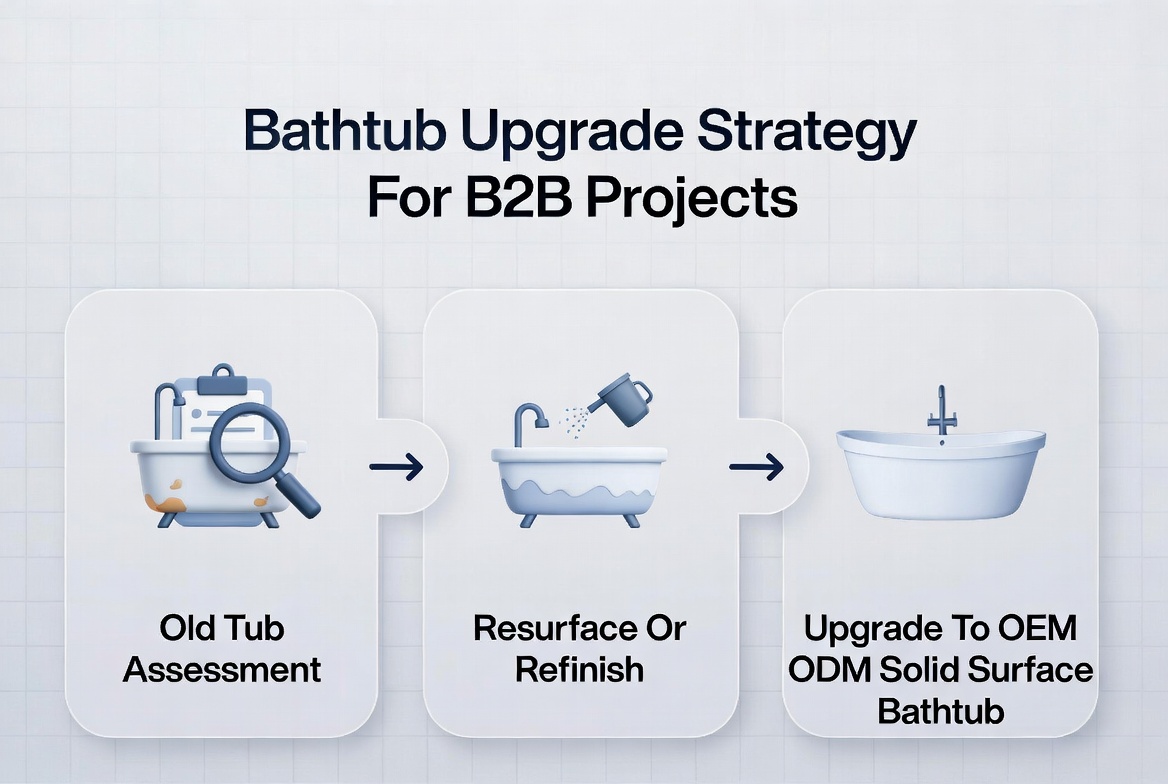
Choosing between resurfacing and replacement is easier when you have both project experience and manufacturing insight on your side. [bathrefinishingsolutions]
Jiaxing Miluo Smart Home Co., Ltd., founded in 1999 in Jiaxing, Zhejiang, has more than 20 years of experience in the research, development, production, and export of high‑end sanitary ware, including solid surface and resin stone bathtubs, basins, shower trays, and vanities. With over 100 patents and exports to more than 56 countries, we support residential and commercial partners in North America, Europe, Australia, and the Middle East with customized bathroom solutions. [bathrefinishingsolutions]
By collaborating directly with an OEM/ODM manufacturer:
- You can specify exact dimensions, shapes, and finishes to match your design vision. [bathrefinishingsolutions]
- You gain access to materials optimized for heat retention, durability, and easy cleaning, which are critical in hospitality and luxury residential projects. [bathrefinishingsolutions]
- Your brand can differentiate with unique bathtub designs instead of standard catalog pieces. [bathrefinishingsolutions]
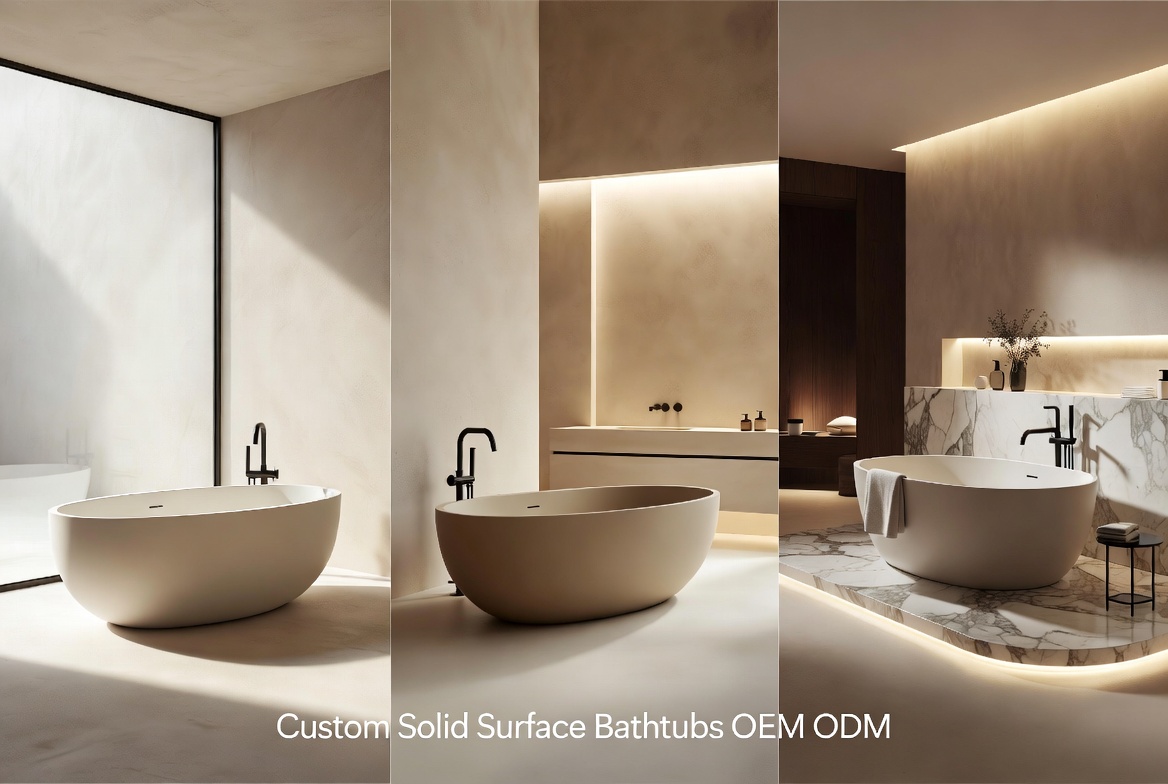
Whether you are evaluating bathtub resurfacing, refinishing, or a full upgrade to custom solid surface or resin stone bathtubs, it helps to talk through options with a specialist who understands both on‑site renovation realities and factory‑level product performance. [bathrefinishingsolutions]
If you are planning a hotel refresh, a multi‑unit residential project, or a high‑end home bathroom upgrade, you can reach our team at Jiaxing Miluo Smart Home Co., Ltd. to discuss the right mix of resurfacing and replacement for your specific situation. Our engineers and project consultants will help you evaluate your existing tubs and design a tailored path toward a modern, durable, and easy‑to‑maintain bathroom portfolio. [bathrefinishingsolutions]
1. How long do I need to wait before using a resurfaced bathtub?
Most professionals recommend waiting 24–48 hours after resurfacing so the coating can fully cure and bond to the surface. Using the tub too early can leave marks or weaken the finish.
2. Can I change the color of my bathtub during resurfacing or refinishing?
Yes, color change is one of the key advantages of resurfacing and refinishing. You can move from an outdated shade to a neutral white or coordinate with custom solid surface vanities, basins, and shower bases for a cohesive look. [bathrefinishingsolutions]
3. How long does a resurfaced bathtub typically last?
With proper preparation and gentle maintenance, a resurfaced bathtub can last 5–15 years before it needs to be redone. The lifespan depends on product quality, usage intensity, and cleaning habits.
4. Are there strong fumes during the resurfacing process?
Yes, many coating systems release noticeable fumes during application and curing. Professionals mitigate this by using low‑VOC products where possible and ensuring good ventilation with open windows and fans.
5. When should I choose a brand‑new bathtub instead of resurfacing?
You should choose a new tub if there is serious structural damage, if plumbing/layout changes are planned, or if you want a completely new design such as a freestanding solid surface or stone resin bathtub that aligns with a higher‑end bathroom concept. [bathrefinishingsolutions]
1. KingKonree International China Surface Industrial Co., Ltd. "What is Bathtub Resurfacing and The Differences from Tub Refinishing?" (accessed 2026). [Link]
2. Jiaxing Miluo Smart Home Co., Ltd. Official Website – Company Profile, Product Categories, and OEM/ODM Services. [Link] [bathrefinishingsolutions]
3. Jiaxing Miluo Smart Home Co., Ltd. "Solid Surface Bathtubs Vs Acrylic Tubs For OEM ODM Bathroom Projects." (Blog overview). [Link] [bathrefinishingsolutions]
4. Jiaxing Miluo Smart Home Co., Ltd. Corporate Statistics – Export Markets, Patents, and Factory Scale. [Link] [bathrefinishingsolutions]
5. Miluo Bath Facebook Page – Company Introduction for Solid Surface Bathtubs, Basins, and Cabinets. [Link] [facebook]


