
Views: 222 Author: Miluo Smart Home Publish Time: 2026-06-13 Origin: Site


Content Menu
● What Is a Composite Bathtub?
● Why Composite Tubs Are Rising in Modern Bathroom Design
● Core Composite Tub Materials and Structures (Expert Overview)
>> Acrylic with Fiberglass Reinforcement
>> Gelcoat Fiberglass Composite Tubs
>> Solid Surface / Stone Resin / Mineral Cast Composite Tubs
>> Cultured Marble Composite Tubs
● Composite Tubs vs Traditional Bathtub Materials
>> Practical Material Comparison for Specifiers
● Key Benefits of Composite Bathtubs for End Users
● Typical Limitations and Considerations
● How Composite Tubs Fit 2026 Bathroom Trends
● OEM vs ODM Composite Bathtubs: What Global Buyers Need to Know
● How a Specialized Composite Tub Manufacturer Supports Your Projects
● How to Choose the Right Composite Tub for Your Project
>> Step 1: Clarify the Use Case and Traffic Level
>> Step 2: Evaluate Structural Constraints and Installation Conditions
>> Step 3: Align Aesthetics with Overall Bathroom Concept
>> Step 4: Consider Lifecycle Costs and Maintenance Capabilities
● Practical Maintenance Tips for Composite Bathtubs
● Call to Action: Partner with a Professional Composite Tub Manufacturer
● FAQs
A composite bathtub is a modern tub made from a blend of materials (such as acrylic, fiberglass, stone resin, or cultured marble) designed to balance luxury aesthetics, durability, and easy installation—making it a smart upgrade for contemporary bathrooms. For global brands and wholesalers, composite tubs also offer a flexible platform for OEM/ODM customization, from shapes and finishes to integrated smart features. [kingkonree]
A composite bathtub is any bathtub whose body is made from two or more materials combined into a single engineered structure. Instead of carving one solid block of stone or casting pure metal, manufacturers blend materials like acrylic, fiberglass, crushed stone, and resin to achieve better performance at a lower weight. [aqualivingstores]
This composite construction allows designers to fine‑tune heat retention, strength, weight, and surface finish for different markets and price segments. In practice, this means a hotel can specify a warm‑to‑the‑touch, matte stone resin freestanding tub, while a mass‑market retailer might choose an affordable acrylic‑fiberglass model for volume projects. [kohlerwalkinbath]
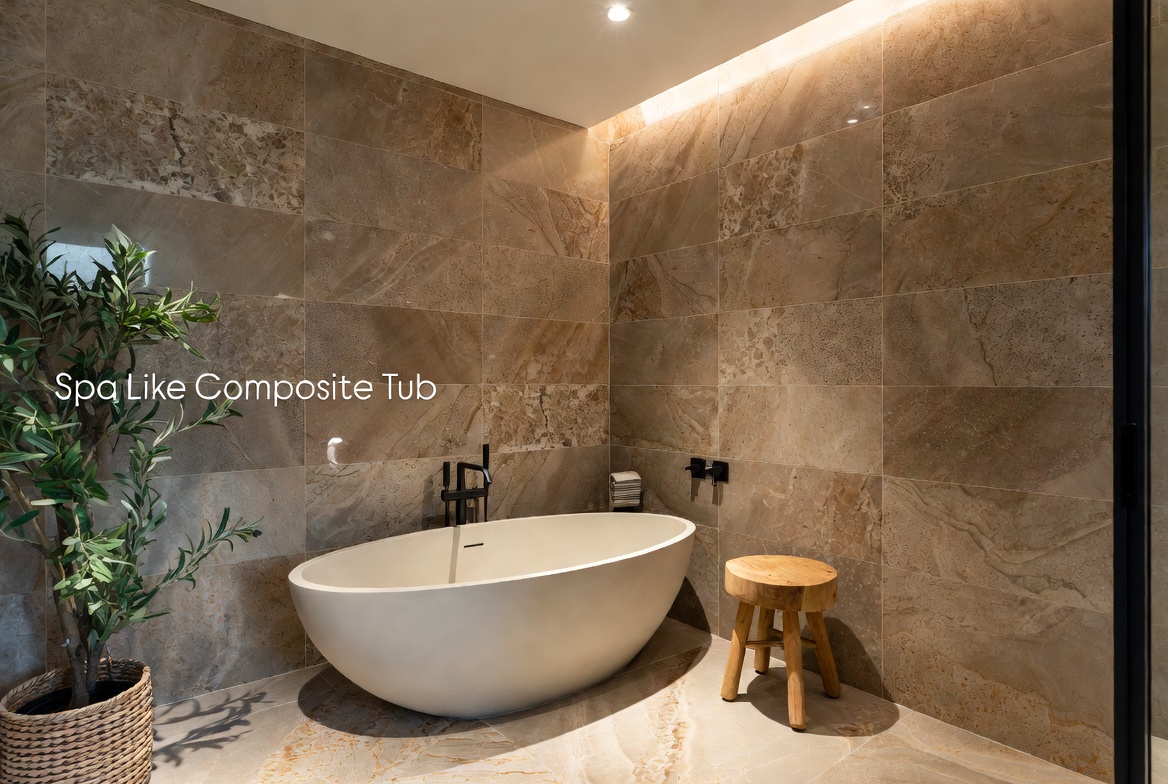
Composite bathtubs are aligning perfectly with today's spa‑like, wellness‑focused bathroom trends. Designers are shifting to open, calming layouts with sculptural fixtures, where a freestanding composite tub acts as the visual anchor of the room. [rebath]
At the same time, homeowners and commercial project owners want performance and practicality: tubs that are lighter than cast iron, easier to transport and install, yet still premium in look and feel. Composite materials deliver this mix, giving specifiers more options for tight floorplans, second‑floor bathrooms, and renovation projects with limited structural upgrades. [edwardmartin]
From a manufacturing and specifier perspective, understanding how each composite is built is key to matching the right tub to the right project. [kingkonree]
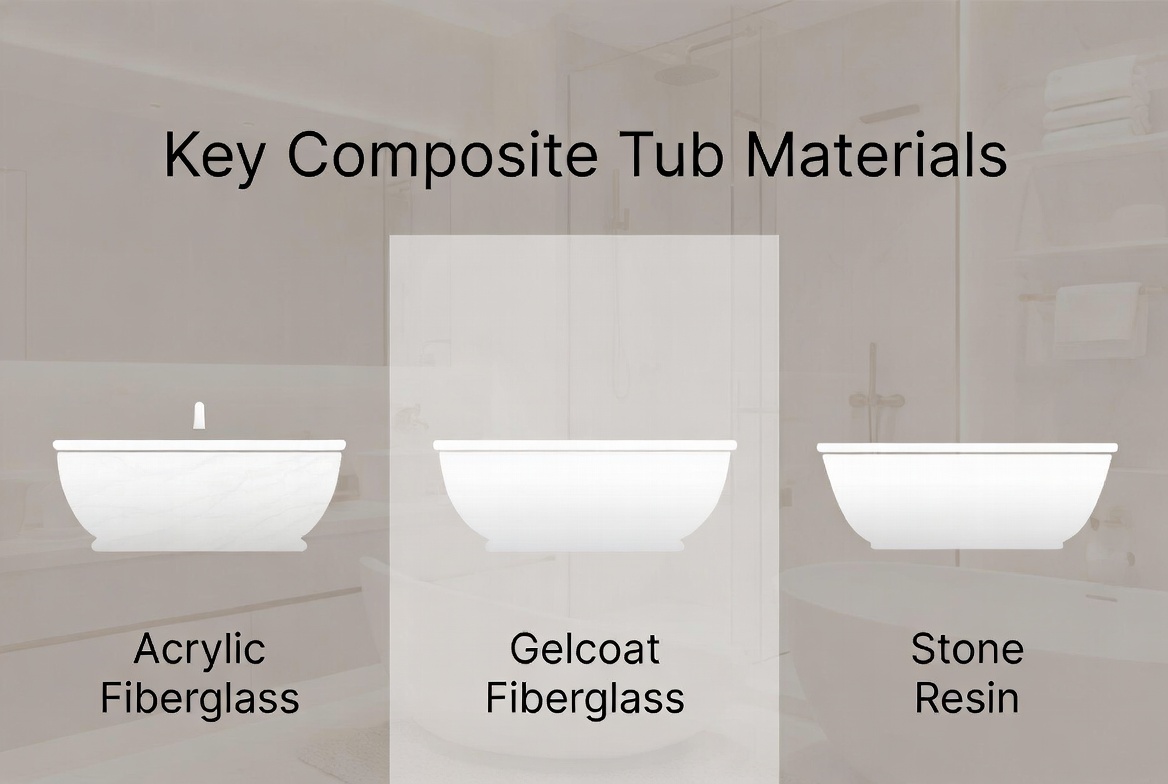
These tubs use a large acrylic sheet as the visible inner surface, backed by layers of fiberglass and sometimes particleboard or additional reinforcement. The acrylic provides a glossy, smooth finish, while the fiberglass gives the shell its strength and shape stability. [aqualivingstores]
Because the structure is relatively thin and lightweight, these tubs are popular in residential renovations, volume housing, and budget‑conscious projects where speed and cost control matter. Slight material flexibility also helps absorb minor stress, reducing the risk of cracking during installation and everyday use. [kingkonree]
Gelcoat tubs start with a sprayed gelcoat layer inside the mold, which forms the smooth, glossy outer skin, followed by multiple layers of fiberglass reinforced with polyester resin. The gelcoat layer protects against discoloration and minor scratches, while the fiberglass build‑up forms a rigid, yet relatively lightweight shell. [kingkonree]
These tubs are ideal for entry‑level, rental, and guest bathrooms, where budget and aesthetic appeal take priority over ultra‑long service life. Compared with stone resin, they are lighter and more affordable, though more prone to surface wear and fading over time under heavy use. [aqualivingstores]
Often described as the "gold standard" of modern composite bathtubs, stone resin and other solid surface tubs combine crushed stone (often marble or limestone) with a resin binder to create a dense, non‑porous material. The tub body is made from the same material throughout, so minor scratches can be polished out without exposing a different substrate. [kohlerwalkinbath]
This category delivers:
- Excellent heat retention, ideal for long soaks and spa‑like experiences. [kingkonree]
- Stone‑like weight and stability without needing full solid stone construction. [edwardmartin]
- Refined matte or satin finishes that pair well with natural stone tiles and organic, biophilic bathroom design trends. [porcelanosa]
For high‑end residential, boutique hotel, and wellness‑oriented projects, stone resin or mineral cast tubs provide the blend of luxury aesthetics and everyday practicality that architects increasingly specify. [edwardmartin]
Cultured marble uses crushed marble or limestone mixed with polyester resin, poured into a gelcoat‑lined mold. Once cured and polished, the result mimics natural marble with a high‑gloss, veined appearance, at a fraction of the cost and weight. [aqualivingstores]
Because the surface is gelcoated, cultured marble offers a very polished, reflective look, which appeals to homeowners seeking a "hotel‑style" bathroom with a classic luxury feel. However, the glossy finish can be more prone to visible chips if impacted, so it's best suited to environments where users treat the tub with moderate care. [porcelanosa]
The choice of material has a direct impact on weight, lifespan, comfort, and overall project cost. The table below summarizes practical differences between composite tubs and common traditional materials from a specifier's point of view. [aqualivingstores]
| Aspect | Composite (Acrylic/Gelcoat/Stone Resin) | Cast Iron | Enamel Steel | Solid Stone |
|---|---|---|---|---|
| Typical weight range | Approx. 70–150 lb for most composites; up to ~400 lb for large stone resin models. (kingkonree) | Very heavy, often 250+ lb, requires robust floor support. (aqualivingstores) | Lighter than cast iron but heavier than acrylic; weight varies by size. (aqualivingstores) | Extremely heavy; can exceed several hundred kilograms. (aqualivingstores) |
| Heat retention | Good to excellent, especially stone resin and solid surface composites. (kingkonree) | Excellent, but tub surface can feel very cold initially. (kohlerwalkinbath) | Moderate; thinner walls lose heat faster. (aqualivingstores) | Excellent once warmed, but cold to touch at the start. (aqualivingstores) |
| Installation complexity | Generally easier; many models install like standard tubs with typical framing and plumbing. (kingkonree) | High; requires structural checks, extra labor, and often more than one installer. (aqualivingstores) | Moderate; similar to cast iron but easier due to lower weight. (aqualivingstores) | Very high; demands reinforced floors, specialist handling, and high transport costs. (aqualivingstores) |
| Surface maintenance | Non‑porous, stain‑resistant, easy to clean; minor scratches on solid surface can be buffed. (kingkonree) | Durable enamel but can chip; chip repair is possible but visible. (aqualivingstores) | Enamel can scratch or rust if damaged; more sensitive to impact. (aqualivingstores) | Porous if unsealed; requires periodic sealing and careful cleaning. (aqualivingstores) |
| Design flexibility | High—complex shapes, slim walls, and integrated features are practical. (kingkonree) | Limited by casting process and weight. (aqualivingstores) | Moderate; shapes more standardized. (aqualivingstores) | Limited, and complex shapes greatly increase cost. (aqualivingstores) |
From a total cost of ownership perspective, composites often deliver the best balance of installation efficiency, user comfort, and lifecycle performance, especially in multi‑unit projects and export markets. [edwardmartin]
From the user's perspective, the appeal of composite tubs can be summarized in three main benefits: comfort, convenience, and aesthetics. [kingkonree]
- Comfortable soaking: Many composite tubs, especially stone resin, keep water warm longer and have surfaces that feel pleasantly neutral or warm to the touch. [kohlerwalkinbath]
- Easy daily maintenance: Non‑porous composite surfaces resist stains, soap scum, and mold, so most cleaning can be done with mild soap, soft cloths, and occasional diluted vinegar. [kingkonree]
- Modern, cohesive design: Composite tubs come in integrated designs—freestanding silhouettes, thin edges, and seamless curves—that align with 2026 trends towards organic, spa‑like bathrooms. [porcelanosa]
In user feedback across projects, buyers often mention that composite tubs look more "designer" than their budget suggests, especially when paired with warm neutrals, textured tiles, and soft indirect lighting. [rebath]
Even high‑quality composite tubs have some trade‑offs, which should be addressed transparently to meet E‑E‑A‑T expectations. [aqualivingstores]
- Surface wear on entry‑level composites: Gelcoat and basic acrylic shells can show scratches and dullness more quickly in heavy‑traffic bathrooms if harsh cleaners or abrasive pads are used. [aqualivingstores]
- Weight of premium stone resin: While lighter than carved stone, large stone resin freestanding tubs can approach 400 lb, requiring careful planning for upper floors and long transport routes. [kingkonree]
- Repair expectations: Minor marks on solid surface tubs can often be polished out, but deep impact damage on gelcoat or cultured marble may require professional refinishing. [aqualivingstores]
Addressing these upfront helps importers, contractors, and homeowners set realistic expectations and choose the right composite type for the actual usage scenario. [edwardmartin]
Recent bathroom trend reports highlight a strong move toward wellness‑oriented spaces, warmer palettes, and organic materials. Composite tubs, especially in stone resin and cultured marble finishes, directly support these directions. [rebath]
- Natural, tactile finishes: 2026 bathrooms emphasize textures inspired by limestone, travertine, and handcrafted surfaces; composite tubs with matte stone‑like finishes integrate seamlessly into these schemes. [porcelanosa]
- Wellness and "home spa" layouts: Open, barrier‑free concepts with a freestanding tub as a focal point are now common in primary bathrooms and high‑end renovations. Composite tubs' design flexibility makes them ideal for these central placements. [rebath]
- Sustainability and long‑term performance: Durable, repairable surfaces that extend product lifecycles align with greener building strategies and help reduce replacement frequency. [edwardmartin]
For brands and wholesalers, positioning composite tubs as "future‑proof, wellness‑ready fixtures" can resonate strongly with architects and end users focused on comfort and long‑term value. [porcelanosa]
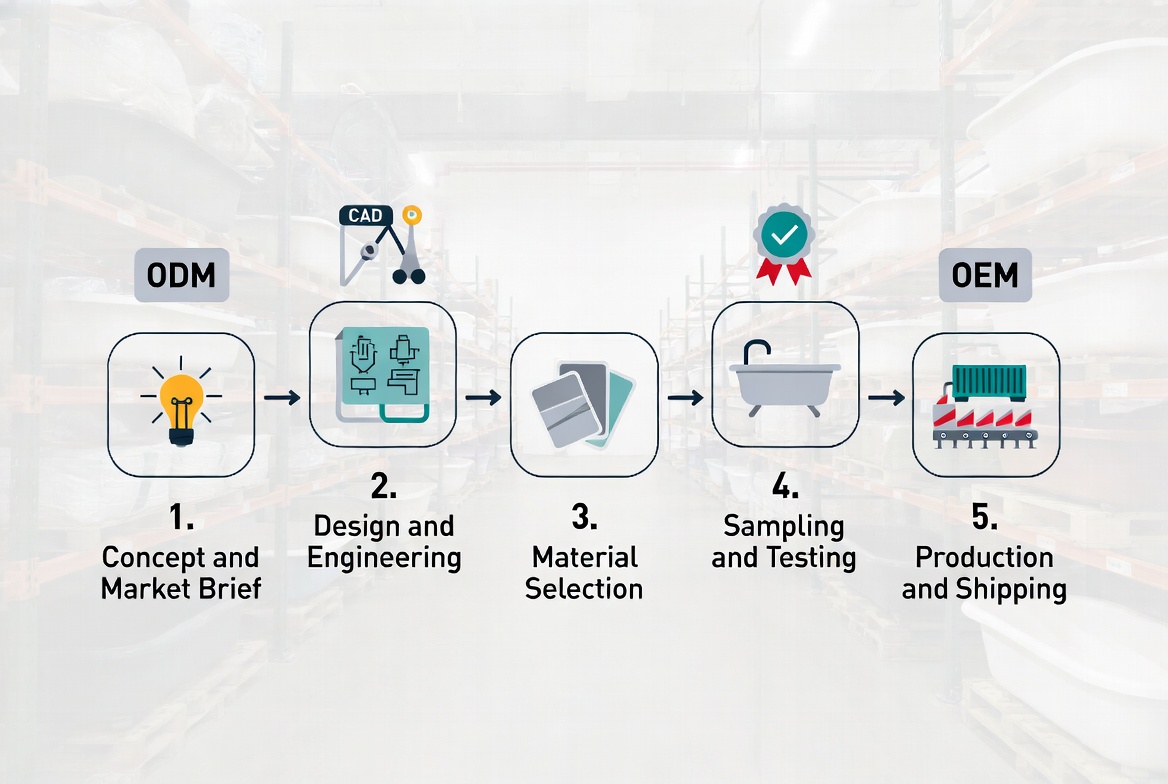
In the global sanitaryware supply chain, composite tubs are frequently sourced through OEM (Original Equipment Manufacturing) and ODM (Original Design Manufacturing) partners. [pentabanyo]
- OEM tubs: The buyer provides specifications, drawings, or existing SKUs, and the manufacturer produces composite tubs under the buyer's brand. This is ideal for established brands that want to extend their product line without rebuilding factories. [spark-faucet]
- ODM tubs: The manufacturer develops its own designs and engineering, then allows buyers to brand these designs for their home markets. This model suits distributors and wholesalers seeking a fast path to market with ready‑made collections. [spark-faucet]
Specialized suppliers can provide tailored OEM/ODM services that go beyond simple white‑labeling by supporting material selection, regional compliance, packaging design, and after‑sales documentation. For composite bathtubs, this often includes advising on which mix of acrylic, gelcoat, stone resin, or cultured marble best fits a target segment. [pentabanyo]
A dedicated bathroom manufacturer focused on composite tubs and related sanitary products can add value at multiple points in the value chain. [pentabanyo]
Typical support capabilities include:
- Product engineering and customization: Adapting dimensions, overflow positions, drain locations, and wall thicknesses to local building habits and codes. [pentabanyo]
- Finish and color matching: Offering warm whites, soft beiges, and darker accents that align with global design trends and brand color strategies. [rebath]
- Packaging and logistics optimization: Designing packaging for long‑distance shipping and e‑commerce distribution, balancing protection with cost efficiency. [pentabanyo]
For long‑term partners, leading suppliers can also support co‑developed collections, covering bathtubs, basins, and coordinated accessories, helping buyers build cohesive bathroom portfolios for their channels. [pentabanyo]
From an industry practitioner's viewpoint, choosing a composite tub should follow a structured process rather than a purely aesthetic decision. [kingkonree]
- Primary family bathroom or master suite: Prioritize heat retention, comfort, and long‑term durability—stone resin or high‑grade solid surface is often preferable. [kohlerwalkinbath]
- Guest bathroom or rental unit: A well‑made acrylic or gelcoat composite may deliver better ROI, especially when budget and fast turnover are critical. [aqualivingstores]
- Check available floor loading, especially in older buildings or upper floors, before specifying very heavy freestanding stone resin models. [kingkonree]
- Assess access routes (stairs, corners, door widths) to ensure the tub can reach the bathroom without damage or complex lifting. [kingkonree]
- For Japandi, Mediterranean, or organic minimalist interiors, consider matte stone‑like composite tubs that echo natural materials. [rebath]
- For classic or boutique hotel‑style bathrooms, a high‑gloss cultured marble tub with gentle veining can anchor the design. [porcelanosa]
- If the end user is comfortable with periodic light polishing, solid surface tubs that can be refinished in place offer long service lives. [kingkonree]
- In environments where maintenance resources are limited, favor composites with robust, stain‑resistant finishes that can be cleaned with simple household products. [aqualivingstores]
Well‑maintained composite tubs can easily last 15–30 years, depending on material and usage intensity. Consistent, gentle care is more effective than occasional aggressive cleaning. [kingkonree]
Recommended practices include:
- Routine cleaning: Use mild soap or a pH‑neutral cleaner and a soft cloth or sponge to remove daily residues. [aqualivingstores]
- Removing water marks: A solution of diluted vinegar can help dissolve mineral deposits without damaging most composite surfaces, provided it is rinsed thoroughly afterward. [kingkonree]
- Avoiding damage: Steer clear of steel wool, harsh abrasives, and strong solvents that can dull gelcoat or acrylic finishes. [aqualivingstores]
For solid surface and stone resin tubs, light sanding and repolishing can restore minor surface imperfections, extending the aesthetic life of the product. [kohlerwalkinbath]
If you are a bathroom brand, importer, or project contractor, the next step is to work with a manufacturer that understands both material science and market expectations. A strong OEM/ODM partner can help you: [pentabanyo]
- Build differentiated composite tub lines for your channels.
- Match global design trends while respecting local installation habits.
- Optimize cost, durability, and user experience for your specific customer base. [edwardmartin]
When you are ready to develop or upgrade your composite bathtub portfolio, consider reaching out to a specialized sanitary manufacturer that can co‑engineer stone resin, acrylic, gelcoat, and cultured marble tubs around your brand's positioning and long‑term strategy. [pentabanyo]
Q1: Are composite tubs easy to clean?
Yes. Most composite tubs use non‑porous surfaces that resist stains and soap residue, so regular cleaning with mild soap and a soft cloth is usually sufficient. [aqualivingstores]
Q2: How long do composite bathtubs typically last?
Depending on material, quality, and usage, composite tubs generally last 10–15 years for basic acrylic/gelcoat models and 15–30 years or more for solid surface or stone resin tubs. [aqualivingstores]
Q3: Are composite tubs lighter than cast iron or natural stone?
In most cases, yes. Many composite tubs weigh between 70 and 150 lb, with heavier stone resin models reaching up to about 400 lb, while cast iron and carved stone often exceed those ranges. [kingkonree]
Q4: Do composite tubs require special installation techniques?
Most composite tubs install like standard units, but larger freestanding models may require additional floor support and careful planning due to their weight and footprint. [aqualivingstores]
Q5: Which composite material is best for a luxury bathroom?
For a premium, spa‑like bathroom, stone resin or solid surface tubs are often the best choice thanks to their heat retention, refined matte finishes, and ability to be refinished over time. [kohlerwalkinbath]
- KingKonree. "What Is a Composite Tub and Types of Composite Bathtubs?" 2025.
https://www.kingkonree.com/blog/what-is-a-composite-tub-and-types-of-composite-bathtubs.html [kingkonree]
- Aqua Living. "9 Common Bathtub Materials and the Pros and Cons of Each." 2019.
https://aqualivingstores.com/9-common-bathtub-materials-and-the-pros-and-cons-of-each/ [aqualivingstores]
- Kohler. "Choosing the Best Material for Your Bathtub." 2024.
https://www.kohlerwalkinbath.com/blog/choosing-the-best-material-for-your-bathtub/ [kohlerwalkinbath]
- Re‑Bath. "Primary Bathroom Designs & Remodel Trends for 2026." 2025.
https://www.rebath.com/blog/primary-bathroom-designs-remodel-trends/ [rebath]
- Porcelanosa. "Bathroom Trends for 2026: Everything You Need to Know." 2026.
https://www.porcelanosa.com/trendbook/us/bathroom-trends-2026/ [porcelanosa]
- Edward Martin. "15 Home Design Trends Driving Bathroom Renovations in 2026." 2026.
https://www.edwardmartin.com/blogs/information/15-home-design-trends-driving-bathroom-renovations-in-2026 [edwardmartin]
- Penta Banyo. "Tailored OEM and ODM Solutions for Your Business." 2022.
https://pentabanyo.com/en/penta-life/penta-banyo-tailored-oem-and-odm-solutions-for-your-business [pentabanyo]
- Spark Faucet. "The Difference Between OEM and ODM Faucet Manufacturers." 2023.
https://spark-faucet.com/the-difference-between-oem-and-odm-faucet-manufacturers/ [spark-faucet]


