
Views: 222 Author: Miluo Smart Home Publish Time: 2026-06-14 Origin: Site


Content Menu
● What Exactly Is an Integrated Sink?
● Key Features of Modern Integrated Sinks
>> ADA-Friendly and Inclusive Design
● Main Types of Integrated Countertop Sinks
>>> Vanity-Integrated vs Undermount-Integrated
>>> Marble Look, Lightweight Performance
● Integrated Sink Materials Compared
>> Common Materials and Performance
● Pros and Cons You Should Know Before Specifying
>> Advantages for End Users and Specifiers
>> Limitations and How to Manage Them
● How Integrated Sinks Fit 2026 Bathroom Design Trends
● OEM & ODM Perspective – What Global Buyers Expect Now
>> Customization Requirements from Overseas Brands
>> Supply Chain and Quality Expectations
● Practical Selection Guide – How to Choose the Right Integrated Sink
● Care and Maintenance Best Practices
● When an Integrated Sink Is the Right Choice
● Call to Action – Customize Your Next Integrated Sink Line
An integrated sink (also called a seamless sink or integrated countertop sink) is a one-piece unit where the basin and countertop are formed from the same material and chemically welded together. Instead of a metal rim or visible joint, the counter flows directly into the bowl, which reduces dirt build-up, speeds up cleaning, and creates a minimalist, monolithic look that aligns with 2026 bathroom design trends. [porcelanosa]
From the standpoint of OEM/ODM manufacturers like Jiaxing Miluo Smart Home, integrated basins are not only a design choice but also a platform for customization—size, color, edge profile, and integrated accessories can all be engineered to match each client's brand and target market. [china-miluo]
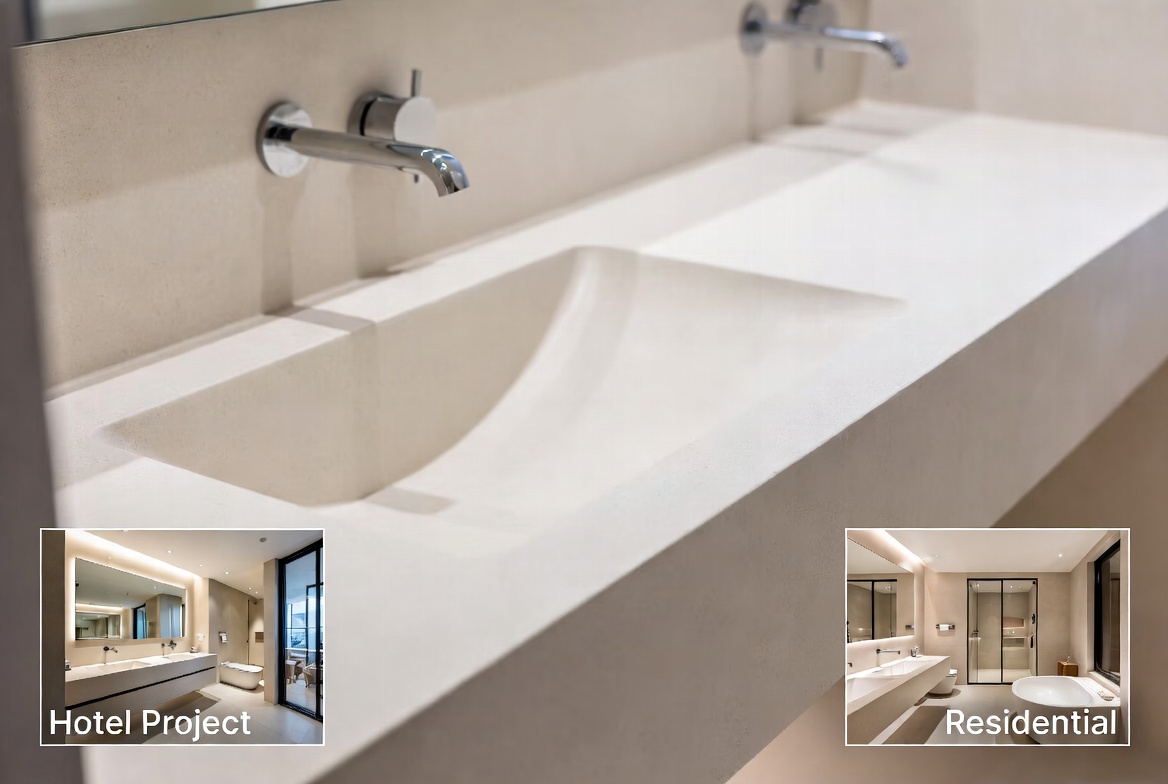
An integrated sink is a countertop with a built‑in basin made from the same or fully bonded material, typically solid surface, quartz, ceramic, or engineered stone. In most high‑end projects, the basin is chemically welded to the top, meaning there is no need for silicone, hybrid sealant, or caulk to hide a lip. [ahrefs]
This "where the counter ends, the sink begins" construction delivers three core benefits: fewer bacteria‑prone joints, a visually continuous surface, and faster installation compared with assembling multiple separate components on site. For brands and wholesalers, this also simplifies product storytelling: one integrated piece, one specification, one design language across the whole vanity line. [ahrefs]
Because there is no rim or gap where water and debris can accumulate, integrated sinks drastically reduce mold, mildew, and bacterial growth around the basin. Soap scum, skin cells, and food particles that would normally get trapped between a drop‑in rim and the countertop simply have nowhere to hide. [ahrefs]
For cleaning staff in hotels, clinics, and public facilities, that means a single-wipe surface that stays visually clean longer and cuts down on chemical use and labor time. This hygienic advantage is one reason integrated sinks are increasingly specified in healthcare, hospitality, and premium multi‑family projects. [ahrefs]
Most integrated sinks in premium projects use solid surface based on alumina trihydrate mineral (ATH) blended with acrylic or polyester resin, designed to feel warm and velvety rather than metallic and cold. Advanced formulations with higher PMMA resin content and UV stabilizers improve flexibility, reduce thermal shock cracking, and keep white or light colors from yellowing under strong bathroom lighting. [ahrefs]
This tactile quality aligns well with the 2026 "home spa" direction, where bathrooms are conceived as wellness spaces and not just functional rooms. For OEM/ODM programs, surface feel (matte, silky, or satin) can be tuned to match the brand's positioning—from clinical minimalism to soft, spa-like textures. [ahrefs]
Integrated sinks can be engineered with shallower bowl depths (typically around 5–6.5 inches) to comply with ADA requirements and allow wheelchair users knee clearance beneath the basin. Traditional 8–10 inch deep sinks often block legroom and make it difficult for seated users to access the faucet. [ahrefs]
By combining shallow integrated bowls with wall‑hung vanities or open underframes, designers create inclusive spaces that still look sleek and contemporary. This is particularly important for hotels, public restrooms, and senior‑living projects where accessibility standards are strictly enforced. [ahrefs]
Solid surface and engineered stone are naturally denser and more acoustically damp than metal, so integrated sinks are significantly quieter than stainless steel bowls when water hits the surface. In open‑plan kitchens and luxury hotel bathrooms, that means fewer metallic "tink" sounds and a calmer acoustic environment. [ahrefs]
As open-concept kitchens continue to blend into living spaces and bathrooms evolve into relaxation zones, this acoustic comfort becomes a real UX advantage that owners notice during everyday use. [ahrefs]
In a bathroom, an integrated basin becomes an architectural feature rather than a separate plumbing object, reinforcing the linear, minimalist look that dominates 2026 bathroom trends. Common integrated bathroom configurations include: [ahrefs]
- Long trough basins for double faucets in master bathrooms
- Compact wall-mounted units for powder rooms
- Corner-integrated solutions for difficult layouts
The rectangular trough style, in particular, offers a large washing area without excessive depth, saving space while serving two users comfortably. [ahrefs]
- Vanity-integrated: The countertop and basin are formed as one continuous slab, often wrapped or curved into the vanity cabinet front, with no visible weld lines. [ahrefs]
- Undermount-integrated: Separate solid surface pieces are chemically welded from underneath, offering more creative freedom in bowl shapes and edge detailing while still achieving a seamless effect on top. [ahrefs]
For project buyers and brand owners, vanity‑integrated options feel more monolithic, while undermount‑integrated designs allow broader SKU variation using shared countertop components. [ahrefs]
Natural marble is beautiful but heavy, porous, and sensitive to stains and acids, which complicates transport and maintenance at scale. Solid surface integrated basins can mimic Calacatta or Carrara veining while remaining non‑porous, lighter, and easier to repair by simple sanding and repolishing. [ahrefs]
This "marble‑look without the headache" proposition is attractive to developers and hotel groups that need a consistent aesthetic across dozens or hundreds of rooms. [ahrefs]
In the kitchen, the integrated sink has become a flagship feature in modern, open layouts where the countertop is always visible from living and dining areas. Key functional benefits include: [ahrefs]
1. Easy cleaning – No rim or silicone joint around the cut‑out; crumbs, flour, and vegetable scraps can be pushed straight into the bowl with one swipe. [ahrefs]
2. Integrated drainboards – Sloped, grooved zones built into the same material to drain water back to the bowl, eliminating separate plastic or metal trays. [ahrefs]
3. Embedded accessories – Grooves or rails for cutting boards and colanders that sit securely over the sink, keeping prep mess contained. [ahrefs]
4. Noise control – The solid surface or engineered stone structure dampens the sound of running water, which is critical in open‑plan living. [ahrefs]
5. Ergonomic apron-fronts – Extended front faces bring users closer to the faucet, reducing forward leaning and lower‑back strain during dishwashing. [ahrefs]
For international distributors, these features create clear selling points that can be highlighted in catalogs and showrooms when comparing against conventional undermount or drop‑in designs. [ahrefs]
Choosing the right material is a strategic decision that affects durability, repairability, and overall lifecycle cost. The table below summarizes the main options discussed in the original guide:
| Material | Durability (everyday use) | Heat resistance | Maintenance level | Cost range | Hygienic properties |
|---|---|---|---|---|---|
| Solid surface | Scratch-repairable | Up to ~250°F | Low | Medium | Non-porous, bacteria-resistant (ahrefs) |
| Quartz | Scratch-resistant | Around 150–300°F | Very low | High | Non-porous, stain-resistant (ahrefs) |
| Ceramic | Acid-resistant | High | Low | Medium | Glazed, smooth, easy clean (ahrefs) |
| Stainless steel | Impact-resistant | 500°F+ | Low | Med–High | Non-porous, hygienic (ahrefs) |
| Concrete | Hard but porous | Moderate | Medium | Variable | Needs sealing to prevent absorption (ahrefs) |
| Natural stone | Strong but variable | Moderate to high | Medium–High | High | Porous; requires regular sealing (ahrefs) |
Solid surface remains the material of choice for highly customized OEM/ODM integrated sinks because it is thermoformable, homogeneous, and relatively easy to repair on site by sanding and repolishing. Quartz and ceramic are preferred in some markets for their high scratch and heat resistance, but their limited thermoformability means more seams and fewer extreme shapes. [ahrefs]
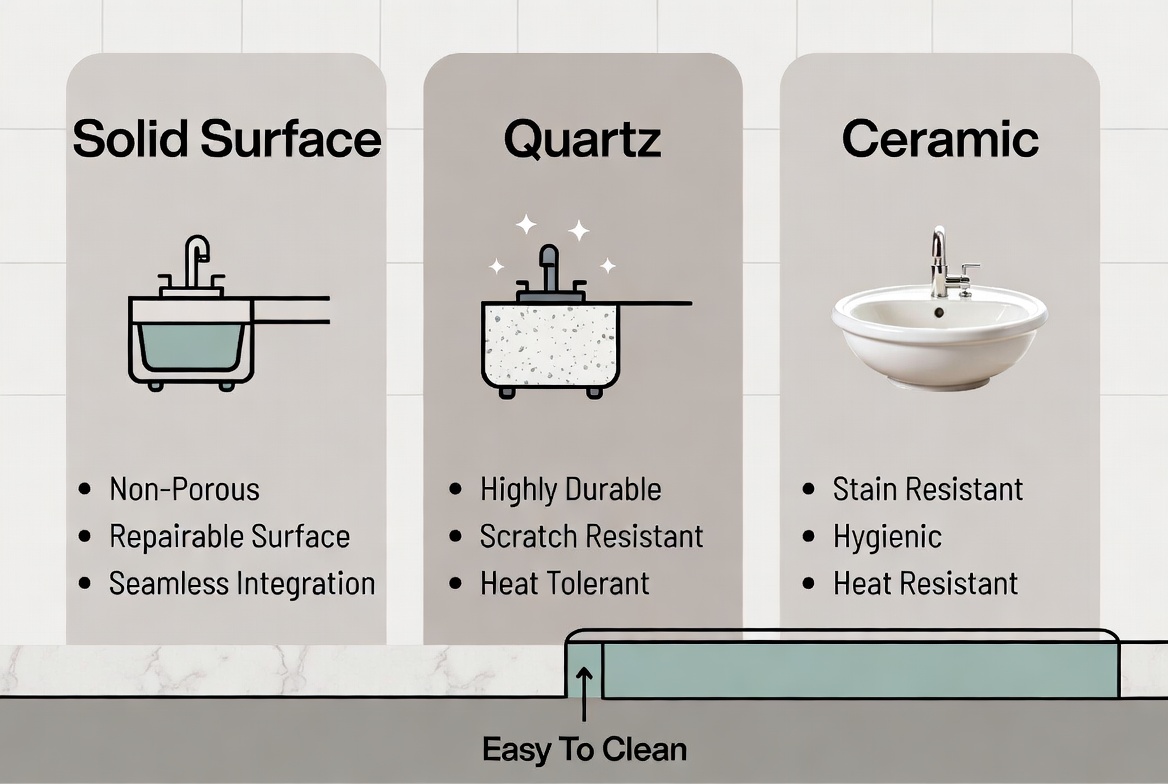
- Total hygiene – No joints between counter and bowl, so dirt and moisture cannot build up around the rim. [ahrefs]
- Custom style – Any color, veining, or geometry can be created, allowing integrated sinks to match specific brand palettes or interior concepts. [ahrefs]
- Easy repair – With homogeneous solid surface, minor scratches and stains can be buffed out, extending the product's aesthetic life without replacement. [ahrefs]
For hotel owners, architects, and builders, these benefits translate into lower lifetime maintenance, fewer guest complaints, and a more consistent high‑end appearance over time. [ahrefs]
- Higher upfront cost – Integrated sinks often require professional fabrication and careful installation, raising initial project budgets compared with basic drop‑in bowls. [ahrefs]
- Heat sensitivity in some materials – Solid surface and quartz can crack or discolor if exposed to extreme temperatures from hot pans or boiling water, so users should avoid direct contact. [ahrefs]
- Surface softness – Compared with quartz or natural stone, some solid surface formulations are softer and more prone to fine scratches, although these can be repaired. [ahrefs]
From a manufacturer's point of view, setting correct end‑user expectations and providing clear care instructions is critical to protecting both product performance and brand reputation. [ahrefs]
Industry trend reports for 2026 highlight seamless sinks as a key element in "continuous surfaces" bathrooms, where floors, walls, and fixtures visually read as a single sculpted volume. Integrated sinks, especially with rounded profiles and compact mineral materials, embody this fluid, biophilic aesthetic inspired by the movement of water. [porcelanosa]
At the same time, bathroom color palettes are shifting toward warm earth tones—beige, terracotta, and soft greens—paired with wood and soft metallics like brushed copper and bronze. Integrated basins in off‑white, greige, or stone‑look finishes slot seamlessly into this palette, letting OEM/ODM brands offer coordinated collections across basins, bathtubs, and vanities. [china-miluo]
Global distributors, importers, and private‑label bathroom brands increasingly expect integrated sink partners to deliver:
- Flexible sizing and shapes – From compact wall-hung basins for urban apartments to long double-termed troughs for hotels.
- Brand-consistent colors and veining – Solid surface or composite basins tinted and patterned to align with the client's product line and regional tastes. [porcelanosa]
- Integrated functional details – Built‑in niches, drainboards, apron fronts, and compatible accessories like cutting boards and trays. [ahrefs]
Manufacturers like Jiaxing Miluo Smart Home focus on customized luxury bathroom solutions—basins, bathtubs, shower trays, and vanities—specifically for foreign brands, wholesalers, and producers, making OEM/ODM collaboration part of their core business model. [facebook]
Overseas partners generally evaluate integrated sink suppliers on:
- Material stability – Anti-yellowing, color fastness, and resistance to cracking under typical thermal loads. [ahrefs]
- Process control – Consistent chemical welding, surface finishing, and edge detailing across batches.
- Design support – CAD assistance, sampling, and co-development of new SKUs for specific markets.
For long-term collaboration, being able to combine basins with matching bathtubs, shower trays, and bathroom furniture gives buyers a stronger, story-led product portfolio under their own brand. [china-miluo]
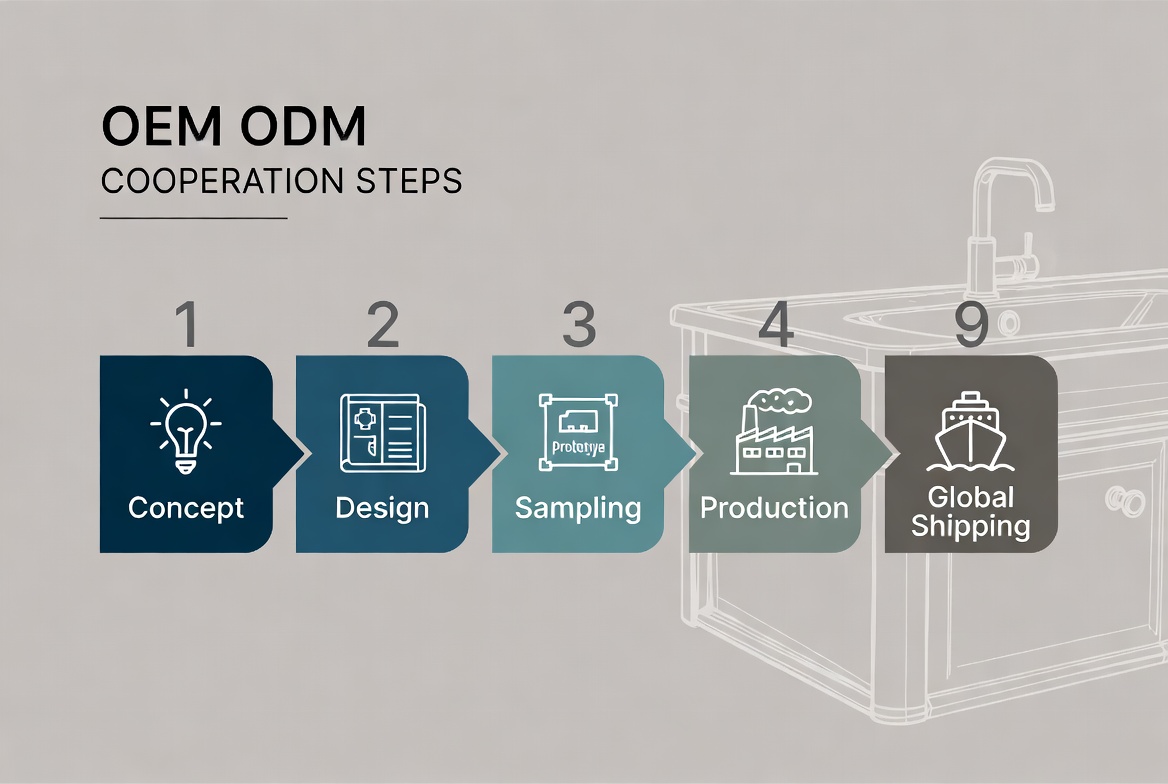
1. Clarify application – Bathroom or kitchen, residential or commercial, and target usage intensity (e.g., hotel vs. private home). [ahrefs]
2. Define visual concept – Minimalist white, marble-look luxury, warm earth tones, or monochrome schemes that extend across the entire bathroom.
3. Choose material – Solid surface for maximum customization and repairability; quartz or ceramic where scratch resistance and perceived solidity matter more. [ahrefs]
4. Plan functionality – Consider trough length, number of faucets, built-in niches, drainboards, apron fronts, and ADA-friendly heights and depths. [ahrefs]
5. Assess maintenance expectations – Align the material choice with cleaning routines and product lifetime assumptions for your project type. [ahrefs]
By walking through this checklist with an experienced OEM/ODM partner, brands and project owners can avoid costly redesigns and ensure the sink solution aligns with both design and operational requirements. [china-miluo]
Integrated solid surface or quartz sinks are designed for low-maintenance use but still benefit from simple daily routines. Clean regularly with a soft cloth, mild detergent, and warm water, avoiding abrasive pads that could dull the surface. [ahrefs]
For solid surface basins, minor scratches or stains can often be removed by light sanding and repolishing, restoring the original sheen without replacing the unit. Users should avoid placing hot pans directly from the stove into the bowl, and in kitchen applications, always use a trivet or rack to manage thermal shock. [ahrefs]
An integrated sink is ideal when your project demands a seamless visual language, easy cleaning, and a strong design narrative that connects the basin with the countertop, vanity, and overall bathroom concept. It works especially well in: [ahrefs]
- Boutique and chain hotels seeking consistent guest experience
- High-end residential developments marketing spa-like bathrooms
- Healthcare and senior-living spaces where hygiene and accessibility are critical
- Open-plan kitchens where visual and acoustic comfort matter
For overseas brands, wholesalers, and project contractors, partnering with a specialist manufacturer of customized basins and other sanitary pieces allows you to bring coherent, ready-to-spec integrated sink solutions to your local market under your own label. [facebook]
If you are planning a new integrated sink collection or a project package that includes basins, bathtubs, vanities, and shower trays, it is essential to work with a manufacturer that understands both design trends and OEM/ODM requirements. A partner experienced in solid surface and composite bathroom products can help you define sizes, shapes, materials, and finishes that match your market's expectations and your brand's positioning. [china-miluo]
Jiaxing Miluo Smart Home specializes in customized luxury bathroom solutions for global brands, wholesalers, and producers, offering OEM and ODM services across basins and other sanitary products. You can collaborate on integrated sink designs that deliver seamless aesthetics, reliable quality, and a convincing value proposition for your end customers. [facebook]
Q1: Do integrated sinks require sealing or special maintenance?
A: Unlike traditional drop-in sinks, solid surface or quartz integrated sinks are chemically welded and do not require caulking around a rim, so there are fewer joints to seal and maintain. Routine cleaning with mild soap and water is usually sufficient, and light sanding can restore minor surface damage on solid surface units. [ahrefs]
Q2: Can I replace just the sink without replacing the countertop?
A: Technically, it is possible but not straightforward because the basin and countertop are unified through chemical welding or thermoforming, which often requires cutting and carries a risk of surrounding damage. For many installations, replacing the full integrated unit is the more practical option. [ahrefs]
Q3: Are integrated sinks heat-resistant enough for kitchen use?
A: Heat resistance depends on the material: solid surface and quartz can generally handle typical hot water use but may crack or discolor under extreme, prolonged heat, while ceramic and stainless steel tolerate higher temperatures. In all cases, avoiding direct contact with very hot pans or thermal shocks will extend the product's life. [ahrefs]
Q4: Are integrated sinks suitable for small bathrooms?
A: Yes, especially wall-mounted and corner-integrated designs, which maximize usable floor area and visually expand compact rooms by reducing visual clutter. Trough-style basins with shallow depths are particularly effective in small urban bathrooms and powder rooms. [ahrefs]
Q5: Why are integrated sinks often used in hotels and commercial projects?
A: Hotels and commercial spaces value the combination of seamless aesthetics, fast cleaning, and durable materials that integrated sinks provide, which lowers operational costs while maintaining a high-end look. The ability to standardize designs across multiple rooms and properties is another major advantage for large operators and global brands. [china-miluo]
1. KingKonree – *What Is an Integrated Sink? Detailed Guide* (2024). Available at: [https://www.kingkonree.com/blog/what-is-an-integrated-sink-detailed-guide.html] [ahrefs]
2. Porcelanosa – *Bathroom trends for 2026: everything you need to know* (2026). Available at: [https://www.porcelanosa.com/trendbook/us/bathroom-trends-2026/]
3. Miluo Bath / Jiaxing Miluo Smart Home – *Customized Bathtub, Wash Basin, Bathroom Solutions* (Company site). Available at: [https://www.china-miluo.com] [china-miluo]
4. Miluo Bath – Facebook Page (Manufacturer profile and contact information). Available at: [https://www.facebook.com/p/Miluo-Bath-100092520951739/] [facebook]
5. Ahrefs – *Content Optimization: The Complete Guide* (2023). Available at: [https://ahrefs.com/blog/content-optimization/] [ahrefs]


