
Views: 222 Author: Miluo Smart Home Publish Time: 2026-06-18 Origin: Site


Content Menu
● What Is a Solid Surface Tub?
● Solid Surface vs Acrylic Tub: Quick Comparison
● Durability: One‑Time Investment vs Shorter Lifecycle
● Bathing Comfort and Heat Retention
● Aesthetics and Customization Potential
>> Solid surface design advantages
● Maintenance, Cleaning, and Hygiene
>> Solid surface: low‑maintenance and repairable
>> Acrylic: gentle cleaning, more frequent upkeep
● Weight, Installation, and Structural Requirements
● Sustainability and Environmental Impact
● Safety and User Experience for All Ages
● When an Expert Recommends Solid Surface vs Acrylic
● Practical Checklist: How to Decide Between Solid Surface and Acrylic
● How Our OEM/ODM Manufacturing Supports Your Ideal Tub Choice
● Call to Action: Plan Your Next Bathtub Collection With Expert Support
● FAQs: Solid Surface vs Acrylic Tub
Choosing between a solid surface tub and an acrylic tub is one of the most important decisions you will make when planning a modern bathroom. As a manufacturer working with global OEM/ODM brands, I've seen both materials perform in real projects for hotels, upscale residences, and renovation contractors—and the differences are far more than just "look and price." [givingtreehome]
In this guide, I'll walk you through durability, comfort, maintenance, installation, cost, and sustainability, using real-world experience from the bathtub manufacturing floor and feedback from international clients. By the end, you'll know exactly which tub type fits your project, your customers, and your long‑term goals. [wgcontent]

A solid surface tub is made from a dense blend of natural minerals and high‑performance resins, cast into a single, seamless structure with a smooth matte or satin finish. This material gives a stone‑like feeling without the weight and fragility of real stone, making it ideal for premium bathroom spaces. [kkrbath]
- Non‑porous and highly resistant to stains and bacteria
- Excellent heat retention for long, spa‑like soaking
- Available in sculpted, modern shapes with seamless edges
Many high‑end hotels and design‑driven residential projects now specify solid surface tubs when they want a statement centerpiece that also elevates property value. [olearytub]
An acrylic tub is typically made from sheets of acrylic reinforced with fiberglass or similar backing materials, then vacuum‑formed into shape. Acrylic bathtubs are known for being lightweight, budget‑friendly, and easy to install—even in upper‑floor bathrooms with standard floor load capacity. [blog.frizerly]
Key characteristics include:
- Glossy, reflective surface with flexible color options
- Wide range of sizes and shapes due to easy molding
- Lower initial purchase cost and fast installation
Acrylic tubs remain very popular with developers and homeowners who prioritize affordability and quick bathroom upgrades over luxury performance. [medunjess]
| Factor | Solid surface tub | Acrylic tub |
|---|---|---|
| Durability & lifespan | Highly resistant to impact, scratches, and stains; designed for decades of use (blog.frizerly) | More prone to scratches, discoloration, and warping over time (blog.frizerly) |
| Heat retention | Excellent; keeps water warm for long soaking sessions (blog.frizerly) | Loses heat more quickly during use (blog.frizerly) |
| Aesthetics | Matte or satin, stone‑like, minimalist look for luxury bathrooms (blog.frizerly) | High‑gloss, reflective finish with versatile styling (blog.frizerly) |
| Maintenance & hygiene | Non‑porous, highly resistant to mold and mildew; easy to clean (blog.frizerly) | Attracts stains and mildew more easily; must use gentle cleaners (blog.frizerly) |
| Weight & installation | Heavier; may require reinforced flooring, especially on upper floors (blog.frizerly) | Very lightweight and easy to handle on all floors (blog.frizerly) |
| Initial cost | Higher upfront investment (blog.frizerly) | Lower purchase price and installation labor (blog.frizerly) |
| Long‑term cost | Minimal upkeep, long lifespan; strong ROI (blog.frizerly) | More frequent repairs or replacement can raise total cost (blog.frizerly) |
| Sustainability | Often recyclable and low‑VOC; low landfill impact (blog.frizerly) | Mass‑produced; more waste and lower recyclability (blog.frizerly) |
| Property value | Enhances perceived value and resale appeal (blog.frizerly) | Limited impact on high‑end resale value (blog.frizerly) |
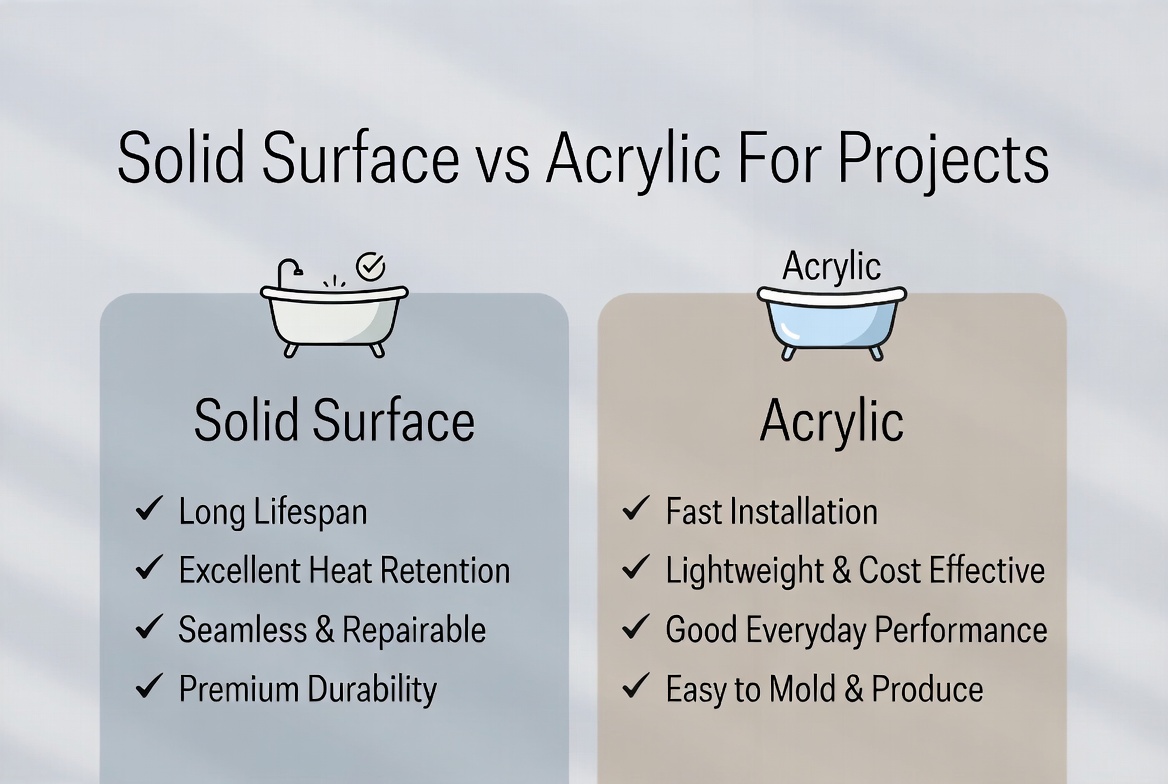
From a manufacturer's standpoint, durability is the first factor we evaluate when advising clients on solid surface vs acrylic tub selection. [givingtreehome]
Solid surface tubs are engineered as dense, impact‑resistant structures that keep their shape and finish over years of daily use. The non‑porous surface repels stains, prevents deep scratches, and reduces the risk of cracks even in commercial environments like boutique hotels or serviced apartments. [kkrbath]
Acrylic tubs perform well in the first years but are more vulnerable to: [medunjess]
- Surface scratches from everyday use or abrasive cleaning
- Discoloration or yellowing over time
- Warping or flexing if the shell and support are not properly engineered
For homeowners who treat the tub gently and are comfortable with periodic refinishing, acrylic can still be a workable option. However, for brands and developers promising "long‑term quality," solid surface is more aligned with that positioning. [blog.frizerly]
If you are creating a spa‑like experience, heat retention is not negotiable. [givingtreehome]
- Solid surface tubs store heat in the material, meaning the bathtub itself helps maintain water temperature, giving users longer, more relaxing baths. [kkrbath]
- Acrylic tubs do not retain heat as well; the shell cools more quickly, which can shorten the comfortable soaking time. [blog.frizerly]
Clients frequently describe solid surface tubs as offering a "velvety, cocoon‑like" feel that supports the body better and holds warmth, especially in deep soaking or freestanding models. This is one of the main reasons high‑end hospitality projects prefer solid surface over standard acrylic. [olearytub]
Modern bathroom design is driven by clean lines, sculpted geometry, and a consistent material story across basins, tubs, and vanity tops. [olearytub]
Solid surface tubs allow for: [givingtreehome]
- Precise, seamless shapes with thin rims and organic curves
- A contemporary matte finish that pairs with stone, wood, and metal
- Customization of color, size, and shape for brand‑specific collections
For OEM and ODM clients, this means we can develop exclusive designs that visually differentiate their product line in competitive markets. [m.olearytub]
Acrylic bathtubs are still strong in: [medunjess]
- High‑gloss, reflective surfaces that many homeowners associate with a "clean" look
- Very wide design libraries because acrylic is easy to mold
- Good color flexibility at a relatively low tooling cost
However, in truly high‑end or minimalist interiors, glossy acrylic can clash with natural stone, engineered stone, or matte metal finishes, whereas solid surface blends more naturally. [olearytub]
From end‑user feedback and after‑sales data, maintenance is often what determines satisfaction in the long term. [itzdigital]
- Non‑porous surface resists mold, mildew, and bacterial growth. [kkrbath]
- Light daily cleaning with mild detergent is usually enough. [blog.frizerly]
- Minor surface damage can often be sanded and refinished, restoring the original look. [givingtreehome]
Because stains and deposits do not penetrate deeply, professional maintenance for solid surface tubs is infrequent, which reduces lifetime cost for hotels and multi‑unit projects. [kkrbath]
Acrylic's glossy finish makes it visually attractive but also more sensitive. [medunjess]
- Harsh chemicals and abrasive pads can permanently dull or scratch the surface. [blog.frizerly]
- The material can attract soap scum, mold, and mildew if not regularly cleaned. [givingtreehome]
- Scratch and crack repairs are possible but may need to be repeated over the product's lifespan. [blog.frizerly]
For busy households, cleaning discipline becomes essential to preserve the appearance of an acrylic tub. [givingtreehome]
Installation is where acrylic tubs usually win from a logistics point of view, but solid surface is increasingly preferred when projects are planned correctly. [kkrbath]
Solid surface tubs are substantially heavier because of their dense composite structure. [kkrbath]
- Ground‑floor bathrooms typically handle the weight with no issues. [blog.frizerly]
- Upper‑floor installations may require reinforced subflooring and careful structural calculation. [givingtreehome]
- Installation needs experienced crews to avoid damage during handling. [blog.frizerly]
For luxury projects, these extra steps are usually accepted as part of delivering a high‑value bathroom. [olearytub]
Acrylic tubs are among the lightest bathtub solutions on the market. [medunjess]
- Easy to move up staircases and through narrow spaces. [givingtreehome]
- Suitable for upper‑floor bathrooms without major structural changes. [blog.frizerly]
- Faster installation reduces labor costs and project timelines. [itzdigital]
This makes acrylic attractive for budget renovations, large apartment developments, or time‑sensitive bathroom upgrades. [itzdigital]
When comparing solid surface vs acrylic tubs, it's important to separate initial cost from lifetime value. [kkrbath]
- Acrylic tubs carry a lower purchase price and lower installation cost, which can be compelling in entry‑level and mid‑range markets. [medunjess]
- Solid surface tubs require a higher initial investment but save money over time through superior durability, fewer replacements, and low maintenance. [kkrbath]
For property developers targeting the premium segment, a solid surface tub can increase perceived value and support stronger selling prices or nightly rates. For cost‑sensitive projects where margins are tight and users are unlikely to demand spa‑level performance, acrylic remains a pragmatic choice. [itzdigital]
Sustainability has moved from "nice to have" to "brand expectation" in many export markets. [itzdigital]
- Solid surface materials are often formulated to be non‑toxic, low‑VOC, and in many cases recyclable at end of life, helping reduce landfill waste. [givingtreehome]
- Acrylic tubs are mass‑produced in high volumes, and disposal can contribute more significantly to landfill loads, especially in large developments or frequent renovation cycles. [blog.frizerly]
When our OEM/ODM partners aim for green building certifications or eco‑conscious branding, we typically recommend solid surface collections designed with recyclability and long lifespan in mind. [olearytub]
Both solid surface and acrylic tubs can be made safe for children, adults, and elderly users with the right design and surface treatment. [givingtreehome]
- Solid surface tubs naturally have a soft matte finish that offers better slip resistance underfoot. [kkrbath]
- Acrylic tubs can be upgraded with anti‑slip coatings or textured bases to achieve comparable safety performance. [blog.frizerly]
In real projects, we usually combine ergonomic backrest design, integrated armrests, and non‑slip zones to provide a comfortable and secure bathing experience regardless of material. [kkrbath]
Drawing on multiple OEM/ODM projects for international bathroom brands, here is how we typically position each material. [olearytub]
Choose a solid surface tub if:
1. You are building a premium or luxury bathroom (residential or hospitality).
2. You want long‑lasting, low‑maintenance performance with strong heat retention.
3. You value customization, unique designs, and a stone‑like aesthetic.
4. You are willing to invest more upfront for better lifetime value and sustainability.
Choose an acrylic tub if:
1. You are working with a tight budget and need a cost‑effective solution.
2. You prioritize fast, simple installation, especially on upper floors.
3. You want a wide selection of standard shapes and glossy colors.
4. You accept a shorter product lifespan and more frequent maintenance or replacement.
For many of our B2B partners, the strategic move is to offer both: acrylic tubs targeted at entry‑level and renovation markets, and solid surface collections positioned as the flagship line. [itzdigital]
To make this choice easier, use the following step‑by‑step checklist when specifying bathtubs for your project: [wgcontent]
1. Define your target customer. Are they seeking a budget solution or a spa‑like experience?
2. Clarify project type. Is this a hotel, high‑end residence, standard apartment, or renovation?
3. Confirm structural conditions. Can the floor safely support a heavier solid surface tub?
4. Set your lifecycle goal. Is this a short‑term fit‑out or a long‑term investment?
5. Evaluate brand positioning. Do you want your bathroom collection to be perceived as premium, eco‑friendly, or mass‑market?
6. Align with after‑sales capacity. Can you support long‑term maintenance, or do you prefer a product that requires minimal service?
Answering these questions honestly will usually make the right material choice obvious. [roirevolution]
As a dedicated manufacturer of bathtubs and modern bathroom products, our role is not only to produce tubs but to help you build a coherent, profitable product line. [m.olearytub]
For solid surface tubs, we can support you with: [givingtreehome]
- Custom mold development for exclusive freestanding and built‑in designs
- Coordinated solid surface basins, countertops, and shower trays for unified collections
- Material optimization for better heat retention and surface durability
For acrylic tubs, we assist with: [medunjess]
- Cost‑optimized models for volume projects and promotions
- Rapid sampling and design iteration for different markets
- Surface and reinforcement engineering to improve perceived quality
Whether you are a brand owner, wholesaler, or manufacturer seeking a reliable OEM/ODM partner, our engineering team can walk you through material selection, tooling strategies, and long‑term portfolio planning. [m.olearytub]
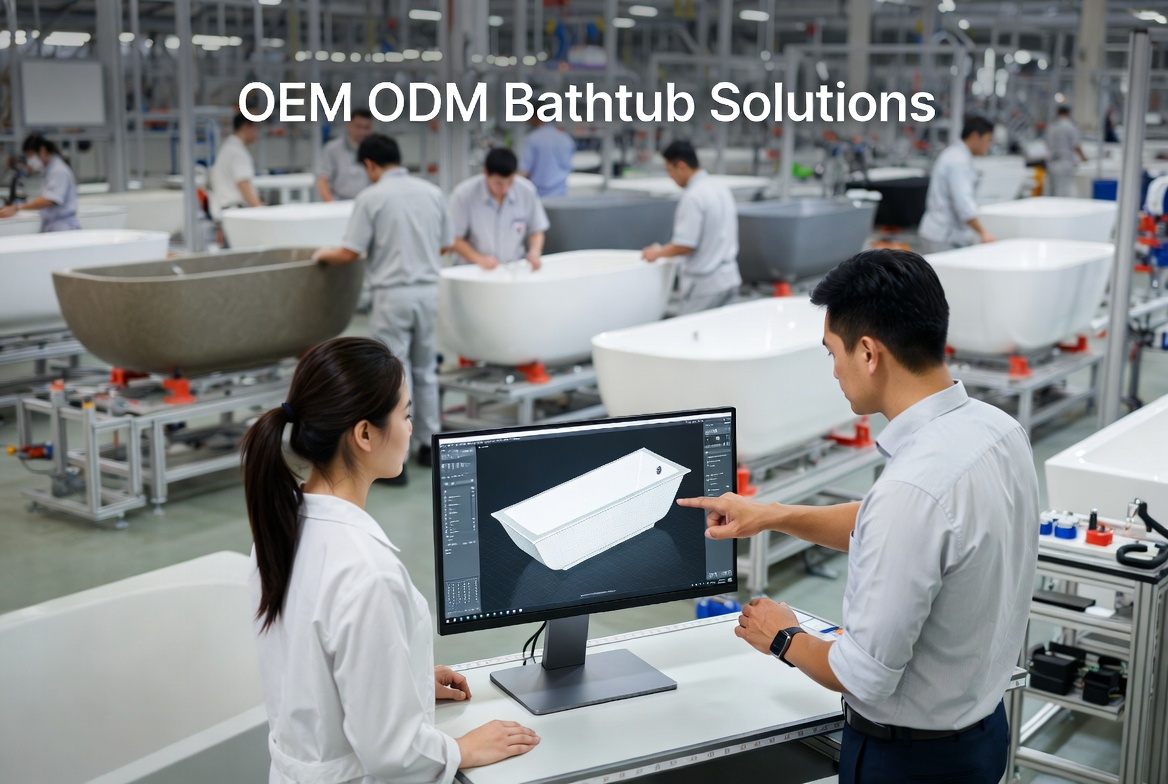
If you are currently comparing solid surface vs acrylic tubs for your next project or product line, you do not have to make that decision alone. Share your target market, budget range, and design direction with us, and we will propose a tailored bathtub solution—including material choice, shapes, finishes, and OEM/ODM options—that aligns with your brand and profitability goals. [roirevolution]
Get in touch with our bathtub manufacturing team today to discuss your solid surface and acrylic tub requirements and receive a customized recommendation for your project. [m.olearytub]
1. Which bathtub material lasts longer, solid surface or acrylic?
Solid surface tubs generally last longer because they are denser, more impact‑resistant, and less prone to discoloration and warping than acrylic tubs. With proper installation, they can perform reliably for decades in both residential and hospitality environments. [kkrbath]
2. Are solid surface tubs worth the higher price?
For users who value luxury aesthetics, excellent heat retention, and minimal maintenance, solid surface tubs typically offer better long‑term value than acrylic. While the upfront price is higher, the extended lifespan and low upkeep can make the total cost of ownership lower over time. [blog.frizerly]
3. Can acrylic bathtubs be repaired if they scratch or crack?
Yes, acrylic tubs can be repaired, but they may need more frequent repair than solid surface tubs due to their softer, glossier surface. Professional refinishing can restore appearance, but repeated treatments add to the lifetime cost. [medunjess]
4. Is a solid surface tub too heavy for upper‑floor bathrooms?
Solid surface tubs are heavier and may require a structural assessment and floor reinforcement for upper‑floor installations. Many projects successfully use them upstairs after simple engineering checks, but ignoring load‑bearing capacity is not recommended. [givingtreehome]
5. Which bathtub material is more eco‑friendly?
Solid surface materials are often formulated to be non‑toxic, durable, and in many cases recyclable, which supports sustainability goals and reduces waste. Acrylic is more challenging to recycle at scale and, due to its generally shorter lifespan, can contribute more to landfill over repeated renovation cycles. [kkrbath]
1. KingKonree. "What Is Better, Solid Surface Tub Or Acrylic Tub?" [Read original article]. [blog.frizerly]
2. KingKonree. "Solid Surface vs Acrylic Tub: Which One Looks Better & Lasts Longer?" [Read resource page]. [kkrbath]
3. Giving Tree Home. "Acrylic vs Solid Surface Tub." [Read article]. [givingtreehome]
4. Medun Jess. "Acrylic vs Solid Surface Tubs: Which Is Right for You?" [Read article]. [medunjess]
5. WG Content. "E‑E‑A‑T for Content Quality." [Read guide]. [wgcontent]
6. ROI Revolution. "Optimizing Your Site for Google E‑E‑A‑T." [Read guide]. [roirevolution]
7. Built Right Digital. "Bathroom Remodeling Website Design Guide (2026)." [Read guide]. [builtrightdigital]
8. ITZ Digital. "5 Proven SEO Strategies For Bathroom Remodeler Companies To Dominate Search Results." [Read article]. [itzdigital]
9. OLEARY Tub. "2025年高端浴缸品牌横评:人造石、铸铁、亚克力谁值得买." [阅读文章]. [olearytub]
10. OLEARY. "OLEARY浴缸定制-人造石树脂浴缸厂家-OEM/ODM酒店工程." [阅读页面]. [m.olearytub]


