
Views: 291 Author: Miluo Smart Home Publish Time: 2026-07-20 Origin: Site


Content Menu
● How to Evaluate Bathroom Vanity Manufacturers
>> Certifications and compliance
>> R&D and engineering capability
>> Quality control and process stability
>> Capacity, lead times and supply planning
>> Export experience and documentation
● Technical Essentials for Bathroom Vanities
>> Substrate materials and construction
>> Surface finishes and aesthetics
>> Hardware and functional performance
● Top 10 Bathroom Vanity Manufacturers in China
>> Jiaxing Miluo Smart Home Co., Ltd.
>> OPPEIN
>> SHKL
>> JOMOO
>> ARROW
>> HEGII
>> HUIDA
>> SSWW
>> DONGPENG
>> LAMOO
● Comparison of Manufacturer Types
● Buyer's Guide: From Shortlist to Reliable Cooperation
>> Verifying certifications and documents
>> Sample evaluation and pilot orders
>> Logistics planning and packaging
● Common Pitfalls When Sourcing Bathroom Vanities
>> Material downgrade over time
>> Over‑reliance on scanned certificates
>> Under‑specifying moisture protection and edges
● An Internal Tip: Reading the Factory Beyond the Showroom
China has developed into one of the most competitive production bases for bathroom vanities, supported by mature supply chains for boards, hardware, ceramics and solid‑surface materials. For international procurement managers serving distributors, retailers and project developers, the challenge is not the lack of options, but the difficulty of selecting factories that can consistently meet long‑term requirements on quality, delivery and compliance.
In practice, buyers must look beyond brand names and catalog photos and focus on whether a factory's systems, engineering capability and communication habits match the demands of multi‑year cooperation. This guide highlights ten representative manufacturers and explains how to evaluate them using practical, verifiable criteria.
Before comparing individual factories, it is useful to define the key dimensions that separate a stable, long‑term partner from a short‑term trading opportunity. The following aspects are commonly used by experienced procurement teams when building an internal shortlist.
A reliable bathroom vanity supplier should be able to provide up‑to‑date management system certificates and product‑related documents where applicable. Typical examples include quality management systems, environmental management systems, and product certificates when vanities integrate electrical components such as LED mirrors or lighting.
Beyond simply obtaining scanned certificates, buyers should check that the company name, address and production scope on the documents match the actual factory. It is also important to confirm that certificates are valid and not suspended or expired, and that the product scope covers the categories being purchased.
For export‑oriented bathroom vanities, engineering capability is just as important as basic production capacity. Factories that maintain in‑house design and engineering teams can convert buyer drawings into manufacturable structures, optimize cabinet construction for moisture resistance and integrate hardware or lighting according to target market requirements.
This capacity usually appears in the form of drawing support, 3D models, detailed bill‑of‑materials and the ability to prototype new designs in a controlled manner. For procurement managers, these capabilities reduce development lead time and lower the risk of misinterpretation during custom projects.
Stable quality over multiple batches depends on documented and enforced control points rather than ad‑hoc inspections. Bathroom vanity manufacturers with stronger systems typically implement checks on incoming raw materials, in‑process assembly and finishing, and final inspection before packing and loading.
Indicators of a structured quality system include clear inspection records, defect classification, corrective actions and traceability of batches. When these elements are present, it becomes easier to identify root causes of issues and avoid recurring problems such as color variation, misaligned doors or swelling panels.
For project‑based buyers and distributors, capacity planning can be just as critical as unit price. Larger manufacturers may run multiple production lines for cabinets, countertops and mirrors, offering substantial throughput for mass residential or commercial developments. Mid‑sized factories often balance flexible customization with moderate volume capacity, which can suit medium‑scale brands and regional distributors.
Realistic lead times, transparent slot management and a proven record of on‑time shipment are often better indicators of reliability than maximum capacity claims. When comparing suppliers, it is useful to review historical lead times, peak‑season performance and how the factory manages overlapping orders.
Experienced exporters typically manage documentation, packaging standards and shipping coordination more efficiently. This includes familiarity with common Incoterms, preparation of packing lists and commercial invoices, and understanding of destination‑market requirements for labeling, barcodes and palletization.
For procurement managers who handle multiple SKUs and container combinations, working with factories that already have established export routines can significantly reduce the administrative burden and the risk of delays at customs or during inland transportation.

Understanding a few key technical elements helps buyers evaluate whether a factory's products are suitable for specific markets and applications.
Bathroom vanities must withstand humidity, cleaning agents and daily use. Common substrates include moisture‑resistant MDF, plywood, particle board, solid wood and engineered combinations. Moisture‑resistant boards and well‑sealed edges reduce the risk of swelling, delamination and warping over time.
Wall‑hung constructions, floor‑standing units and integrated basin designs each require specific reinforcement and mounting solutions. For residential and hospitality projects, it is important to review how the cabinet backs, mounting rails and brackets are designed to handle load and repeated use.
Melamine, PVC foil, laminate, lacquer and veneer offer different levels of scratch resistance, color depth and maintenance requirements. High‑gloss finishes may demand tighter process control to avoid dust and imperfections, while textured surfaces can better disguise minor wear in heavy‑traffic bathrooms.
Color consistency across batches, especially for multi‑unit projects, depends on controlled finishing processes and clear color references. Buyers should specify finish systems, sample panels and acceptable tolerances before mass production.
Soft‑close hinges and drawer slides have become standard for many mid‑to‑high‑end markets. Branded hardware or equivalent quality components help ensure smooth operation over time. Other details—such as adjustable feet, integrated handles, anti‑slip mats, and damping mechanisms—can significantly influence the perceived quality of the vanity.
For vanities with integrated mirrors, lighting or demister pads, electrical components must be properly selected and assembled for the target region's voltage, plug type and protection level. Coordination between cabinet structure and these components is essential to avoid rework on site.
The following manufacturers represent different types of partners: large integrated groups, brand‑oriented suppliers and flexible OEM/ODM factories. The list is arranged for variety rather than strict ranking.
Jiaxing Miluo Smart Home Co., Ltd. specializes in customized bathroom solutions, including vanities, bathtubs, basins and related accessories, with a focus on solid‑surface and resin‑stone materials. Located in Jiaxing, Zhejiang, it benefits from access to major ports and a regional furniture and sanitary ware ecosystem.
The company's strengths include flexible OEM and ODM support for small and medium bathroom brands, overseas wholesalers and manufacturers. It works with buyers to adapt dimensions, structures, finishes and integrated components according to project drawings or branding guidelines, while maintaining attention to detail in manufacturing and packaging.
For international procurement managers, Jiaxing Miluo is particularly suitable when:
- The project requires modern, high‑end bathroom vanities based on solid‑surface or resin‑stone combinations.
- The buyer values responsive communication, engineering feedback and iterative development of product ranges.
- The target order volumes are significant but not at the scale typically demanded by the largest domestic groups, creating a need for a more flexible and service‑oriented factory partner.
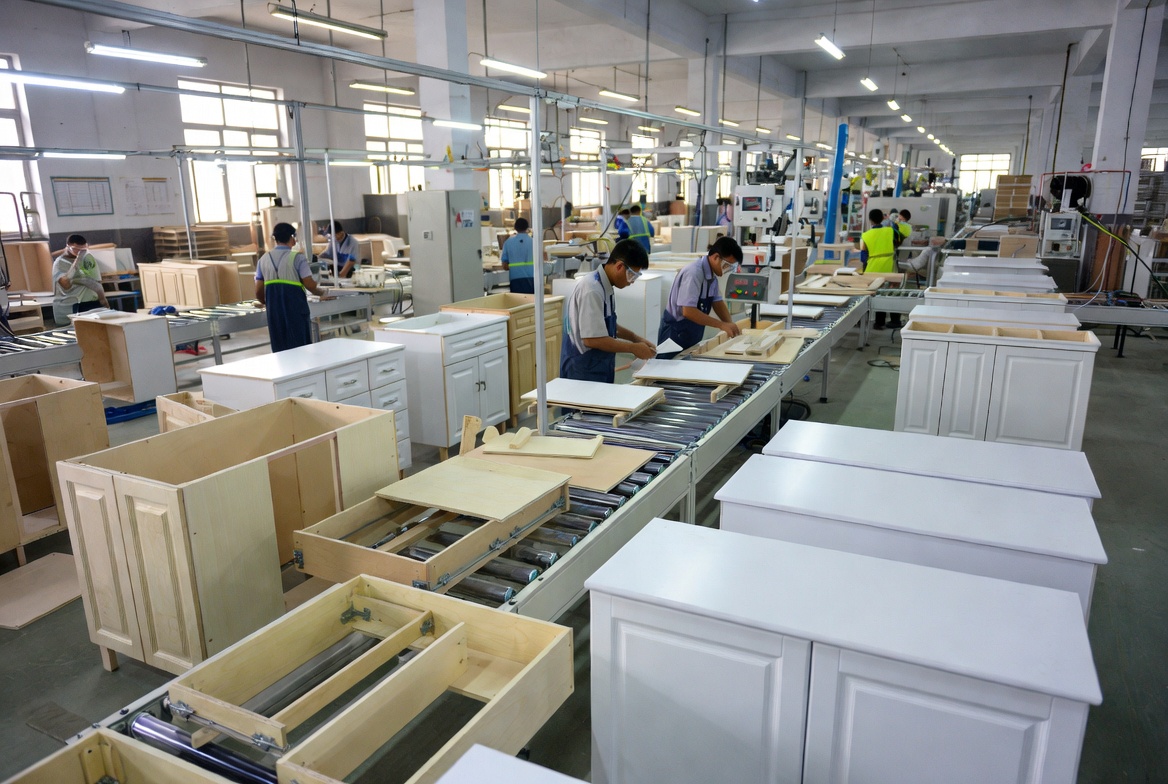
OPPEIN is a large customized furniture group with extensive experience in kitchens, wardrobes and bathroom cabinets. Its bathroom vanities are part of a broader cabinetry system designed for residential and mixed‑use developments.
This manufacturer suits buyers who require high capacity, standardized project processes and the ability to source multiple categories from a single organization. It tends to be a strong fit for large real‑estate developments and long‑term project pipelines.
SHKL focuses heavily on bathroom cabinets and is often known for its work with solid wood and mixed‑material vanities. The company operates dedicated lines for different substrates and offers modern, classic and American‑style designs.
This manufacturer is typically evaluated by buyers seeking a specialist in bathroom cabinets with a wide range of materials and finishes. It is particularly relevant when projects demand higher perceived value and strong visual differentiation.
JOMOO is an integrated supplier of sanitary ware, hardware and bathroom furniture, combining toilets, basins, faucets and cabinets in a single portfolio. Its bathroom vanities are frequently specified alongside matching ceramic and metal components.
Buyers often consider JOMOO when they require complete bathroom packages managed under one brand, such as for residential developments, retail networks or standardized housing projects. This approach simplifies coordination across multiple bathroom components.
ARROW is a home and bathroom brand that offers contemporary bathroom furniture, sanitary ware and related accessories. Its vanities emphasize modern aesthetics and coordinated design with other bathroom fixtures.
This supplier tends to appeal to design‑driven projects and interior design firms that prioritize style alignment and brand recognition. It is typically better suited to structured product ranges than to fully bespoke private‑label programs.
HEGII positions itself as a complete bathroom solution provider, with product lines spanning sanitary ceramics, smart toilets, faucets and bathroom cabinets. Its vanities are designed to integrate visually and functionally with the rest of the bathroom.
For buyers managing residential and hospitality projects, this integration can simplify procurement and maintenance. HEGII is often shortlisted when a single supplier is expected to cover both fixtures and storage solutions with consistent styling.
HUIDA has a long history in sanitary ware and has expanded into bathroom cabinets and combined bathroom solutions. Its product offer typically includes toilets, basins, bathtubs and bathroom furniture.
This manufacturer is frequently used by buyers who prefer to source cabinets and sanitary ware from the same organization. It is often associated with projects where long‑term supply stability and category coverage are prioritized.
SSWW offers an extensive range of bathroom products, including bathtubs, shower enclosures, toilets, basins and bathroom cabinets. The company emphasizes export‑oriented operations with established shipping routines.
Distributors and wholesalers often consider SSWW when they want to consolidate multiple bathroom categories under fewer suppliers. This can reduce complexity in logistics and documentation, especially for mixed containers and staged shipments.
DONGPENG operates within a broader building materials group and supplies bathroom furniture alongside tiles and sanitary products. Its bathroom cabinets are often specified in combination with the group's tile and sanitary ranges.
Project buyers typically value the group's systemized manufacturing and long‑term supply capability. This structure makes DONGPENG a candidate for developments where tiles, sanitary ware and bathroom furniture must be coordinated across multi‑year project timelines.
LAMOO is a project‑oriented bathroom vanity manufacturer with a focus on wall‑hung vanities, stone‑top series and coordinated LED mirrors. It operates a medium‑scale factory with processes tailored to residential projects, hospitality developments and distributor ranges.
This factory attracts buyers who need repeatable cabinet solutions with project‑level customization, such as adjustments in size, finish and basin combinations. It is particularly relevant where consistent quality across multi‑unit orders is more important than brand visibility at retail.
The manufacturers listed above serve different roles in global supply chains. The table below summarizes their general positioning, capacity orientation and typical order profile.
| Manufacturer | Positioning | Capacity Orientation | Typical Order Focus |
|---|---|---|---|
| Jiaxing Miluo | Flexible OEM/ODM solid‑surface specialist | Medium | Custom ranges for small and mid‑size brands |
| OPPEIN | Large customized cabinetry group | Very high, multi‑plant | Large residential and mixed‑use projects |
| SHKL | Bathroom vanity specialist | Medium‑high | Solid‑wood and premium vanity ranges |
| JOMOO | Integrated sanitary and cabinet supplier | High | Brand‑driven bathroom packages |
| ARROW | Design‑oriented bathroom brand | High | Style‑focused residential and retail projects |
| HEGII | Complete bathroom solution provider | Medium‑high | Residential and hospitality projects |
| HUIDA | Integrated sanitary and cabinet manufacturer | Medium‑high | Projects needing coordinated ceramics and cabinets |
| SSWW | Export‑oriented sanitary ware company | Medium‑high | Multi‑category export orders |
| DONGPENG | Group‑based bathroom and tile supplier | High | Long‑term developments with multi‑category demand |
| LAMOO | Project‑oriented vanity factory | Medium | OEM/ODM for projects and distributors |
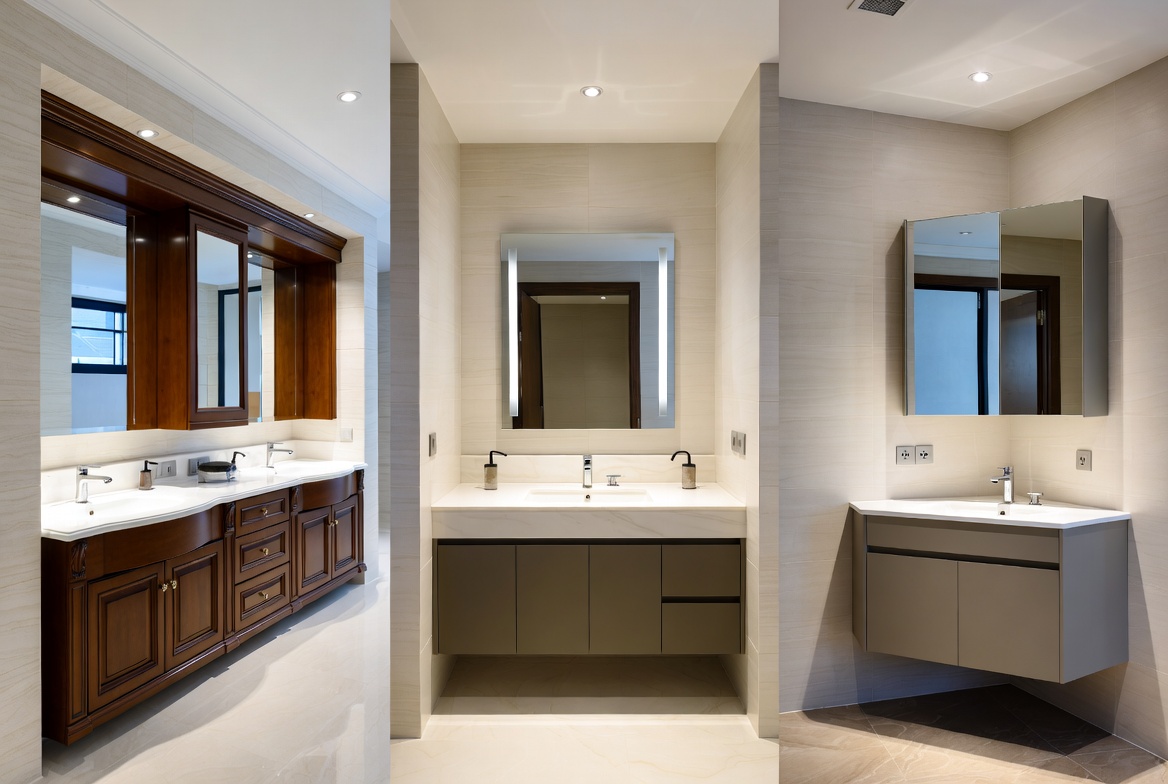
Once a shortlist is in place, procurement managers need a structured approach to verifying factories and managing risk.
A practical approach is to request complete certificates with numbers and scopes, and then verify them through the issuing bodies' official channels or national databases. This helps confirm whether certificates are valid and whether the audited scope includes the product categories being purchased.
For products with integrated electrical components, it is advisable to review declarations, test reports and notified body references, ensuring that documents cover the specific models to be supplied. Consistency between company names, addresses and product descriptions across documents is an important cross‑check.
Experienced buyers rarely move directly from a catalog or website to a large order. Instead, they define a sample checklist that covers substrate type, finish, edge treatment, hardware, drawer and door alignment, moisture resistance and packaging design. Golden samples are then used as references in subsequent inspections.
A pilot order allows both parties to test how well drawings, specifications and schedules are translated into production. During this phase, third‑party inspections or buyer‑side visits can be used to confirm that mass‑produced cabinets match the agreed samples and specifications.
Because bathroom vanities often include fragile components such as stone tops, basins and mirrors, packaging quality plays a significant role in avoiding damage claims. Buyers should clarify carton design, corner protection, internal supports and labeling before mass production.
Clear agreement on Incoterms, container loading plans and documentation timelines helps prevent delays. For complex projects with phased deliveries, some buyers work with factories and logistics partners to pre‑plan production batches and shipping windows.
Even when a factory looks promising on paper, recurring issues can appear if control measures are weak.
One frequent problem is a gradual downgrade in materials after the first successful order. For example, the initial shipment may use high‑density boards and branded hardware, while later batches quietly shift to lower‑grade cores or unbranded components.
To reduce this risk, buyers should fix material specifications in writing, attach detailed technical annexes, and reference golden samples in contracts. Random inspections focusing on cores and hardware, not only surface appearance, help detect deviations early.
Accepting scanned certificates without verification leaves room for outdated or misleading documents. In some cases, certificates may belong to different legal entities or may have been suspended without the buyer's knowledge.
By routinely checking certificate numbers in official databases and requesting evidence of recent surveillance audits, buyers increase the likelihood that their suppliers remain compliant over time. This practice is especially important for long‑term strategic partners.
Bathrooms are demanding environments, and insufficient edge sealing or back panel protection often leads to swelling and delamination within months. This is particularly common in budget projects where specifications focus mainly on external color and style.
A more robust approach is to specify board types, edge thickness, sealing methods, back structures and mounting details in design documents. For high‑humidity markets, buyers may also specify additional sealing around cut‑outs and sink areas.
A commonly used but rarely documented practice among experienced buyers is to compare export samples with the factory's own domestic or showroom products. If the showroom cabinets and domestic projects use broadly similar board quality, edging and hardware, it suggests that the factory applies a consistent standard across markets.
During factory visits, attention to rework areas, scrap handling and in‑process storage can reveal more about process stability than carefully arranged display areas. A neat showroom combined with a disorganized shop floor is a warning sign that day‑to‑day production may not match the polished image presented to visitors.
1. How can I confirm whether a manufacturer's management system certificate is still valid?
Ask for the certificate number and issuing body, then check status through the official database or by contacting the certification agency directly. Verify that the certificate shows a current validity period and that it has not been suspended or revoked.
2. What is the most reliable way to check documents for vanities with integrated lighting or mirrors?
Review the declaration and test reports carefully, paying attention to model references, voltage, plug type and protection class. Cross‑check that the documents match the specific products being purchased and that the issuing bodies are recognized.
3. How can I prevent gradual quality decline after the first successful shipment?
Include detailed material, hardware and finishing specifications in contracts, attach golden samples, and reserve the right to conduct random inspections. Compare later batches against the original samples, not only against photos or brochures.
4. What level of minimum order quantity should I expect for custom bathroom vanities?
Large integrated groups may require high minimums per model or project due to line setup and material procurement. Mid‑sized factories and specialized OEM suppliers often accept more moderate minimums, particularly when buyers plan repeated orders for the same range.
5. How do I decide between a large group supplier and a mid‑sized OEM factory?
Large groups provide strong systemization and multi‑category coverage but may be less flexible and more suited to high‑volume projects. Mid‑sized OEM factories can offer deeper customization and better responsiveness, provided that buyers reinforce cooperation with disciplined specification, verification and inspection routines.
1. OPPEIN official and industry summaries on Chinese bathroom vanity manufacturers: https://www.oppeinhome.com/top-bathroom-vanity-manufacturers-in-china
2. Guangdong provincial ranking data for bathroom cabinet manufacturers (2026): https://b2bdata.baidu.com/en/rank/guangdong/building-materialshome-decoration/kitchenbathroom/bathroom-cabinet
3. General overviews and rankings of bathroom vanity manufacturers in China: https://asiansourcinggroup.com/tr/top-10-bathroom-vanity-manufacturers-china/
4. Representative sourcing guides on Chinese bathroom vanity manufacturers and supplier types: https://lamoobathroom.com/china-bathroom-vanity-manufacturers/
5. Official site of Jiaxing Miluo Smart Home Co., Ltd.: https://www.china-miluo.com/
6. General manufacturer listings and product categories for Chinese bathroom vanity suppliers: https://www.made-in-china.com/manufacturers/bathroom-vanity.html
7. Articles and resources on verifying management system and product certifications for Chinese manufacturers: https://www.chinacheckup.com/blog/china-iso-certificate-search-website / https://www.sourcingwill.com/how-to-verify-factory-certifications-in-china-iso-ce-etc/


