
Views: 231 Author: Miluo Smart Home Publish Time: 2026-07-21 Origin: Site


Content Menu
● Understanding Fire Rating in Commercial Buildings
● What Resin Stone Is and Why It Matters
● Resin Stone vs Traditional Stone: Fire Behavior
● How Commercial Codes Treat Bathroom Materials
● Typical Fire Tests and Classifications
● Can Resin Stone Be Used as a Fire‑Resistant Facing?
● Resin Stone in Commercial Bathroom Assemblies
● Comparing Resin Stone with Other Bathroom Surfaces
● Design Considerations for Commercial Bathrooms
● Practical Evaluation Workflow for Project Teams
● Building Confidence and Clarity
● Future Trends: Engineered Surfaces and Fire Safety
● Closing Perspective for Commercial Projects
● FAQs
Resin stone has become a signature finish in modern commercial bathrooms, from hotel suites to high‑rise apartments, yet its behavior under fire conditions remains a critical question for designers and manufacturers. For a company specializing in high‑end bathtubs and integrated bathroom solutions, understanding how resin stone interacts with fire‑rated assemblies is essential to delivering both design impact and building safety.
Fire ratings describe how building elements perform when exposed to fire over a defined period under standardized test conditions. They help determine how long walls, floors, and ceilings can resist fire and maintain structural integrity, giving occupants time to escape and allowing emergency services to respond.
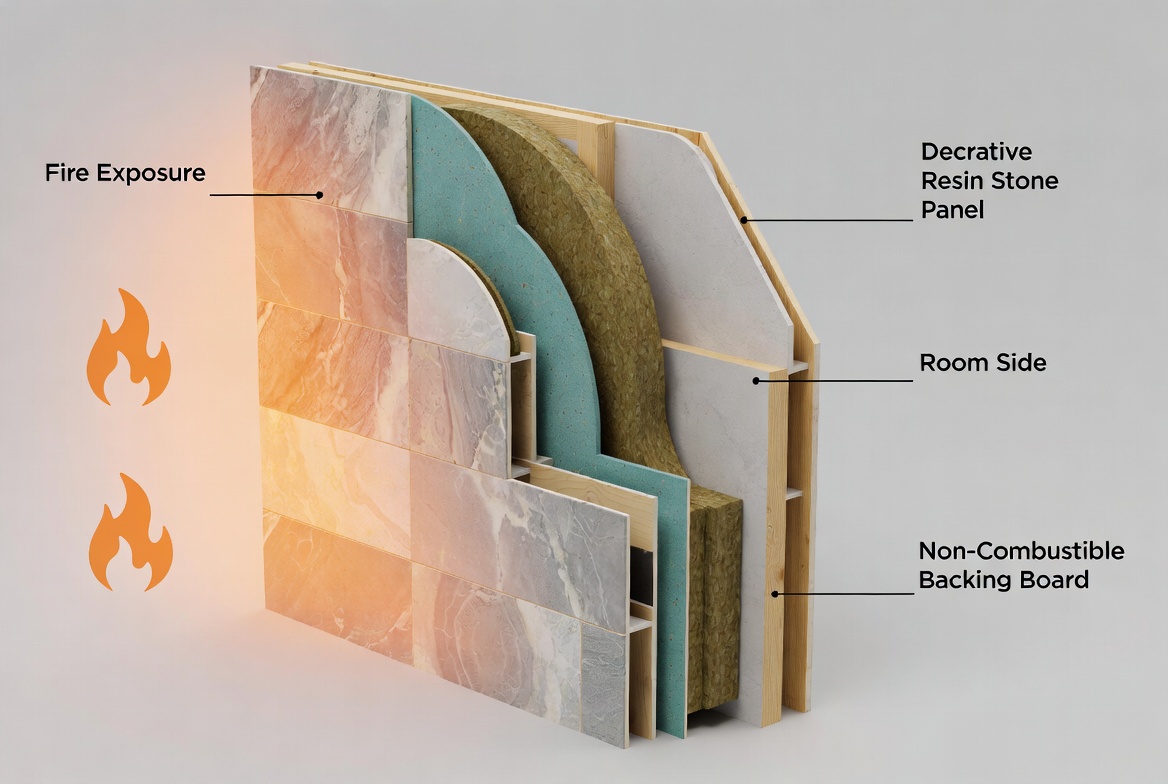
It is important to recognize that many codes assign fire resistance not to a single surface material, but to an entire assembly. In commercial bathrooms, this usually means that the wall or ceiling system as a whole—studs, boards, insulation, and finishes—must meet a specified rating, rather than individual decorative products being certified in isolation.

Resin stone, often referred to as engineered or reconstituted stone, combines mineral aggregates such as quartz, marble chips, or other stone powders with a polymer resin binder. Pigments and additives allow manufacturers to produce a huge variety of colors, textures, and surface effects, making resin stone highly attractive for contemporary bathroom design.
From a fire perspective, however, this composition has a significant implication. While the stone aggregates themselves are non‑combustible, the resin binder is typically organic and combustible. This contrasts with natural stone, which is fully mineral and does not burn. Understanding this difference is the starting point for evaluating how resin stone behaves in a fire scenario.
When comparing resin stone to traditional stone, three key aspects stand out: combustibility, heat transfer, and role within the wall or fixture system.
- Combustibility
Natural stone is non‑combustible. It does not ignite or contribute fuel to a fire. Resin stone, by contrast, contains polymers that can ignite, soften, char, and in some cases drip or emit smoke when exposed to high temperatures. This does not automatically disqualify it from use, but it changes how it must be evaluated.
- Heat Transfer
Both natural stone and engineered products conduct heat to some degree. Stone veneers, tiles, or panels can transmit heat through to underlying substrates. If those substrates are combustible, their protection depends on the complete assembly and not just the face material.
- Role in the Assembly
Natural stone is often treated as a benign cladding over a separately rated wall. Resin stone, because of its combustible binder, is generally considered a finish material whose presence adds some fuel load. It is therefore rarely accepted as the sole protective layer over combustible substrates in high‑risk areas unless specific testing demonstrates its performance.
The practical outcome is that resin stone is usually judged suitable as a decorative or functional finish, provided it is used over a properly rated wall or ceiling system and within the limits of relevant standards.
Commercial building regulations typically tackle bathroom design from two angles: occupant safety and health, and overall building fire performance. Plumbing and sanitary codes focus on fixture numbers, water use, accessibility, and hygiene. Fire codes and building regulations handle compartmentation, fire‑resistant separations, and protection of escape routes.
In bathrooms and washrooms, fire safety is therefore often addressed through:
- Fire‑resistant wall and ceiling assemblies separating units, corridors, and shafts.
- Limitations on combustible finishes in certain corridors, stair enclosures, or shafts.
- Coordination with sprinkler coverage or other suppression systems.
Fixtures such as bathtubs, shower bases, and decorative panels rarely receive their own time‑based fire rating. Instead, regulators examine whether the surfaces installed over rated walls or around critical separations compromise or respect the intended fire resistance. For any resin stone product, the central question becomes: how does this finish interact with the rated assembly behind it?
Fire performance is characterized using standardized tests and classification systems. While specific test numbers and classifications vary by region, several concepts are common worldwide.
- Fire resistance of assemblies
These tests expose a wall, floor, or ceiling to a controlled fire curve and measure how long it maintains integrity and sometimes insulation. The result is often expressed in minutes (for example, 30, 60, or 120 minutes). For bathroom partitions, shafts, and separating walls, this is the key parameter.
- Reaction to fire of materials
Separate tests assess whether a material ignites easily, how quickly it propagates flame, how much smoke or flaming droplets it generates, and how it contributes to fire. This is where resin stone's resin content comes into focus, because it influences flame spread and smoke generation more than pure stone.
- Regional classification schemes
Different jurisdictions use their own classification labels; some focus on non‑combustible versus limited combustible, others define multiple classes of surface finishes. Engineered surfaces must be tested and labeled according to these schemes before being specified in critical parts of a building.
Resin stone products used as panels, wall claddings, or vanity surfaces in bathrooms should ideally have documented reaction‑to‑fire performance and clear notes indicating whether they are intended purely as decorative finishes or as part of a tested assembly.
Resin stone should not be assumed to perform like natural stone when used as a facing over combustible materials. Because its binder is combustible, many regulatory guidelines treat resin stone in the same general category as other polymeric or composite finishes rather than as inherently fire‑resistant stone.
In particular, where regulations demand a "fire‑resistant facing" to shield combustible substrates from high heat (for example, near appliances or in critical fire separations), guidance often emphasizes:
- Use of fully non‑combustible materials, such as certain ceramics, metals, or solid stone.
- Defined minimum thicknesses and backing board types.
- Specific test evidence for each acceptable material combination.
Resin stone can still be used extensively in commercial interiors, including hotel bathrooms, apartment washrooms, spas, and wellness facilities. The essential condition is that the wall or ceiling assemblies behind it provide the primary fire resistance, and that the resin stone does not undermine that performance in critical locations.
For a manufacturer of high‑end bathtubs and bathroom systems, resin stone is often integrated into assemblies in several ways:
- Tub surrounds and integrated panels
Resin stone panels may form the vertical surfaces around a bath, combining with corner trims and sealing details. Behind them, structural and moisture‑resistant boards form the true load‑bearing and fire‑resistant elements.
- Shower walls and enclosures
Large‑format resin stone panels offer a seamless appearance and fewer grout joints than traditional tiles. In rated partitions, these panels are installed over boards and stud systems tested or designed for the required fire resistance.
- Vanity tops and shelving
Resin stone works well as a countertop or shelf surface because the heat exposure is typically limited. Here, the primary fire concerns relate more to overall fuel load and occupant egress than to the surface's role in protecting a combustible substrate.
In all these cases, the product's technical documentation should emphasize that fire resistance is delivered by the substrate and the assembly, while the resin stone provides finish quality and functional performance such as water resistance and cleanability.
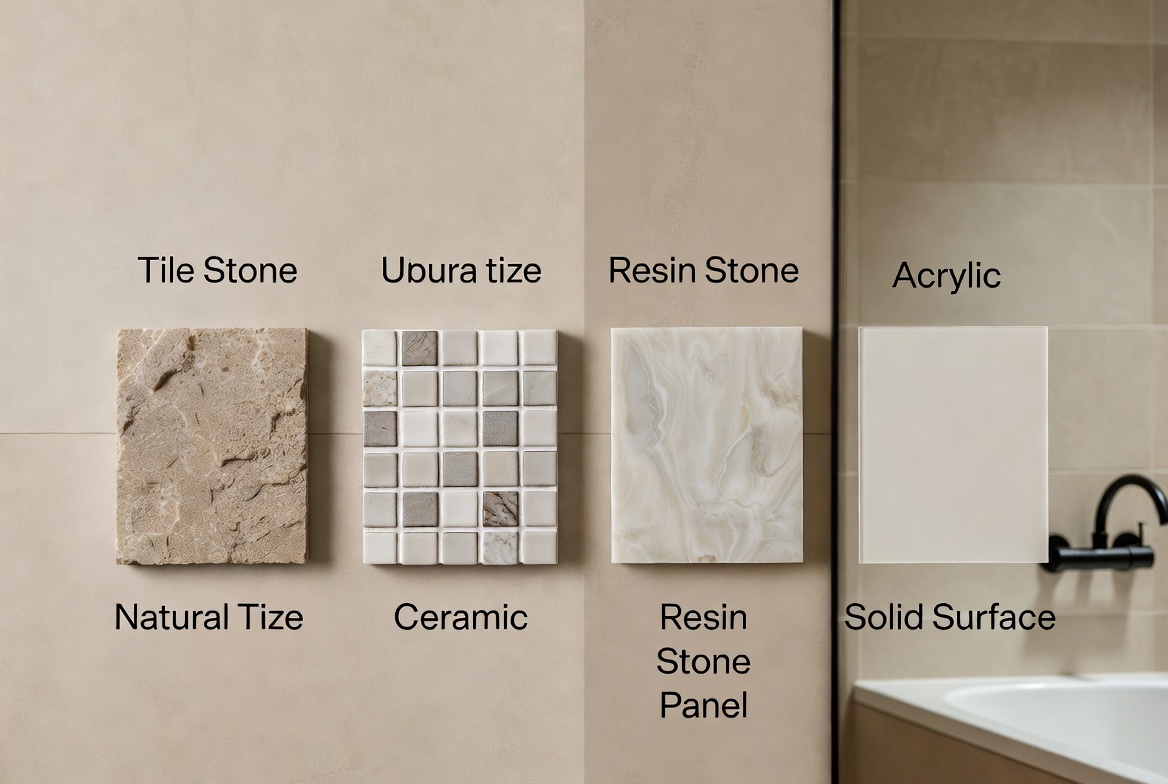
The following comparison highlights how resin stone aligns with other common bathroom surface materials from a fire behavior point of view.
| Material type | Combustibility characteristics | Typical role in fire strategy |
|---|---|---|
| Natural stone (marble, granite) | Non‑combustible, does not burn | Cladding over rated assemblies; benign surface fuel |
| Ceramic or porcelain tile | Non‑combustible, stable at high heat | Widely accepted protective facing over rated walls |
| Resin stone / engineered stone | Contains combustible polymer binder | Decorative finish; relies on rated backing |
| Solid surface / acrylic panels | Fully polymeric, combustible | Finish only; not a primary fire‑resistant layer |
The key takeaway is that resin stone behaves more like a controlled combustible finish than a non‑combustible cladding. Designing a compliant bathroom therefore means combining it with appropriate substrates and assemblies, rather than expecting it to compensate for combustible structures by itself.
To ensure that resin stone bath products align with building safety expectations, several design practices are particularly useful for commercial projects:
1. Separate structural and finish functions
Wall and ceiling systems must be designed first to meet required fire resistance and moisture resistance. Resin stone is then added as a finish layer that does not carry structural or primary fire‑resistive duties.
2. Specify appropriate backing materials
For rated partitions, use backing boards and framing systems compatible with the project's required rating. Cement boards, certain gypsum boards, and metal studs are typical choices for wet areas.
3. Address high‑risk zones explicitly
Areas adjacent to heat sources, vertical shafts, or escape routes may require stricter material selections. In these regions, the use of non‑combustible facings may be preferred over resin‑bonded products.
4. Control jointing and detailing
Joints, penetrations, and interfaces between resin stone panels and other materials must be detailed carefully. Sealants, trims, and fixings should not compromise the integrity of the rated assembly.
5. Coordinate with mechanical and plumbing design
Penetrations for pipes, valves, and mechanical services are common in bathrooms. Coordinated detailing ensures that firestopping systems and rated penetrations remain effective behind resin stone finishes.
By approaching resin stone design as part of a larger system, bathroom manufacturers and project teams can integrate sophisticated finishes without losing sight of fundamental safety requirements.
When project stakeholders are considering resin stone finishes in commercial bathrooms, a simple evaluation workflow helps align expectations and responsibilities.
1. Clarify the role of each wall and ceiling
Determine which separators around the bathroom—party walls, corridor walls, shaft enclosures—require defined fire resistance. Note their required rating and any limits on combustible finishes.
2. Identify where resin stone will be used
Map out positions of bath surrounds, shower walls, vanity areas, and decorative panels. Distinguish between surfaces lining rated partitions and those within internal partitions that do not require a fire rating.
3. Review product documentation
Examine technical data sheets for resin stone products, focusing on material composition, reaction‑to‑fire performance, and any installation constraints or limitations.
4. Confirm compatibility with rated assemblies
Ensure that the proposed substrates, boards, and fixings are appropriate for the required rating. If in doubt, align with assemblies that have comparable tested configurations.
5. Document installation guidance
Provide installers with clear instructions that reflect the assumptions used in design: backing type, fasteners, joint locations, and maximum panel sizes. This alignment helps maintain the intended fire performance in the built project.
This structured approach helps designers, contractors, and manufacturers work together to integrate resin stone confidently into complex building programs.
From the perspective of a bathroom product manufacturer, especially one supplying overseas markets with customized tubs and integrated systems, clarity and consistency are key.
- Material transparency
Communicating that resin stone includes a combustible binder, while also explaining how it is safely combined with non‑combustible backers, helps specifiers make informed decisions. Technical sheets that distinguish between structural and finishing functions reduce confusion.
- Alignment with global market expectations
International clients operate under diverse regulatory frameworks, but they share a need for reliable information on fire behavior. Providing flexible configurations—such as different backing options or panel thicknesses—helps align products with a variety of regional requirements.
- Support during design and review
Design offices and compliance consultants appreciate suppliers that can respond quickly to technical queries. Offering clear details on typical bathroom assemblies, including resin stone finishes, backing boards, and fixings, makes it easier for them to integrate products into their designs.
By emphasizing technical reliability alongside aesthetic appeal, a manufacturer strengthens long‑term relationships with hotel brands, developers, and wholesalers who must balance design ambition with compliance and operational safety.
Engineered surfaces, including resin stone, are likely to continue expanding in commercial interiors because they offer consistency, design flexibility, and efficient fabrication. At the same time, regulators and testing bodies are refining their approaches to composite materials.
Several trends are worth watching:
- Continued refinement of reaction‑to‑fire classifications for complex multilayer products.
- Greater focus on full‑scale testing of assemblies that combine composites, non‑combustible boards, and insulation.
- Increasing awareness among designers about how decorative finishes contribute to overall fuel load in enclosed rooms.
These trends reinforce the importance of ongoing testing, documentation, and product development. For bathroom manufacturers, staying aligned with these developments ensures that resin stone solutions remain relevant and acceptable in future building programs.
Resin stone brings a distinct visual and tactile quality to modern commercial bathrooms, and it can be integrated safely when treated as part of a carefully designed wall and ceiling system. The essential point is to respect the difference between non‑combustible stone and resin‑bound composites, and to ensure that the primary fire resistance resides in the underlying assemblies.
For companies focused on customized, high‑end bathroom products, embracing this perspective allows resin stone bathtubs, surrounds, and panels to become trusted elements in international projects. By combining technical clarity with design sensitivity, such solutions can support long‑term building performance and occupant safety across a wide range of commercial environments.
1. Is resin stone suitable for use on walls forming fire‑rated separations?
Yes, resin stone can be used on walls that form fire‑rated separations, provided it is installed over a wall assembly designed to deliver the required fire resistance. In this context, the wall system—not the resin stone itself—provides the time‑based rating, while the resin stone functions as a controlled finish layer.
2. Does resin stone behave like natural stone when exposed to fire?
No. Natural stone is fully mineral and does not burn, whereas resin stone includes an organic binder that can ignite or char under high heat. As a result, resin stone is assessed more like a composite or polymeric finish rather than a purely non‑combustible stone cladding.
3. Can resin stone bathtubs and panels be used in hotel bathrooms and spas?
Yes, resin stone tubs and panels are widely used in hotel bathrooms and spa facilities, especially where they are combined with appropriate backing systems and coordinated with overall fire and moisture management strategies. The key is to ensure that their placement and substrates respect any limits on combustible finishes in critical areas.
4. What information should manufacturers provide about resin stone for commercial projects?
Manufacturers should provide clear data on composition, reaction‑to‑fire behavior, typical assembly configurations, recommended backing materials, and installation details. This information helps designers and inspectors understand how resin stone integrates into fire‑rated partitions and other regulated elements.
5. How should project teams assess resin stone proposals in an existing building design?
Project teams should first identify which walls and ceilings require specific fire resistance, then map resin stone finishes to these zones. They should review technical documentation, check compatibility with rated assemblies, and document installation assumptions so that onsite construction aligns with design intent.
1. Real Stone Systems – Fire Rating of Stone (PDF). https://www.realstonesystems.com/wp-content/uploads/2021/05/Fire-Rating-of-Stone-1.pdf
2. NIST – Fire-Resistance Classifications of Building Constructions (BMS92). https://nvlpubs.nist.gov/nistpubs/Legacy/BMS/nbsbuildingmaterialsstructures92.pdf
3. Energy Safe Victoria – Gas Information Sheet 53: Fire resistant facing materials and reconstituted stone. https://www.energysafe.vic.gov.au/sites/default/files/2025-01/2024-12-30-GIS-53.pdf
4. Skinrock – Fire Safety & Thin Stone Veneer: What Class B2 Means for Your Build. https://www.skinrockusa.com/fire-safety-thin-stone-veneer-what-class-b2-means-for-your-build/
5. USGS – The Fire-Resistive Properties of Various Building Materials (Bulletin). https://pubs.usgs.gov/bul/0370/report.pdf
6. International Plumbing and Building Code Resources – Fixtures, Faucets and Fixture Fittings; Minimum Required Toilet Facilities Based on Occupancy. https://allstarce.com/wp-content/uploads/2016/03/2015-IPC-Code-Ch-4.pdf


