
Views: 224 Author: Miluo Smart Home Publish Time: 2026-10-03 Origin: Site


Content Menu
● No-Overflow Basins vs. Overflow Basins: What Is the Difference?
>> What Is a Basin With an Overflow?
>> What Is a No-Overflow Basin?
● Overflow vs. No-Overflow Basins: A Practical Comparison
● Why No-Overflow Basins Appeal to Modern Bathroom Designers
>> An Uninterrupted Surface Strengthens the Basin's Shape
>> Minimalism Requires More Than Removing a Hole
● Safety and Drain Compatibility: Where the Decision Becomes Technical
>> Choose the Waste for the Actual Basin Configuration
>> Open Waste or Click-Clack Waste?
>> Are No-Overflow Basins Allowed?
● To Drill or Not to Drill: Why an Overflow Is Not Just a Hole
● Cleaning and Maintenance: Is a No-Overflow Basin Easier to Maintain?
● A Third Option: Clean Appearance With Concealed Overflow Protection
● A Practical Validation Plan for Custom Basin Development
>> Step 1: Define the Intended Application
>> Step 2: Test the Basin, Tap, and Waste Together
>> Step 3: Assess Foreseeable Misuse
>> Step 4: Confirm Service Access and Instructions
● OEM and ODM Specification: What Buyers Should Put in the Brief
● Choosing the Right Configuration for Your Collection
>> 1. What is the main advantage of a no-overflow basin?
>> 2. Can a no-overflow basin use a pop-up waste?
>> 3. Does an overflow basin prevent bathroom flooding?
>> 4. Can I drill an overflow hole into an existing basin?
>> 5. Are no-overflow basins suitable for hotels?
>> 6. Is a basin without a visible overflow always a no-overflow basin?
A no-overflow basin creates a clean, uninterrupted bathroom surface. A basin with an overflow adds a secondary drainage route when water reaches the overflow opening. Choosing between them is not simply a question of appearance: it affects drain compatibility, maintenance, installation, and everyday use.
For overseas brands, wholesalers, and manufacturers developing modern bathroom collections, this decision belongs in the product brief—not at the installation stage.
From a product-development perspective, I would start with one question: what should this basin allow the user to do? A sculptural vessel basin for handwashing and a family bathroom basin used for soaking garments have different requirements.
The strongest design balances aesthetics with a clearly specified drainage system.
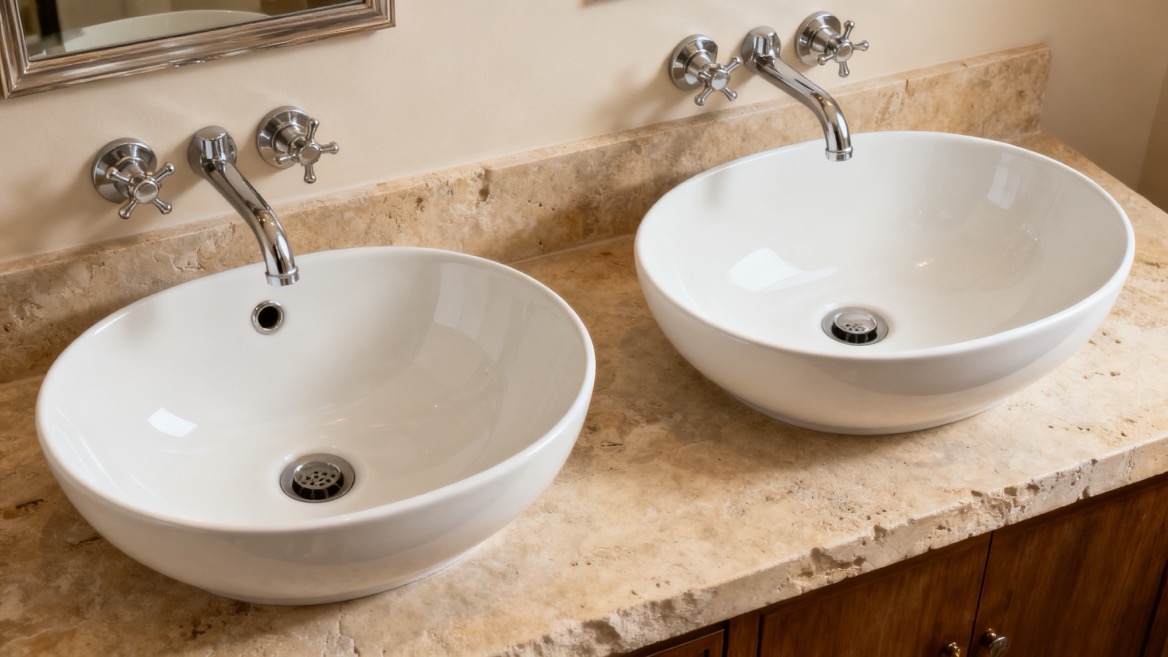
An overflow basin has an opening near the upper part of its bowl. In a conventional integrated design, this opening connects to a channel that directs water toward a compatible waste fitting.
When water reaches the opening, the overflow provides an additional drainage route.
However, it is not a guarantee against flooding. Its effectiveness depends on the complete system, including channel condition, waste compatibility, downstream drainage, and incoming water flow.
An overflow cannot solve every blockage or compensate indefinitely for an unattended running tap.
A no-overflow basin does not have a conventional overflow opening and channel. Water normally leaves through the main waste outlet alone.
This arrangement creates a visually continuous bowl, making it attractive for minimalist bathroom basins and sculptural vessel sinks.
One distinction matters: a basin without a visible overflow hole is not necessarily a basin without overflow protection. Some purpose-designed systems conceal the overflow mechanism beneath the basin.
Buyers should therefore distinguish between:
- A conventional basin with a visible overflow.
- A true no-overflow basin.
- A basin with a compatible concealed overflow system.
| Selection factor | Basin with overflow | True no-overflow basin |
|---|---|---|
| Visual appearance | Includes a visible opening or decorative cover | Offers an uninterrupted bowl surface |
| Secondary drainage | Available through a correctly connected overflow | No separate overflow route |
| Waste selection | Requires an overflow-compatible waste | Requires a waste approved for the basin |
| Holding water | Usually possible with a suitable closable waste | Possible with a suitable closable waste, but without overflow backup |
| Cleaning access | Includes an additional opening and channel | Removes the conventional overflow opening from the cleaning routine |
| Product development | Must coordinate opening, channel, and waste interface | Must coordinate bowl geometry, waste, and intended use |
| Installation priority | Confirm overflow connection and sealing | Confirm waste sealing and drainage performance |
Neither configuration is universally better. The right choice depends on the product's application and the consequences of misuse.
A visible overflow hole creates a second focal point inside the bowl. Removing it allows attention to remain on the basin's proportions, curvature, and finish.
This can be particularly effective in:
- Thin-rim vessel basins.
- Oval countertop washbasins.
- Matte-finish bathroom collections.
- Sculptural basins paired with wall-mounted taps.
The appeal is a design judgment rather than a measurable performance advantage. Some buyers prefer uninterrupted surfaces; others appreciate an overflow cover that coordinates with the tap finish.
For a premium collection, consistency across the basin, waste cover, tap, and countertop matters more than eliminating one opening.
A poorly matched waste can undermine a carefully designed basin.
An oversized drain cover may dominate a shallow bowl. A contrasting metal finish may interrupt a monochrome collection. A badly positioned tap may cause splashing regardless of whether an overflow exists.
My preferred approach is to evaluate the basin as an installed composition, not an isolated product photograph.
Review the waste cover, tap projection, bowl depth, and countertop relationship together. The cleanest appearance comes from coordinated details.
The phrase "bathroom sink drain" is not a sufficiently detailed purchasing specification.
An overflow-compatible waste generally provides a route for water arriving from the basin's overflow channel. A no-overflow waste is designed for an installation without that conventional connection.
Do not assume that every waste supplied with a tap will suit the selected basin.
Before approval, confirm:
1. Whether the basin has a conventional or concealed overflow.
2. Whether the waste is closable or permanently open.
3. Outlet dimensions and applicable connection sizes.
4. Basin thickness at the waste seat.
5. Gasket arrangement and manufacturer-approved sealing method.
Correct compatibility matters more than matching the visible finish alone.
A permanently open waste prevents the user from deliberately closing the outlet to retain water. This can reduce one common overfilling scenario.
It does not make the basin flood-proof. Debris, an obstructed drain, or an unsuitable downstream installation can still restrict discharge.
A click-clack waste allows water retention. That may be useful for washing or soaking, but a true no-overflow basin then has no secondary escape route if the tap continues running.
Both arrangements are commercially available for no-overflow applications. The decision should follow intended use, applicable requirements, and tested compatibility.
There is no reliable worldwide yes-or-no answer.
Published plumbing guidance explains that the fixture standards it discusses do not universally require overflows for lavatories, sinks, and bidets. However, that does not establish approval for every country, building type, or installation.
For export projects, verify the currently adopted local requirements, relevant product standards, and any project-specific specifications.
Treat compliance as a documented approval task—not a claim inferred from a product's popularity.
The title raises an important practical question: can an existing no-overflow basin become an overflow basin simply by drilling its side?
For a conventional integrated overflow, the answer is no.
The opening needs a properly engineered route to the waste. A drilled hole without that route could release water outside the basin instead of directing it into the drainage system.
Any modification also needs consideration of material integrity, sealing, finish quality, and warranty conditions. Do not modify a finished basin without written manufacturer approval and an engineered solution.
For OEM and ODM development, specify the overflow configuration before approving the design.
If a collection needs both versions, treat them as distinct technical variants. Confirm their drawings, waste requirements, installation instructions, and identification separately.
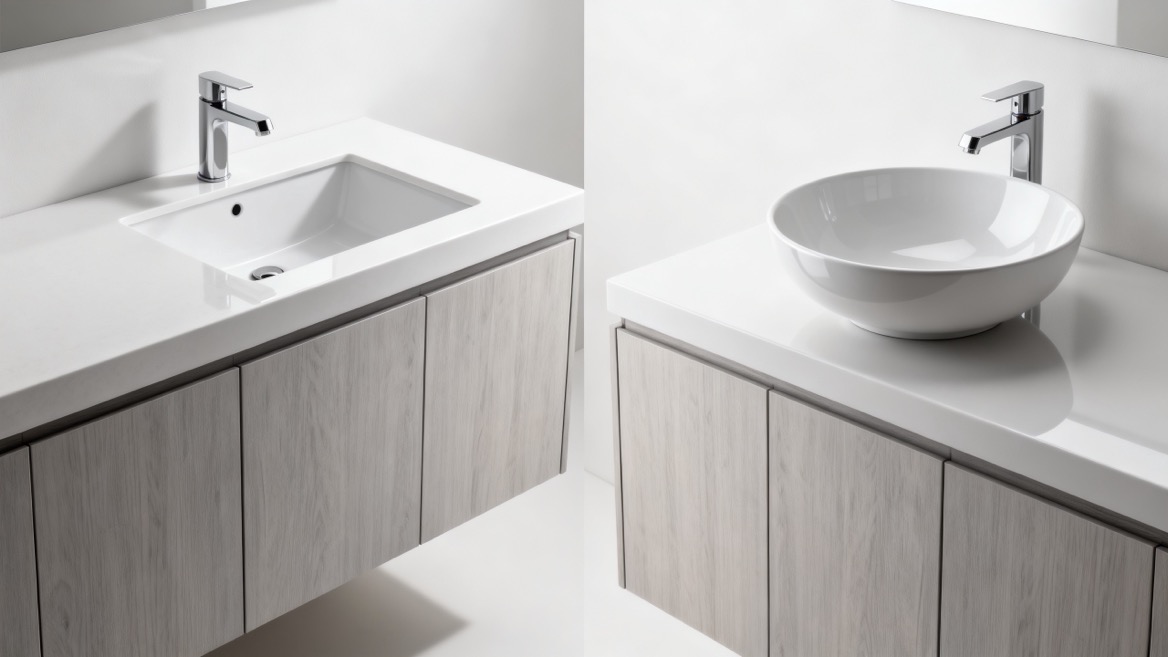
A no-overflow basin removes the conventional overflow opening and channel from the cleaning routine. Its uninterrupted bowl can also be easier to wipe.
That does not prove that every no-overflow basin is more hygienic.
Finish quality, surface condition, waste accessibility, cleaning frequency, and installation details all influence maintenance. The main outlet and trap still require attention.
An overflow basin introduces an additional area that needs suitable cleaning access. Maintenance instructions should explain how to care for that area without damaging the basin or fittings.
For either configuration:
- Follow material-specific cleaning instructions.
- Remove debris around the waste regularly.
- Investigate slow drainage promptly.
- Avoid incompatible chemicals and abrasive tools.
- Keep removable waste components accessible.
The useful purchasing question is not "Which basin never needs cleaning?" It is "Can the installed system be cleaned and serviced predictably?"
The choice does not always have to be visible overflow versus no overflow.
Villeroy & Boch's ViFlow illustrates a different approach: a purpose-designed outlet and overflow system fitted discreetly beneath the washbasin.
Its published operating description explains that water rises in an overflow pipe when the basin valve is closed. At a defined level, excess water passes into the wastewater route.
This example matters because it separates two requirements that buyers often combine:
- Removing the visible overflow opening.
- Removing overflow functionality altogether.
A concealed system may address both appearance and water management, but compatibility must be checked. It also requires sufficient installation space and access.
It should not be presented as a universal retrofit or assumed to fit every basin.
For a custom bathroom basin, an attractive sample is only the beginning. The approval process should test the actual assembly.
The following is a recommended development checklist, not a substitute for required laboratory testing.
Record whether the product is intended for residential bathrooms, guest washrooms, hospitality projects, or another setting.
Specify whether users need to retain water.
Also identify the consequences of overflow near cabinetry, electrical equipment, or water-sensitive finishes.
Use the proposed production components.
Check tap projection, splash behavior, drainage, and standing water around the waste. Repeat the review at the intended operating conditions.
A basin tested with a different waste or tap may not represent the final installation.
Under controlled conditions, assess restricted drainage and, where appropriate, a closed waste.
For an overflow design, verify that water reaches the intended drainage route without leaking into the cabinet.
For a no-overflow design, document the limitations clearly. Do not describe it as overflow-protected unless an approved system provides that function.
Check whether installers can reach connections and maintenance staff can remove serviceable components.
Then align the packaging, drawings, product page, and instructions. Every document should describe the same configuration.
For brands and wholesalers, an incomplete specification can create confusion between visually similar products.
A useful custom basin brief should include:
| Specification area | Information to confirm |
|---|---|
| Product configuration | Visible overflow, no overflow, or concealed system |
| Material and finish | Agreed material, color, texture, and care requirements |
| Dimensions | Bowl geometry, overall dimensions, and waste-seat details |
| Waste assembly | Approved type, connection, finish, and sealing arrangement |
| Tap relationship | Mounting location, projection, and operating conditions |
| Market requirements | Applicable standards and required documentation |
| Product communication | Drawings, instructions, labeling, and spare-part identification |
At Jiaxing Miluo Smart Home Co., Ltd., the product-development conversation can begin with the buyer's intended market, design direction, and OEM or ODM requirements.
Rather than treating "no overflow" as a standalone selling point, position the basin as part of a coordinated bathroom solution.
My recommendation is to choose the drainage concept before finalizing the visual details.
A true no-overflow basin can suit a minimalist collection when its waste configuration, intended use, and limitations are clearly defined.
A conventional overflow basin can offer a secondary drainage route while still delivering a refined appearance through careful opening placement and finish coordination.
A concealed overflow system offers another route where compatibility, installation space, and project requirements support it.
For your next custom basin project, send Jiaxing Miluo Smart Home Co., Ltd. your target market, reference drawings, preferred finish, installation type, and intended waste configuration. Use those details to establish a coordinated OEM or ODM development brief before sample approval.
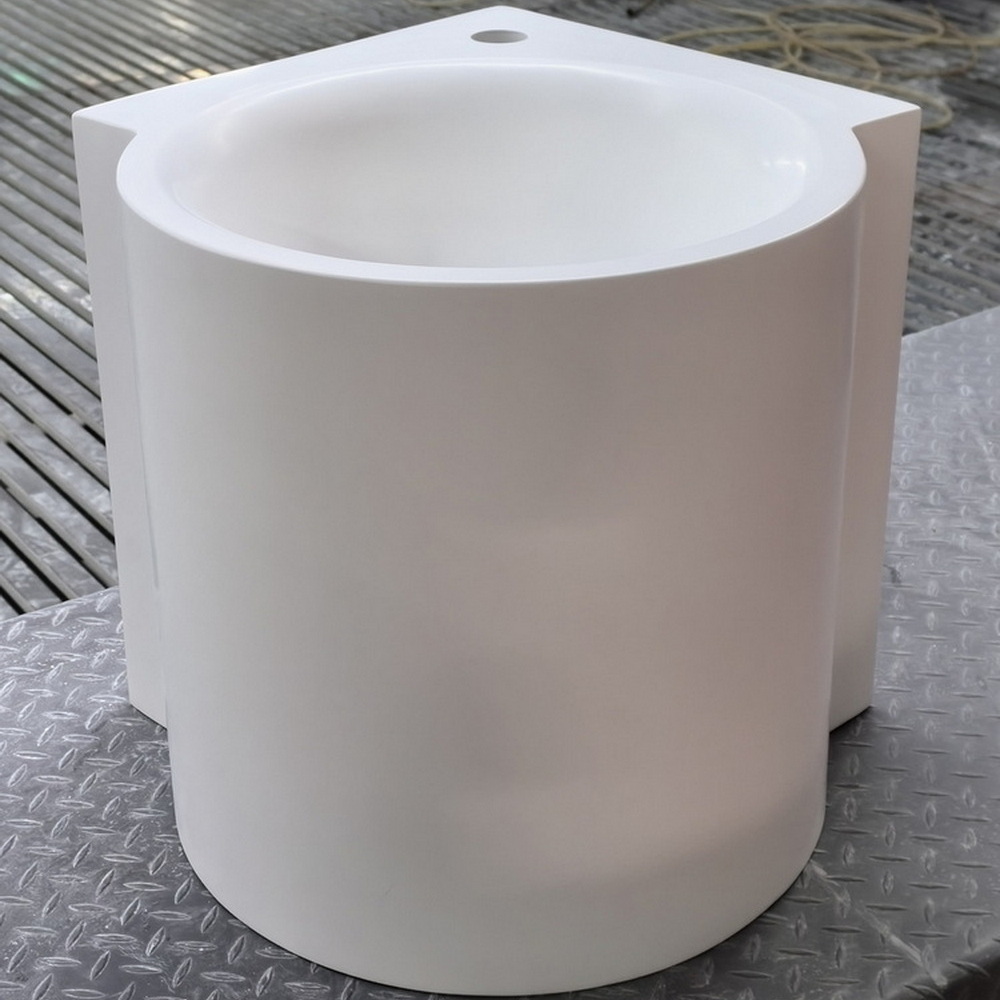
Its main visual advantage is an uninterrupted bowl surface. It also eliminates the conventional overflow opening from the cleaning routine. These benefits should be evaluated alongside drainage requirements and intended use.
Yes, if the basin and waste manufacturers approve the combination. A closable waste allows water retention, but a true no-overflow basin has no secondary overflow route when that waste is closed.
Not reliably in every situation. It provides an additional route for water, but performance depends on compatibility, cleanliness, incoming flow, and downstream drainage. It is not a substitute for supervision.
Do not assume that you can. A functioning overflow needs an engineered connection to the waste, not just an opening. Seek written manufacturer approval before considering any modification.
Potentially, subject to project requirements and a documented risk assessment. Review guest behavior, maintenance access, waste selection, and the consequences of overfilling. Appearance alone should not determine suitability.
No. Some basins use compatible concealed overflow systems. Buyers should request technical drawings and installation information rather than judging functionality from photographs.
1. [IAPMO — "404.0 Overflows," commentary from the 2015 Uniform Plumbing Code Illustrated Training Manual]. Supports the explanation of overflow routing and the distinction between fixture-standard requirements and universal overflow requirements. This historical guidance does not replace current local approval. [forms.iapmo]
2. [KOHLER — Bathroom Sink Grid Drain Without Overflow, K-7129]. Manufacturer product example supporting the discussion of grid drains for no-overflow applications. [kohler]
3. [KOHLER — Clicker Drain Without Overflow, K-33151]. Manufacturer product example demonstrating that a closable clicker waste can be designed for a no-overflow application. [kohler]
4. [Villeroy & Boch — "Experience the Innovative ViFlow Outlet and Overflow System"]. Supports the concealed-overflow example, operating explanation, and distinction between an invisible overflow and absent overflow functionality. [villeroy-boch.co]
5. [Villeroy & Boch — ViFlow for Washbasins, Professional Product Information]. Additional manufacturer documentation describing an outlet and overflow fitting that avoids a visible overflow hole in the washbasin. [pro.villeroy-boch]


