
Views: 222 Author: Miluo Smart Home Publish Time: 2026-07-14 Origin: Site


Content Menu
● Understanding Resin Stone In Modern Bathrooms
● What Happens When Bath Salts And Essential Oils Meet Resin Stone?
● Resin Stone Versus Bath Salts
>> Chemical And Physical Behavior Of Bath Salts
>> Resin Stone Response To Salt Solutions
● Resin Stone Versus Essential Oils
>> Key Properties Of Essential Oils In Bath Use
>> Resin Stone Resistance To Oils And Fragrances
● Resin Stone, Bath Salts And Essential Oils
● Industry Case Insight: Luxury Resin Stone Baths With Wellness Usage
● Practical Testing Framework For Resin Stone OEM Projects
● Expert Perspective: Balancing User Rituals And Material Longevity
● Everyday Best Practices For End Users
● Positioning Opportunities For Bathtub Manufacturers
● FAQs
Resin stone bathtubs and basins can safely handle most common bath salts and essential oils when they are properly formulated and used with basic care routines. For brands working with Jiaxing Miluo Smart Home Co., Ltd., this opens up strong positioning opportunities around wellness-focused bathroom products built on durable, modern materials. [china-miluo]
Resin stone is a composite material that blends mineral powders with high‑performance resin binders to create a smooth, non‑porous, structural surface. In high‑end bathroom manufacturing, this material is used for bathtubs, basins, vanities and integrated tops where durability and design flexibility matter. [casadistone]
Compared with traditional ceramic or natural stone, resin stone offers better stain resistance, more consistent color, and a warm‑to‑the‑touch surface that enhances soaking comfort. For OEM and ODM projects, it allows brands to specify custom forms, textures and colors while maintaining tight performance tolerances in repeated production runs. [china-miluo]
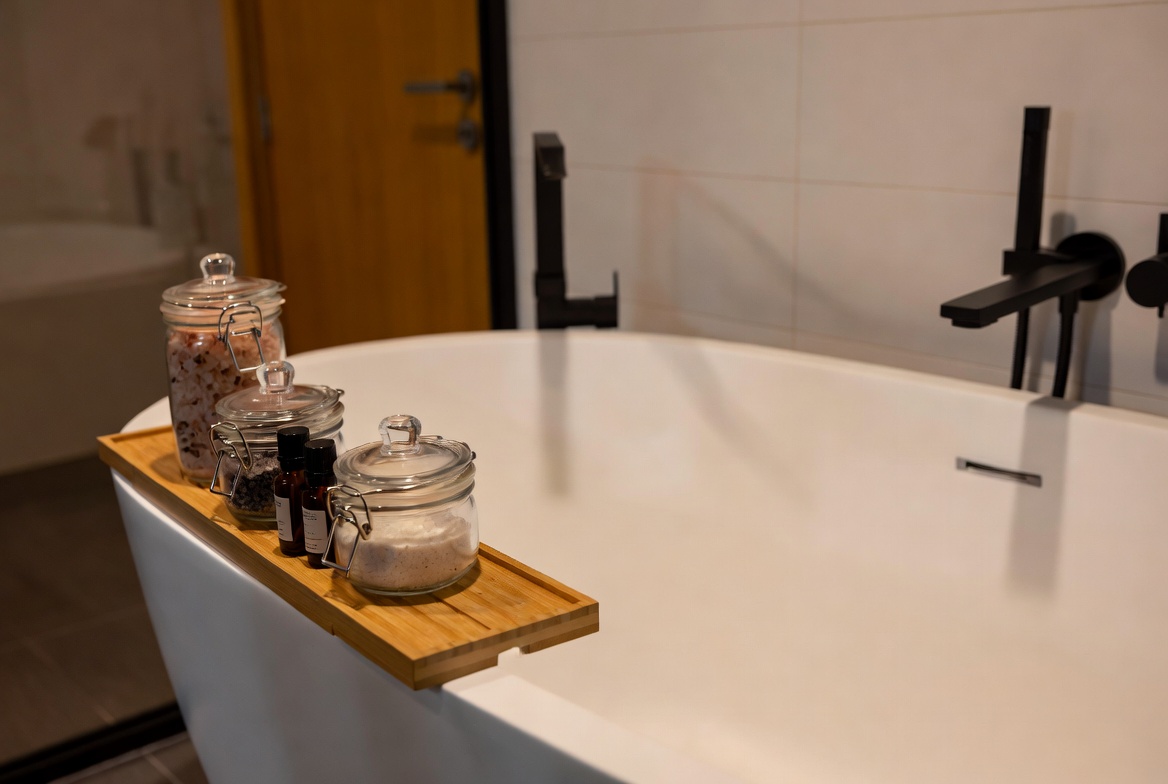
When users dissolve bath salts and essential oils in hot water, they create a concentrated solution that sits against the bathtub surface during soaking. On porous materials, this can gradually lead to staining, roughening or discoloration, especially when strongly pigmented fragrances or colorants are involved. [mdpi]
Resin stone responds differently because of its non‑porous microstructure and stable polymer matrix. The absence of capillary pores significantly reduces liquid absorption, so properly formulated products show much lower risk of salt crystallization inside the material or deep oil penetration. [pmc.ncbi.nlm.nih]
Most commercial bath salts are built around magnesium sulfate (Epsom salt) or sodium chloride, combined with colorants, fragrances and sometimes botanical powders. In water, these salts dissociate into ions, temporarily changing pH and ionic strength in the bath solution, then return to a crystalline state on drying if residues remain. [tip.trunojoyo.ac]
On hard surfaces, undissolved crystals or dried residues can create micro‑abrasion if repeatedly rubbed across the same spot, especially on softer coatings or glossy finishes. Heavily dyed salt blends can also leave colored rings in textured or porous materials that trap pigments more easily. [mdpi]
Resin stone designed for bathroom use is engineered to resist staining and thermal shock, and this resilience extends to typical salt solutions used in domestic bathing. Laboratory work on stone materials has shown that salt‑containing solutions are more likely to affect porosity or surface roughness in natural stone than in non‑porous composites. [casadistone]
In practice, high‑quality resin stone baths:
- Show low surface absorption, limiting ion migration into the material. [pmc.ncbi.nlm.nih]
- Maintain gloss and texture when bath salts are fully dissolved before immersion. [casadistone]
- Require only simple rinsing with warm water after draining to remove salt and pigment residues. [casadistone]
For OEM brands working with Jiaxing Miluo Smart Home Co., Ltd., these behaviors support clear product messaging around compatibility with everyday wellness rituals based on salt soaks and mineral baths. [china-miluo]
Essential oils used in baths are complex mixtures of volatile organic compounds such as terpenes, sesquiterpenes and phenylpropanoids extracted from plant material. They provide aromatic and perceived therapeutic effects, but their lipophilic nature and strong odor profile mean they can interact with surfaces differently from simple salt solutions. [sciencedirect]
Research on essential‑oil‑based products applied to stone substrates shows two main concerns: color interference (yellowing or darkening) and possible changes in surface hydrophobicity when oils accumulate. Highly pigmented blends or oils with intense chromophores are more likely to leave visible marks, especially when they remain on the surface for extended periods. [mdpi]
Resin stone bathroom products are developed to minimize these risks, leveraging their smooth, sealed surfaces and stable resin networks. Industrial tests with oil‑containing formulations designed for stone conservation show that when oils are properly dispersed and used at controlled concentrations, long‑term structural impact is low on non‑porous substrates. [pmc.ncbi.nlm.nih]
In home bathroom scenarios, resin stone bathtubs typically:
- Resist oil penetration and staining under normal use when surfaces are rinsed after bathing. [casadistone]
- Maintain color uniformity even when exposed to repeated aromatic oil blends with standard dilution ratios. [pmc.ncbi.nlm.nih]
- Show minimal change in tactile feel when users avoid undiluted oil pooling directly on dry surfaces. [mdpi]
For wellness‑oriented brands, this makes resin stone a reassuring foundation for product lines that emphasize aromatherapy, scented salts and multi‑sensory bath rituals. [china-miluo]
| Aspect | Resin Stone Behavior | Bath Salts Characteristics | Essential Oils Characteristics |
|---|---|---|---|
| Surface porosity | Non‑porous, sealed surface. (casadistone) | Fully dissolved in water; crystals on drying. (tip.trunojoyo.ac) | Lipophilic liquids with volatile compounds. (sciencedirect) |
| Stain risk | Low with basic rinsing. (casadistone) | Pigmented salts may leave rings. (mdpi) | Colored oils can cause local yellowing. (mdpi) |
| Structural impact | Highly resistant to everyday solutions. (casadistone) | Mostly cosmetic unless extreme conditions. (mdpi) | Limited when diluted and rinsed. (pmc.ncbi.nlm.nih) |
| Cleaning routine | Warm water and mild soap. (casadistone) | Rinse and wipe residues. (casadistone) | Rinse oil film, avoid harsh solvents. (casadistone) |
| Thermal behavior | Retains bath heat well. (casadistone) | Dissolution accelerated by higher temperature. (tip.trunojoyo.ac) | Volatility increases with hot water. (sciencedirect) |
| Typical user concern | Long‑term surface appearance. (casadistone) | Roughness or color rings in tub. (mdpi) | Oil film, aroma persistence and possible staining. (mdpi) |
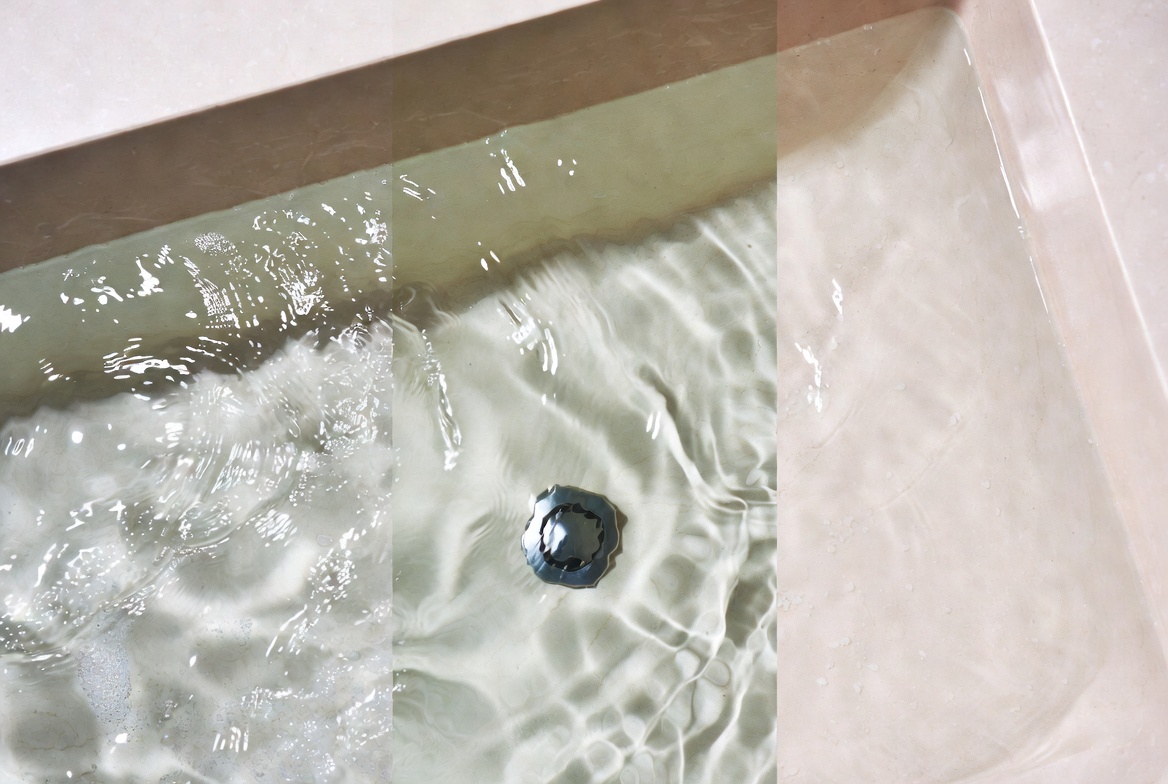
A leading European luxury bathroom brand working with proprietary resin stone composites reports that its bathtubs remain resistant to staining from oils and salts when users simply rinse the surface after use. This is aligned with accelerated lab testing, where color interference from essential‑oil products on stone materials becomes noticeable mainly when residues are allowed to dry repeatedly without any cleaning. [mdpi]
In parallel, research on bath formulations enriched with plant oils and functional botanicals shows strong consumer interest in multi‑benefit bath bombs and salt blends that combine fragrance, mild antibacterial effects and skin feel improvements. For manufacturers, this creates a powerful intersection: robust resin stone shells supporting increasingly complex in‑bath formulations without compromising long‑term product appearance when basic maintenance is followed. [jkefarind]
For brands co‑developing bathtubs and basins with Jiaxing Miluo Smart Home Co., Ltd., a structured test protocol with bath salts and essential oils helps validate performance claims before market launch. [china-miluo]
A simple, repeatable approach might include:
1. Solution preparation – Prepare separate test baths: one with typical Epsom‑based bath salts and another with a standard dilution of essential oils used in consumer products. [jkefarind]
2. Exposure cycles – Run multiple soak cycles on resin stone test pieces, controlling water temperature and exposure time to reflect realistic home use. [pmc.ncbi.nlm.nih]
3. Visual evaluation – Inspect for color change, gloss variation and surface roughness after each cycle under consistent lighting and photographic documentation. [mdpi]
4. Cleaning and re‑assessment – Apply warm‑water rinsing with mild soap, then re‑evaluate surfaces to determine whether any marks persist after typical maintenance. [casadistone]
5. Documentation for branding – Translate results into clear performance statements and usage guidance that downstream partners can adopt in packaging and marketing content. [china-miluo]
This test ladder not only reinforces confidence in resin stone's compatibility with wellness rituals but also creates measurable data points that support differentiated product messaging in competitive bathroom markets. [pmc.ncbi.nlm.nih]
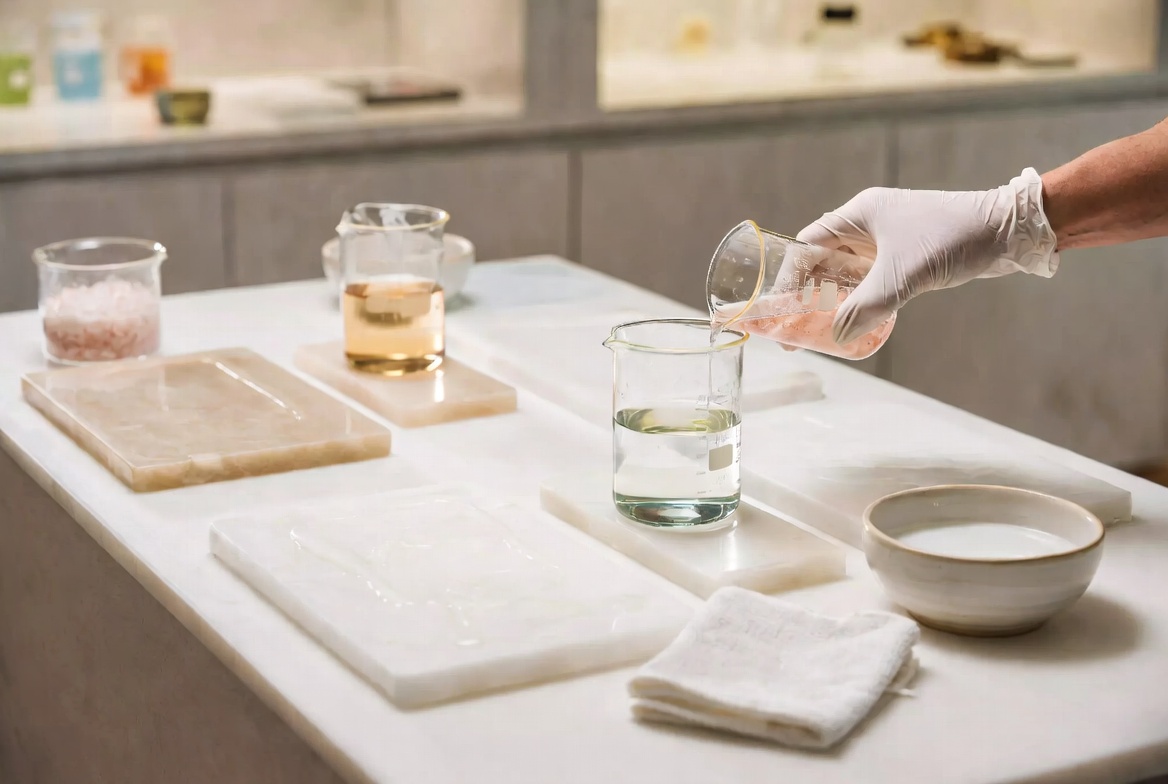
From a materials engineering view, resin stone's strongest advantage is its combination of low porosity and stable polymer matrix, which reduces interaction depth with dissolved salts and oils to the very surface layer. As long as that surface layer is maintained through gentle cleaning, the material can withstand years of habitual use without noticeable structural degradation. [casadistone]
From a bathroom design and branding view, encouraging users to fully dissolve bath salts, dilute essential oils in water rather than apply them neat, and rinse tubs after use becomes part of the product's value narrative rather than a limitation. Instead of restricting wellness practices, resin stone can be presented as an enabling platform that makes such rituals practical for modern residential and hospitality bathrooms. [tip.trunojoyo.ac]
For end users enjoying resin stone baths with salts and oils, a few simple habits keep the material looking its best over time. [mdpi]
- Always dissolve salts completely in warm water before entering the bath, to avoid concentrated piles rubbing directly against the surface. [tip.trunojoyo.ac]
- Mix essential oils into the bath water rather than pouring undiluted drops onto a dry tub wall, which can concentrate pigments and aromatic compounds in a small area. [pmc.ncbi.nlm.nih]
- After draining, rinse the tub with clean warm water and, if needed, use a mild, non‑abrasive cleaner and a soft cloth. [casadistone]
- Avoid scouring pads or aggressive solvents that can scratch or dull even resilient resin stone surfaces. [mdpi]
These routines align natural wellness preferences with long‑term bathroom aesthetics, supporting both user satisfaction and brand reputation across OEM and ODM product lines. [china-miluo]
For manufacturers like Jiaxing Miluo Smart Home Co., Ltd. that specialize in customized high‑end bathroom solutions, resin stone's performance with bath salts and essential oils supports several strategic positioning angles. [china-miluo]
- Wellness‑ready materials: Emphasize that resin stone tubs and basins are designed for regular use with scented salts and essential‑oil blends when basic care guidelines are followed. [jkefarind]
- Long‑term aesthetic stability: Highlight resistance to staining, thermal shock and everyday cosmetic wear in environments where users expect frequent aromatherapy and spa‑style rituals. [pmc.ncbi.nlm.nih]
- OEM/ODM customization: Offer tailored shapes, finishes and integrated accessories optimized around modern bathing habits, from deeper soaking wells to surfaces that retain warmth. [china-miluo]
By combining verified material behavior with clear guidance for downstream partners, manufacturers can differentiate their resin stone bathroom collections in crowded global markets where wellness and durability now coexist as core buying criteria. [jkefarind]
Q1: Can resin stone bathtubs be used daily with bath salts without surface damage?
Regular use with fully dissolved bath salts and simple rinsing routines does not typically cause structural damage to quality resin stone bathtubs under normal household conditions. [tip.trunojoyo.ac]
Q2: Are essential oils more likely to stain resin stone than bath salts?
Highly pigmented essential oils can create local discoloration more easily than clear salt solutions, but non‑porous resin stone surfaces show low stain retention when they are rinsed soon after use. [mdpi]
Q3: Does resin stone need special sealants to handle bath salts and essential oils?
Bathroom‑grade resin stone composites are manufactured with inherently sealed surfaces, so they generally do not require additional sealants for ordinary bath salt and essential‑oil exposure. [casadistone]
Q4: What cleaning products are recommended after aromatic baths?
Warm water, mild soap and a soft cloth provide effective cleaning for resin stone after aromatic baths, avoiding the abrasives and aggressive solvents that can dull or scratch surfaces. [mdpi]
Q5: How can manufacturers validate compatibility claims for wellness‑focused tubs?
Manufacturers can run controlled exposure tests on resin stone samples with representative bath salts and essential‑oil solutions, documenting visual changes before and after standardized cleaning. [jkefarind]
1. Miluo Bath – Customized Bathtub, Wash Basin, Bathroom Solutions. Jiaxing Miluo Smart Home Co., Ltd. – <https://www.china-miluo.com/> [china-miluo]
2. Casa Di Stone – Frequently Asked Questions: Resin Stone Baths And Basins. – <https://www.casadistone.com/en/Frequently-Asked-Questions/cc-18.aspx> [casadistone]
3. Agnini, G. et al. "Aroma profiling of resin from Ferula drudeana — culinary and essential oil aspects." ScienceDirect, 2026. – <https://www.sciencedirect.com/science/article/pii/S1878450X26000168> [sciencedirect]
4. Antonelli, F. et al. "Essential Oils and Essential Oil‑Based Products Compared on Stone Materials." Coatings, 2024. – <https://www.mdpi.com/2079-6412/14/12/1546> [mdpi]
5. Bartoli, F. et al. "In Vitro Viability Tests of New Ecofriendly Nanosystems Incorporating Essential Oils for Long‑Lasting Conservation of Stone Artworks." PMC, 2024. – <https://pmc.ncbi.nlm.nih.gov/articles/PMC10888044/> [pmc.ncbi.nlm.nih]
6. Rochman, M. F. et al. "Formulation and Evaluation of Patchouli Oil Bath Bomb." 2025. – <https://jkefarind.com/index.php/jki/article/download/6733/2974> [jkefarind]
7. Maflahah, I. et al. "Characterizing the Quality of Bath Salt Enriched with Lemongrass Oil." Universitas Trunojoyo Madura, 2023. – <https://tip.trunojoyo.ac.id/wp-content/uploads/2023/03/2.-7.-1.pdf> [tip.trunojoyo.ac]


