
Views: 263 Author: Miluo Smart Home Publish Time: 2026-10-04 Origin: Site


Content Menu
● What Makes a Luxury Walk-In Bathtub Different?
● How to Choose the Best Luxury Walk-In Bathtub
● Walk-In Bathtub Safety Features: What They Can—and Cannot—Do
● The Overlooked Issue: Filling and Draining While Seated
>> Ask for Meaningful Drainage Evidence
>> Plan for Comfort Between Stages
● Solid Surface vs. Acrylic Walk-In Bathtubs
>> Solid-Surface Walk-In Bathtubs
● Luxury Walk-In Bathtub Installation: A Five-Step Checklist
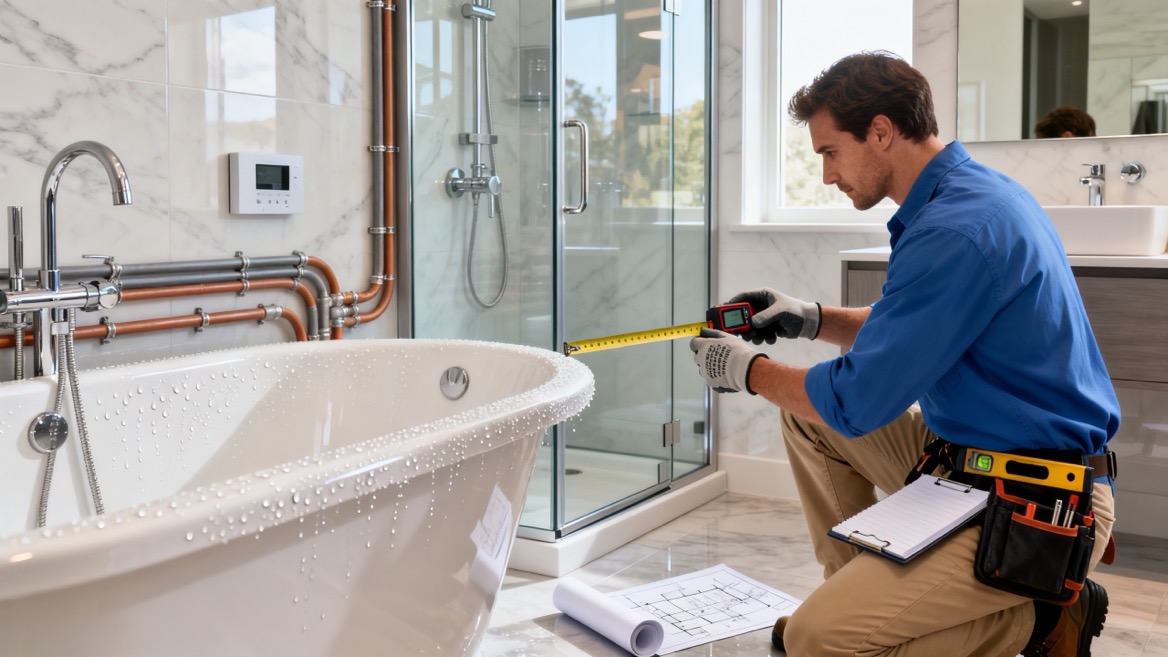
>> 1. Measure the Delivery Route
>> 2. Confirm Bathroom Clearances
>> 3. Review Water Supply and Drainage
>> 4. Assess Structural and Electrical Needs
● Hydrotherapy Features: Choose Comfort Without Medical Promises
● Turn Customer Reviews into Useful Product Requirements
● OEM and ODM Walk-In Bathtub Development for International Brands
>> Build a Detailed Product Brief
>> Validate the Sample Before Production
● Compare Total Ownership Cost, Not Just Purchase Price
● Create a Walk-In Bathtub Collection Around Real Needs
>> What is the best luxury walk-in bathtub for seniors?
>> Can a walk-in bathtub fit in a small bathroom?
>> How long does a walk-in bathtub take to drain?
>> Are walk-in bathtubs suitable for wheelchair users?
>> Are solid-surface walk-in tubs better than acrylic models?
>> Can a walk-in bathtub be customized for a private-label brand?
The best luxury walk-in bathtub combines easier access, comfortable seating, dependable drainage, and a design that belongs in a modern bathroom. For homeowners, the goal is a more manageable bathing routine. For brands and distributors, it is a product customers can understand, installers can fit, and service teams can support.
At Jiaxing Miluo Smart Home Co., Ltd., our focus is customized modern bathroom products and OEM/ODM solutions for international brands, wholesalers, and manufacturers. From a manufacturing perspective, I would start with one principle: judge a walk-in tub by the complete bathing experience, not its appearance alone.
This guide explains what to evaluate before choosing a luxury walk-in tub or developing a private-label collection.
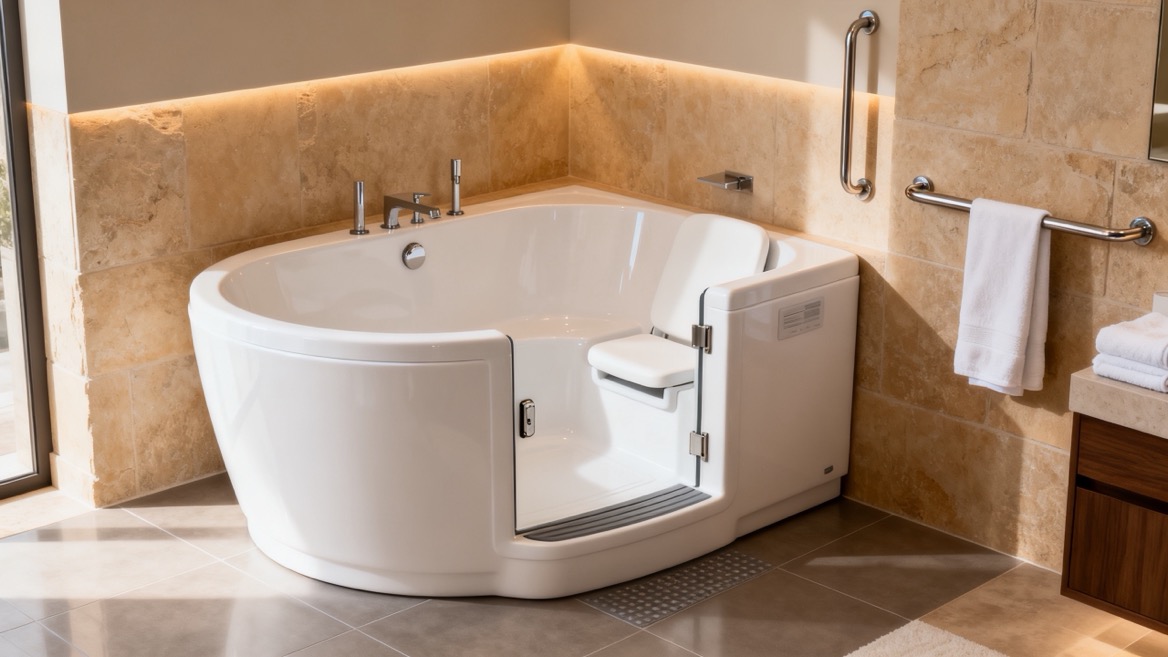
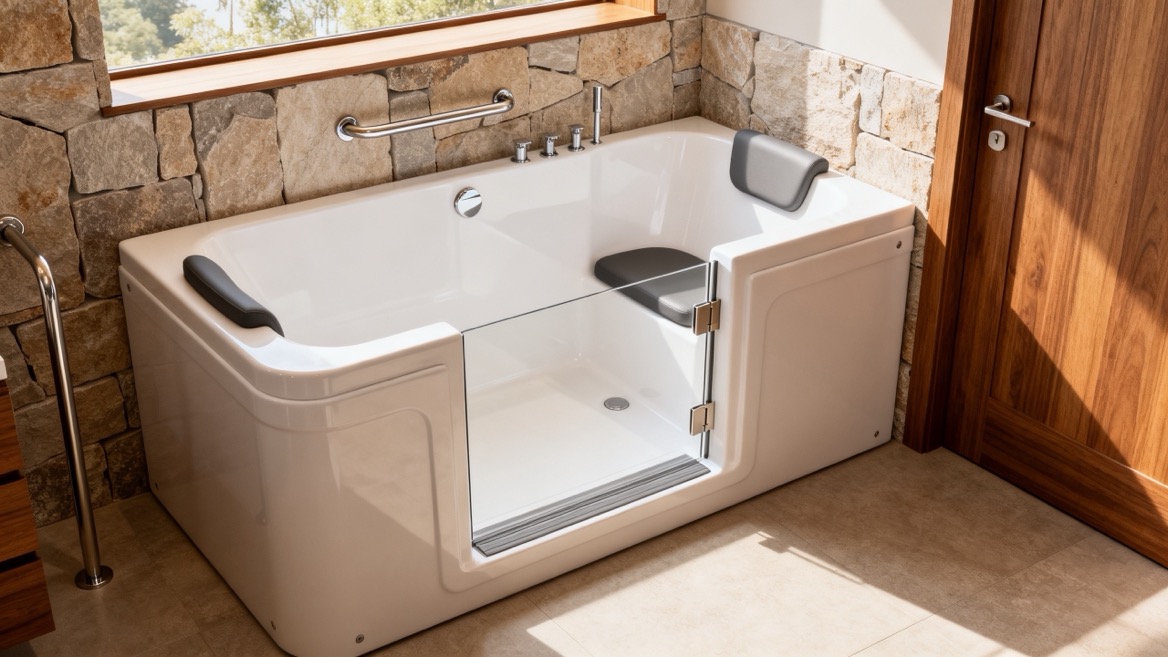
A walk-in bathtub uses a door to reduce the need to step over a conventional tub wall. Many designs also incorporate seated bathing, support handles, and accessible controls.
A luxury model should add thoughtful ergonomics, attractive materials, and a coherent finish—not simply more accessories.
Modern freestanding walk-in bathtubs illustrate this shift. Aquatica's Baby Boomer 2, for example, combines a low-threshold door and ergonomic interior with its proprietary AquateX solid-surface material. It shows how an accessibility-oriented product can also become a bathroom design feature.
However, an appealing design does not establish suitability for every user. Door access, seating, installation requirements, and maintenance must still be evaluated individually.
The most valuable premium features improve everyday use:
- A latch that is easy to reach and operate.
- Seating that supports a comfortable bathing position.
- Controls visible from the seat.
- Surfaces that are straightforward to clean.
- Replaceable components with clear service instructions.
A feature deserves its place when it solves a real problem.
The best choice depends on the user, bathroom, and support available. Compare measurable details rather than relying on labels such as "senior-friendly" or "spa-quality."
| Selection factor | What to examine | Why it matters |
|---|---|---|
| Entry threshold | Actual height and approach space | Determines how manageable entry may be |
| Door operation | Opening direction, clearance, latch reach | Affects access and bathroom layout |
| Seating | Height, width, depth, and back support | Influences comfort and transfers |
| Support points | Position, fixing method, rated capacity | Provides dependable handholds |
| Filling and drainage | Test conditions and operating times | Determines the complete bathing cycle |
| Material | Care requirements and repair options | Affects long-term appearance |
| Serviceability | Access panels and replacement parts | Reduces maintenance difficulty |
Ask for dimensioned drawings. A photograph rarely reveals whether a user can comfortably reach the faucet or whether an installer can access a connection.
A low entry threshold can make access more manageable, but it does not eliminate slipping, balance problems, or transfer difficulties.
Public home-safety guidance recommends grab bars and nonslip measures around bathing areas. These principles remain relevant even when the bathtub itself includes accessibility features.
Evaluate the movement sequence:
1. Approach the bathtub.
2. Open the door.
3. Step or transfer inside.
4. Turn and sit.
5. Reach the controls.
6. Stand or transfer out after draining.
Each movement introduces different requirements. Someone who can step inside may still struggle to rise from a seat.
Properly secured grab bars matter. Towel rails should not be treated as weight-bearing supports, and a bathtub door should not be used as a handhold unless expressly designed for that purpose.
A walk-in tub is not automatically wheelchair-accessible. Some users need a transfer-oriented configuration or a different bathing solution.
For significant mobility limitations, an occupational therapist or qualified accessibility professional can help assess the bathroom and the person's actual transfer method.
Avoid promises that a bathtub "prevents accidents." Responsible product guidance explains both intended benefits and remaining risks.
In many conventional walk-in designs, the user enters before filling and waits for the water to drain before opening the door. This affects comfort more than showroom photographs suggest.
A bathtub may feel luxurious during soaking yet inconvenient during the waiting periods.
A claim such as "fast drain" needs context. Ask:
- What water volume was tested?
- Was the bathtub installed under realistic plumbing conditions?
- Which drain assembly was used?
- When could the door safely open?
- Was the reported result reproduced across several tests?
Drainage performance depends on the complete installation, not just the bathtub outlet.
For a custom collection, document the test setup and distinguish laboratory results from installed performance. Customers need realistic expectations, not a number without conditions.
Consider room warmth, towel placement, reachable controls, and assistance arrangements. These details help make the entire routine manageable.
Also request instructions for a blocked drain or a user who becomes unwell. Emergency arrangements should be explained for the specific design rather than assumed.
Material affects appearance, weight, maintenance, and product positioning. However, material names alone do not establish quality.
Solid-surface designs can offer a contemporary appearance and a smooth tactile finish. Aquatica describes its proprietary material as providing durability and heat retention.
Those claims should not be generalized to every solid-surface formulation. Buyers should request product-specific information about cleaning, repair, heat retention, and finished weight.
For installations, assess the combined load of the bathtub, water, and user—not the empty tub alone.
Acrylic is another option to assess for a custom collection. Look beyond the visible finish to the supporting structure, reinforcement, door assembly, and service access.
Request the approved cleaning instructions and examine a finished sample. The quality of the complete assembly matters more than an isolated material description.
For either material, ask how the surface responds to intended cleaning products and how cosmetic damage would be handled.
A compact footprint does not guarantee an easy installation. The delivery route, plumbing, and maintenance clearances can be equally important.
Check entrance doors, corridors, stairs, and turning spaces. Compare these measurements with packaged dimensions as well as the unpacked product.
Allow for door movement, user approach, cleaning, and any caregiver assistance. Do not assess fit using external bathtub dimensions alone.
Have a qualified installer evaluate supply pressure, usable hot-water capacity, drain layout, and filling performance.
A tub that fits physically may still require plumbing changes.
Confirm support for the total operating load. If pumps, heaters, or other electrical components are specified, establish the applicable installation and electrical-protection requirements.
Plan how technicians will reach seals, fittings, pumps, and controls. Concealing every component can make a beautiful installation expensive to maintain.
Complete these checks before finalizing the product order.
Optional jets, air systems, and lighting can create a different bathing experience. However, additional systems also introduce cleaning requirements, electrical considerations, and service needs.
Choose features according to the intended user rather than assuming more technology means a better product.
Ask about:
- Noise during operation.
- Control accessibility.
- Cleaning and water-system maintenance.
- Replacement components.
- Procedures when a feature stops working.
Warm bathing or massage may feel relaxing, but product descriptions should not promise treatment for arthritis, circulation disorders, or other medical conditions without appropriate evidence.
Users with relevant medical concerns should seek individual guidance about bathing temperature, duration, and powered features.
Customer feedback can reveal problems that specifications overlook. Yet a five-star rating does not establish accessibility, reliability, or suitability.
The comments displayed on the reviewed competitor product page do not clearly establish product-specific ownership or testing. They should not be presented as verified evidence of walk-in bathtub performance.
For your own collection, gather structured feedback about:
- Door and latch operation.
- Seat comfort.
- Filling and drainage waits.
- Cleaning difficulty.
- Installation surprises.
- Availability of after-sales support.
Ask reviewers to identify the model and describe their usage context. Separate feedback from homeowners, installers, and caregivers.
If several users report difficulty reaching a control, that is more actionable than a general statement that the bathtub "looks beautiful."
A successful private-label bathtub starts with a clear brief. OEM projects typically work from buyer-defined specifications, while ODM projects generally involve manufacturer-supported design development. Define responsibilities explicitly in either arrangement.
Jiaxing Miluo Smart Home Co., Ltd. provides customized modern bathroom products and OEM/ODM services. For a proposed walk-in collection, the first discussion should establish the required design, intended market, and feasibility—not assume every requested configuration is already available.
Include:
- Target users and sales markets.
- Desired installation format.
- Dimensional constraints.
- Material and finish preferences.
- Door orientation and seating requirements.
- Optional bathing systems.
- Packaging and documentation needs.
- Warranty and spare-parts expectations.
Market-specific compliance requirements must be confirmed for the final configuration. Do not assume a certificate for one model covers every customized variant.
Agree on a validation plan covering door operation, leakage checks, drainage, surface inspection, and service access.
Where appropriate, specify repeated operating cycles and acceptance criteria. A sample that looks correct is not necessarily ready for routine use.
Record approved drawings, component specifications, and change-control procedures. This creates a clearer basis for production consistency and after-sales support.
The purchase price is only one part of the decision. A lower-priced tub may require additional installation work or offer limited replacement-part support.
Compare:
- Product and freight costs.
- Plumbing, electrical, and structural work.
- Installation and commissioning.
- Cleaning and routine maintenance.
- Replacement seals and components.
- Warranty exclusions and service arrangements.
For distributors, documentation quality also matters. Clear instructions and accessible spare parts can make the difference between a manageable service request and a prolonged customer complaint.
A luxury walk-in bathtub should unite contemporary design with a manageable bathing routine and dependable long-term support.
For homeowners, that means evaluating every stage from entry to cleaning. For brands, it means translating those needs into specifications that can be manufactured, verified, and serviced.
Send Jiaxing Miluo Smart Home Co., Ltd. your target market, preferred dimensions, design references, and projected order volume. Our team can discuss a customized bathroom product brief and the next steps for assessing your OEM or ODM project.
Choose according to mobility, transfer ability, seat fit, control reach, and bathroom layout. A low threshold is useful, but no single configuration suits every older adult.
Some compact models can. Verify the delivery route, door movement, approach space, plumbing, and maintenance access before ordering. Footprint alone does not determine suitability.
There is no universal time. Water volume, drain design, and installed plumbing affect performance. Request model-specific test conditions and realistic expectations for the proposed installation.
Not automatically. Some require stepping or standing transfers. Wheelchair users may need a transfer-oriented design, caregiver support, or another bathing arrangement.
Neither material is automatically better. Compare the complete construction, operating weight, cleaning instructions, repair options, and support available for the specific product.
Customization may cover dimensions, appearance, components, and documentation, subject to engineering feasibility. Confirm what is available, what requires development, and what validation the final configuration needs.
1. [Aquatica — "Best Luxury Walk in Tub"]. Original editorial topic and competing product positioning. Its search-visible safety language informed the decision to replace absolute accident-prevention claims with qualified guidance. The full migrated article could not be retrieved reliably. [aquaticausa]
2. [Aquatica — "Baby Boomer 2 Freestanding Solid Surface Bathtub"]. Primary manufacturer source for the named product's low-threshold door, ergonomic interior, freestanding format, proprietary material, published specifications, and displayed customer comments. Material-performance statements remain manufacturer claims rather than independent comparative findings. [aquaticausa]
3. [National Institute on Aging — "Home Safety Tips for Older Adults"]. Public guidance supporting grab bars near bathing areas and nonslip measures on wet surfaces. [nia.nih]
4. [National Institute on Aging — "Alzheimer's Caregiving: Home Safety Tips"]. Supports bathroom adaptations including grab bars, nonskid surfaces, shower stools, and handheld shower heads. Its dementia-care context should not be interpreted as a product certification or a universal suitability assessment. [nia.nih]
5. [FloridaHealthFinder — "Bathroom Safety for Adults"]. Supports secure grab-bar installation and the warning that towel racks are not suitable substitutes for weight-bearing supports. [quality.healthfinder.fl]
6. ["Consumer Perspectives on Grab Bars: A Canadian National Survey" — PubMed Central]. Research discussing grab bars, bathing transfers, accessibility, and caregiver considerations. It does not establish the performance of a particular walk-in bathtub. [pmc.ncbi.nlm.nih]


