
Views: 222 Author: Miluo Smart Home Publish Time: 2026-06-05 Origin: Site


Content Menu
● Acrylic Bathtubs vs Acrylic Solid Surface Bathtubs: Key Definitions
● Internal Structure: Layered Shell vs Solid Body
● Base Materials: PMMA Sheet vs Acrylic–Aluminum Composite
● Production Methods: Thermoforming vs Vacuum Casting
● Durability, Lifespan and Maintenance
● Design Flexibility and Aesthetic Impact
● Weight, Installation and Logistics
● Cost vs Value: Why Solid Surface Costs More
● Practical Scenarios: Which Bathtub Type Fits Your Project?
● Comparative Overview Table: Acrylic vs Acrylic Solid Surface
● UX & Installation Tips for End Users and Contractors
● OEM/ODM Perspective: Customization, Branding and Compliance
● How to Choose the Right Bathtub Type: A Simple Decision Flow
● Call to Action: Partner with a Professional OEM/ODM Bathtub Manufacturer
● Frequently Asked Questions (FAQ)
Acrylic bathtubs and acrylic solid surface bathtubs may sound similar, but they perform very differently in real-world projects, especially for brands, wholesalers and OEM/ODM buyers in the bathroom industry. In this in‑depth guide, we will compare the two from both a technical and business perspective, and show when each material makes sense for your projects. [newbathtoday]
- Clear definitions of acrylic bathtubs and acrylic solid surface bathtubs. [newbathtoday]
- A practical comparison of structure, materials, production methods, durability and design. [linkedin]
- Expert insights from the perspective of an OEM/ODM bathtub manufacturer serving international brands. [m.olearytub]
- Actionable guidance on how to choose the right tub type for your next bathroom collection or project. [linkedin]
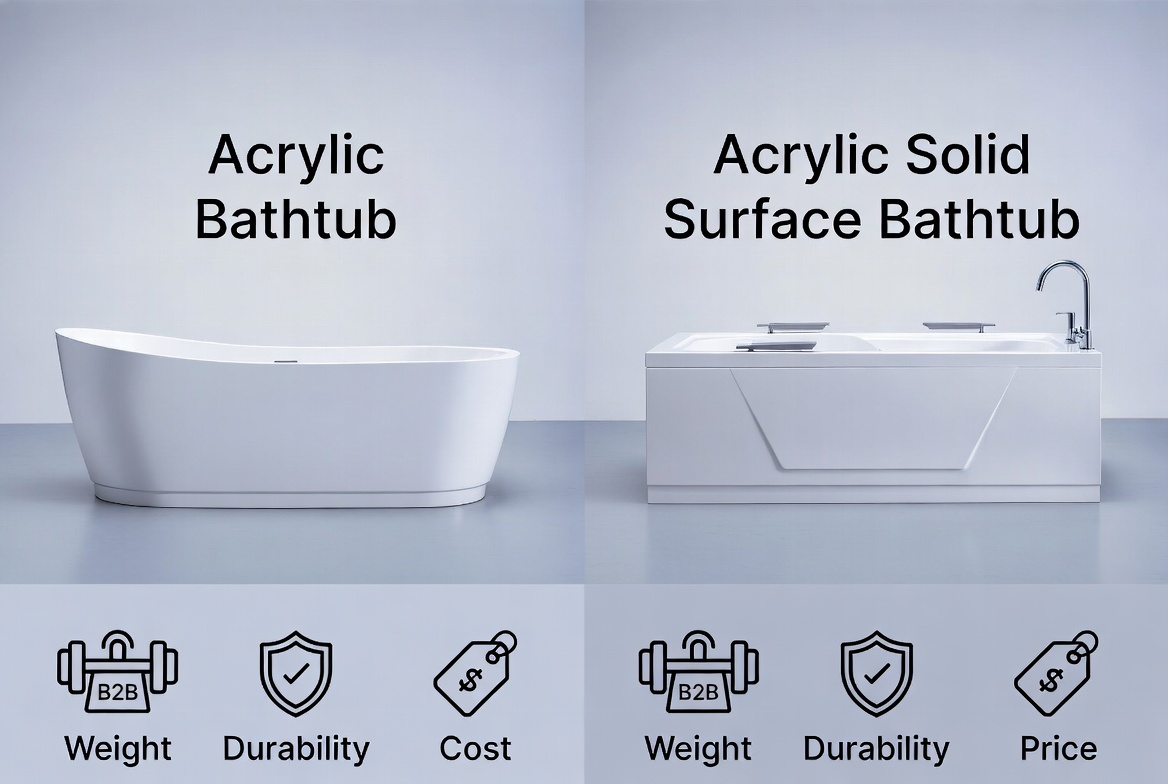
Acrylic bathtub usually refers to a bathtub formed from a thin acrylic (PMMA) sheet that is thermoformed and then reinforced on the back with fiberglass and polyester resin. This structure is sometimes called a "fiberglass bathtub" because the fiberglass backing provides most of the strength. [reddit]
By contrast, an acrylic solid surface bathtub (often called stone composite or solid surface tub) is solid throughout its entire thickness. It is made from a composite of premium acrylic resin (PMMA/MMA) and aluminum powder, cast in molds under vacuum, creating a non‑porous, stone‑like material. [newbathtoday]
From a buyer's point of view, this difference in structure and material is the main reason an acrylic solid surface tub can cost up to three times more than a standard acrylic bathtub—but also deliver much higher perceived value and longevity. [linkedin]
A standard acrylic bathtub is a multi‑layer structure: [newbathtoday]
- A 3–4 mm acrylic (PMMA) face layer forms the visible interior surface of the tub. [newbathtoday]
- Below this, a 4–5 mm fiberglass-reinforced backing bonded with polyester resin adds rigidity. [reddit]
This combination keeps the tub lightweight and cost‑effective, but also means the structure relies heavily on the integrity of the thin acrylic shell and fiberglass support. [newbathtoday]
An acrylic solid surface bathtub, on the other hand, has a uniform solid body, typically 18–25 mm thick throughout. The same composite material runs from the outer surface to the inner core, which: [newbathtoday]
- Provides a heavier, more stable feel similar to natural stone. [linkedin]
- Reduces flexing under load, improving long‑term structural stability. [linkedin]
- Supports more precise shapes and thinner edges without compromising strength. [newbathtoday]
For high‑end residential and hospitality projects, this solid body construction is a key visual and tactile differentiator.
Acrylic tubs:
- Made from 4 mm PMMA slabs (acrylic glass), which are heated and formed into shape. [newbathtoday]
- Reinforced with fiberglass and polyester resin on the back for strength. [reddit]
Acrylic solid surface tubs:
- Use premium acrylic resin, a blend of PMMA and MMA, as the binder. [newbathtoday]
- Combine this with fine aluminum powder to create a dense, stone‑like composite. [linkedin]
This composite is non‑porous, highly resistant to staining, and can be repaired and refinished on site if minor scratches occur. For brands positioning themselves as premium or luxury, this material choice supports a stronger quality story and longer warranty terms. [linkedin]
The manufacturing process is another major point of difference.
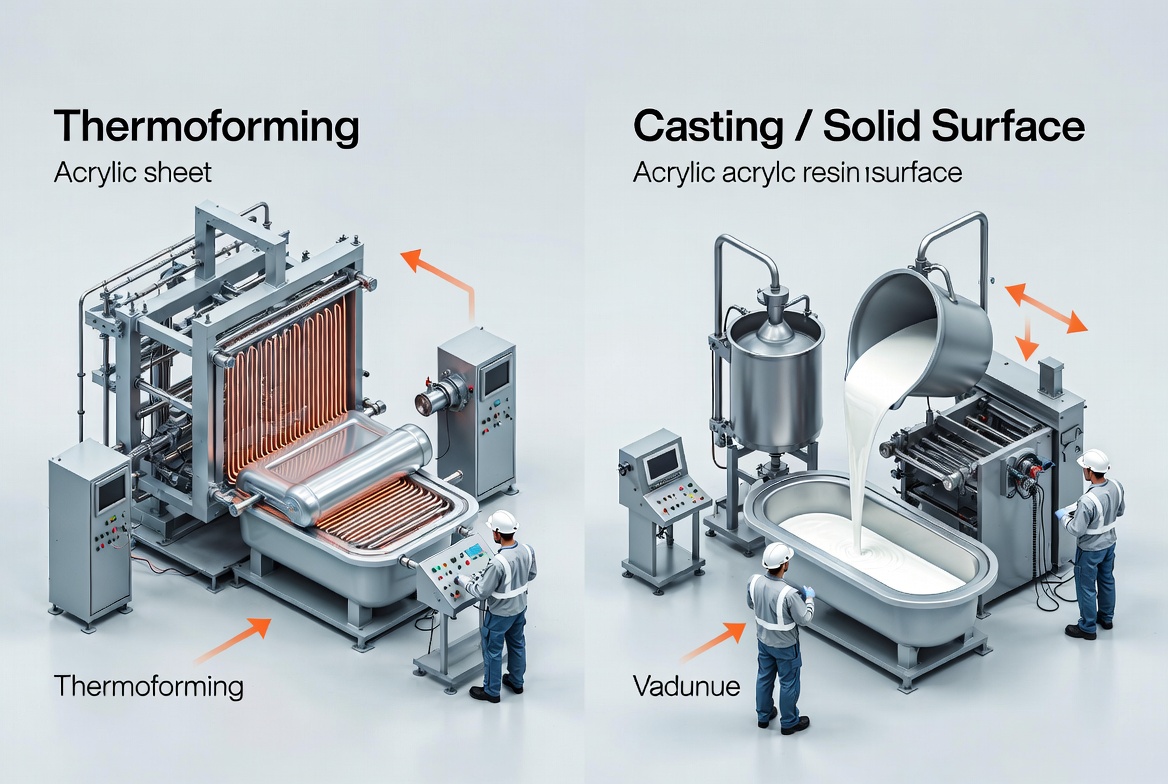
1. Acrylic tubs – Thermoforming process [newbathtoday]
- PMMA sheets are heated to around 120–150°C until they become pliable. [newbathtoday]
- The sheet is then drawn over a mold using vacuum or plastic suction technique, forming the desired tub shape. [newbathtoday]
- After cooling, a fiberglass backing is sprayed or laid up and bonded with polyester resin to reinforce the shape. [reddit]
This method is fast, scalable and cost‑efficient, ideal for high‑volume products and price‑sensitive markets. [newbathtoday]
2. Acrylic solid surface tubs – Vacuum casting process [newbathtoday]
- Liquid acrylic resin (MMA) is mixed with aluminum powder and other additives in a casting machine. [newbathtoday]
- The mixture is de‑aired under vacuum to minimize bubbles. [newbathtoday]
- It is then poured into a mold, where it cures and solidifies into a thick, homogeneous body. [newbathtoday]
- After demolding and curing, the tub is machined, trimmed and surface‑finished to a smooth, matte or satin texture. [linkedin]
This process is more material‑ and labor‑intensive, but enables precise control of wall thickness, consistent color, and complex, sculptural designs that appeal to premium markets. [linkedin]
From an industry expert perspective, the durability profile of each material directly connects to warranty risk, after‑sales costs, and brand reputation.
Acrylic tubs:
- Offer good performance for everyday residential use, but the thin acrylic surface can be more susceptible to scratches, discoloration and surface wear over time. [reddit]
- Fiberglass backing can be damaged if the tub is not properly supported during installation, leading to flexing or cracking. [reddit]
- Lifespan is generally shorter than solid surface, though adequate for many mid‑market projects. [linkedin]
Acrylic solid surface tubs:
- Feature a dense, non‑porous body that resists stains and discoloration, and can be lightly sanded or refinished if needed. [linkedin]
- Provide decades of service life when properly installed and maintained, making them suitable for upscale residential, boutique hotels and high‑end apartments. [linkedin]
- Their weight and stability help reduce creaking or movement, enhancing user confidence and comfort. [linkedin]
For OEM/ODM buyers, the lower complaint rate and longer lifespan of solid surface bathtubs often offset the higher upfront cost, especially for premium projects with strict quality expectations. [linkedin]
Design is not just about looks—it is directly linked to brand differentiation and margin potential.
Acrylic bathtubs:
- Work well for standardized designs such as built‑in tubs, alcove tubs and simple freestanding forms. [newbathtoday]
- Support glossy finishes and a wide palette of colors, though the thin shell limits ultra‑sharp edges or extremely thin rims. [reddit]
- Ideal when cost and speed are more important than unique sculptural shapes. [newbathtoday]
Acrylic solid surface bathtubs:
- Enable clean, minimalist geometries with thin edges, monolithic shapes and integrated overflow or storage details. [linkedin]
- Offer a stone‑like, matte or satin finish, which fits modern luxury bathroom trends, especially in Europe, North America and high‑end Asian markets. [linkedin]
- Support custom shapes and sizes, making them a strong choice for designers, boutique hotels and premium residential projects seeking signature products. [m.olearytub]
If your brand wants to position its bathtub collection as modern, sculptural and high‑end, acrylic solid surface bathtubs provide a clear visual and tactile advantage.
From a project manager's or contractor's perspective, weight and installation are critical.
- Acrylic bathtubs are significantly lighter, making them easier to carry, position and install, especially in upper floors or renovation projects with limited structural capacity. [newbathtoday]
- Acrylic solid surface bathtubs are heavier, closer to natural stone tubs, requiring more labor and sometimes structural consideration, but offering exceptional stability once installed. [linkedin]
For OEM/ODM buyers shipping containers globally, this also affects freight cost per unit and handling requirements at the destination warehouse. Acrylic tubs may reduce logistics costs, while solid surface tubs carry higher freight cost but command higher retail prices and stronger brand image.
The original KingKonree article notes that some buyers are surprised to see acrylic solid surface bathtubs priced up to three times higher than standard acrylic tubs. This price difference is driven by: [newbathtoday]
- Thicker, more expensive composite material consumed per tub. [linkedin]
- Longer production cycle due to casting, curing and detailed finishing. [newbathtoday]
- Higher quality control requirements to ensure consistent color, texture and dimensions. [linkedin]
However, from a total value perspective, acrylic solid surface tubs:
- Deliver higher perceived quality and brand prestige, supporting premium price positioning. [linkedin]
- Offer longer lifespan and fewer post‑sale issues, protecting your brand reputation. [linkedin]
- Open doors to architects, designers and hospitality buyers who demand solid surface as a minimum standard for luxury projects. [m.olearytub]
For entry‑level product lines and price‑sensitive markets, acrylic tubs may still be the right choice. For flagship collections and high‑end projects, acrylic solid surface bathtubs help you stand out in a crowded market.
From years of working with export brands and project developers, the following scenarios are common in OEM/ODM discussions. [m.olearytub]
Choose acrylic bathtubs when:
- You are building an entry‑level or mid‑market bathroom line focused on volume and competitive pricing. [newbathtoday]
- Projects involve tight budgets, such as large residential developments or entry‑level hotel refurbishments. [adroll]
- Installation needs to be simple and fast, with limited manpower or restricted access. [newbathtoday]
Choose acrylic solid surface bathtubs when:
- Your brand positions itself as premium or luxury, and uses bathroom products as a design statement. [linkedin]
- You serve high‑end residential, boutique hotel, spa or resort projects where longevity and aesthetics are critical. [m.olearytub]
- You need custom designs, special colors or unique shapes to differentiate your collection from competitors. [m.olearytub]
| Feature | Acrylic Bathtub (PMMA + Fiberglass) | Acrylic Solid Surface Bathtub (Stone Composite) |
|---|---|---|
| Structure | Thin acrylic shell + fiberglass backing. (newbathtoday) | Solid, homogeneous body 18–25 mm thick. (newbathtoday) |
| Base materials | PMMA sheet + fiberglass + polyester resin. (newbathtoday) | Acrylic resin (PMMA/MMA) + aluminum powder. (newbathtoday) |
| Production method | Thermoformed at 120–150°C, then reinforced. (newbathtoday) | Vacuum cast in molds, then cured and finished. (newbathtoday) |
| Weight | Light, easy to carry and install. (newbathtoday) | Heavier, more stable and stone‑like. (newbathtoday) |
| Durability | Good, but more prone to scratching and flexing. (newbathtoday) | Very high, long service life, repairable surface. (newbathtoday) |
| Aesthetic style | Glossy, standard forms, budget‑friendly. (newbathtoday) | Matte/satin, sculptural, premium look. (newbathtoday) |
| Typical applications | Mid‑market homes, cost‑conscious projects. (newbathtoday) | Luxury homes, boutique hotels, design projects. (newbathtoday) |
| Relative price | Lower initial cost. (newbathtoday) | Up to 3× higher, higher perceived value. (newbathtoday) |
Even though this guide is written from a manufacturer's and buyer's perspective, end users and installers play a huge role in overall satisfaction. Based on real‑world installation feedback from bathroom projects: [reddit]
For acrylic bathtubs:
1. Ensure proper floor support and use a quality mortar bed or support frame to prevent flexing.
2. Avoid harsh abrasives; clean with mild, non‑abrasive cleaners to reduce scratching and dulling.
3. Check and seal all joints carefully, as lighter tubs can shift slightly if not fully supported.
For acrylic solid surface bathtubs:
1. Plan logistics early—confirm door and stair clearances and arrange enough labor for safe handling. [newbathtoday]
2. Use professional installers familiar with heavy freestanding tubs and final leveling.
3. Educate homeowners or guests that minor marks can often be lightly polished out, extending the pristine appearance. [linkedin]
Providing these simple guidelines within your own product documentation helps reduce warranty claims and improve customer reviews.
As a manufacturer focused on OEM and ODM solutions for global brands, we know that bathtub material selection is only one part of a broader product strategy. [adroll]
From the OEM/ODM angle:
- Brand differentiation: Solid surface bathtubs allow unique mold design, signature silhouettes and distinctive details that are hard for competitors to copy. [m.olearytub]
- Labeling and compliance: Both acrylic and solid surface products can be engineered to meet target safety and plumbing standards in key export markets, but project specifications often favor solid surface for high‑end hospitality. [m.olearytub]
- Portfolio strategy: Many successful brands offer tiered product lines—entry‑level acrylic tubs for volume and premium solid surface tubs as a flagship range. [adroll]
Working with an experienced OEM/ODM partner lets you align material, design and pricing with your broader market positioning.
To summarize for buyers, designers and brand managers, use this three‑step decision logic: [linkedin]
1. Define your market position
- If your brand focuses on value and volume, prioritize acrylic tubs.
- If your brand emphasizes luxury and design, lead with acrylic solid surface tubs.
2. Clarify project requirements
- For projects with strict weight limits, budget constraints or fast timelines, acrylic tubs are often the better fit. [newbathtoday]
- For projects where design, durability and guest impression matter most, solid surface is usually preferred. [m.olearytub]
3. Align with long‑term brand strategy
- Use acrylic tubs to maintain accessibility and price coverage in entry ranges.
- Use acrylic solid surface tubs as hero products that elevate your brand and open new premium channels. [adroll]
Whether you are building a new bathtub collection or upgrading an existing product line, choosing between acrylic and acrylic solid surface bathtubs is a strategic decision that impacts your brand, margins and customer satisfaction.
If you are a bathroom brand owner, wholesaler or project contractor, consider working with an experienced OEM/ODM manufacturer who can:
- Help you co‑develop designs optimized for your target markets.
- Offer both acrylic and acrylic solid surface options under one roof.
- Provide consistent quality, on‑time delivery and technical support for your international projects. [adroll]
You can start by outlining your target segment, design preferences and budget, then request tailored proposals and samples to evaluate which bathtub type will best support your business goals. [seoclarity]
1. Are acrylic solid surface bathtubs worth the higher price?
Yes, for premium projects they usually are, because they offer longer lifespan, superior aesthetics, a more substantial feel and lower complaint rates, which help protect brand reputation and support higher retail prices. [linkedin]
2. Do acrylic bathtubs crack easily compared to solid surface tubs?
Properly manufactured and installed acrylic bathtubs do not "crack easily," but their thinner shell can flex more if the base is not adequately supported, whereas solid surface tubs are thicker and more rigid. [reddit]
3. Can scratches on acrylic solid surface bathtubs be repaired?
Minor scratches and marks on acrylic solid surface bathtubs can often be reduced or removed through light sanding and polishing, thanks to the homogeneous, non‑porous material throughout the thickness. [linkedin]
4. Which material is better for high‑rise buildings?
For high‑rise projects with strict weight limits and challenging logistics, lightweight acrylic bathtubs are often more practical, although solid surface tubs can still be used selectively where structure and access allow. [m.olearytub]
5. How important is manufacturer experience when choosing bathtub suppliers?
Manufacturer experience is critical: experienced suppliers understand material behavior, global quality standards and export requirements, reducing the risk of defects, delays and compliance issues for your brand. [innovationvisual]
1. KingKonree International – *Acrylic Bathtubs Vs Acrylic Solid Surface Bathtubs* (original article content and technical descriptions).
https://www.kingkonree.com/acrylic-bathtubs-vs-acrylic-solid-surface-bathtubs.html [newbathtoday]
2. New Bath Today – *Acrylic vs. Solid Surface Bathtubs* (installation and material considerations).
https://newbathtoday.com/blog/acrylic-vs-solid-surface-bathtubs/ [newbathtoday]
3. Allen Kyi – *Solid Surface Bathtub or Acrylic Bathtub?* (comparative perceptions of quality and durability).
https://www.linkedin.com/pulse/solid-surface-bathtub-acrylic-allen-kyi [linkedin]
4. Innovation Visual – *Google's EEAT Guidelines – How To Remain Compliant* (E‑E‑A‑T best practices for content).
https://www.innovationvisual.com/knowledge-hub/resources/google-eeat-guidelines-how-to-remain-compliant [innovationvisual]
5. iO Digital – *Google E‑E‑A‑T: Creating Content That Puts People First* (experience and expertise recommendations).
https://www.iodigital.com/en/insights/blogs/google-e-e-a-t-creating-content-that-puts-people-first [iodigital]
6. AdRoll – *Product Page SEO: How to Boost Rankings For Your Product Content* (UX and CTA guidance for product content).
https://www.adroll.com/blog/product-page-seo-how-to-boost-rankings-for-your-product-content [adroll]
7. Reddit – *fiberglass vs acrylic vs porcelain enameled steel* (user experiences on durability and flexing).
https://www.reddit.com/r/Renovations/comments/tvcany/confused_about_bathtub_material_choice_fiberglass/ [reddit]
8. OLEARY – *人造石树脂浴缸定制* (solid surface bathtub OEM/ODM positioning and applications).
https://m.olearytub.com/Custom_bathtubs.html [m.olearytub]


