

Views: 289 Author: Miluo Smart Home Publish Time: 2026-09-25 Origin: Site


Content Menu
● Why Small Bathtubs Are Gaining Attention
>> Compact Does Not Mean Compromised
● Depth vs. Length: What Actually Creates a Better Soak?
>> The Ergonomics Behind Comfort
● How to Choose the Right Small Bathtub Size
>> Start With the Available Floor Plan
>> Choose by User Profile, Not Only Room Size
● Material Selection: Acrylic, Solid Surface, and More
>> Solid Surface and Stone Resin Bathtubs
>> Material Comparison for B2B Buyers
● Compact Bathtub Installation: The Details That Prevent Problems
>> Confirm Drain and Overflow Compatibility
>> Protect the Product During Delivery
● Designing a Small Bathroom Around a Freestanding Tub
>> Use Vertical Design Elements
>> Select Fixtures That Match the Tub Scale
● Water Use and Responsible Bathing Choices
● A Buyer's Checklist for Small Bathtub Sourcing
>> Commercial and Logistics Readiness
● Build a Compact Bathtub Collection With Miluo
>> What is considered a small bathtub?
>> Are small bathtubs comfortable for adults?
>> Is a deeper bathtub better than a longer bathtub?
>> What is the best material for a compact freestanding bathtub?
>> How much clearance should be left around a small bathtub?
>> Can a small bathtub be used in a hotel or apartment project?
>> Can a bathtub manufacturer customize small tub designs?
A small bathtub can deliver an exceptionally relaxing daily bathing experience when it is selected around interior depth, ergonomic support, thermal performance, and installation realities—not length alone. For compact apartments, boutique hotels, urban residences, and modern renovation projects, a well-designed compact soaking tub can turn limited floor space into a refined, high-comfort bathroom feature.
At Jiaxing Miluo Smart Home Co., Ltd., we work with international brands, wholesalers, and project buyers developing modern bathroom collections. From our experience supporting OEM and ODM bathtub programs, the most successful compact-tub projects begin with one principle: design the bathing position first, then shape the product and space around it.
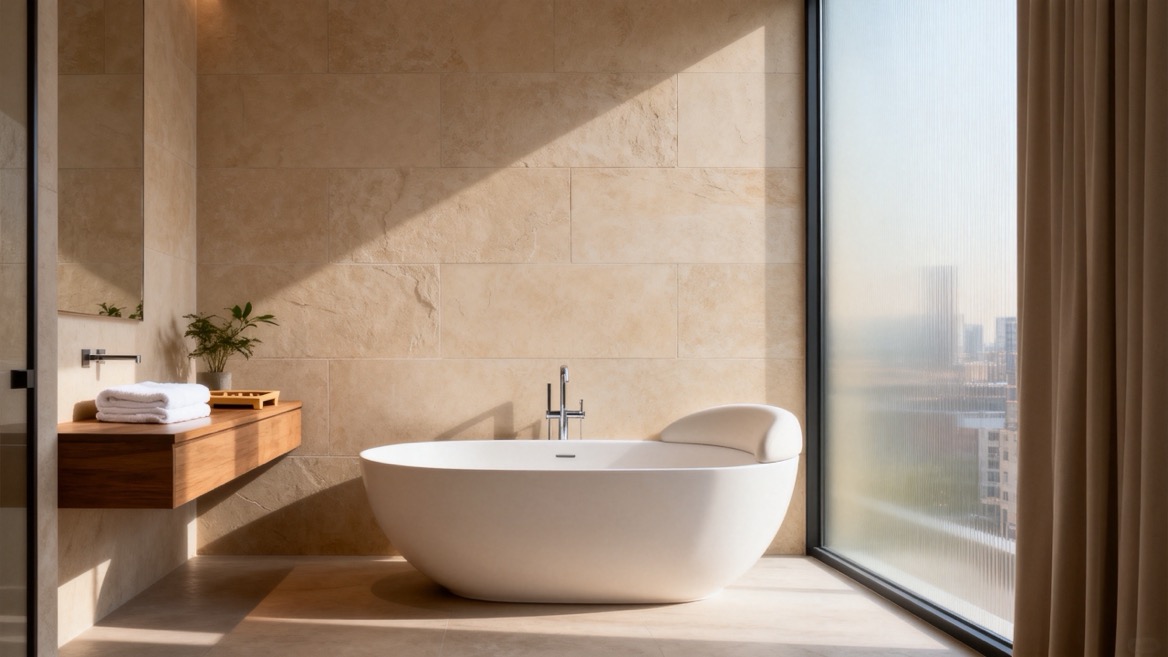
For decades, many buyers judged bathtubs primarily by overall length. A longer bathtub was assumed to be more luxurious because it allowed the bather to recline fully. That approach still suits spacious primary bathrooms, but it does not always match contemporary homes, apartments, guest suites, or renovation layouts.
In smaller bathrooms, a long but shallow bathtub can occupy valuable floor area without providing a fully immersive soak. A compact bathtub with generous internal depth, a carefully angled backrest, and balanced proportions can often feel more satisfying.
The key difference is simple:
- A long bathtub encourages a horizontal, reclined position.
- A deep compact bathtub supports a more upright or semi-reclined soaking position.
- A well-shaped small soaking tub can cover more of the body with water while using less floor length.
- A freestanding compact bathtub can create a visual focal point without requiring a large built-in deck.
This is why modern buyers increasingly compare internal bathing space rather than exterior dimensions alone.
A small bathtub should not feel like an undersized standard tub. It should be intentionally engineered for comfort.
The most effective designs typically combine:
- Deeper internal water capacity for shoulder-level immersion
- Supportive lumbar shaping to reduce pressure on the lower back
- A narrower footprint that preserves circulation around the tub
- Insulated materials that help retain bathwater warmth
- Smooth, easy-clean surfaces suitable for everyday residential use
- Stable, well-balanced construction for safe installation and long-term durability
For international buyers building a premium bathroom collection, compact models also create a useful product-category advantage: they serve consumers who want a freestanding luxury look but cannot accommodate a 60- to 72-inch bathtub.
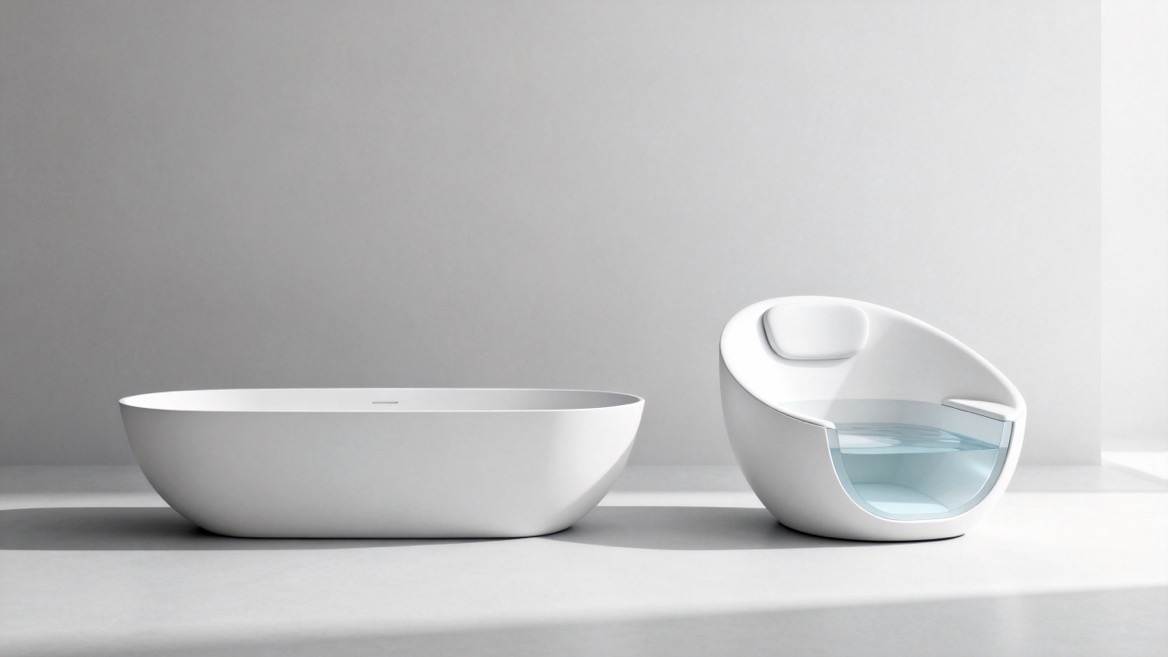
When choosing a small bathtub, interior depth matters more than many buyers expect. A tub may be short in length but still provide an enveloping soak if it is deep enough for the user's torso.
Water depth is usually measured from the lowest point of the bathing well to the overflow level. This number matters because the overflow determines the practical maximum fill height.
Many conventional bathtubs are designed around a shallow reclining format. Compact soaking tubs, by comparison, may offer a deeper interior that enables a seated or semi-seated position.
| Comfort Factor | Conventional Long Bathtub | Compact Soaking Bathtub |
|---|---|---|
| Typical external length | 60–72 inches | 47–55 inches |
| Typical bathing posture | Reclined | Upright or semi-reclined |
| Interior water depth | Often shallower | Often deeper |
| Floor-space requirement | Higher | Lower |
| Suitable for compact bathrooms | Limited | Strong |
| Visual impact | Depends on installation | Often high with freestanding design |
| User experience | Full-leg extension | Immersive, cocoon-like soaking |
A compact tub is especially appealing to users who prefer to sit upright, read, use a bath tray, or enjoy a longer soak without needing to stretch their legs fully.
Depth alone does not guarantee comfort. The tub's internal geometry is equally important.
A high-quality compact bathtub should be assessed for:
- Backrest angle: A gentle slope supports relaxed sitting without forcing the neck forward.
- Lumbar contour: A subtle curve can help the lower back maintain a natural position.
- Shoulder width: The upper bathing area should not feel restrictive when the user leans back.
- Footwell shape: A secure foot area helps prevent sliding in a deeper tub.
- Rim profile: A broad, comfortable rim can improve visual balance and provide a practical resting place for towels or accessories.
- Drain placement: A centrally positioned or carefully offset drain can reduce discomfort when bathing.
For OEM and ODM development, these details should be evaluated early through drawings, prototypes, and real-user testing. A beautiful tub that looks excellent in a showroom but lacks back support may create unnecessary return-risk for a brand or distributor.
The correct compact bathtub size depends on the bathroom layout, target user, local building requirements, and intended bathing style. Buyers should avoid selecting a model only because it fits within a wall-to-wall dimension.
Instead, evaluate the full user journey: entering the bathroom, approaching the bathtub, getting in, sitting comfortably, cleaning the tub, and exiting safely.
Before selecting a bathtub, record the following measurements:
1. Wall-to-wall width and usable length.
2. Door swing and door-opening clearance.
3. Window, vanity, toilet, shower, and storage locations.
4. Drain position and plumbing accessibility.
5. Ceiling height if a shower system will be installed above the bathtub.
6. Delivery route, including elevators, corridors, staircases, and door openings.
7. Space needed for cleaning around the bathtub.
Bathroom planning guidance commonly identifies 21 inches as a minimum front clearance in many code-based situations, while 30 inches of clear space is generally more comfortable for daily use and movement. The ideal requirement will depend on the market, local code, project type, and accessibility expectations.
A compact bathtub program should consider its intended user profile.
| Buyer or User Type | Recommended Compact Tub Priorities |
|---|---|
| Apartment owner | Deep interior, short footprint, easy installation access |
| Boutique hotel | Durable surface, fast cleaning, consistent dimensions, strong visual identity |
| Senior-oriented project | Lower or safer entry strategy, optional seat support, reinforced grab-bar planning |
| Urban luxury homeowner | Freestanding silhouette, solid surface feel, thermal performance |
| Developer or project buyer | Stable supply, packaging protection, specification consistency, certification support |
| Private-label brand | Custom color, logo packaging, differentiated shape, market-specific sizing |
A 50-inch tub may be ideal for a city apartment but unsuitable for a tall target customer. Conversely, a 55-inch deep-soaking bathtub may satisfy a broader range of users while still fitting in a compact renovation footprint.
The best product strategy is not "the smallest possible tub." It is the smallest tub that still provides a convincing premium bathing experience.
Material affects comfort, shipping, manufacturing flexibility, appearance, maintenance, and final pricing. For B2B buyers, material selection should be connected to the brand's market position and channel strategy.
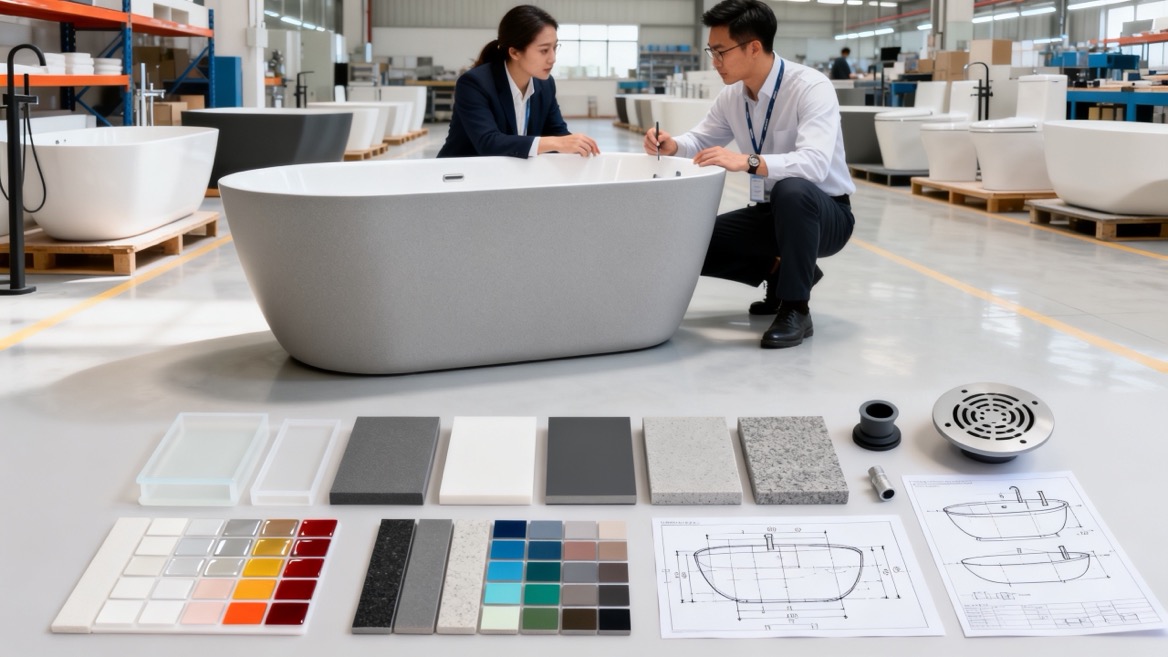
Acrylic remains popular because it is lightweight, adaptable, and efficient for many residential bathroom projects.
Advantages of acrylic compact bathtubs include:
- Lower weight compared with many mineral-based materials
- Easier transport and handling during installation
- Smooth, warm-touch surface
- Broad shape flexibility for freestanding and built-in models
- Cost-effective positioning for retail and wholesale programs
- Potential for reinforced construction through fiberglass or composite backing
Acrylic is especially practical where installation access is limited, such as upstairs apartments, narrow staircases, and renovation projects with restricted delivery routes.
However, buyers should examine the acrylic sheet quality, thickness, reinforcement method, frame construction, and base stability. A low-cost tub with inadequate reinforcement may flex under load, which can reduce perceived quality over time.
Solid surface and stone-resin-style tubs are often selected for premium collections because of their substantial feel, matte appearance, sculptural form, and thermal properties.
Key advantages include:
- Premium visual and tactile experience
- Strong heat-retention potential
- Seamless modern appearance
- Excellent suitability for minimalist luxury bathrooms
- Opportunity for custom colors, finishes, and distinctive silhouettes
- High perceived value for designer, hospitality, and luxury residential projects
The trade-off is weight. A compact solid-surface bathtub can still be significantly heavier than an acrylic equivalent, even before water and user weight are considered. Buyers should coordinate with installers, contractors, and structural professionals when required.
| Factor | Reinforced Acrylic | Solid Surface / Stone Resin |
|---|---|---|
| Product weight | Lower | Higher |
| Shipping and handling | Easier | Requires more planning |
| Surface feel | Smooth and warm | Dense, refined, premium |
| Design positioning | Mid-range to premium | Premium to luxury |
| Shape flexibility | High | High, depending on production process |
| Installation access | Better for difficult routes | Best for accessible projects |
| Customization potential | Strong | Strong, especially for finish and color |
| Retail appeal | Broad-market | Design-led and high-end |
For a collection serving multiple markets, brands may benefit from offering both materials under a unified design language: an accessible acrylic series and a higher-end solid-surface series with complementary shapes.
A beautiful bathtub can become a costly project issue if installation requirements are overlooked. For wholesalers, developers, contractors, and private-label brands, installation documentation should be treated as part of the product—not as an afterthought.
The installed bathtub must safely support:
- The bathtub itself
- Water volume
- The user's body weight
- Any accessories or fixtures associated with the installation
A useful planning formula is:
Total Loaded Weight=Tub Weight+Water Weight+User Weight+Accessory Allowance
Water weighs approximately 8.34 pounds per U.S. gallon, so even a compact soaking tub can become very heavy once filled. Structural suitability should be confirmed by qualified professionals where necessary.
Small bathtubs are often positioned in tight rooms where plumbing changes can be expensive. Before finalizing a purchase order or installation plan, confirm:
- Drain location: center, left, right, or end drain
- Drain diameter and local plumbing compatibility
- Overflow configuration
- Freestanding filler location
- Access for maintenance
- P-trap position and floor opening details
- Required waterproofing around adjacent walls and floors
The wall area above a bathtub or shower pan should use waterproof material to the required height under applicable local rules. Planning guidance also emphasizes non-slip surfaces in bathroom areas and appropriate support provisions where grab bars may be needed.
For export projects, packaging is not merely a logistics detail. It protects brand reputation.
A reliable bathtub export packaging program should consider:
- Molded foam or protective corner systems
- Reinforced carton construction
- Moisture protection for sea freight
- Pallet or crate strategy where appropriate
- Clear handling instructions
- Product identification labels
- Installation manuals
- Inspection records before loading
- Spare parts and drainage accessories when required
For OEM and ODM buyers, custom packaging can also be a brand-building opportunity. Printed cartons, branded manuals, barcode labels, and retail-ready inserts can improve distributor and consumer confidence.
A compact freestanding bathtub can make a bathroom feel larger when the surrounding layout is carefully controlled. The goal is to preserve sightlines and avoid visual clutter.
Small bathrooms benefit from visual height. Consider:
- Tall-format wall tiles
- Vertical tile patterns behind the bathtub
- Full-height wall panels
- Slim pendant lighting or wall sconces
- Recessed niches for bath products
- Tall mirrors that reflect light
- Frameless glass shower screens where appropriate
A vertical feature wall behind a compact tub can visually elevate the room and create a hotel-inspired focal point.
Floor clutter quickly makes a compact bathroom feel crowded. Floating vanities, recessed niches, wall-mounted accessories, and slim towel rails can preserve a cleaner visual field.
This approach also helps the bathtub stand out as the main design object rather than appearing squeezed between unrelated fixtures.
Large, oversized fixtures can make a compact bathtub look undersized. Create proportion through coordinated elements:
- A slimline freestanding bath mixer
- A wall-mounted filler for narrow layouts
- A compact side table rather than a wide bath caddy
- Minimalist towel storage
- Small-format lighting with warm color temperature
- Matte black, brushed nickel, chrome, or custom-finish hardware matched to the overall interior concept
The most luxurious compact bathrooms are not necessarily filled with features. They are carefully edited.
A bathtub's water use depends on its actual fill volume, overflow level, user displacement, and personal bathing habits. A small soaking bathtub may require less water than a long, wide bathtub, but it should not automatically be presented as more water-efficient than every alternative.
The responsible approach is to specify the actual usable water capacity of the tub and help end users make informed choices.
For bathroom remodeling projects, water savings often come from the wider fixture package, including high-efficiency faucets, showers, and toilets. WaterSense-labeled bathroom faucets are designed to use no more than 1.5 gallons per minute under the current program criteria, while maintaining performance requirements.
For bathtub brands and suppliers, practical sustainability actions include:
- Providing clear water-capacity information
- Designing tubs that create immersion without excessive volume
- Offering durable products that remain in service for years
- Using packaging efficiently while maintaining transit protection
- Reducing avoidable material waste during production
- Supporting repairable drainage and accessory components
- Giving customers clear cleaning and care instructions to extend product life
Before approving a compact bathtub for a brand, wholesale program, or construction project, use the following checklist.
- Does the tub provide sufficient internal depth at the actual overflow level?
- Is the backrest comfortable for the intended user profile?
- Does the footwell feel stable during use?
- Is the drain positioned to avoid pressure points?
- Does the tub retain heat effectively for its material category?
- Is the base stable on a level floor?
- What material grade and reinforcement process are used?
- Are dimensions controlled consistently across production batches?
- Is every unit inspected for surface defects, leakage, drainage performance, and levelness?
- Can the supplier provide technical drawings and installation instructions?
- Is custom color, logo, packaging, or finish development available?
- What is the approach to sample approval and mass-production quality control?
- What is the minimum order quantity for standard and customized designs?
- Can the supplier support OEM branding and ODM product development?
- What packaging is used for long-distance ocean transport?
- Are replacement drains, overflow components, and accessories available?
- Can the product be adapted for destination-market requirements?
- What lead time applies to samples, first production, and repeat orders?
A small bathtub should do more than fit inside a limited floor plan. It should create a genuine moment of comfort, support a clear product-positioning strategy, and deliver reliable quality from factory to final installation.
Jiaxing Miluo Smart Home Co., Ltd. supports international brands, wholesalers, manufacturers, and project buyers with modern bathtub and integrated bathroom-product solutions. Whether you are developing a compact acrylic tub for a residential retail collection or a premium solid-surface soaking tub for a design-led market, our team can support OEM and ODM development from concept, technical review, and sampling through production, packaging, and export delivery.
Contact Miluo to discuss your compact bathtub requirements, target dimensions, material preferences, custom branding, and market-specific product plan.
A small bathtub commonly falls between approximately 47 and 55 inches in length. However, the most important measurement is not only external length. Interior depth, width, backrest angle, and usable water level determine whether the bathtub feels comfortable.
Yes. A compact bathtub can be very comfortable for adults when it is designed for upright or semi-reclined soaking. Look for adequate internal depth, ergonomic back support, stable foot positioning, and sufficient shoulder room.
Not always, but deeper tubs are often better for users who prefer immersive soaking in small bathrooms. A long bathtub is more suitable for users who want to stretch out horizontally. The ideal choice depends on the user's height, bathing preference, and available space.
Reinforced acrylic is often best for projects requiring lighter weight, efficient transport, and broad-market pricing. Solid surface or stone resin is a strong choice for premium projects that prioritize tactile quality, thermal performance, and a luxury visual identity.
Local building requirements should always be checked. Bathroom planning guidance commonly identifies 21 inches as a minimum front clearance in some code-based applications, while 30 inches is generally more comfortable for use and circulation.
Yes. Compact bathtubs are well suited to boutique hotels, serviced apartments, urban residential projects, guest bathrooms, and premium rental properties. Project buyers should prioritize durability, consistent specification, easy-clean surfaces, replacement-part availability, and reliable packaging.
An experienced OEM and ODM manufacturer can often support custom dimensions, colors, finishes, drainage positions, branding, packaging, and accessory configurations. Custom feasibility depends on material choice, tooling requirements, order volume, certification needs, and target-market specifications.
1. [Aquatica USA — Tiny but Mighty: Small Bathtubs That Don't Skimp on Comfort]
2. [National Kitchen & Bath Association — Bathroom Planning Guidelines]
3. [NKBA — Bath Planning Guidelines PDF]
4. [U.S. Environmental Protection Agency — WaterSense Bathroom Faucets]
5. [Wiley — NKBA Kitchen and Bathroom Planning Guidelines with Access Standards]


